Caregivers of people with dementia need to understand that changes in mobility are not a sudden crisis but a progression that follows predictable patterns as the disease affects the brain regions controlling movement, balance, and coordination. In early dementia, a person might become unsteady or shuffle slightly; in later stages, they may lose the ability to walk entirely.
By learning what these changes look like, when they typically appear, and how to respond, you can adapt the home environment, choose the right assistive devices, and prevent the catastrophic falls that send many older adults to hospitals and nursing homes. The relationship between dementia and mobility matters because movement is survival—it determines whether your loved one can get to the bathroom independently, whether they’ll experience the social and physical benefits of walking, and whether they face a future of immobility-related complications like pressure sores, blood clots, and muscle wasting. Falls are the leading cause of injury-related death in older adults, and people with dementia fall twice as often as cognitively intact peers because they’ve lost the judgment to avoid hazards and the reflexes to catch themselves.
Table of Contents
- HOW DEMENTIA AFFECTS GAIT AND BALANCE
- FALL RISK FACTORS UNIQUE TO DEMENTIA
- ASSISTIVE DEVICES AND WHEN TO INTRODUCE THEM
- PREVENTING AND MANAGING FALLS
- COMMUNICATION AND CAREGIVER SAFETY DURING MOBILITY
- PHYSICAL THERAPY AND EXERCISE
- LATE-STAGE DEMENTIA AND IMMOBILITY
HOW DEMENTIA AFFECTS GAIT AND BALANCE
dementia damages the neural pathways that coordinate movement, creating a specific pattern of decline that differs from normal aging. Early on, a person with dementia may walk more slowly, take shorter steps, or shuffle their feet—changes that seem minor but signal that the brain’s motor-planning center is misfiring. They may also develop a wider stance to feel more stable, or they might lean forward as if struggling against invisible resistance. In vascular dementia (caused by stroke-like events in the brain), gait changes can be sudden and more pronounced than in Alzheimer’s disease. A person might develop a “marching” gait where the legs feel stiff, or they might experience sudden freezing—a terrifying moment where the feet seem locked to the floor despite conscious intent to move.
Lewy body dementia brings Parkinsonian features: rigidity, tremor, and that same freezing phenomenon. Frontotemporal dementia can cause unsteadiness and poor coordination earlier than other dementias, sometimes mimicking Parkinson’s disease so closely that families and doctors confuse the two. The danger lies in the unpredictability of when these changes will worsen. A person stable on their feet one month may require a walker the next. Their balance may deteriorate rapidly after a fall, an infection, a medication change, or even a brief hospitalization—not because the dementia itself accelerated, but because immobility and fear compound the underlying weakness. This is why observation matters: a caregiver who notices the first signs of shuffle or unsteadiness can intervene before a fall occurs.
FALL RISK FACTORS UNIQUE TO DEMENTIA
People with dementia face fall risks that go beyond the standard hazards of aging: they may not remember that a step exists, they may forget to use their walker, or they may wander into dangerous spaces at night. They cannot learn from a near-fall—if they stumble and catch themselves, they won’t apply that lesson tomorrow. They may also lack pain awareness or the ability to report injury, so a hidden fracture may go untreated for days. Environmental hazards take on new significance. A person with dementia may not see a throw rug as an obstacle; they may not understand that the bottom step of a staircase is different from the others; they may forget where the toilet is and fall in the dark on the way to find it. Medications—especially sedatives, anti-psychotics, and blood pressure drugs—multiply fall risk by causing dizziness, confusion, or low blood pressure.
A person on five or more medications faces a sharply elevated fall risk, yet they may not be able to report feeling dizzy or faint. The limitation here is that no amount of home modification can eliminate all risk. Even the most controlled environment—locked doors, night lights in every room, padded furniture—cannot prevent a determined person with dementia from falling. Some caregivers become so afraid of falls that they restrict their loved one’s movement entirely, keeping them in a chair or bed. This creates a different crisis: muscle loss, stiffness, loss of appetite, and accelerated cognitive decline. The goal is not zero falls but *manageable* falls—reducing severity through environmental design and movement support rather than eliminating movement altogether.
ASSISTIVE DEVICES AND WHEN TO INTRODUCE THEM
A walker, cane, or wheelchair is not a sign of failure; it is a tool that extends the period of mobility and independence. The challenge is introducing devices at the right moment—early enough to prevent falls but not so early that a person becomes overly reliant or refuses to use the device because they don’t believe they need it. For someone in early to moderate dementia, a standard walker with a seat (rollator) works well because it provides stability, allows rest breaks, and gives the caregiver a point of contact for steadying. Some rollators have hand brakes that the person can understand and operate; others do not, which is fine if the caregiver supervises. A cane is rarely sufficient for someone with dementia because it requires the cognitive awareness to use it correctly—weight transfer, hand position, timing—and that awareness often fades early.
A wheelchair becomes necessary in later dementia when standing or walking is no longer safe, though many facilities and families keep people walking with support long after they’ve lost the ability to do so independently, which has both benefits and risks. The tradeoff is between autonomy and safety. A person who will walk with a caregiver’s arm but refuses a walker may do better with human support. A person who wanders at night might benefit from a bed alarm (which alerts you when they stand) rather than a device that requires memory and judgment to use. Consider your loved one’s specific cognitive and physical abilities—not a generic dementia diagnosis, but what this particular person can still do.
PREVENTING AND MANAGING FALLS
Fall prevention begins with a home assessment, ideally conducted by an occupational therapist who understands dementia. Remove throw rugs, secure electrical cords, mark the edges of steps with contrasting tape, install grab bars in bathrooms (and understand that a person with dementia may not know how to use them—the bar must be paired with your physical support), ensure adequate lighting, and keep the path from bed to bathroom clear. A person who has already fallen often develops fear of falling, which paradoxically increases fall risk by making them tense and unsteady. After a fall, it is worth asking: was it a trip hazard, a loss of balance, a medication effect, or confusion about where they were? If it was a one-time accident, reassurance and continued mobility are appropriate.
If it was the first of repeated falls, a physical therapist can assess whether specific exercises—balance work, leg strengthening—might help. An important limitation: physical therapy may slow decline in early dementia, but it cannot reverse the underlying brain damage, and motivation to exercise disappears as dementia progresses. After a fall, medical evaluation is essential. A fracture, a head injury, or an infection can look like dementia progression but is actually a reversible medical condition. An older adult who falls and hits their head should be evaluated even if they seem fine—subdural hematoma (bleeding in the brain) can develop silently over days or weeks.
COMMUNICATION AND CAREGIVER SAFETY DURING MOBILITY
As dementia progresses, your loved one may resist help with walking or toileting because they don’t remember that they need help or they misunderstand your intentions. Someone who has lost language may become defensive or combative when you touch them. This creates a physical and emotional risk for both of you. Use clear, simple language: “I’m going to help you stand” rather than a long explanation. Approach from the front when possible so you don’t startle them. Use a gait belt—a belt with handles that you wear to provide stability and prevent falls—rather than pulling on their arm, which can dislocate a shoulder.
Never lift someone entirely by their armpits; use proper body mechanics or a mechanical lift. The warning here is about caregiver injury: back pain, shoulder strain, and repetitive stress injuries are common in dementia caregiving. If you cannot safely transfer or ambulate someone on your own, ask for help or use equipment. Your health matters. Some people with dementia develop behavioral changes during mobility—they become anxious, aggressive, or refuse to move. This is not obstinacy; it is fear, confusion, or physical discomfort that they cannot articulate. Slow down, use calming touch, and consider whether pain, a full bladder, or sensory overload is driving the resistance.
PHYSICAL THERAPY AND EXERCISE
A person with early to moderate dementia can benefit from regular physical activity—walking, resistance exercises, balance training—to maintain strength and slow the rate of decline. A physical therapist can design a program, and a caregiver can supervise or assist. Consistency matters: weekly therapy without daily practice in between provides limited benefit. Reality: motivation evaporates as dementia progresses.
A person who once enjoyed walking may refuse to go outside, or they may forget why they are walking and stop mid-step. Forcing exercise is counterproductive. Instead, embed movement into daily routines—walking to the mailbox, dancing to music, gardening—so that exercise feels purposeful rather than therapeutic. The best program is one that your loved one will tolerate and you can sustain without burning out.
LATE-STAGE DEMENTIA AND IMMOBILITY
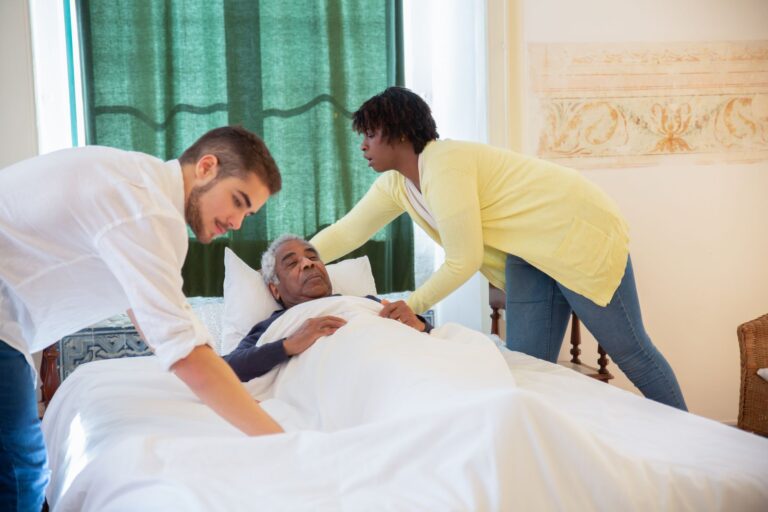
In late dementia, a person may lose the ability to walk entirely, becoming bedbound or chair-bound. At this stage, the focus shifts from preventing falls to preventing complications of immobility: pressure sores, pneumonia, contractures (permanent stiffening of joints), and blood clots. Regular repositioning—turning someone in bed every 2 hours—becomes critical.
Passive range-of-motion exercises (gently moving their limbs through their normal range of motion) help maintain flexibility and circulation. A person who is no longer mobile still benefits from being moved—transferred to a chair for meals, positioned differently in bed, taken outside if possible—because movement preserves dignity, supports circulation, and may reduce agitation. Tube feeding and other end-of-life interventions are medical decisions that you and your healthcare team will make; the key is understanding that immobility is not inevitable even in late dementia if family and care staff prioritize gentle movement and positioning.
- —