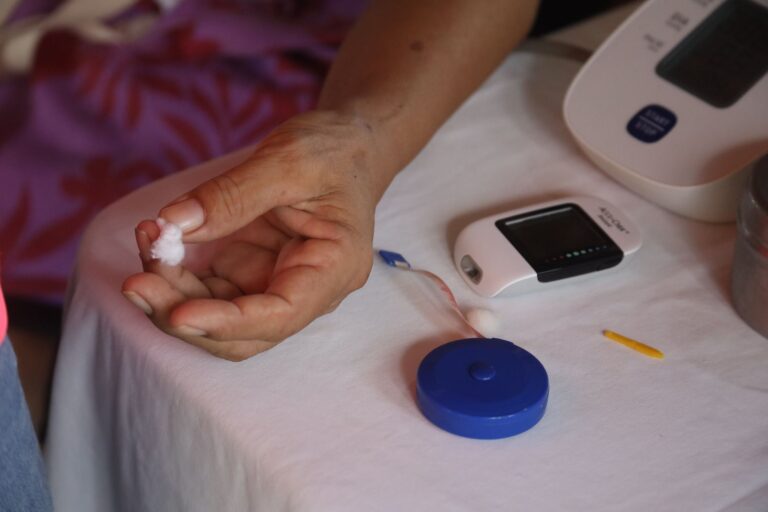
Medical imaging remains indispensable in modern diagnosis, not because blood tests are inferior, but because they measure fundamentally different things. A blood test can tell you *that* something is wrong—elevated markers, abnormal proteins, inflammatory signals—but imaging shows you *where* the problem is, *how big* it is, and *what it looks like*. When a patient arrives at the emergency room with sudden weakness or chest pain, blood tests alone will not save their life. A CT scan of the brain is mandatory to distinguish between a blocked blood vessel and a brain bleed before any stroke treatment can begin. Similarly, imaging must be completed within 25 minutes of stroke arrival to guide treatment decisions that determine disability or recovery.
This is not a limitation of imaging or a failure of blood tests. It’s a reflection of how medical diagnosis actually works. Biomarkers in the blood are signposts pointing toward disease; imaging is the direct visualization that confirms location, extent, and anatomy. Both are necessary. Neither substitutes for the other.
Table of Contents
- What Blood Tests Show—and What They Cannot
- Why Location and Anatomy Cannot Be Guessed from Laboratory Results
- Acute Emergencies Where Imaging Is Diagnostic, Blood Tests Are Not
- How Blood Tests and Imaging Work Together
- When Imaging Is Limited and Blood Tests Provide Answers
- Brain Imaging and Dementia Diagnosis
- Why Modern Diagnosis Requires Both Blood Tests and Imaging
What Blood Tests Show—and What They Cannot
blood tests detect disease presence through biomarkers: proteins, enzymes, inflammatory molecules, and genetic fragments that circulate when cells are injured or reproducing abnormally. They are fast, scalable, and excellent at screening large populations. A multi-cancer blood test can search for signals from dozens of tumor types. But here is the critical limitation: a positive blood test for cancer tells you disease is present somewhere in the body. It does not tell you if the tumor is in the liver, lung, brain, or bone. It does not show whether the cancer has spread to lymph nodes or invaded blood vessels. These questions require imaging.
The Pathfinder 2 trial in October 2025 found that when multi-cancer blood tests were positive, they correctly localized the cancer only 61.6% of the time. The remaining cases either showed false positives or identified cancer type incorrectly—a result that illustrates why imaging remains essential even when blood biomarkers are highly advanced. In emergency medicine, blood tests are equally limited. A patient with sudden shortness of breath might have a pulmonary embolism, and a D-dimer blood test is a fast screening tool. But D-dimer has a major flaw: it rises not only when blood clots form, but also with kidney disease, recent surgery, or aging. A patient with declining kidney function will have elevated D-dimer levels whether or not a blood clot is present. CT Angiography (CTPA) imaging is “firmly established as the standard imaging modality” for PE diagnosis precisely because it visualizes the actual clot in the pulmonary arteries. Blood tests cannot do this.
Why Location and Anatomy Cannot Be Guessed from Laboratory Results
Imaging provides information that exists nowhere in the bloodstream. When a radiologist performs an MRI of the brain, they are not looking for a protein or enzyme—they are creating a map of brain structure, identifying blocked blood vessels, visualizing accumulated fluid, and detecting changes in tissue that correlate with neurodegeneration. In Alzheimer’s disease, MRI can visualize the structural brain pathology and clogged glymphatic drains associated with early Alzheimer’s risk. Blood biomarkers for Alzheimer’s protein—amyloid and tau—are increasingly reliable at predicting who will decline cognitively. But blood biomarkers and MRI answer different diagnostic questions. The biomarker tells you about protein misfolding; the MRI shows you where brain volume is being lost and whether changes have begun that match Alzheimer’s pathology. A person with abnormal blood biomarkers might remain cognitively intact for years.
Imaging provides context that changes prognosis. The distinction between blood tests and imaging becomes even sharper when considering conditions where anatomy is everything. Bone fractures cannot be detected by any blood test. Many fractures—particularly stress fractures, some hip fractures, and wrist injuries—are not visible on initial X-rays and require CT or MRI to be diagnosed. A patient who fell and complains of wrist pain will receive an X-ray. If the film appears normal but pain persists, CT or MRI is ordered. No laboratory analysis of blood will ever identify a fracture because fracture diagnosis is entirely a matter of visualizing bone breaks on imaging. Blood tests may later reveal elevated alkaline phosphatase indicating bone turnover during healing, but they cannot diagnose the fracture itself.
Acute Emergencies Where Imaging Is Diagnostic, Blood Tests Are Not
In the emergency department, time determines survival for several conditions, and imaging is the only diagnostic tool that matters. When a patient presents with acute abdominal pain, the differential diagnosis spans appendicitis, bowel perforation, aortic aneurysm rupture, and dozens of other conditions. Abdominal CT imaging is the standard diagnostic modality for appendicitis; no blood test diagnoses it. Pediatric ultrasound for appendicitis achieves 71–94% sensitivity and 81–98% specificity. Blood cultures or white cell count might elevate during infection, but they tell the surgeon nothing about whether an appendix is inflamed, where it is located, or whether it has perforated. A surgeon cannot operate based on blood results; they require imaging. Abdominal aortic aneurysm (AAA) rupture is another condition where imaging is the only diagnostic modality. A point-of-care ultrasound by emergency physicians achieves 98.33% sensitivity and 99.84% specificity for detecting AAA. No blood biomarker diagnoses aneurysm.
A patient with sudden back or abdominal pain and hypotension needs ultrasound or CT within minutes. Blood tests are irrelevant to the diagnosis. The imaging determines whether the patient goes immediately to the operating room. In cases of acute stroke, the stakes are similar. Within the first few hours of symptom onset, a CT scan must distinguish between ischemic stroke (blocked artery) and hemorrhagic stroke (brain bleed). The 2026 AHA/ASA Guideline for Early Management of Acute Ischemic Stroke mandates imaging within 25 minutes of arrival. Blood tests cannot differentiate these two conditions. The type of stroke determines treatment. Giving clot-busting medications to a patient with a brain bleed is catastrophic. Imaging provides the diagnosis; blood tests do not.
How Blood Tests and Imaging Work Together
The relationship between blood tests and imaging is not competitive—it is complementary. A patient suspected of pneumonia might start with a chest X-ray, which shows infiltrates in lung fields. But pneumonia diagnosis by chest X-ray has limitations: sensitivity ranges from 38–76%, meaning early or subtle cases are missed. If X-ray findings are unclear, a CT scan of the chest provides higher sensitivity and shows pneumonia in fine detail. Blood tests contribute to the picture: elevated white cell count, C-reactive protein, or procalcitonin support the diagnosis and guide antibiotic therapy. None of these tests alone suffices. The radiologist needs the clinical presentation. The clinician needs laboratory values.
Together, they construct diagnosis. In cancer care, this integration is essential. When a screening blood test identifies a potential cancer signal, imaging is ordered to localize the tumor, determine its size, and stage the disease. MRI “creates pictures of soft tissue sometimes hard to see on other imaging tests” and provides information about tumor size and spread required for treatment planning. Biopsy—tissue sampling—then confirms cancer type. Blood biomarkers during treatment monitor response. This is a workflow: screening test → imaging → tissue diagnosis → treatment → blood monitoring. No single test replaces the others.
When Imaging Is Limited and Blood Tests Provide Answers
Imaging has real limitations, and blood tests excel where imaging is blind. A patient with chest pain and possible myocardial infarction receives an electrocardiogram and serial blood measurements of troponin, a protein that rises when heart muscle is damaged. A troponin result is available in hours; cardiac imaging like echocardiography or coronary angiography may be scheduled days later if initial troponin values are negative. The blood test provides rapid triage. Similarly, blood tests for organ dysfunction—liver enzymes, creatinine, bilirubin—are far more practical than imaging every patient with possible liver or kidney disease. Blood tests are scalable and fast. Imaging is resource-intensive and slower.
Another limitation: imaging cannot reliably distinguish between benign and malignant findings. A nodule in the lung seen on CT is concerning, but many lung nodules are benign scars or old granulomas. Blood tests for circulating tumor DNA can sometimes help confirm that a nodule is cancerous. Conversely, imaging cannot detect diffuse processes—systemic inflammation, hemolytic anemia, or metabolic disorders where whole-body pathology is not localized to one structure. Blood tests excel here. The relationship is not hierarchical. Each tool answers specific questions.
Brain Imaging and Dementia Diagnosis
For patients with cognitive concerns, brain imaging plays a growing diagnostic role that blood tests cannot replace. When memory loss or cognitive decline is reported, clinicians now order both blood biomarkers for Alzheimer’s proteins and structural brain imaging. MRI reveals hippocampal atrophy—shrinkage of the memory center—and changes in white matter integrity that correlate with cognitive decline. These findings have direct prognostic value. A person with positive blood biomarkers but normal hippocampal volume on MRI may have many years before symptom onset.
A person with both abnormal biomarkers and hippocampal atrophy may progress more rapidly. Imaging provides anatomical context that changes clinical counseling. Advanced imaging techniques like amyloid PET scans visualize the actual accumulation of amyloid protein in the brain. Blood biomarkers for amyloid reflect overall disease burden but do not show regional distribution. A patient might have amyloid in the frontal lobes (affecting judgment and behavior) versus the temporal lobes (affecting memory), and PET imaging reveals this distribution. Blood tests cannot localize pathology within the brain.
Why Modern Diagnosis Requires Both Blood Tests and Imaging
The evidence is unambiguous: modern medicine requires both blood tests and imaging for accurate diagnosis of serious conditions. Where blood tests provide risk stratification and disease detection, imaging provides anatomy, localization, and confirmation. A stroke patient needs both imaging to identify the stroke location and type, and blood tests to identify stroke risk factors. A cancer patient needs both imaging for staging and blood tests for tumor markers and treatment monitoring. A patient with cognitive symptoms needs both brain imaging to visualize neurodegeneration and blood biomarkers to assess Alzheimer’s protein pathology. The clinician’s role is to order the appropriate tests in the right sequence.
Blood tests screen quickly and broadly. Imaging pinpoints diagnosis and guides treatment. Neither is obsolete. Neither is a luxury. Together, they define what modern diagnosis actually is: a combination of detecting disease presence through biomarkers and confirming disease location through visualization. For patients concerned about brain health or facing acute medical emergencies, expecting a diagnosis from blood tests alone is like expecting a radiologist to read an X-ray they never obtained. The imaging exists because certain questions have no answer in blood.
- —