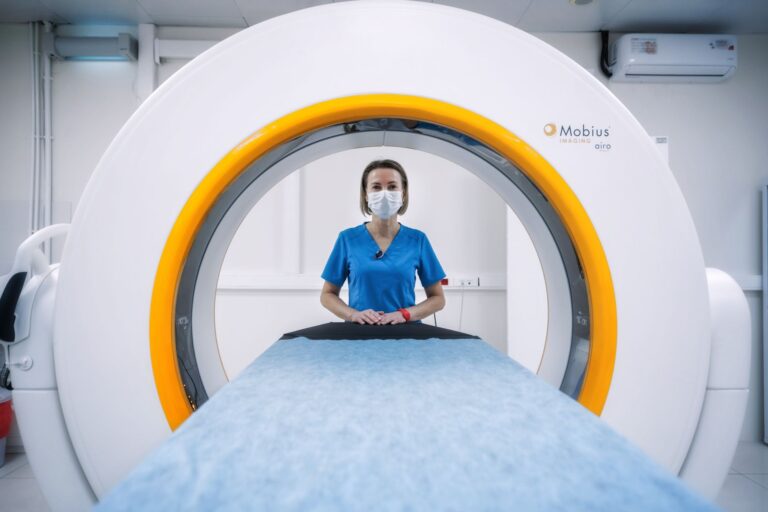
PET scans matter in dementia diagnosis because they reveal what standard brain imaging cannot: the actual biological changes occurring in the brain at a molecular level. While MRI and CT scans show the brain’s structure and can detect shrinkage or bleeding, PET imaging detects abnormal metabolism, amyloid protein buildup, and tau tangles—the hallmark damage of Alzheimer’s disease and other dementias. This capability means PET scans can identify the dementia process years before symptoms become obvious or progress to more severe stages, giving patients and doctors a critical window for early intervention. A patient in their 60s with mild memory lapses might receive normal results on an MRI, but a PET scan could reveal amyloid accumulation in their brain, confirming early Alzheimer’s disease and enabling them to start treatments like monoclonal antibodies or other disease-modifying therapies before cognitive decline accelerates.
Without the PET scan, that same patient might be dismissed as simply aging, and the opportunity to slow the disease would be lost. PET scans also help neurologists distinguish between types of dementia—something MRI alone cannot reliably do. A patient with Parkinson’s disease dementia shows a different metabolic pattern than someone with Alzheimer’s disease, and frontotemporal dementia has its own signature on PET imaging. Making the correct diagnosis is essential because treatments and disease progression differ substantially between these conditions.
Table of Contents
- How Do PET Scans Reveal Molecular Brain Damage?
- Why PET Imaging Distinguishes Dementia Types Better Than Structural Imaging
- Early Detection and Preclinical Diagnosis
- When Neurologists Order PET Scans and What They Look For
- Limitations and Risks of PET Imaging
- Comparing PET Imaging to Blood Biomarkers and CSF Testing
- Tau PET Imaging and Advanced Dementia Staging
- Frequently Asked Questions
How Do PET Scans Reveal Molecular Brain Damage?
PET (positron emission tomography) scans work by injecting a radioactive tracer into the bloodstream, most commonly FDG (fluorodeoxyglucose) or newer amyloid and tau tracers. These tracers concentrate in areas of the brain where metabolic activity or protein accumulation is occurring. The scanner detects the radiation and creates a detailed map showing which brain regions are affected. In dementia patients, areas showing low glucose metabolism or high amyloid/tau uptake light up distinctly, revealing the distribution and severity of disease. The most commonly used tracer, FDG-PET, measures glucose consumption.
Dementia typically causes a predictable pattern of hypometabolism—reduced glucose use in specific brain regions. In Alzheimer’s disease, for example, the characteristic pattern involves decreased metabolism in the temporoparietal cortex and posterior cingulate, regions critical for memory and spatial awareness. A patient undergoing FDG-PET will show these “cold spots” where the brain is working less efficiently or has already sustained damage that reduces its metabolic demands. Newer amyloid and tau PET tracers, approved by the FDA in recent years, directly visualize the misfolded proteins driving Alzheimer’s pathology. These scans can show a patient’s “amyloid burden”—how much abnormal protein has accumulated—and tau tangle distribution. A person with high amyloid but intact cognition is at significant risk for future decline, while someone with cognitive impairment but minimal tau in the cortex might have a different pathological process altogether, pointing toward non-Alzheimer’s dementia.
Why PET Imaging Distinguishes Dementia Types Better Than Structural Imaging
MRI excels at showing the brain’s anatomy—the size of the hippocampus, evidence of strokes, or the pattern of brain atrophy. However, multiple dementia types cause similar structural changes, making differentiation difficult. Two patients with frontotemporal dementia and Alzheimer’s disease might both show frontal lobe atrophy on MRI, yet they have entirely different diseases requiring different approaches to care and treatment. PET scans solve this problem by showing the functional and molecular differences. Frontotemporal dementia typically shows metabolic reduction in the frontal and temporal lobes with relatively preserved parietal regions, while Alzheimer’s disease affects the parietal and posterior temporal areas. Lewy body dementia exhibits a distinctive pattern of reduced occipital lobe metabolism.
Primary progressive aphasia shows focal left inferior frontal hypometabolism. These patterns are specific enough that an experienced neuroradiologist can often determine the likely diagnosis with high confidence. However, there is an important limitation: PET scans are expensive and not universally available. Many patients never undergo PET imaging during their diagnostic workup, meaning clinicians must rely on clinical presentation, standard MRI, cognitive testing, and sometimes spinal fluid or blood biomarkers to make their best guess. In rural areas or resource-limited settings, PET imaging may be entirely unavailable, forcing doctors to diagnose based on less precise information. Additionally, some patients with atypical presentations or rare dementia subtypes may have PET patterns that don’t fit the typical boxes, requiring additional testing or specialist consultation.
Early Detection and Preclinical Diagnosis
One of the most significant shifts in dementia care over the past five years has been the recognition that pathological changes—amyloid, tau, and neurodegeneration—begin decades before cognitive symptoms appear. PET scans, particularly amyloid and tau imaging, can identify these preclinical changes in cognitively normal individuals. A 55-year-old with a family history of Alzheimer’s disease and positive amyloid PET might never develop symptoms for 20 years, but knowing they have pathology allows them to pursue preventive strategies, participate in research, or discuss future planning with their physician. Research studies have shown that approximately 30% of cognitively normal older adults have amyloid accumulation detectable on PET scans. Many will never develop cognitive impairment during their lifetime due to cognitive reserve—the brain’s capacity to compensate for pathology through preserved neural networks and alternative processing strategies.
Others will eventually progress, and the PET scan at baseline provides crucial information about their risk trajectory. A person with amyloid but no tau has a different prognosis than someone with both amyloid and tau accumulation, and imaging clarifies that distinction. The challenge of early detection is deciding what to do with the information. If a cognitively normal patient discovers they have amyloid on a PET scan, should they start an anti-amyloid monoclonal antibody? Current evidence supports this approach for those with mild cognitive impairment or prodromal symptoms, but the role in truly asymptomatic individuals remains under investigation. Some patients experience anxiety upon learning they have brain pathology, and others make major life decisions based on this information, making the psychological and ethical implications of preclinical diagnosis important considerations.
When Neurologists Order PET Scans and What They Look For
Neurologists typically order PET scans when the clinical diagnosis remains uncertain after standard testing. A patient with cognitive complaints undergoes neuropsychological testing and MRI, but the results don’t clearly point to a single diagnosis. Perhaps the patient shows both language impairment and memory loss, or cognitive symptoms in a pattern that doesn’t fit typical Alzheimer’s disease. In these situations, PET imaging clarifies which brain regions are most affected, guiding the diagnosis. A real example: A 68-year-old man presents with progressive difficulty finding words and problems with visual-spatial tasks, but preserved memory. His MRI shows mild, nonspecific changes.
His neuropsychologist notes language and visuospatial impairment out of proportion to memory loss. FDG-PET shows bilateral frontal hypometabolism with right parietal involvement—a pattern more consistent with primary progressive aphasia or corticobasal degeneration than typical Alzheimer’s disease. This information redirects his care plan toward speech therapy and different medication management strategies. Doctors also order PET scans to monitor disease progression or treatment response in research settings, and increasingly, tau PET imaging is being used to assess patients starting amyloid-targeting therapies. Does the amyloid antibody successfully clear amyloid from the brain? Does the tau burden change? These questions drive PET imaging in clinical trials and specialized dementia centers. However, outside research settings, serial PET scans are expensive and rarely repeated, so most patients have PET imaging only once or twice during their diagnostic journey.
Limitations and Risks of PET Imaging
While PET scans provide detailed information, they carry real limitations that affect their clinical use. The first is radiation exposure. A single PET scan exposes the patient to ionizing radiation roughly equivalent to 3-10 years of background radiation exposure. For an elderly person with limited life expectancy, this risk is often acceptable, but for younger patients with preclinical pathology or patients undergoing multiple scans, cumulative radiation becomes a consideration. Younger patients being evaluated for familial dementia or enrolled in prevention research may receive multiple PET scans over years, and repeat imaging carries compounded risk. The second limitation is cost. A PET scan typically costs $3,000 to $5,000, and many insurance plans cover it only in specific situations—typically when dementia diagnosis is uncertain after other testing.
Unlike MRI or CT scans, PET is not routine, and access is geographically uneven. Academic medical centers and large hospitals usually have PET scanners and expertise, but smaller hospitals and clinics may not. A rural patient might need to travel hours to reach a PET imaging center. The third limitation is that PET scans show pathology but not precise prognosis. A patient with high amyloid burden might remain cognitively normal for years or rapidly decline—individual variation is substantial. Additionally, PET scans cannot definitively predict response to treatment. Two patients with similar amyloid patterns might respond very differently to anti-amyloid monoclonal antibodies based on factors we don’t yet understand, including their APOE genotype, the presence of tau, inflammation levels, and other genetic and environmental factors. Essentially, a PET scan provides important biological information but not a crystal ball.
Comparing PET Imaging to Blood Biomarkers and CSF Testing
Over the past few years, blood tests measuring amyloid, tau, and phosphorylated tau variants have become available, and they show excellent correlation with PET imaging. These blood biomarkers are far cheaper than PET scans, require no radiation, and can be ordered in an outpatient clinic. For many patients, blood biomarkers now provide the diagnostic information that previously required PET imaging. A patient with cognitive complaints can have blood drawn, and if the biomarkers are positive for amyloid and tau, a diagnosis of Alzheimer’s disease can be made with high confidence without ever undergoing a PET scan. This shift raises a practical question: Does every patient need PET imaging if blood biomarkers are available? The answer is increasingly no.
However, PET scans remain valuable when the clinical presentation is atypical, when blood biomarkers are discordant with clinical features, or when the pattern of cognitive impairment suggests a non-Alzheimer’s dementia like frontotemporal dementia or Lewy body disease. Blood biomarkers are excellent for detecting Alzheimer’s pathology but less specific for non-Alzheimer’s dementias. In those situations, PET imaging with its ability to show regional patterns remains the gold standard. Cerebrospinal fluid (CSF) analysis for amyloid and tau existed long before blood biomarkers and PET amyloid tracers, but it requires a lumbar puncture, an invasive procedure with rare complications. CSF testing has been largely superseded by blood biomarkers and imaging for initial diagnosis. However, CSF remains useful in research settings and occasionally when diagnosis remains uncertain despite other testing, as CSF shows the full spectrum of tau phosphorylation variants and protein abnormalities.
Tau PET Imaging and Advanced Dementia Staging
Tau PET imaging represents a major advance in understanding dementia, particularly Alzheimer’s disease, because it visualizes the tau pathology that correlates most closely with neurodegeneration and cognitive symptoms. Amyloid accumulation begins decades before symptoms, but tau tangles appear later and spread progressively through the brain in a characteristic pattern. First, tau appears in the transentorhinal cortex and entorhinal cortex, then spreads to the hippocampus and temporal lobes, and eventually extends into frontal and parietal cortex in later disease stages. Tau PET scans can map this progression precisely.
A patient in their early stages of Alzheimer’s disease might show amyloid throughout the brain but tau confined to medial temporal lobes, indicating disease is in an earlier stage despite elevated amyloid. Another patient with similar amyloid levels but extensive tau throughout cortical regions is at greater risk for rapid cognitive decline. This information helps neurologists counsel patients and families about disease trajectory and informs decisions about enrollment in clinical trials, where researchers often stratify participants by their tau burden. In specialized dementia centers and research institutions, tau PET imaging is becoming routine for patients with cognitive impairment, though it remains less widely available than FDG-PET.
Frequently Asked Questions
Do I need a PET scan if blood biomarkers show amyloid and tau?
Not necessarily. Blood biomarkers now diagnose Alzheimer’s disease accurately and less expensively than PET scans. Your doctor might still order PET imaging if your symptoms don’t fit the typical pattern or if they suspect a different type of dementia.
How much radiation does a PET scan expose me to?
A single PET scan exposes you to roughly 3–10 years of background radiation. For most older adults, this is considered acceptable risk, but younger patients should discuss cumulative radiation burden with their doctor.
Can a PET scan predict how fast my dementia will progress?
A PET scan shows how much pathology is in your brain, but it cannot precisely predict your individual progression. Some people with extensive amyloid and tau remain stable for years; others decline more rapidly.
What happens if my PET scan is normal but I still have memory problems?
A normal PET scan suggests your cognitive symptoms are not due to Alzheimer’s disease or other common dementias detected by imaging. Your doctor would pursue other causes—including depression, sleep disorders, medications, thyroid problems, or less common conditions.
Is PET imaging covered by insurance?
Coverage varies by insurance plan and clinical circumstances. Most plans require evidence that diagnosis remains uncertain after standard testing before approving PET imaging. Check with your insurance provider about your specific situation.
Can I have both amyloid and tau PET scans the same day?
Yes, amyloid and tau PET scans can be performed at the same appointment or on the same day, depending on the imaging center’s protocols and the specific tracers used. This approach is sometimes done in research settings or specialized centers.