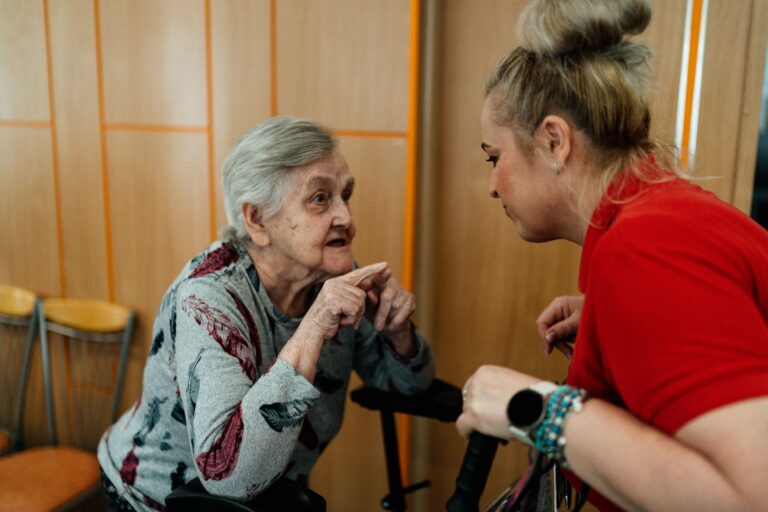
Validation therapy is a communication technique that accepts a person with dementia’s reality and emotions rather than correcting them or insisting on factual accuracy. Instead of redirecting someone who believes it’s 1975 or insists their deceased parent is still alive, a caregiver using validation acknowledges these feelings and experiences as real to the person living them, then uses empathy and reflection to connect with them emotionally. The approach was developed in the 1960s by Naomi Feil, a social worker, after she noticed that traditional reality-oriented approaches often increased confusion and agitation in people with dementia—particularly those in late stages where the ability to process factual corrections had diminished.
The core practice involves listening to what the person is communicating beneath their words. If an elderly woman says she needs to go pick up her children from school, a validation approach recognizes that she may be expressing anxiety about her role as a caregiver or fear about abandonment, even though her children are now adults. Rather than saying, “Your children are all grown up,” a caregiver might say, “I can see that being a good mother matters to you. Tell me about your children.”.
Table of Contents
- How Does Validation Therapy Differ from Reality Orientation?
- Core Principles Behind Validation Therapy
- When Validation Therapy Works Best
- Practical Steps for Using Validation Therapy
- Common Challenges and When Validation Has Limits
- The Impact on Family Caregivers
- Specific Validation Techniques in Action
- Frequently Asked Questions
How Does Validation Therapy Differ from Reality Orientation?
Reality orientation has long been a standard dementia care technique, grounded in the belief that constantly correcting a person will help them stay connected to facts and present circumstances. This approach involves repeatedly stating the current date, time, location, and reality of the person’s situation. However, research and clinical experience have shown that reality orientation can backfire, especially in moderate to late-stage dementia. When a person insists their mother is coming to pick them up and a caregiver responds with “Your mother died 20 years ago,” the person often experiences genuine distress and may become defensive, withdrawn, or agitated—they’ve been told something they don’t believe is true, and the correction itself causes emotional harm. Validation therapy takes the opposite stance.
Rather than challenging the person’s version of reality, it meets them where they are and validates the emotion underneath the statement. This doesn’t mean lying or pretending beliefs are factually true; it means not wasting energy on contradiction. For example, if a man with mid-stage Alzheimer’s repeatedly asks for his work shoes because he needs to get to the factory, validation therapy would acknowledge his need for purpose (“You’ve been a hardworking man”) without arguing that factories have changed or that retirement happened. The focus shifts from correcting facts to maintaining dignity and emotional connection. Clinical studies comparing these approaches have found that validation typically reduces behavioral problems, decreases medication use, and improves quality of life more effectively than reality orientation alone, particularly in the moderate to late stages of dementia. This doesn’t mean reality orientation has no place—some people benefit from gentle grounding cues in earlier stages—but validation has proven more humane and effective when someone’s short-term memory and comprehension have significantly declined.
Core Principles Behind Validation Therapy
Validation therapy rests on several key beliefs about how to honor people with dementia. First is the principle that behavior always has meaning. A person who wanders or becomes angry isn’t being difficult; they’re expressing an unmet need or an emotion they cannot put into words. Second, validation assumes that a person with dementia retains emotional and sensory memory long after factual memory fades. Someone may not remember their spouse’s name but will respond to a familiar voice or a hand held gently. Third, validation recognizes that the social and emotional world of a person with dementia is as real to them as ours is to us, and dismissing that world damages trust and increases distress. One important limitation of validation therapy is that it works best when caregivers have been trained in the technique and have realistic expectations.
Untrained caregivers sometimes interpret validation as simply agreeing with everything a person says, which can lead to confusion or inappropriate responses. True validation is a skilled practice that involves genuine empathy, careful listening, and strategic use of therapeutic language. A caregiver who hasn’t learned the technique might simply say “Yes, we’ll go get your kids” and then become frustrated when the person asks again five minutes later. Trained validation uses reflection, open-ended questions, and emotion-focused responses that actually reduce repetitive questioning over time. There’s also a warning here: validation therapy can be emotionally demanding for caregivers. It requires sitting with uncomfortable emotions—frustration, grief, the person’s fear—without rushing to fix or escape them. Some caregivers find this easier than reality orientation’s constant correcting; others feel dishonest or exhausted by the emotional labor. Facilities and family caregivers must acknowledge this and provide adequate support, training, and breaks.
When Validation Therapy Works Best
Validation therapy is most effective in moderate to late-stage dementia, when a person’s short-term memory is significantly compromised but emotional responses remain intact. A person who can no longer follow a logical argument about why they can’t do something may still respond to gentle empathy and emotional acknowledgment. It’s particularly helpful for managing the kinds of behaviors and concerns that are common in later stages: repetitive questioning, shadowing (following a caregiver constantly), agitation related to time confusion, and expressions of grief or loss. Consider a real example: an 82-year-old woman with advanced Alzheimer’s begins asking repeatedly whether her breakfast has been served, despite having just eaten. A reality-oriented response might involve explaining multiple times that she’s already eaten, showing her the empty plate, or even becoming frustrated. Each repetition of the fact causes her fresh confusion and distress.
A validation approach might acknowledge, “You’re thinking about food—that matters to you. Let’s go sit together for a few minutes,” or “Your stomach is asking questions. I hear you.” The caregiver redirects attention without arguing. Over time, the repetitive questioning often decreases because the person’s actual need (reassurance, connection, orientation to routine) is being met. Validation is less critical in early-stage dementia, where people often retain enough cognitive ability to benefit from gentle reality orientation and may feel patronized by over-validation. However, even in early stages, mixing validation with factual support can be helpful when someone is frightened or confused. Early-stage approaches typically emphasize compensation strategies (written reminders, structured routines) combined with validation when emotions run high.
Practical Steps for Using Validation Therapy
Implementing validation therapy begins with centering yourself emotionally and physically. Make eye contact, position yourself at the person’s level, and slow your pace. Speak in a calm, warm tone. These non-verbal cues communicate respect and safety before words are even used. Then listen carefully to what the person is saying, both literally and beneath the surface. If someone says “I have to go meet my husband at the factory,” resist the urge to correct. Instead, ask open-ended questions: “Tell me about your husband. What was he like?” This shifts the conversation from a place of argumentation to genuine curiosity. The technique called “reminiscence” is often paired with validation.
Rather than saying “That never happened” or “That was a long time ago,” you can explore the memory or emotion with genuine interest. “That sounds important to you. Tell me more.” “When was that? What do you remember?” This keeps the person engaged without requiring them to accept contradiction. If they become distressed, validation offers emotional support: “I can see this is worrying you,” or “That must have felt difficult.” Naming the emotion often helps more than providing facts. One trade-off in this approach is time. Validation conversations require patience and presence—you cannot rush through them while multitasking or checking your phone. A caregiver accustomed to efficient task completion may find it slower than simply redirecting a person or attempting a quick reality-check. However, many caregivers report that the time investment pays off: fewer behavioral crises, less repetitive questioning, and calmer overall interactions mean the total time spent is actually less, even if each individual interaction feels longer. The comparison is between spending five minutes in genuine connection now or dealing with escalated agitation that requires thirty minutes of management later.
Common Challenges and When Validation Has Limits
One major challenge with validation therapy is managing it in a group setting or in facilities with high staff turnover. A nursing home where validators use one approach and non-trained staff use reality orientation creates confusion and undermines the technique. A person who is validated by one caregiver and corrected by another may become anxious and lose trust. Implementing validation requires organizational commitment and consistent training, which is a significant burden for understaffed facilities. Many facilities attempt validation with only partial success because the infrastructure to support it—training, staffing ratios, caregiver support—isn’t in place. There is also a real limitation when a person with dementia explicitly states distress about their own confusion or expresses a desire to be corrected. Some people, particularly those with insight into their illness, find validation patronizing or dishonest. An individual who says, “I know I’m forgetting things, please just tell me the truth,” may benefit more from a hybrid approach: gentle truthfulness combined with emotional support, rather than pure validation.
This is where flexibility matters. Validation is a tool, not a rigid dogma. The goal is always the person’s dignity and well-being, not adherence to any single technique. A warning about validation: it can be misused to avoid difficult conversations or genuine problem-solving. A person asking to see their deceased spouse may need validation and also may benefit from acknowledging grief with words like “I know you miss them very much,” which validates emotion while gently acknowledging reality. Validation doesn’t mean never providing any factual information; it means prioritizing emotional connection over factual correction. There’s a difference between validating someone’s feelings and enabling harmful choices. If someone wants to leave a secure facility to return to a home they can no longer manage safely, validation of their longing and fear is appropriate, but so is a gentle explanation of safety concerns and a redirect to meaningful activity.
The Impact on Family Caregivers
Family members often struggle with validation therapy because it feels counterintuitive. A wife caring for her husband may feel angry or helpless when he no longer recognizes her but asks repeatedly for his mother. The impulse to say “I’m your wife, she’s been dead for 40 years” is driven by pain—a desire to be known and remembered. Learning to validate instead requires processing her own grief while focusing entirely on his emotional needs. This emotional labor is significant and often unsupported.
Many family caregivers report that validation therapy, once understood, actually reduces their stress and resentment. When a caregiver stops trying to convince someone of reality and instead focuses on connection, the adversarial dynamic often disappears. The person becomes less combative, and the caregiver feels less defeated. However, this benefit only emerges after learning the technique and working through the grief that underpins the desire to correct. Respite care, caregiver support groups, and training in validation therapy are essential supports that many families lack.
Specific Validation Techniques in Action
One concrete technique is called “using emotion words.” When someone expresses distress or confusion, a validation-trained caregiver names the emotion: “You sound worried,” “That frightens you,” “You miss them.” This simple acknowledgment often calms the person more than any explanation or reassurance. Another technique is “reminiscence and reflection.” If someone speaks of an old job, a house they lived in, or a loved one, ask them to describe it. “What was your job like? What did you enjoy about it?” This creates meaning and connection around the memory itself, regardless of whether the memory is entirely accurate. The technique of “ambiguous or vague affirmations” is also useful.
Rather than confirming false facts, a caregiver can offer responses that are emotionally supportive but don’t commit to a factual claim. If someone says they need to go home, saying “Home is important to you” or “Tell me about your home” validates the emotion without confirming an unsafe plan. Physical comfort is another validation tool: holding a hand, sitting close, offering a blanket or warm drink. For people in late-stage dementia who may not process words, sensory validation through touch and presence becomes primary. A person who cannot remember words will often relax in the presence of someone who smells familiar, speaks gently, and maintains calm physical contact—validation communicated entirely through non-verbal means.
- —
Frequently Asked Questions
Is validation therapy the same as lying to someone with dementia?
No. Validation doesn’t require stating false facts; it prioritizes emotional connection over factual correction. You can acknowledge someone’s feelings (“I know you miss them”) without confirming false beliefs. The goal is preventing harm through constant contradiction, not deception.
Can validation therapy be used in early-stage dementia?
Yes, though it’s often less critical than in later stages. Early-stage people often benefit from factual information combined with emotional support. Validation becomes essential as memory loss advances and comprehension declines.
Does validation therapy require special training?
While untrained caregivers can begin using basic validation principles (listening, empathy, avoiding contradiction), formal training significantly improves effectiveness. Untrained caregivers sometimes misinterpret it as simply agreeing with everything, which isn’t validation.
How long does it take to see results from validation therapy?
Changes can begin within days or weeks—reduced agitation, less repetitive questioning, calmer interactions. However, full benefits emerge over months of consistent use as trust rebuilds and caregivers become proficient in the technique.
What if validation isn’t working with a specific person?
Every person responds differently. Some people, especially those with insight into dementia, may prefer honesty combined with emotional support rather than pure validation. Flexibility and observation are key—adjust based on the individual’s response.
Can nursing homes or facilities implement validation therapy?
Yes, but it requires organizational commitment: staff training, adequate staffing ratios, ongoing support for caregivers, and consistency across all staff. Partial or inconsistent implementation often fails because mixed messages confuse residents.