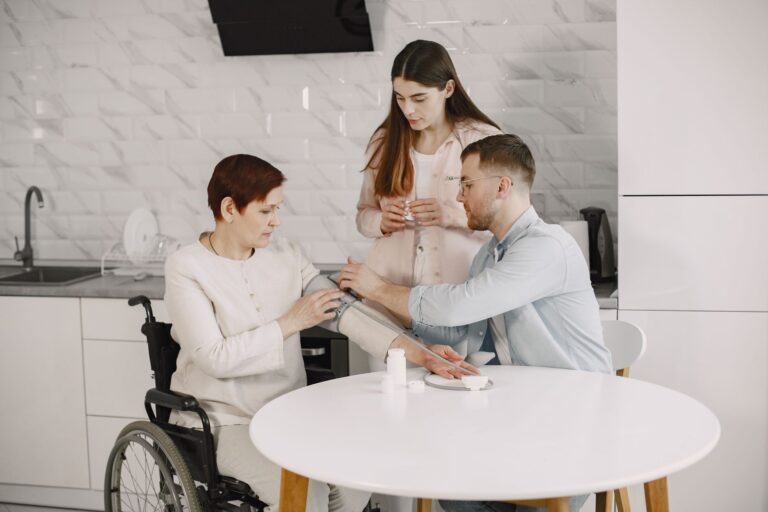
Nearly 13 million Americans provide unpaid dementia care, according to the 2026 Alzheimer’s Disease Facts and Figures report. The precise estimate is 12.7 million family members and other unpaid caregivers who supported people with Alzheimer’s disease or another dementia during 2025. The time qualifier matters: this is a 2025 caregiving estimate published in 2026, not a newly measured 2026 count. Behind that national figure are ordinary routines with extraordinary demands.
A daughter might visit before work to prepare breakfast and medications, spend her lunch break arranging a medical appointment, and return in the evening because her father has become disoriented. Across the country, caregivers provided an estimated 19.6 billion hours of care in 2025, averaging about 30 hours per caregiver each week. The work can include bathing, transportation, meal preparation, household management, financial oversight, supervision and repeated reassurance. Unlike many other caregiving situations, dementia care often becomes more intensive as memory, judgment, communication and physical function decline.
Medical information disclaimer: This article is for general educational purposes only and does not provide medical advice, diagnosis, or treatment. Always consult a physician or other qualified health professional about symptoms, medications, tests, or treatment decisions.
Table of Contents
- How Many Unpaid Dementia Caregivers Were There in 2026?
- The Emotional and Financial Weight of Dementia Caregiving
- Women, Older Adults and Sandwich-Generation Caregivers
- Practical Ways to Make Daily Dementia Care More Manageable
- Medicare GUIDE Support and Its Eligibility Limits
- Why the Number of People With Alzheimer’s Is Not the Caregiver Count
- Early Alzheimer’s Treatment Can Add New Caregiving Responsibilities
- Frequently Asked Questions
How Many Unpaid Dementia Caregivers Were There in 2026?
The 2026 report places the number of U.S. unpaid dementia caregivers at 12.7 million, based on care provided during 2025. “Nearly 13 million” is therefore an accurate description, provided the reporting period is made clear. The estimate covers people caring for someone with Alzheimer’s disease or another dementia, a broader category than Alzheimer’s alone. Those caregivers contributed 19.6 billion hours of assistance.
Spread across 12.7 million people, that works out to roughly 30 hours per caregiver per week—close to a substantial part-time job. An average can hide wide variation, however. One caregiver may handle weekly shopping and bills, while another provides continuous supervision because the person cannot safely remain alone. The report values this unpaid labor at $446.3 billion for 2025. That figure represents an economic estimate, not money paid to caregivers. A spouse who leaves work early every day to prevent wandering does not receive a share of that $446.3 billion simply because the value of the care appears in a national report.
The Emotional and Financial Weight of Dementia Caregiving
Dementia caregiving carries a pronounced emotional burden: 59% of caregivers report high to very high emotional stress. Uncertainty is one reason. A caregiver may not know whether a difficult behavior will last ten minutes or all night, or whether a routine trip to the pharmacy will trigger confusion, agitation or an attempt to leave. Financial pressure can develop even when care is described as “unpaid.” Families may cover transportation, home modifications, incontinence supplies, prepared meals, legal services or paid help during working hours.
They may also lose income by reducing schedules, turning down promotions or leaving employment. The 2026 report estimates that families bear 70% of lifetime dementia-care costs through unpaid care and out-of-pocket spending. U.S. health and long-term-care costs for people with Alzheimer’s or other dementias are projected to reach $409 billion in 2026, excluding unpaid caregiving. That exclusion is important: the $409 billion formal-care projection and the $446.3 billion valuation of 2025 unpaid care measure different economic burdens and should not be treated as interchangeable household bills.
Women, Older Adults and Sandwich-Generation Caregivers
About two-thirds of dementia caregivers are women, and more than one-third are daughters. These figures reflect how families often divide care work, with women coordinating appointments, responding to emergencies and providing personal assistance even when other relatives contribute occasionally. Around 30% of dementia caregivers are age 65 or older. An older spouse, for example, may be helping with bathing and transfers while managing arthritis, heart disease or balance problems of their own.
A care plan that assumes the caregiver can lift another adult, drive after dark or remain awake through repeated nighttime disruptions may be unsafe for both people. About one-quarter of dementia caregivers are members of the “sandwich generation,” meaning they also care for at least one child. A parent might supervise homework while answering repeated calls from a mother with dementia who cannot find her medication. Competing demands can make missed appointments, work absences and caregiver exhaustion more likely, especially when no backup person has been identified.
Practical Ways to Make Daily Dementia Care More Manageable
A written care system can reduce the amount of information one person must hold in memory. Useful records include an updated medication list, clinicians’ contact details, allergies, insurance information, legal documents, preferred routines and the names of people permitted to receive health information. A simple weekly calendar on the refrigerator may work better than a sophisticated app if several relatives or paid aides need to consult it quickly. Caregivers can also separate urgent safety needs from tasks that merely reflect personal preference.
Preventing medication errors, falls, unsafe driving and wandering takes priority over keeping the home arranged exactly as it once was. The tradeoff is that added safety measures may reduce privacy or independence, so restrictions should be proportionate to the person’s actual abilities and reviewed as those abilities change. Because 66% of caregivers live with the person with dementia in the community, respite needs to be planned rather than treated as an occasional luxury. A concrete plan might assign one relative to stay every Saturday morning while another manages grocery delivery and prescription refills. Before relying on a friend or family member for backup, the primary caregiver should explain current communication needs, mobility limits, emergency contacts and behaviors that could create risk.
Medicare GUIDE Support and Its Eligibility Limits
Medicare’s nationwide Guiding an Improved Dementia Experience, or GUIDE, model is active and offers participating patients and caregivers coordinated dementia-care services. These can include care navigation, caregiver education and support, 24/7 access to assistance, and up to $2,500 annually in respite services for qualifying caregivers. GUIDE is a Medicare model test, not a universal benefit automatically available to every person with dementia.
Eligibility generally requires clinician-confirmed dementia, traditional Medicare Parts A and B with Medicare as the primary payer, and a qualifying residence. People enrolled in Medicare Advantage or PACE are excluded, as are long-term nursing-home residents and people living in memory-care units. Caregivers should verify both patient eligibility and local provider participation before making plans around the respite allowance. For example, a family should not schedule a week of paid relief on the assumption that Medicare will reimburse it without first confirming enrollment, covered providers and the applicable service limits.
Why the Number of People With Alzheimer’s Is Not the Caregiver Count
An estimated 7.4 million Americans age 65 and older are living with clinical Alzheimer’s dementia in 2026, and 74% are age 75 or older. This is an Alzheimer’s-specific estimate, while the 12.7 million caregiver figure includes care for Alzheimer’s disease and other dementias.
The two figures also count different populations: one counts people with a condition, and the other counts unpaid caregivers. One person with dementia may receive help from a spouse, two adult children and a neighbor, while one caregiver may assist more than one relative. The figures therefore should not be used to calculate a simple one-to-one caregiver ratio.
Early Alzheimer’s Treatment Can Add New Caregiving Responsibilities
Kisunla, the brand name for donanemab-azbt, is an FDA-approved Alzheimer’s treatment rather than an experimental drug available only through clinical trials. The FDA approved it on July 2, 2024, with treatment initiation limited to people at the mild cognitive impairment or mild dementia stage of Alzheimer’s disease—the population studied. It is administered through an intravenous infusion every four weeks.
In the 1,736-person TRAILBLAZER-ALZ 2 study, Kisunla reduced clinical decline compared with placebo at week 76. It is not a cure, and its label carries a boxed warning for amyloid-related imaging abnormalities, or ARIA. For a caregiver, treatment may bring additional responsibilities such as arranging infusion visits, tracking symptoms and coordinating required monitoring with the medical team.
Frequently Asked Questions
Does “nearly 13 million caregivers in 2026” mean they were all counted during 2026?
No. The 2026 Alzheimer’s Disease Facts and Figures report estimates that 12.7 million people provided unpaid dementia care during 2025.
Are unpaid caregivers paid from the reported $446.3 billion value?
No. The amount is an economic valuation of unpaid care, not wages, reimbursements or benefits distributed to caregivers.
How much care did the average caregiver provide?
The 19.6 billion total hours equal approximately 30 hours per caregiver per week. Individual commitments can be substantially lower or higher.
Does every Medicare beneficiary with dementia qualify for GUIDE?
No. GUIDE has clinical, coverage and residence requirements. Medicare Advantage and PACE enrollees, long-term nursing-home residents and memory-care-unit residents are among those excluded.
Is Kisunla approved for every stage of Alzheimer’s disease?
Treatment initiation is limited to mild cognitive impairment or mild dementia due to Alzheimer’s disease, matching the population in which the drug was studied.