If you use a metered-dose inhaler, each puff you take releases a propellant with up to 3,220 times the global warming potential of carbon dioxide. That is not a typo. The hydrofluoroalkane gases that power most inhalers — HFA-134a and HFA-227ea — trap heat in the atmosphere so efficiently that a single dose of two puffs produces emissions comparable to driving two kilometers in a fuel-efficient car. Over a year of regular use, one MDI can generate the carbon equivalent of 150 to 400 kilograms of CO2, roughly the same savings you would get from insulating your home or cutting meat from your diet. For the millions of people managing asthma and COPD, this creates an uncomfortable tension between personal health and planetary health. The numbers at scale are staggering.
According to the US Environmental Protection Agency, discharge and leakage of HFA propellants from metered-dose inhalers generated 2.5 million metric tons of CO2 equivalents in 2020 alone — roughly equal to the annual emissions of 550,000 passenger vehicles. A UCLA Health study published in JAMA found that MDIs accounted for 98 percent of total greenhouse gas emissions from all inhaler types approved for asthma or COPD between 2014 and 2024. This article examines why these small medical devices carry such an outsized environmental footprint, what alternatives exist, why switching is not straightforward for everyone, and what next-generation propellants may change the equation entirely. For readers of this site, the relevance is direct. Many older adults managing COPD or other respiratory conditions alongside cognitive decline depend on inhalers daily. Understanding the environmental trade-offs — and knowing that greener options and new propellant technologies are on the horizon — matters both for informed caregiving and for the broader world those we care for will leave behind.
Table of Contents
- How Can a Small Inhaler Produce More Emissions Than Driving a Car?
- The NHS Wake-Up Call — When a Healthcare System Measured Its Own Inhalers
- Dry Powder Inhalers — A Greener Alternative That Actually Works
- Who Cannot Switch — And Why That Matters for Dementia Caregivers
- Next-Generation Propellants — A Fix That Does Not Require Changing Devices
- What One Inhaler Switch Can Do — Putting the Numbers in Perspective
- The Road Ahead for Respiratory Care and the Climate
- Conclusion
- Frequently Asked Questions
How Can a Small Inhaler Produce More Emissions Than Driving a Car?
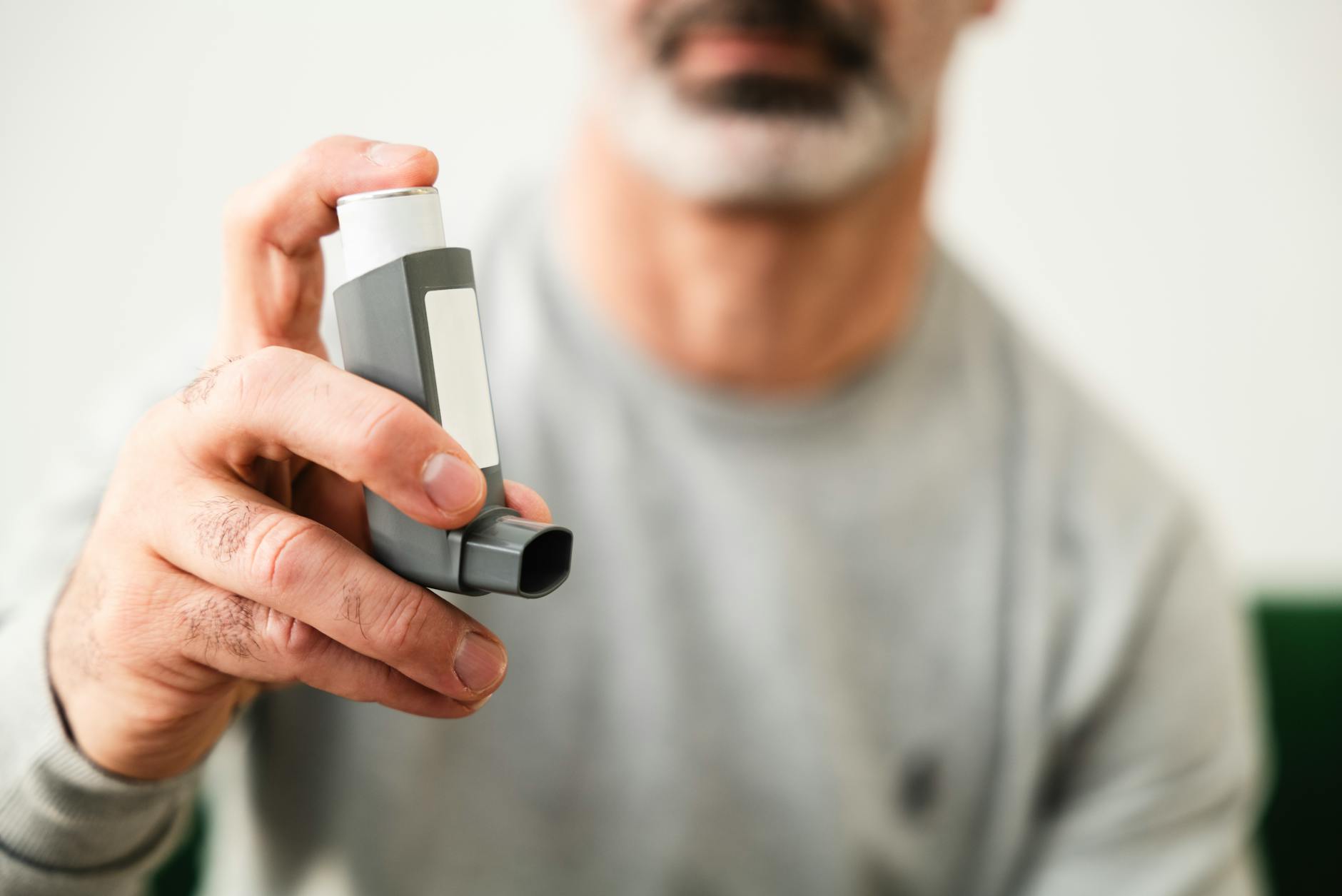
The answer lies in the chemistry of the propellant, not the volume of gas released. Metered-dose inhalers use hydrofluoroalkane propellants — specifically HFA-134a, which has a global warming potential 1,430 times that of CO2, and HFA-227ea, which clocks in at 3,220 times. Global warming potential measures how much heat a greenhouse gas traps over a given period compared to the same mass of carbon dioxide. Even a tiny amount of these propellants, released in milligram quantities with each puff, packs an enormous atmospheric punch. To put this in everyday terms, consider that a single dose of two puffs from an HFA-134a inhaler is equivalent to driving about two kilometers in a Seat Ibiza Ecomotive, one of Europe’s most fuel-efficient cars.
Most people with asthma or COPD use their inhalers multiple times daily. Over a full year, that adds up to between 150 and 400 kilograms of CO2 equivalent per inhaler — a figure comparable to the annual carbon savings from recycling household waste or switching to a plant-based diet. Your car may seem like the bigger polluter, but each individual inhaler puff is, gram for gram, far more climate-damaging than the exhaust coming out of your tailpipe. In the United States, metered-dose inhalers made up 75 percent of all inhalers in use in 2020. That market dominance means the cumulative impact is enormous. The EPA’s estimate of 2.5 million metric tons of CO2 equivalents from inhaler propellants in a single year is not a rounding error in national emissions — it is a measurable, addressable contributor to climate change hiding in medicine cabinets across the country.
The NHS Wake-Up Call — When a Healthcare System Measured Its Own Inhalers
The United Kingdom’s National Health Service has done some of the most transparent accounting of inhaler emissions in the world, and the results are sobering. MDI propellants account for approximately 3 to 3.9 percent of the entire NHS carbon footprint. That means a single product category — one type of medical device — generates a measurable share of the emissions from an entire national healthcare system serving over 60 million people. When narrowed to the care-delivery carbon footprint specifically, inhaler propellants represent roughly 13 percent. These figures prompted the NHS to set explicit targets for reducing inhaler-related emissions, including encouraging clinicians to prescribe dry powder inhalers where clinically appropriate.
The UK experience offers a useful comparison for other healthcare systems: if a country with relatively strong DPI adoption still sees this level of impact, the situation in the United States — where MDIs dominate at 75 percent of the market — is considerably worse on a per-capita basis. However, the NHS data also revealed an important caveat. Switching inhalers is not a simple administrative decision. It requires clinical assessment, patient education, and ongoing monitoring. Patients who have used an MDI for years may struggle with the different inhalation technique required by a dry powder device, and some may experience anxiety about changing a treatment that has been working. For people living with dementia or cognitive impairment, any change to an established medication routine introduces additional risk and must be managed carefully with caregivers and clinicians.
Dry Powder Inhalers — A Greener Alternative That Actually Works
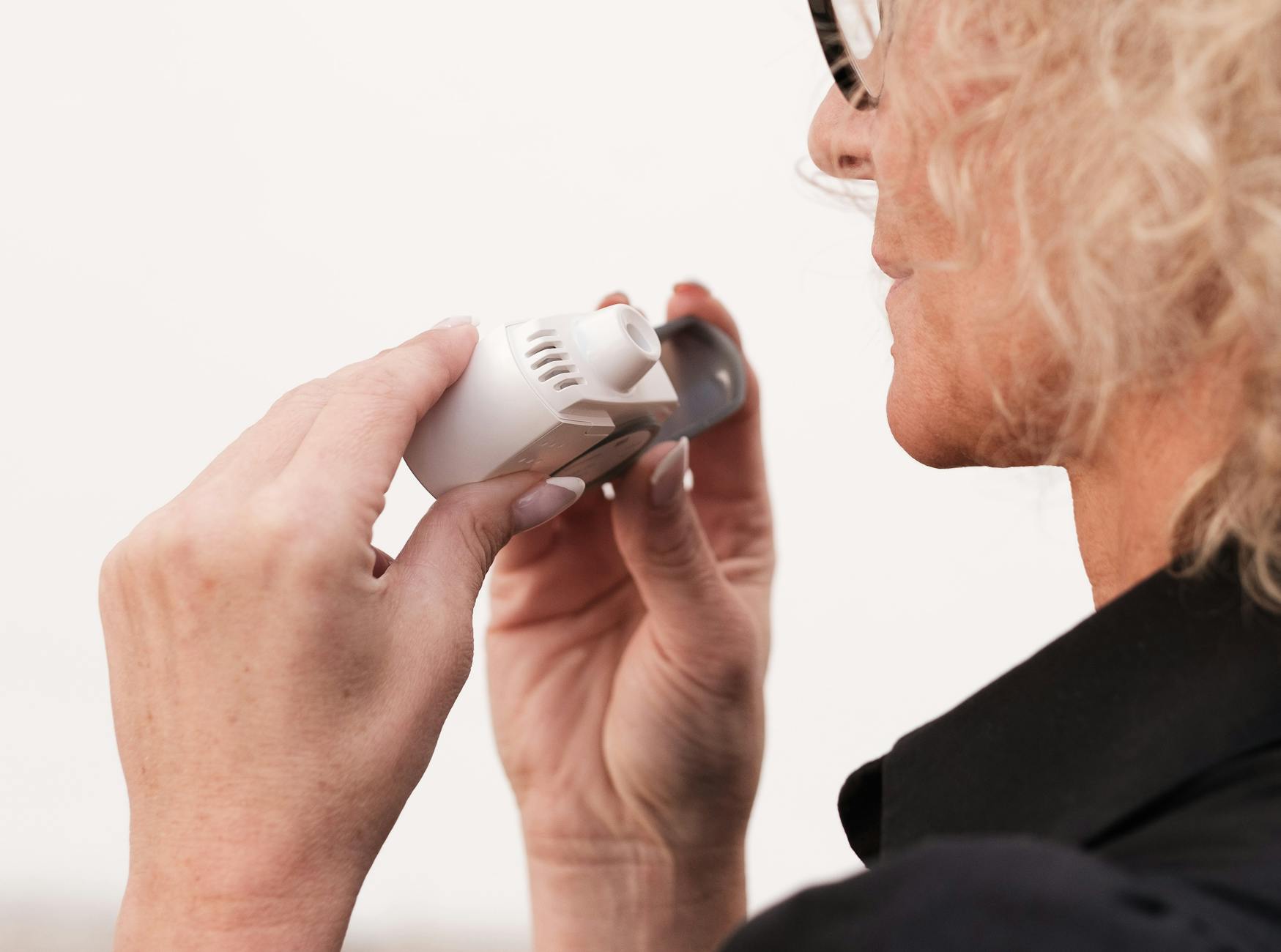
Dry powder inhalers carry a carbon footprint 20 to 40 times lower than metered-dose inhalers. The reason is straightforward: DPIs are breath-activated and contain no propellant gas at all. The medication sits as a dry powder inside the device, and the patient’s own inhalation draws it into the lungs. No HFA, no greenhouse gas release. The clinical evidence supporting the switch is strong. Studies have shown that switching from MDI to DPI reduced estimated CO2 equivalent emissions by 97 percent for maintenance inhalers and 99.6 percent for reliever medication — all while maintaining disease control among patients with asthma or COPD.
That last point is critical. A greener inhaler means nothing if it does not control the patient’s condition. The research confirms that for many patients, DPIs work just as well. As a specific example, consider a patient using an MDI-based reliever inhaler four times daily. Over a year, that single inhaler might contribute 300 or more kilograms of CO2 equivalent. Switching to a DPI reliever drops that figure by over 99 percent, to just a few kilograms. Multiply that across the roughly 25 million Americans with asthma and the 16 million diagnosed with COPD, and the aggregate reduction potential is enormous.
Who Cannot Switch — And Why That Matters for Dementia Caregivers
For all the promise of dry powder inhalers, they are not universally suitable, and this limitation is especially relevant for the population this site serves. DPIs require the patient to generate a sharp, forceful inhalation to pull the medication into the lungs. Many children and elderly patients with limited lung capacity simply cannot produce enough inspiratory force to use a DPI effectively. This is a significant consideration for people living with dementia. Cognitive decline often affects the ability to learn new device techniques, follow multi-step instructions, or coordinate breathing with device activation.
A person who has reliably used a press-and-breathe MDI for years may be unable to master the different technique required by a DPI. Caregivers already managing complex medication schedules and behavioral symptoms should not assume that a “greener” inhaler is automatically the right choice. The clinical priority remains effective drug delivery and disease control. The trade-off is real: the most environmentally harmful inhaler type may also be the most accessible one for vulnerable patients. This is not a reason to dismiss the environmental concern, but it is a reason to avoid blanket prescribing changes and to ensure that any switch is made with the individual patient’s cognitive and physical capabilities in mind. Spacer devices attached to MDIs can improve drug delivery and may be a better intervention for some patients than switching device types entirely.
Next-Generation Propellants — A Fix That Does Not Require Changing Devices
The most promising near-term solution may not involve switching inhaler types at all. A new propellant called HFA-152a has a global warming potential of just 124 — roughly 90 percent lower than the HFA-134a currently used in most MDIs. If this propellant can replace existing ones, patients could continue using familiar MDI devices with a dramatically reduced environmental impact. Progress on this front is real, not theoretical. Koura, a propellant manufacturer, opened the world’s first HFA-152a medical propellant production facility, with commercial-scale availability since mid-2022.
The Chiesi Group, a major pharmaceutical company, has initiated Phase III clinical trials for what it calls “carbon minimal inhalers” using HFA-152a, after completing two short-term safety trials and three clinical pharmacology studies. Chiesi’s target is commercial availability by the end of 2025. Safety data published to date shows that switching from HFA-134a to HFA-152a does not induce bronchoconstriction in asthma patients or impair mucociliary clearance. However, a critical limitation remains: even after regulatory approval, it will take years for new-propellant inhalers to reach widespread adoption. Manufacturing must scale, existing MDI formulations must be reformulated and retested, and healthcare systems must update formularies. Patients and caregivers should be aware that this solution is coming but should not delay discussing current alternatives with their physicians.

What One Inhaler Switch Can Do — Putting the Numbers in Perspective
Consider a practical comparison. Replacing a single MDI with a DPI over the course of one year saves the equivalent of 150 to 400 kilograms of CO2. That is roughly the same climate benefit as installing wall insulation in a home, or committing to a year of household recycling.
For a family already making efforts to reduce their environmental footprint — driving less, eating less meat, improving home efficiency — addressing inhaler choice is a change of comparable magnitude that rarely appears on anyone’s list. The UCLA Health study published in JAMA underscored this point by documenting that MDIs accounted for 98 percent of greenhouse gas emissions across all inhaler types over a full decade, despite dry powder and soft mist alternatives being available throughout that period. The problem is not a lack of options. It is a lack of awareness, clinical inertia, and in some cases, genuine clinical need for the MDI format.
The Road Ahead for Respiratory Care and the Climate
The convergence of low-GWP propellants, growing clinical evidence for DPI equivalence, and increasing healthcare system accountability for emissions suggests that the environmental footprint of inhalers will shrink substantially over the next decade. Phase III trials for HFA-152a inhalers, if successful, could provide a solution that requires no behavior change from patients — the same device, the same technique, with 90 percent less climate impact.
For caregivers managing respiratory conditions alongside dementia, the practical takeaway is this: talk to your loved one’s pulmonologist or primary care physician about whether a DPI is appropriate, and ask about the timeline for next-generation low-GWP inhalers. Do not make switches independently, and do not prioritize environmental benefit over effective symptom control. But do recognize that this is a conversation worth having — because the small canister in the medicine cabinet may carry a surprisingly large environmental cost, and alternatives that protect both lungs and atmosphere are closer than most people realize.
Conclusion
Metered-dose inhalers, used by tens of millions of Americans daily, release propellants with up to 3,220 times the global warming potential of carbon dioxide. At the population level, this translates to 2.5 million metric tons of CO2 equivalents annually in the United States alone — the emissions equivalent of over half a million cars. Dry powder inhalers offer a 97 to 99 percent reduction in emissions with equivalent clinical outcomes for many patients, while next-generation HFA-152a propellants promise a 90 percent reduction for those who need to stay with MDIs. For those caring for people with dementia or age-related cognitive decline, the key is informed conversation with healthcare providers rather than unilateral changes.
Not every patient can switch to a DPI, and that is medically appropriate. But for those who can, the environmental benefit is real and substantial. And for those who cannot, relief is on the horizon in the form of low-GWP propellant inhalers expected to reach the market in the coming years. Respiratory health and environmental responsibility are not opposing forces — they are converging, and caregivers are in a position to advocate for both.
Frequently Asked Questions
Are dry powder inhalers as effective as metered-dose inhalers?
For most patients with asthma or COPD, yes. Clinical studies have confirmed that disease control is maintained when switching from MDI to DPI. However, effectiveness depends on the patient’s ability to inhale with sufficient force to activate the device, which may be a limitation for elderly patients or those with severe airflow obstruction.
Can someone with dementia safely switch from an MDI to a DPI?
It depends on the individual’s cognitive and physical abilities. DPIs require a different inhalation technique that may be difficult for someone with cognitive impairment to learn. Any switch should be made under close medical supervision, with caregiver training and monitoring to ensure the medication is being delivered effectively.
When will low-GWP propellant inhalers be available?
Chiesi Group has targeted commercial availability of HFA-152a-based inhalers by the end of 2025, following Phase III clinical trials. Koura has been producing pharmaceutical-grade HFA-152a at commercial scale since mid-2022. However, widespread availability across all inhaler brands will take additional years as other manufacturers reformulate their products.
How much carbon can switching one inhaler actually save?
Replacing a single MDI with a DPI over one year saves between 150 and 400 kilograms of CO2 equivalent, depending on the specific products involved. That is comparable to the annual carbon savings from installing home wall insulation or adopting household recycling.
Should I feel guilty about using an MDI?
No. Inhalers are essential medical devices, and breathing comes first. The goal is not to shame patients but to raise awareness that lower-impact alternatives exist for many people and that systemic changes in propellant technology are underway. The responsibility for reducing inhaler emissions falls primarily on manufacturers, healthcare systems, and policymakers — not individual patients.