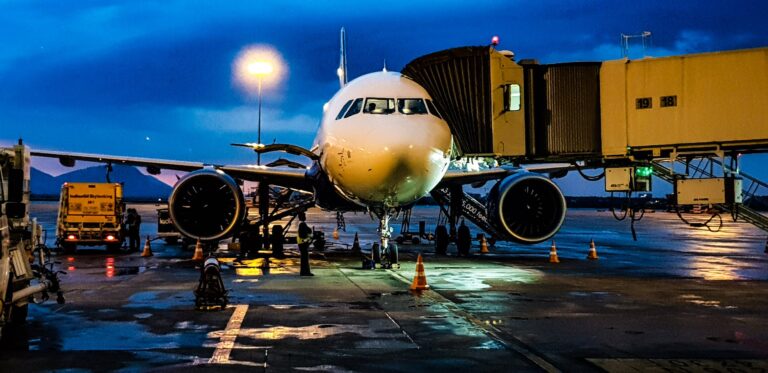
On March 23, 2026, at approximately 11:45 PM, a fire truck crossing LaGuardia Airport’s active runway to respond to a separate safety concern was struck by an Air Canada regional jet arriving from Montreal. The collision, which killed both pilots of the aircraft and resulted in 41 passengers and crew members being hospitalized, occurred at 104 miles per hour and marks the first fatal crash at one of New York’s three major airports in over 30 years.
The incident raises urgent questions about how such a catastrophic breakdown in coordination could occur at the nation’s 19th busiest airport, and what safeguards failed to prevent a vehicle from being in the path of an arriving aircraft. This article examines the facts of what happened that night, how air traffic control and emergency response systems failed to coordinate effectively, the human toll on those aboard the flight and the fire crew, and the broader implications for aviation safety at America’s busiest hubs. We also explore the historical context of LaGuardia’s safety record and what investigations are uncovering about the communication failures that led to this tragedy.
Table of Contents
- What Caused the Fire Truck to Enter an Active Runway?
- How Did Communication Break Down Between Air Traffic Control and Emergency Crews?
- What Was the Human Cost of the Collision?
- What Safety Systems Failed to Prevent This Incident?
- How Rare Are Accidents Like This at Major U.S. Airports?
- What Happens During Runway Emergency Response?
- What Changes Could Prevent Similar Incidents?
- Conclusion
- Frequently Asked Questions
What Caused the Fire Truck to Enter an Active Runway?
The fire truck was dispatched to cross the active runway not because of an aircraft emergency, but to respond to a separate incident: another aircraft at the airport had reported a concerning odor aboard. This routine-seeming call—investigating unusual smells on a plane—is a common enough occurrence at busy airports that crews respond to them regularly. Emergency responders are trained to respond quickly to any potential safety concern, and in this case, the fire crew was cleared by air traffic control to cross the runway to reach the aircraft that reported the problem.
However, the critical gap in this sequence was what happened next. After initially clearing the fire truck to cross the active runway, air traffic control became aware that the Air Canada flight was approaching for landing. Controllers attempted to stop or redirect the fire truck before the collision could occur, but the communication window proved too narrow. The Air Canada jet, traveling at 104 miles per hour on final approach, could not be warned in time, and the fire truck remained in the path of the incoming aircraft.

How Did Communication Break Down Between Air Traffic Control and Emergency Crews?
The investigation by the National Transportation Safety Board (NTSB) and Federal Aviation Administration (FAA) is focusing heavily on the sequence of clearances and the timing of communications between the tower and the fire truck. Control tower audio recordings indicate that air traffic control did attempt to communicate with the fire truck after realizing the danger, but the message either did not reach the crew in time or could not be acted upon given the speed of the approaching aircraft. This type of communication failure is particularly dangerous at an active runway because timing is measured in seconds.
A fire truck crossing a runway, even at typical emergency speed, takes time to traverse the full width of the tarmac. When an aircraft on final approach is only moments away, there is often no window to stop the vehicle, redirect it, or wave off the incoming flight. The preliminary findings suggest that the fire truck had not yet cleared the runway when the Air Canada jet made contact. Furthermore, even if controllers had communicated with the fire truck crew at the moment of impact, there would have been no time for the aircraft to abort its landing or climb away safely.
What Was the Human Cost of the Collision?
The Air Canada flight carried 72 passengers and 4 crew members. Of the 76 people aboard, 2 pilots—the pilot and copilot—were killed in the collision. The impact was severe enough that 41 passengers and crew members required immediate hospitalization. However, the immediate medical response was swift enough that 32 of those hospitalized patients were later released, suggesting that many injuries, while serious, were not life-threatening.
One notable case among the survivors was flight attendant Solange Tremblay, who sustained multiple fractures that required surgery; her recovery will likely be lengthy. The fire truck crew did not escape unscathed. Two firefighters were injured in the collision, adding to the toll of this incident. The two pilots represent a particular loss in the aviation community—experienced professionals who were conducting a routine landing operation. The disparity between the 2 fatalities and 41 hospitalizations reflects both the destructive force of a jet aircraft struck at landing speed and the protection offered by the plane’s structure and the modern safety features now standard in commercial aviation.

What Safety Systems Failed to Prevent This Incident?
Modern airports operate under strict protocols designed to prevent exactly this type of scenario. Aircraft approaching for landing are given priority clearance, and runways are supposed to be clear of all vehicles and obstacles during landing operations. Fire trucks and emergency vehicles are routed to cross only when controllers have confirmed that the runway is clear of traffic. The fact that this incident occurred indicates a breakdown in one or more of these layered safety systems.
One critical question emerging from the investigation is whether air traffic control should have held the fire truck from crossing at all, or whether the truck should have been directed to take an alternate route to the aircraft reporting the odor. In some airports, there are multiple pathways and entry points that emergency vehicles can use; in others, the geometry of the airfield makes certain routes unavoidable. Additionally, the speed at which tower personnel recognized the conflict—and the narrow window between that recognition and the aircraft’s arrival—raises questions about whether the radar and monitoring systems at LaGuardia gave controllers sufficient warning. Unlike some modern airports, LaGuardia’s infrastructure and runway configuration date from an earlier era of aviation, which may have contributed to the coordination challenges.
How Rare Are Accidents Like This at Major U.S. Airports?
The fact that this is LaGuardia’s first fatal accident in more than 30 years underscores just how uncommon such incidents are. The previous fatal crash at LaGuardia occurred on March 22, 1992—exactly 34 years earlier. This long gap reflects decades of successful safety protocols, pilot training, and air traffic control procedures.
The rarity of these events can create a false sense that such disasters could never happen, which can lead to complacency in training, communication drills, and equipment maintenance. However, the very fact that this incident did occur—after 34 years without a fatal crash at one of the nation’s busiest airports—demonstrates that no safety system is foolproof. There is always a human element: a split-second decision, a communication that was slightly delayed, a procedure that was followed but proved inadequate under a specific set of circumstances. The National Transportation Safety Board will spend months investigating every detail of what happened on March 23, 2026, and their findings will likely lead to changes in how runways are managed and how emergency vehicle movements are coordinated during active flight operations.

What Happens During Runway Emergency Response?
When a pilot reports a concerning odor or any other potential safety issue aboard an aircraft, ground crews take it seriously. The odor reported in the aircraft that prompted the fire truck dispatch could have been anything from a minor mechanical issue to a potential fire risk. Until it is investigated, no one knows the severity. This is why fire trucks and emergency personnel are standing by 24 hours a day at major airports—to respond immediately to any reported problem.
In this case, the fire truck crew was doing exactly what they were trained to do: responding quickly to an emergency call. The tragedy was not that they responded, but that the systems designed to coordinate their movement with incoming and outgoing aircraft traffic failed. Fire trucks are not small or fast-moving; they are large, heavy vehicles that cannot move quickly out of danger. Once they are crossing a runway, they are committed to that path, and the only way to prevent a collision is for the incoming aircraft to be diverted or delayed before they arrive in the landing zone.
What Changes Could Prevent Similar Incidents?
The NTSB and FAA investigations will likely recommend changes to how runway crossings are authorized and monitored at LaGuardia and potentially at other major airports. Some possibilities being discussed by aviation safety experts include more restrictive rules about when emergency vehicles can cross active runways, improved communication systems that give crews more precise information about approaching aircraft, and possible modifications to the airfield layout to reduce the need for vehicles to cross active runways.
Another area of focus will be on the decision-making process itself. Did controllers have the information they needed to make a sound decision about clearing the fire truck to cross? Was there a procedure in place for rapidly canceling or redirecting that clearance if an aircraft emergency developed? As aviation becomes busier and airports become more congested, these questions become more urgent. The incident at LaGuardia on March 23, 2026, will likely influence airport operations and safety protocols for years to come, serving as a stark reminder that even well-established systems require constant review and improvement.
Conclusion
The collision between an Air Canada jet and a fire truck at LaGuardia Airport on March 23, 2026, was a rare but catastrophic failure of the multiple safeguards that normally prevent such incidents. The two pilots who died were performing a routine landing operation, following all established procedures. The 41 passengers and crew members who were hospitalized, including flight attendant Solange Tremblay who underwent surgery for multiple fractures, endured trauma that will affect them for years to come.
The fire truck crew, responding to what should have been a routine emergency call, were also caught in circumstances beyond their control. As investigations continue and recommendations are developed, the focus must remain on understanding how the coordination between air traffic control and ground emergency services broke down, and what systemic changes are needed to prevent such tragedies at the nation’s busiest airports. For travelers, families, and anyone who uses air transportation, this incident underscores both the rarity of fatal aviation accidents in the United States and the importance of continued vigilance in airport safety operations. The 34-year gap between fatal crashes at LaGuardia prior to this incident reflects decades of dedicated work by pilots, controllers, and ground crews—work that must continue with renewed commitment to prevent this tragedy from becoming a pattern rather than an outlier.
Frequently Asked Questions
How often do fire trucks cross active runways at airports?
Fire trucks and emergency vehicles cross active runways regularly at busy airports, usually in response to aircraft emergencies or safety concerns. These movements are carefully coordinated with air traffic control to ensure no aircraft are landing or taking off. However, the very frequency of these operations means that the potential for miscommunication or timing errors is always present.
Could the pilots have avoided the collision?
Pilots on final approach are committed to landing and cannot easily alter their course or climb away once they are close to the runway. By the time the fire truck would have been visible or registered as a threat, there was insufficient time and altitude for the aircraft to take evasive action. This is why preventing the fire truck from being on the runway in the first place is the responsibility of air traffic control.
What was the odor that prompted the fire truck response?
The specific nature of the odor reported by the other aircraft has not been publicly disclosed. Unusual odors on aircraft can indicate anything from mechanical issues to electrical problems, and until investigated, they are treated as potential safety hazards.
Will LaGuardia’s runways be redesigned?
While possible, a complete redesign of LaGuardia’s runways would be an enormous undertaking. More likely, procedures for how emergency vehicles access different parts of the airfield will be modified, and technological upgrades to communication and monitoring systems may be implemented.
How does this incident compare to other recent aviation accidents?
Fatal accidents involving commercial aircraft in the United States are extraordinarily rare. The 34-year gap between fatal crashes at LaGuardia demonstrates how successful modern aviation safety protocols have been. This incident is tragic precisely because it was so unexpected and broke a long streak of safe operations.
What should travelers know about airport safety?
Commercial aviation remains one of the safest forms of transportation. This incident, while tragic, involved a ground emergency vehicle, not a failure of aircraft systems or pilot error during normal flight operations. Travelers should not be deterred from flying, but can take some comfort knowing that the investigation into this incident will likely result in even more robust safety procedures.