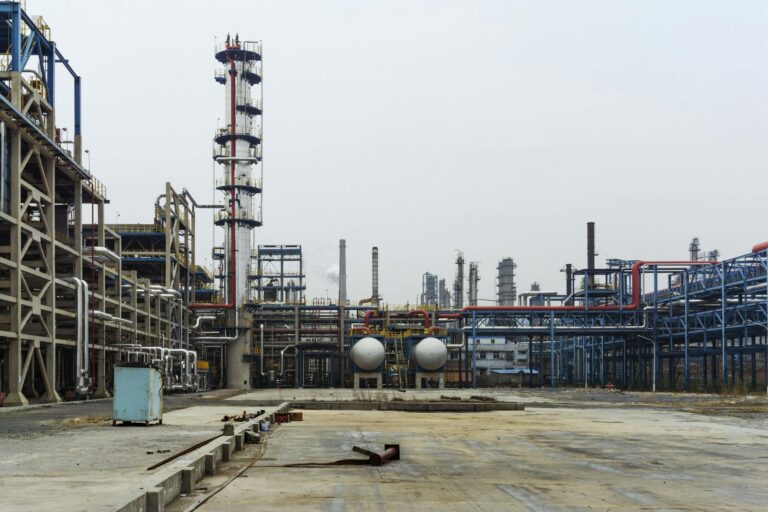
The Iran war is affecting oil prices in Asia far more severely than in North America because Asia depends almost entirely on Middle Eastern oil shipped through a single, now-threatened chokepoint—the Strait of Hormuz—while North America relies heavily on its own domestic production. When Iran closed the Strait of Hormuz on March 4, 2026, following U.S.-Israel airstrikes on February 28, approximately 80% of Gulf oil that normally flows through that passage was bound for Asian markets. For comparison, a Japanese refinery that relies on the Middle East for roughly 90% of its crude oil imports suddenly faced a supply disruption with no alternative routes and no domestic energy reserves to buffer the shock.
North American refineries, by contrast, draw from U.S. shale production, Canadian oil sands, and existing domestic infrastructure—providing insulation from the Middle Eastern supply crisis. This article examines the geographic and economic forces that make Asia’s oil market vastly more vulnerable to Middle Eastern disruptions than North America’s, explains why some Asian nations are more exposed than others, and explores what this means for global oil prices and economic stability heading forward.
Table of Contents
- How Geography and Supply Routes Create Wildly Different Vulnerabilities
- The Depth of Asia’s Import Dependency and Strategic Weakness
- How Oil Prices Translate into Immediate Economic Disruption Across Asia
- The Role of LNG Markets and Secondary Energy Shocks
- Why Longer-Term Reserve Depletion Is the Hidden Threat
- Secondary Inflation Effects and Healthcare Cost Implications
- The Long-Term Recalibration of Asian Energy Strategy
- Conclusion
How Geography and Supply Routes Create Wildly Different Vulnerabilities
The Strait of Hormuz is the world’s most critical oil chokepoint, and Asia has no way around it. Approximately 21% of all global oil passes through this narrow waterway between iran and Oman, but the regional distribution is deeply unequal: 80% of the oil shipped through Hormuz is destined for Asian markets, while only a fraction reaches North America. Japan, South Korea, China, and India combined account for 75% of all oil exports from the Persian Gulf, and virtually all of these shipments depend on safe passage through a body of water now controlled by a hostile Iran. North America’s situation is fundamentally different. The United States produces roughly 13 million barrels of oil daily, while Canada adds another 6 million barrels, covering most of North America’s needs domestically.
When Hormuz closed on March 4, 2026, crude oil prices for Brent crude surged past $120 per barrel—a spike driven primarily by Asian demand scrambling to replace lost supplies. Yet U.S. diesel prices rose only 25% from the start of the conflict, while Asian LNG futures skyrocketed 51% as of March 9. The difference is stark: Asia absorbs the full shock because it has nowhere else to source its energy. North America absorbs a portion of it through global price transmission, but domestic supply cushions the blow.

The Depth of Asia’s Import Dependency and Strategic Weakness
The scale of Asia’s reliance on middle Eastern oil is staggering when examined country by country. Japan, the world’s third-largest economy, imports approximately 90% of its crude oil from the Middle East, and the vast majority of those shipments transit through the Strait of Hormuz. South Korea depends on the Middle East for about 70% of its crude oil supply, with 95% or more of those flows traveling through the same chokepoint. China and India, despite their massive economies and domestic energy sectors, remain structural importers from the Gulf region and face the same routing constraint. However, the most dangerous vulnerability is not import dependency alone—it’s the paucity of strategic oil reserves.
Vietnam’s oil reserves are estimated to last fewer than 20 days; Pakistan and Indonesia have roughly 20 days of supply in storage. Even India, Thailand, and the Philippines, larger and wealthier economies, hold only about 60 days of reserves. These figures are striking compared to North American reserves and suggest that an extended Hormuz closure would force Asian nations into immediate rationing or sharp price increases within weeks. China is an exception, having pre-war stockpiled approximately 1.4 billion barrels in strategic storage and reportedly even allowing Iranian vessels passage through the blockade—but even China cannot sustain its entire economy on stored reserves indefinitely. For most Asian nations, a closure lasting more than a month becomes an existential economic problem.
How Oil Prices Translate into Immediate Economic Disruption Across Asia
Between March 3 and March 20, 2026, oil prices increased from $81.40 to $106.41 per barrel—a 30.72% spike in just 17 days. This kind of shock has immediate, cascading effects throughout Asian economies. Electricity generation, which relies partly on oil, becomes more expensive overnight. Transportation costs rise for trucking, aviation, and shipping, putting pressure on food prices, manufacturing, and retail. countries like Vietnam and Indonesia, which spend significant portions of their government budgets on energy subsidies to keep fuel affordable for citizens, face sudden fiscal crises. A nation with only 20 days of oil reserves cannot afford to absorb a 30% price spike gradually; it must either ration fuel immediately or bankrupt itself subsidizing cheaper prices for its population. North America experiences pain but not crisis under the same circumstances.
Goldman Sachs predicted U.S. gasoline would reach $3.50 per gallon if disruptions continued—a meaningful increase but historically manageable. California saw gasoline surge above $5 per gallon in March 2026, but this was localized to one state with unique refining constraints, not a nationwide emergency. The U.S. Strategic Petroleum Reserve could be drawn down to stabilize prices, as it has been during past crises. Most importantly, U.S. inflation expectations remain anchored partly because domestic energy production provides a ceiling on how high prices can rise before domestic substitutes become economically competitive. Asia has no such floor; prices rise as high as global markets push them.

The Role of LNG Markets and Secondary Energy Shocks
The shock to oil prices is only half the story in Asia. Liquefied natural gas (LNG) is also a critical fuel for Asian economies, particularly Japan and South Korea, which use it for electricity generation and heating. Approximately 84% of LNG shipped through the Strait of Hormuz in 2024 was bound for Asia, and 83% of oil as well. When the Strait closed, LNG futures prices in Asia skyrocketed 51% as of March 9, 2026—a figure far exceeding the oil price increase. This means Asian utility companies and manufacturers face a double shock: oil prices surged 30%, and natural gas prices surged 51%.
For a nation like Japan, which imports roughly 100% of its LNG from abroad, this is a compounding crisis. North America’s LNG exposure is minimal by comparison. The U.S. actually exports LNG to Asia, so higher global prices benefit American energy companies and diversify their revenues. This reversal—where Asia’s shock is North America’s opportunity—underscores how fundamentally different the geographic exposure is. An Asian manufacturer facing a 50% spike in natural gas costs may relocate or cut production; a North American manufacturer sees cheaper energy inputs if it can source domestically, or hedges its foreign costs because energy is less critical to its supply chain.
Why Longer-Term Reserve Depletion Is the Hidden Threat
One critical warning must be highlighted: short-term price spikes and disruptions can be managed, but extended supply losses deplete reserves faster than they can be replenished. As of March 2026, if the Strait of Hormuz remained closed and Asian nations relied entirely on their strategic reserves while finding alternative suppliers, Vietnam’s reserves would last fewer than 20 days, Pakistan’s roughly a month. If alternative suppliers (Russian, African, or domestic sources) could provide only half the lost Gulf oil while Hormuz remains closed, Vietnam would face genuine fuel rationing—power cuts, transportation restrictions, and industrial shutdowns—within six weeks.
This creates a perverse incentive structure: as reserves deplete, Asian nations become more desperate to accept Iran’s terms for reopening the Strait, even if those terms are politically or diplomatically costly. Conversely, North America’s energy cushion allows it to maintain pressure on Iran without suffering immediate domestic consequences. This asymmetry means that even if a ceasefire or negotiated settlement seems close, the timing and pressure dynamics will be shaped by which regions can actually afford to wait and which cannot.

Secondary Inflation Effects and Healthcare Cost Implications
Oil price shocks ripple through economies in ways that extend far beyond the pump price of gasoline. Transportation costs for food, pharmaceuticals, and medical supplies all increase. For elderly populations in Asia who depend on regular medications, medical supplies, and healthcare services, these cost increases are direct threats. A nursing facility in Thailand or India that relies on imported pharmaceutical supplies sees those costs increase proportionally to global oil prices. The 30% jump in crude oil between March 3 and March 20 translates into higher costs for plastic medical tubing, pharmaceutical transport, and heating for medical facilities—costs that hospitals absorb or pass along to patients.
In North America, the same pressures exist but are far less severe because supply chains are shorter and more domestically sourced. A U.S. hospital can source most of its medical supplies from North American manufacturers, whose energy costs rose but only 25%, not 50%. An Asian hospital importing those same supplies faces both the higher energy costs in its own region and the higher commodity costs embedded in the imports themselves. Healthcare access and quality in Asia are therefore more directly threatened by oil price shocks than in North America.
The Long-Term Recalibration of Asian Energy Strategy
The Iran war has already begun reshaping Asian energy strategy in real time. Nations are exploring liquefied natural gas from new suppliers, developing renewable energy infrastructure faster than planned, and negotiating bilateral trade agreements to reduce dependence on Strait of Hormuz shipping. China’s tolerance for Iranian shipping despite the blockade signals that major powers are willing to accept diplomatic risk to maintain energy flows. Smaller Asian nations are considering energy independence investments—solar, wind, and nuclear—that they had previously seen as long-term, low-urgency initiatives.
These shifts will take years to fully materialize, but they reflect a recognition that the pre-2026 energy landscape, where the Strait of Hormuz represented a stable, well-functioning chokepoint, may not return. For North America, the strategic challenge is different: how to maintain energy independence while integrating with global energy markets. The war has already demonstrated that energy security is geopolitical, not just economic. Understanding why Asia suffers more from Middle Eastern disruptions—and preparing for the policy and supply chain shifts that will follow—is now essential for any North American business or government planning for the next decade.
Conclusion
The reason Asia suffers far greater oil price shocks from the Iran war than North America can be reduced to a simple geographic reality: Asia imports 75% or more of the world’s Middle Eastern oil, with virtually all of it flowing through the Strait of Hormuz, while North America produces most of its own energy domestically. When the Strait closed on March 4, 2026, following February 28 airstrikes, crude oil prices surged 30% in three weeks, LNG futures jumped 51%, and Asian nations with strategic reserves lasting only weeks or months faced immediate economic crises.
North America, sheltered by domestic production and larger strategic reserves, experienced painful but manageable price increases. Understanding this disparity matters because it shapes how long the current Middle Eastern crisis will persist, which nations bear the burden of resolution, and where energy investments will flow next. For anyone following global economic stability, healthcare cost trends, or geopolitical risk, the asymmetry in oil price impacts between Asia and North America is the key fact driving policy responses and supply chain strategies that will echo through 2027 and beyond.