Reviewed by the Help Dementia Editorial Team — our editors review every article for accuracy against guidance from the National Institute on Aging, the Alzheimer’s Association, and peer-reviewed sources.
Housing transitions create genuine cognitive and behavioral challenges for people with dementia because the condition fundamentally impairs their ability to adapt to new environments, navigate unfamiliar spaces, and process significant change. When someone with dementia moves to a different home, assisted living facility, or memory care unit without careful preparation, the environmental disorientation can trigger increased anxiety, confusion, agitation, wandering, and sometimes dangerous behaviors—all because their brain can no longer rely on the familiar landmarks, routines, and spatial memory that once anchored their sense of security. A dementia-sensitive transition plan doesn’t just make the move smoother; it directly addresses how the disease affects perception, memory, and emotional stability during a critical life event.
Dementia-sensitive planning means approaching a housing transition as a medical and psychological intervention, not simply a logistical one. Rather than moving someone with advanced dementia in a single day with unfamiliar movers and then introducing a completely new environment, a thoughtful approach involves gradual familiarization, preservation of familiar objects, consistent caregivers, simplified layouts, clear wayfinding, and attention to sensory elements like lighting and sound. For example, a family might spend several weeks having their loved one visit the new space during calm times of day, bring meaningful photographs and furniture from the old home, ensure the same care staff make the transition, and arrange the new bedroom to mirror the layout of the old one as closely as possible.
Table of Contents
- How Does Dementia Change the Way Someone Experiences Housing Transitions?
- The Hidden Risks of Unprepared Environmental Changes
- Sensory and Physical Space Design for Dementia Transitions
- The Role of Care Continuity and Professional Planning
- Common Planning Mistakes That Increase Distress
- Building Environmental Continuity Through Familiar Elements
- Planning for Life Stage Changes Within Dementia Progression
- Conclusion
How Does Dementia Change the Way Someone Experiences Housing Transitions?
The brain regions affected by dementia—particularly those involved in memory, spatial awareness, and executive function—make environmental change uniquely disorienting. A person with moderate to advanced dementia cannot simply “get used to” a new place the way someone with a healthy brain might. They may not form new memories of the new space, may have difficulty finding the bathroom or bedroom even after weeks there, and may experience constant cognitive dissonance between fragments of memory from the old home and the present surroundings. This neurological reality means that moving day itself can feel like waking up in a completely foreign place every single day, a source of profound distress.
The speed of cognitive decline also matters. Someone in early-stage dementia may adapt somewhat with preparation and repeated exposure, while someone in late-stage dementia will likely depend almost entirely on environmental cues—the location of furniture, familiar colors and smells, the presence of consistent caregivers—to orient themselves and feel safe. This is why institutional moves that happen quickly, without preparation, are associated with sharper functional decline, increased behavioral problems, and sometimes accelerated disease progression. A person moved suddenly to an unfamiliar environment may stop eating, become incontinent, or develop sundowning symptoms with unexpected severity.

The Hidden Risks of Unprepared Environmental Changes
One of the most significant risks of inadequate transition planning is precipitous functional decline—people with dementia often lose abilities they already have when moved without preparation. An older adult who was still ambulating independently and using the toilet appropriately in their own home may become bedbound or incontinent within weeks of a sudden move to an unfamiliar facility, not because their disease progressed dramatically, but because the cognitive load of navigating an unknown environment caused acute decompensation. This decline is sometimes reversible if the person is then moved back or if their environment is substantially reorganized, but it represents genuine harm from poor planning. Another risk is increased use of chemical or physical restraints.
When a person with dementia is confused and agitated in a new environment, facilities sometimes respond by increasing sedating medications or, in worst cases, applying physical restraints. These interventions then accelerate cognitive decline, increase risk of falls and aspiration, and diminish quality of life. A dementia-sensitive transition, by contrast, actually reduces behavioral problems and the need for chemical management. The limitation to understand here is that even with excellent planning, some people will still experience adjustment distress—this isn’t failure, it’s the nature of the disease. The goal is to minimize avoidable harm, not eliminate all distress.
Sensory and Physical Space Design for Dementia Transitions
The physical environment itself becomes a form of cognitive support when someone has dementia. Adequate, non-flickering lighting helps with disorientation and reduces shadows that can be misinterpreted as obstacles or threats. Color-contrasted doorways and grab bars make bathrooms and exits more visible to someone whose spatial processing is compromised. Flooring that is consistent throughout (no transitions between carpet and hardwood that can look like barriers) reduces fall risk and confusion. A person with dementia moving into a new space benefits enormously from environmental consistency—the new bedroom arranged like the old one, the bathroom in the same relative position, familiar furniture pieces placed in recognizable configurations.
Sound environment is equally important. A quiet space reduces overstimulation and anxiety in someone with dementia, whose filtering ability for background noise is often compromised. An environment with constant announcements, alarms, or television can trigger agitation, confusion, and sleep disruption. One specific example: an older adult moved from a quiet single-family home to a bustling assisted living community may become severely agitated because their brain cannot filter the constant ambient noise—but moving them to a quieter wing or room with earbuds for preferred music often resolves the behavioral problem entirely. Additionally, clear wayfinding (visual markers showing how to get to common areas) and simplified floor plans reduce the cognitive load of navigating new space.

The Role of Care Continuity and Professional Planning
One of the most underestimated elements of dementia-sensitive transitions is care continuity. If possible, the same caregiver should accompany the person to the new environment, at least initially. This familiar face and consistent voice provide continuity and emotional anchor even when everything else is changed. If moving to a facility, having current care staff visit the new place and spend time with the person there helps. Professional support matters too—working with a geriatric care manager or occupational therapist who specializes in dementia can make substantial difference.
These professionals can assess the new environment, identify potential confusion points, and recommend modifications before the move happens. The planning timeline matters significantly. Ideally, planning for a dementia transition should begin 2-3 months in advance for a major move, allowing time for visits to the new space, preparation of the environment, communication with all staff involved, and gradual adjustment. For someone in early-stage dementia who retains some planning capacity, involving them in the process—letting them choose which furniture to bring, showing them pictures of the new place, having them participate in visits—can increase their sense of agency and reduce anxiety. However, there’s a tradeoff: involving them too much in planning can also increase their anxiety if they fixate on worries or repeatedly ask questions. Professional guidance helps strike this balance appropriately.
Common Planning Mistakes That Increase Distress
A frequent mistake is bringing too many possessions to the new environment, which creates overwhelming cognitive complexity. A person with dementia benefits from a simpler, more organized environment with meaningful objects than from maximum comfort items. Bringing an entire household of belongings to a small assisted living room actually increases confusion and distress. Instead, a dementia-sensitive approach selects a limited number of meaningful items—a few favorite photographs, a beloved chair, a quilt with familiar texture—and allows the rest to be in storage or managed by family, with a plan to rotate items if desired.
Another serious mistake is inconsistent or changing caregiving approaches during the transition. If one caregiver bathed the person with the shower door open and soft music playing, and the new facility uses a different routine, this jarring change can trigger resistance, aggression, or refusal to bathe. Documenting the person’s preferences, routines, and what calms them—then communicating these specifically to new staff—is essential. The limitation here is that not all facilities can accommodate highly individualized care routines, which is why placement decisions matter greatly. A facility willing to learn and implement person-centered routines will have far better outcomes than one operating on standardized procedures regardless of individual needs.

Building Environmental Continuity Through Familiar Elements
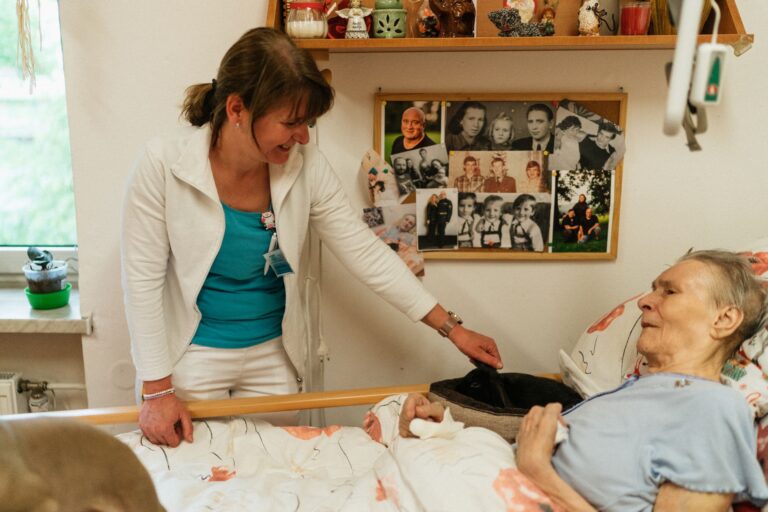
Practical strategies for creating continuity include bringing items that have strong sensory association. If someone loves the smell of a particular soap or lavender, ensuring that scent is available in the new space (through candles, lotion, or linen spray) can provide unexpected comfort and orientation. If they had a favorite blanket or pillow, this tactile familiarity can be grounding. Photographs—especially large, clear photos showing family members, the old home, or meaningful places—should be displayed prominently in the new bedroom.
Some families create a photo board or memory book to be placed where the person sees it regularly. Music offers particular benefit because the dementia-affected brain often retains music memory longer than other cognitive domains. Creating a playlist of music from the person’s era or their stated preferences, playing it regularly in the new environment, can reduce sundowning, increase calmness during meals, and provide a familiar emotional backdrop. One example: an older adult who became extremely agitated and confused after moving to memory care began calming within 30 minutes when their daughter played big band music from the 1940s—music from their youth that the brain remembered even as current memory failed.
Planning for Life Stage Changes Within Dementia Progression
Housing transitions often happen multiple times during the dementia journey—from independent living to assisted living, or from assisted living to memory care. Each transition brings new cognitive demands. A proactive approach anticipates future changes and plans incrementally rather than crisis-managing sudden moves.
For example, a family might choose assisted living specifically because it has a memory care unit on-site, allowing a future transition to happen within the same building and with the same staff, rather than moving to an entirely new facility. The trajectory of dementia means that environmental needs change too. Early-stage transitions might benefit from maximizing independence and choice; mid-stage transitions require simplification and safety modifications; late-stage transitions prioritize comfort, familiar sensory input, and consistent care routines. Understanding this progression allows families and care planners to choose environments and make modifications that will serve the person well across stages of disease, rather than optimizing only for the present moment.
Conclusion
Housing transitions for someone with dementia require dementia-sensitive planning because the disease fundamentally changes how the brain processes environmental information, creates memories, and adapts to change. Without careful attention to continuity, environmental design, care consistency, and gradual familiarization, moves can trigger behavioral crises, accelerate functional decline, and significantly diminish quality of life. The investment in thoughtful planning—starting early, involving the right professionals, preserving familiar elements, and maintaining care continuity—directly translates into better outcomes: calmer adjustment, fewer behavioral problems, reduced need for medication or restraint, and maintained dignity.
If you’re facing a housing transition for someone with dementia, begin planning at least two months ahead, work with geriatric care professionals if possible, involve current care staff in the process, and focus on environmental continuity rather than logistical efficiency. Document the person’s preferences and routines, select meaningful possessions thoughtfully, arrange the new space to mirror the old layout where possible, and maintain consistent caregiving approaches. The goal isn’t to eliminate the stress of transition entirely—dementia often makes some adjustment distress inevitable—but to minimize avoidable harm and create an environment where the person can feel as secure and oriented as possible despite cognitive changes.