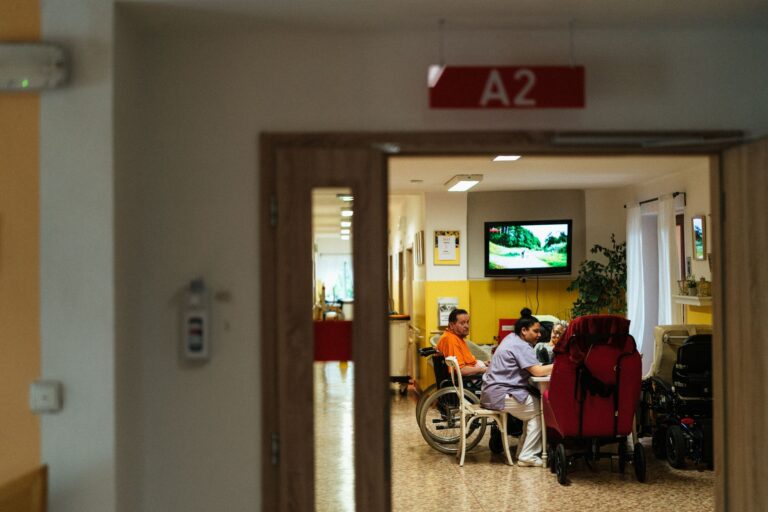
Empathy changes are a defining feature of frontotemporal dementia, particularly in the behavioral variant (bvFTD). Unlike Alzheimer’s disease, which primarily damages memory, behavioral FTD attacks the brain regions responsible for understanding others’ emotions, reading social cues, and feeling concern for people around you. These empathy changes are not a choice or a personality quirk the person is developing—they are the direct result of degeneration in the frontal and temporal lobes, the same areas that govern social awareness and emotional regulation.
A person with FTD-related empathy loss might sit in a waiting room while their spouse describes a serious health diagnosis and feel no emotional response, then become irritated at minor inconveniences. They might make cruel jokes at inappropriate moments without understanding why others are hurt. In some cases, they stop initiating contact with family members they once adored, not from depression but from a flattening of the emotional drive to connect. These changes often appear long before memory problems, which is one reason behavioral FTD is so frequently misdiagnosed as depression, bipolar disorder, or personality change.
Table of Contents
- How Frontotemporal Dementia Damages Empathy Networks
- The Neurological Damage Behind Empathy Loss
- Early Signs of Empathy Changes in FTD
- Managing Relationships When Empathy Changes Occur
- Why Empathy Changes Happen Differently in Each FTD Case
- Distinguishing Empathy Loss from Apathy in FTD
- The Prefrontal Cortex’s Role in Social Emotional Processing
- Frequently Asked Questions
How Frontotemporal Dementia Damages Empathy Networks
The brain regions most critical to empathy—the orbitofrontal cortex, ventromedial prefrontal cortex, and anterior insula—are precisely the areas where ftd begins its destruction. The orbitofrontal cortex helps you weigh the emotional significance of other people’s reactions; the ventromedial prefrontal cortex integrates emotion with decision-making; the anterior insula is essential for emotional awareness and the “gut feeling” that something matters. When FTD degenerates these tissues, the person loses the neurological foundation for empathic response, much like losing the ability to see color after damage to the visual cortex. This damage develops gradually over months or years, which means empathy loss in FTD is progressive rather than sudden.
Early on, people might seem callous only in specific situations—they might be harsh toward a family member’s minor mistake but still show affection at other times. As the disease advances, empathy becomes consistently blunted across all relationships. A man who spent his career as a therapist, known for his gentleness, might begin making cutting remarks to his adult children without recognizing he’s hurting them. His brain damage is not creating new traits; it is removing the neural circuits that allow him to predict, understand, and care about emotional impact.
The Neurological Damage Behind Empathy Loss
It is crucial to understand that empathy loss in FTD is not willful cruelty masquerading as brain disease. When caregivers or family members interpret these changes as personality regression or deliberate unkindness, they often respond with anger or guilt. The person with FTD cannot simply “decide” to empathize; the biological machinery that generates empathic responses has been compromised. Brain imaging in FTD patients shows marked atrophy in the very regions active during empathic tasks in healthy brains, and this atrophy correlates directly with the severity of empathy loss reported by caregivers.
A significant limitation is that FTD’s empathy changes are not uniform across individuals. Two people with confirmed bvFTD may show very different patterns—one becomes socially withdrawn, the other becomes inappropriately friendly or disinhibited. Some people develop selective empathy, showing concern for animals or distant strangers while becoming indifferent to close family. This variability exists because the exact location and spread of atrophy differs from person to person, and the prefrontal and temporal cortex are not monolithic but contain multiple circuits serving different aspects of social behavior. Caregivers cannot rely on a one-size-fits-all expectation of what “empathy loss in FTD” will look like.
Early Signs of Empathy Changes in FTD
Empathy loss in early FTD often appears as a flattening of emotional response rather than its complete absence. The person may listen to news of a loved one’s hardship and respond with a bare “that’s too bad” rather than the warmth or concern they once showed. In social settings, they might stop asking how others are doing and show little interest in their responses. They may become absorbed in one-track conversations about their own interests while showing visible boredom when others speak.
Some develop what caregivers describe as inappropriate humor—making jokes at funerals, laughing at others’ misfortune, or finding dark humor in situations that demand sensitivity. One woman in her late fifties began declining invitations to family dinners, not from depression but from a loss of feeling that the gatherings mattered. She told her daughter, “I don’t see why I should sit there listening to everyone’s problems.” Her neurological scans eventually revealed severe atrophy in the ventromedial prefrontal cortex. Before her diagnosis, her family had interpreted this withdrawal as rejection, not realizing that her brain had lost the circuits that create the emotional pull toward social connection. The distinction matters enormously: it shifts the frame from “she doesn’t want to be with us” to “her brain damage prevents her from feeling the value of being with us.”.
Managing Relationships When Empathy Changes Occur
Caregivers and family members often report that the empathy loss is harder to live with than memory loss. A parent who forgets what you told them yesterday can be gently reminded. A parent who seems indifferent to your distress cannot be reasoned into caring. One practical strategy is to stop expecting or soliciting emotional support from the person with FTD, at least in regard to emotional matters. Instead, structure interactions around concrete activities—cooking, watching a show, taking a walk—where social connection doesn’t depend on empathic mirroring.
This is not acceptance of the relationship loss; it is adaptation to neurological reality. Another approach is to recognize that the person with FTD may still follow social rules even when they don’t feel them emotionally. Some maintain polite behavior in public while being harsher with family at home, not out of favoritism but because they are working harder to comply with social expectations in situations where they feel monitored. Teaching caregivers that “empathy damage doesn’t mean the person is a bad person” is important, but equally important is accepting that the relationship has changed. A spouse or adult child may need to grieve the loss of reciprocal emotional support while simultaneously providing care to someone who cannot reciprocate.
Why Empathy Changes Happen Differently in Each FTD Case
The behavioral variant of FTD (bvFTD) is often distinguished from two other FTD variants—primary progressive aphasia (PPA), which damages language areas, and semantic dementia, which erodes word meaning and object knowledge. Yet empathy changes can appear in all three variants, though with different prominence. In bvFTD, they are front and center; in language variants, they may be secondary to speech loss. This variability has led some researchers to argue that “empathy deficit” is a feature of FTD in general, not specific to behavior-variant alone, but that its presentation and severity depend on exactly where atrophy strikes first.
A significant limitation in discussing FTD empathy changes is that many diagnoses come only after years of misinterpretation. Someone who has spent five years being told they are depressed, selfish, or unmotivated finally receives an FTD diagnosis at age 58, after repeated behavioral crises and relationship failures. In those years, the damage has worsened, and the secondary psychological toll—shame, confusion, damaged relationships—has layered on top of the primary neurological loss. Early recognition matters precisely because it can prevent this cascade of misunderstanding.
Distinguishing Empathy Loss from Apathy in FTD
Apathy and empathy loss are often conflated but represent different deficits. Apathy is a loss of motivation and initiative—the person doesn’t care about doing things or engaging with the world. Empathy loss is a failure to recognize or respond to others’ emotional states. Someone with pure apathy might sit quietly at a gathering, unmotivated to interact, but still understand that their spouse is upset and still wish they could be more present. Someone with empathy loss might be highly motivated and socially active but entirely indifferent to whether anyone around them is suffering.
In practice, FTD often produces both, but teasing them apart helps caregivers respond appropriately. A woman with FTD might show apathy by refusing to initiate social calls and avoiding the effort of planning outings. But when her daughter calls and describes a crisis at work, the woman’s response—or lack of one—reflects empathy loss: she hears the distress in her daughter’s voice and feels nothing. If it were apathy alone, she would understand her daughter was upset but lack the motivation to respond meaningfully. These distinctions are subtle but matter for understanding what the person with FTD can and cannot do.
The Prefrontal Cortex’s Role in Social Emotional Processing
The prefrontal cortex serves as the brain’s social interpreter. In healthy brains, this region activates when you see another person’s facial expression, hear distress in their voice, or learn about their suffering. Your prefrontal cortex rapidly integrates that information and generates a response—compassion, concern, a desire to help. In FTD, this process breaks down at the intake stage. The person may literally not register that someone is upset, or they may register it without the emotional coloring that makes it matter.
Brain imaging studies of people with bvFTD show reduced activity in the prefrontal cortex during tasks that require understanding others’ mental states, and this reduced activity predicts the severity of caregiver-reported empathy problems. One clinically significant finding is that some people with FTD lose empathy selectively for certain categories of people. A man might become indifferent to his family’s suffering while remaining protective toward animals. A woman might show empathy for people she reads about in news stories but none for the family member sitting across from her. These patterns suggest that different neural circuits within the prefrontal and temporal regions code for different types of social relationships or emotional categories. Damage to one circuit may leave another partially intact, explaining the seemingly contradictory empathy patterns clinicians observe in the clinic.
- —
Frequently Asked Questions
Is empathy loss in FTD the same as sociopathy?
No. Sociopathy is a developmental condition where the person was born without typical empathic capacity. Empathy loss in FTD is an acquired neurological deterioration. The person once had normal empathy; their brain has since been damaged. Understanding this distinction is crucial for families, because it shifts the focus from blame to neurology.
Can empathy loss in FTD be treated with medication?
There is no medication that restores empathy in FTD. Antidepressants, antipsychotics, and other psychiatric drugs may help with agitation, impulsivity, or depression that accompanies empathy loss, but they do not repair the damaged brain circuits. The goal of medical management is to address secondary symptoms while supporting behavioral and relationship adaptations.
Does empathy loss mean the person with FTD doesn’t love their family anymore?
Love and empathy are separate neurological systems. Someone with FTD might retain a sense of familiarity or loyalty to family while losing the emotional responsiveness that makes love feel reciprocal. They may behave as though family doesn’t matter, but this reflects a failure in emotional perception and response, not the dissolution of all positive feeling.
Will someone with empathy loss in FTD get worse?
Yes. Empathy loss in FTD is progressive, meaning it will deepen over time as atrophy spreads. Early in the disease, a person might show empathy inconsistently; later, they may show almost none. This progression is one reason early diagnosis matters—it allows families to adjust expectations and relationships while there is still some opportunity for connection.
How can I tell if my loved one’s empathy loss is from FTD or from depression?
Depression typically involves withdrawal combined with sadness or hopelessness; the person may recognize they should care but feel too depressed to act. FTD empathy loss is characterized by indifference without the accompanying sadness. A person with FTD empathy loss may seem cheerful or unmoved by situations that would cause depression-related distress. A neurologist or specialized memory clinic can help distinguish these through history, behavior observation, and imaging if needed.
Can cognitive training or therapy help rebuild empathy in FTD?
Cognitive training and therapy cannot restore damaged brain tissue. However, behavioral strategies—teaching the person with FTD to recognize social cues through concrete rules rather than intuition, or structuring their environment to reduce social demands—may help them function better despite empathy loss. These approaches work around the damage rather than fixing it. —