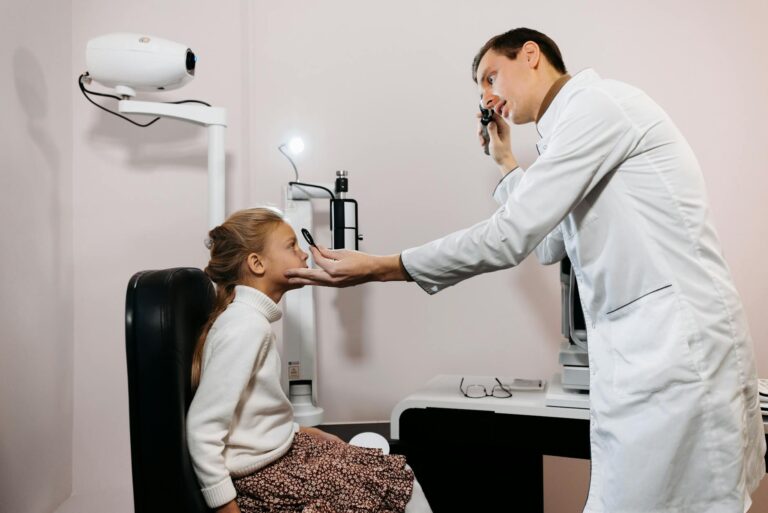
Doctors are combining two old drugs for a new effect because, in many cases, medications that have been safely used for decades turn out to work better together than either does alone — sometimes through mechanisms nobody fully understood until recently. A striking example landed in January 2026, when the FDA approved Yuvezzi, an eye drop that pairs brimonidine tartrate (a glaucoma drug from the 1990s) with carbachol (a cholinergic agent used in eye surgery for decades). Neither drug was designed to treat presbyopia — the age-related blurry near vision that affects most people over 40 — but together they constrict the pupil in a way that sharpens close-up focus. The combination was not only more effective than either component alone, it was actually safer: ocular redness occurred in just 2.8% of Yuvezzi patients in the Phase 3 BRIO-II trial, compared to 10.7% with carbachol by itself. This trend extends far beyond eye drops.
Across oncology, metabolic disease, and even psychiatry, researchers and clinicians are rediscovering that familiar, well-characterized drugs can be repurposed and recombined to treat conditions they were never originally intended for. Approximately one-third of newly approved treatments are now repurposed medications, accounting for roughly 25% of the pharmaceutical industry’s yearly income. The appeal is straightforward: these drugs already have established safety profiles, which slashes development time and cost compared to building a molecule from scratch. This article examines several recent examples of old drugs being combined for new purposes — from a weight-loss injection pairing two hormone mimics to an antidepressant being repurposed alongside an acne medication to fight leukemia. We will also look at how a 67-year-old cancer drug was recently found to work through an entirely different mechanism than scientists believed, and what artificial intelligence is doing to accelerate the pace of drug repurposing. For anyone interested in brain health and aging, these developments matter because the same logic now driving breakthroughs in oncology and metabolic disease is being applied to neurodegenerative conditions, including dementia.
Table of Contents
- What Is Driving Doctors to Combine Old Drugs for New Effects?
- How Combining Hormone Mimics Is Changing Weight Management
- Old Cancer Drug Classes Paired to Outperform Modern Treatments
- When Scientists Discover an Old Drug Works Differently Than Assumed
- Repurposing a 1960s Antidepressant and an Acne Drug for Leukemia
- How Artificial Intelligence Is Accelerating Drug Combination Discovery
- What This Means for Brain Health and Dementia Care Going Forward
- Conclusion
- Frequently Asked Questions
What Is Driving Doctors to Combine Old Drugs for New Effects?
The core idea is deceptively simple. Most drugs interact with multiple biological pathways, but during their initial development, researchers typically focus on a single mechanism for a single disease. Decades later, with better tools and a deeper understanding of disease biology, scientists can identify secondary effects that were overlooked or considered irrelevant. When two drugs with complementary secondary effects are paired, the result can be a treatment that outperforms newer, purpose-built medications — at a fraction of the cost. Consider the economics. Developing a new drug from scratch typically takes 10 to 15 years and costs well over a billion dollars, with no guarantee of approval. Repurposing an existing drug with a known safety record can cut years off the timeline because much of the toxicology and pharmacokinetics work is already done.
When you combine two such drugs, you are essentially building a new therapy from well-understood parts. This is why pharmaceutical companies and academic labs alike have embraced the approach. A 2024 study published in Nature Medicine used a foundation model trained on a medical knowledge graph to rank existing drugs across 17,080 diseases — an effort that would have been unthinkable even a decade ago but is now routine with AI-driven drug discovery platforms. The practical result is a pipeline of combination therapies reaching patients faster. Yuvezzi, the presbyopia eye drop made by Tenpoint Therapeutics, is expected to be broadly commercially available by the second quarter of 2026. Johnson & Johnson’s lung cancer combination of amivantamab and lazertinib received FDA approval on February 17, 2026, for first-line treatment. The pace is accelerating, and the implications for diseases that currently lack effective treatments — including Alzheimer’s and other dementias — are significant.
How Combining Hormone Mimics Is Changing Weight Management
One of the most anticipated drug combinations in development is CagriSema, which pairs cagrilintide (an amylin analog) with semaglutide (the GLP-1 receptor agonist behind Ozempic and Wegovy). Both drugs mimic natural hormones produced by the gut and pancreas that regulate appetite and blood sugar, but they act through different receptor pathways. By hitting two pathways simultaneously, CagriSema produces weight loss that exceeds what either drug achieves on its own. The numbers from clinical trials are substantial. In the REDEFINE 1 trial, published in the New England Journal of Medicine, patients without diabetes lost a mean of 20.4% of their body weight over 68 weeks, compared to 3.0% on placebo. An overwhelming 91.9% of CagriSema patients achieved at least 5% weight loss, versus 31.5% on placebo.
In the REDEFINE 2 trial, which enrolled patients with type 2 diabetes — a population that typically loses less weight on GLP-1 drugs alone — the mean weight loss was still 13.7%, compared to 3.4% on placebo. Novo Nordisk has filed for FDA approval in 2026, with a decision expected later this year. However, these results come with a significant caveat. Gastrointestinal side effects — nausea, vomiting, and diarrhea — affected 79.6% of CagriSema patients, compared to 39.9% on placebo. While the side effects were mostly described as mild to moderate and transient, nearly four out of five patients experiencing GI symptoms is not trivial, particularly for older adults or those with pre-existing digestive conditions. For the dementia care community, the connection is worth watching: obesity in midlife is a well-established risk factor for cognitive decline, and effective weight management tools could have downstream effects on brain health. But the tolerability question will be critical for elderly patients, who are most vulnerable to dehydration from persistent nausea and vomiting.
Old Cancer Drug Classes Paired to Outperform Modern Treatments
Perhaps the most dramatic demonstration of the old-drugs-combined-for-new-effects principle is playing out in oncology. On February 17, 2026, the FDA approved a simplified once-monthly subcutaneous combination of amivantamab (a bispecific antibody sold as Rybrevant) and lazertinib (a tyrosine kinase inhibitor sold as Lazcluze) for first-line treatment of EGFR-mutated non-small cell lung cancer. Bispecific antibodies and tyrosine kinase inhibitors are both established drug classes — but combining them produced results that beat the previous standard of care. In the MARIPOSA Phase 3 trial, the amivantamab-lazertinib combination reduced the risk of disease progression or death by 30% compared to osimertinib, which had been the go-to first-line treatment.
Median progression-free survival was 23.7 months with the combination versus 16.6 months with osimertinib alone — a difference of more than seven months. Made by Johnson & Johnson, the combination also benefited from a simplified delivery format: a once-monthly subcutaneous injection rather than the intravenous infusions that many cancer antibody therapies require, reducing the burden on patients and healthcare systems. This kind of result matters for brain health researchers because the same combinatorial logic is being explored in neurology. If two well-known drug classes can be combined to outperform a newer single agent in lung cancer, the same principle could apply to neuroinflammation or amyloid clearance in Alzheimer’s disease. The challenge, as always, is identifying the right pairings — and that is where new research tools are making a difference.
When Scientists Discover an Old Drug Works Differently Than Assumed
Sometimes the case for combining drugs is strengthened not by a new trial, but by a new understanding of how an old drug actually works. In October 2024, MIT researchers led by senior author Michael Yaffe published a finding in Cell Reports Medicine that upended decades of assumptions about 5-fluorouracil, or 5-FU, one of the most widely used cancer drugs in history. First approved in 1957, 5-FU has been a cornerstone of treatment for gastrointestinal cancers for 67 years. For most of that time, oncologists believed it worked primarily by damaging cancer cells’ DNA. Yaffe’s team discovered that 5-FU actually kills GI cancer cells by disrupting RNA synthesis — specifically, by damaging ribosomal RNA and preventing cells from building ribosomes and producing proteins. This is a fundamentally different mechanism than DNA damage, and it has immediate practical implications for how doctors design combination regimens.
If 5-FU works through RNA disruption rather than DNA damage, then the standard practice of combining it with DNA-damaging chemotherapy drugs may be suboptimal. Instead, pairing 5-FU with drugs that also target RNA synthesis could produce stronger anti-tumor effects in colon and other GI cancers. The tradeoff here is sobering. For decades, patients may have received combination chemotherapy that was less effective than it could have been, simply because the mechanism of one of the drugs was misunderstood. On the other hand, this discovery opens a clear path to better regimens — and it underscores why ongoing research into drug mechanisms matters even for medications that have been in use for generations. For the dementia research community, the parallel is direct: several drugs used in Alzheimer’s trials may have secondary mechanisms that have not yet been fully characterized, and understanding those mechanisms could reveal better combination strategies.
Repurposing a 1960s Antidepressant and an Acne Drug for Leukemia
One of the more unexpected drug combinations to emerge from recent research pairs tranylcypromine (TCP), a monoamine oxidase inhibitor antidepressant first introduced in the 1960s, with all-trans retinoic acid (ATRA, also known as tretinoin), a retinoid compound best known as an acne treatment. Neither drug was developed with leukemia in mind, but researchers discovered that TCP also inhibits LSD1, an enzyme that plays a role in cancer cell growth. When TCP and ATRA are combined, they induce differentiation and exhaustion of leukemic stem cells in non-APL acute myeloid leukemia (AML) — a particularly aggressive form of blood cancer. In a Phase I/II trial of 18 patients with relapsed or refractory AML, the overall response rate was 20%, including two complete remissions. A 20% response rate may sound modest, but context matters enormously here: these were patients who had exhausted all other treatment options. For them, any response is meaningful, and complete remission is exceptional.
The limitation is obvious and important. This was a small, early-phase trial in a highly selected patient population. The results are promising enough to justify further study, but they do not yet support widespread clinical use. Moreover, tranylcypromine carries significant dietary and drug interaction restrictions — patients on MAO inhibitors must avoid tyramine-rich foods and many common medications, which complicates its use in elderly or medically complex patients. For the dementia care world, this example is a useful reminder that drug repurposing is not always straightforward. A drug’s known side effect profile in its original context may look very different when it is used at different doses, in different combinations, or in different patient populations.

How Artificial Intelligence Is Accelerating Drug Combination Discovery
The examples above were largely discovered through traditional research — clinical observation, bench science, and trial-and-error. But the next wave of drug repurposing is being driven by machine learning. A 2024 foundation model published in Nature Medicine was trained on a massive medical knowledge graph and used to systematically rank existing drugs for potential effectiveness across 17,080 diseases.
This kind of computational screening can identify candidate drug combinations that no human researcher would think to test, simply because the biological connections between diseases and drug mechanisms are too numerous and complex for any individual to hold in mind. The implications for dementia research are particularly compelling. Alzheimer’s disease involves multiple interacting pathologies — amyloid plaques, tau tangles, neuroinflammation, vascular dysfunction, and metabolic disruption — and it is increasingly clear that single-target therapies are unlikely to be sufficient. AI-driven screening of existing drugs for multi-target combinations could dramatically accelerate the identification of regimens worth testing in clinical trials, at a fraction of the cost of developing entirely new molecules.
What This Means for Brain Health and Dementia Care Going Forward
The trend toward combining old drugs for new effects is not a curiosity limited to eye drops and oncology. It represents a fundamental shift in how medicine approaches complex, multi-pathway diseases — exactly the kind of diseases that have proven most resistant to single-drug solutions. Dementia, and Alzheimer’s disease in particular, fits squarely in this category. Several research groups are already exploring repurposed drug combinations for neurodegeneration, and the success of combination strategies in cancer and metabolic disease provides both a template and a source of optimism.
What makes this moment different from past waves of drug repurposing enthusiasm is the convergence of better biological understanding, larger clinical datasets, and AI tools that can process both at scale. The discovery that 5-FU works through RNA rather than DNA, after 67 years of use, is a pointed reminder that our understanding of even well-established drugs is incomplete. As that understanding deepens — and as computational tools make it possible to systematically explore the space of possible drug combinations — the odds of finding effective, affordable treatments for conditions like dementia improve meaningfully. The drugs may already exist. The challenge is finding the right combinations.
Conclusion
The practice of combining old drugs for new therapeutic effects is producing results across medicine — from a presbyopia eye drop that is safer than one of its own components, to cancer regimens that outperform modern targeted therapies, to metabolic treatments that achieve unprecedented weight loss. These successes are not accidents. They reflect a growing recognition that the pharmacopeia already contains powerful tools whose full potential has not been realized, and that the right combinations can unlock effects that no single drug achieves alone. For those focused on brain health and dementia care, the message is cautiously encouraging.
The same combinatorial logic, accelerated by artificial intelligence and grounded in decades of safety data, is being directed at neurodegenerative disease. No one should expect a miracle combination to emerge overnight — the history of Alzheimer’s drug development is littered with disappointments. But the approach is sound, the tools are better than they have ever been, and the pipeline of repurposed drug candidates is growing. Staying informed about these developments is one of the most practical things patients, caregivers, and clinicians can do as this field evolves.
Frequently Asked Questions
What does it mean to “repurpose” a drug?
Drug repurposing means using an existing, approved medication to treat a condition it was not originally developed for. Because the drug’s safety profile is already established, this approach can significantly reduce the time and cost of bringing a new treatment to patients.
How common is drug repurposing in new treatments?
Approximately one-third of newly approved treatments are repurposed medications, and these account for about 25% of the pharmaceutical industry’s yearly income. The practice has become a significant part of modern drug development.
Is combining old drugs always safer than using new ones?
Not necessarily. While individual drugs may have well-known safety profiles, combining them can introduce new side effects or interactions. For example, CagriSema’s combination of cagrilintide and semaglutide produced GI side effects in 79.6% of trial participants. Each combination must be rigorously tested in clinical trials.
Could drug combinations help treat Alzheimer’s or other dementias?
Researchers are actively exploring this possibility. Alzheimer’s involves multiple biological pathways — amyloid buildup, tau tangles, inflammation, and vascular problems — which makes it a strong candidate for multi-drug combination approaches. AI-driven screening tools are helping identify promising drug pairings for further study.
How is AI changing drug repurposing?
Machine learning models can now analyze vast medical knowledge graphs to rank existing drugs for potential effectiveness across thousands of diseases. A 2024 Nature Medicine study used this approach to evaluate drugs across 17,080 diseases, identifying candidates that human researchers might never have considered.