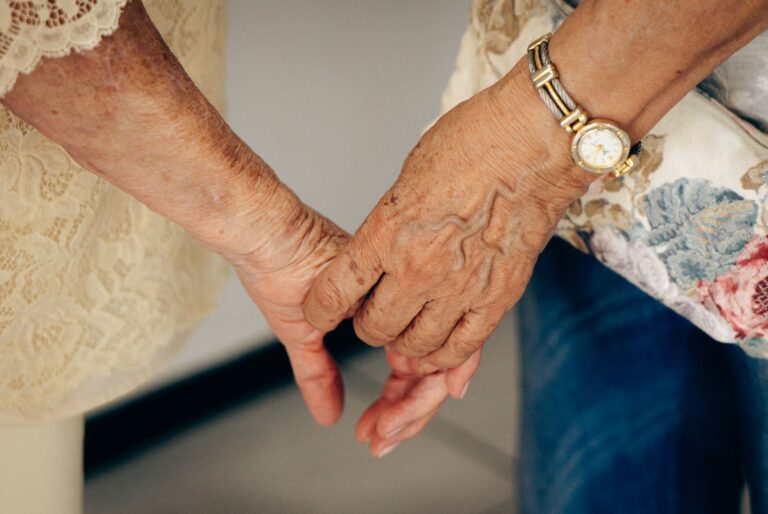
Creative activities matter profoundly for people with dementia because they engage parts of the brain that remain intact even when memory circuits deteriorate. When someone can no longer reliably recall yesterday’s conversation, they may still be able to paint, sing, play an instrument, or work with their hands in ways that feel purposeful and connected. This happens because memory loss in dementia typically affects episodic memory—the recall of specific events—before significantly damaging procedural memory, emotional processing, and sensory-motor skills that creativity relies on. A person with moderate dementia might not remember attending a painting session ten minutes after it ends, but the act of painting activates regions of the brain involved in focus, color perception, spatial reasoning, and emotional expression.
The practical benefit extends beyond brain engagement. When Margaret, a 72-year-old with Alzheimer’s disease, could no longer carry on conversations or recognize family members reliably, she still participated in a pottery class at her memory care facility. During the class, her hands moved with purpose, she made eye contact with her instructor, and she experienced moments of visible satisfaction. Her daughter reported that Margaret seemed more present and calmer on pottery days than on other days, even though Margaret had no memory of what she’d made by evening. Creative activity became a reliable anchor point for dignity and engagement when traditional memory-based interactions had become fragmented.
Table of Contents
- How Does Creativity Activate the Brain When Memory Is Failing?
- Emotional and Psychological Benefits Beyond the Brain Scans
- How Creative Work Preserves a Sense of Continuous Identity
- Practical Structure for Creative Activities in Daily Care
- Realistic Expectations and the Grief of Changing Abilities
- The Social and Relational Value of Creating Together
- Specific Creative Modalities and Their Particular Advantages
How Does Creativity Activate the Brain When Memory Is Failing?
Memory decline in dementia doesn’t uniformly erase all cognitive function. Neuroimaging studies have consistently shown that procedural memory—the memory for how to do things, from riding a bike to playing a guitar—is often preserved longer than declarative memory, which handles facts and events. This distinction is fundamental to understanding why creative work remains accessible. When a person sits down to draw, paint, or sculpt, they’re not primarily relying on the ability to remember what happened at breakfast. They’re using visual-spatial processing, motor planning, color discrimination, and hand-eye coordination—cognitive systems that operate somewhat independently from the memory circuits most affected by dementia. Music offers a particularly compelling example of this preservation.
Research on dementia patients who were musicians shows that even in advanced stages, some individuals retain the ability to play familiar pieces or to respond emotionally to music, despite severe impairment in other cognitive domains. A former concert pianist with late-stage Alzheimer’s may not recognize her own children but can still physically produce coherent melodic patterns when her hands touch piano keys. The motor memory and the deeply encoded musical pathways remain active when newer memories fade almost immediately. This doesn’t mean all creative abilities survive equally—the ability to learn something entirely new becomes much harder as dementia progresses—but the ability to engage in established creative practices often persists. The emotional engagement that accompanies creative work also stimulates neural activity in ways distinct from cognitive memory tasks. Creating something, even something simple, activates the brain’s reward systems and involves regions associated with attention, intention, and sensory processing. This creates a qualitatively different kind of brain engagement than testing someone’s recall of dates or names, and that engagement can feel genuinely meaningful to the person experiencing it, moment by moment.
Emotional and Psychological Benefits Beyond the Brain Scans
While increased neural activation is measurable and real, the emotional value of creative activity may matter just as much to quality of life. Creative engagement provides a sense of agency—the feeling of making something happen, of having some control in circumstances where control has been steadily eroding. For someone experiencing the disorientation and loss of autonomy that accompany dementia, the simple act of choosing a color, making a mark on a page, or shaping clay with their hands can represent a kind of power that few other daily activities offer. However, this benefit depends heavily on how the activity is framed and managed. A warning worth noting: if creative activities are imposed as therapy in a way that prioritizes the product over the person’s actual engagement, or that becomes another obligation rather than an opportunity, they lose their psychological value.
An elderly man forced to do “art therapy” as a scheduled task may experience resentment or anxiety rather than joy. Conversely, the same man invited to the same activity by someone he trusts, given genuine choice in whether and how to participate, and allowed to work at his own pace without judgment, may experience that same time as restorative and affirming. The emotional consistency of creative practice also provides an alternative kind of memory when explicit recall fails. Someone might not remember a conversation about an artist they love, but if given access to supplies and a quiet space, they’ll naturally gravitate toward their preferred medium. The body and the emotional response remember what the conscious mind cannot. This creates continuity of self and preference that becomes increasingly important as cognitive function declines.
How Creative Work Preserves a Sense of Continuous Identity
One of the deepest losses in dementia is the fragmentation of identity. A person may lose track of their own story, their accomplishments, their preferences, and their role in their own life. Creative activity, especially when it involves familiar mediums, can function as an anchor to the pre-dementia self. A woman who spent forty years as a seamstress might no longer be able to follow complex sewing patterns, but handling fabric, threading needles, and working with her hands may reconnect her with decades of muscle memory and embedded identity. This preservation can be particularly powerful in the case of lifelong creative practitioners.
A retired architect with dementia may struggle to recognize his wife, but when given large paper and pencils, he may spontaneously begin drawing architectural forms—not as a learned response to therapy, but as an automatic expression of how his mind has been trained to see space and structure. His drawings may be less refined than they once were, and he may not remember making them, but in the act of creating, he is expressing something fundamental about himself that persists beneath the cognitive loss. The limitation to acknowledge is that this identity continuity requires opportunity and access. Someone who was never encouraged to pursue creative activities before dementia onset won’t have this form of engagement to fall back on. And even for lifelong practitioners, the complexity of what they can attempt will likely decrease. The goal isn’t to recreate their former level of mastery, but to maintain some form of engagement with what has always felt like an essential part of who they are.
Practical Structure for Creative Activities in Daily Care
Translating the benefits of creative engagement into actual practice requires realistic planning. The most successful creative activities for people with dementia are usually those that are simple enough to begin without extensive instruction, flexible enough to have no wrong outcome, and short enough to fit into the variable attention span that dementia often involves. A one-hour structured art class with complex rules and expectations frequently fails, while access to familiar craft supplies with a quiet space and minimal instruction often succeeds. Comparison between structured programs and open access illustrates this difference. A memory care facility that offers a weekly pottery class at a set time with an instructor teaching specific techniques may serve some residents well, particularly those still in earlier stages of dementia. The same facility that also leaves out a basket of colored pencils, sketchbooks, beads, and yarn for residents to use whenever they choose, without instruction or expected outcome, often sees higher engagement overall.
Some residents use both opportunities; many prefer the freedom of the open access approach. The key variable is reducing barriers to entry—fewer decisions about when, lower pressure to perform, no expectation of a product. Timing also matters more than many caregivers expect. Someone with dementia is typically sharper and more able to focus during their own personal peak hours, which might be morning for some people and late afternoon for others. Offering creative opportunities during a person’s worst hours—when agitation is highest and attention is most fragmented—sets up failure. Understanding individual patterns and aligning creative activities with them takes observation but requires no special resources.
Realistic Expectations and the Grief of Changing Abilities
One consistent challenge: creative abilities decline as dementia progresses, and watching that decline can be emotionally difficult for both the person with dementia and their caregivers. A person who could once paint with precision and vision may progress to making simple marks and colors that show little intentionality. There’s a real grief in that change, and it’s important not to gloss over it with overly optimistic framing of “creative engagement for its own sake.” The loss is genuine. Another practical warning: some people with dementia experience increased frustration, not engagement, when confronted with materials or tasks that once came naturally but now feel impossible. A formerly skilled quilter might become deeply agitated when attempting to measure and cut fabric accurately and finding she cannot. In these cases, the activity that was once meaningful becomes a source of distress.
The appropriate response isn’t to force continued engagement with the same medium, but to shift toward simpler creative outlets—perhaps sorting fabric by color, or feeling textures, or arranging pre-cut pieces without the expectation of precise execution. The emotional trajectory isn’t always decline, though. Some individuals find unexpected satisfaction in less sophisticated creative work than they engaged in before. Someone’s careful, controlled paintings might give way to looser, more expressive mark-making, and a few people genuinely seem to enjoy this shift. But assuming this will happen, or suggesting that it represents progress, imposes a false narrative. The honest approach is to watch, respond to what seems to bring actual engagement rather than apparent resistance, and accept that creativity becomes different rather than better or worse.
The Social and Relational Value of Creating Together
Creative activities rarely happen in isolation, even for solitary practitioners. A daughter might sit next to her mother while her mother draws, without contributing herself. A husband might handle the materials while his wife makes the choices about color and placement. These shared moments have their own value distinct from what the person with dementia accomplishes alone.
The simple presence of another person, the implicit message that what the person is doing matters enough to be witnessed, and the opportunity for non-verbal connection through a shared activity all constitute a form of relationship that goes beyond language and memory. In some dementia care settings, group creative activities create social structures that might otherwise be difficult to maintain. A group painting session doesn’t require conversation or the recall of shared history. Residents can sit together, work on their own pieces, and be part of a common activity without the cognitive demand of remembering names or processing complex social exchange. For people whose social isolation has deepened because dementia has made conversation harder, this kind of parallel engagement can be genuinely valuable.
Specific Creative Modalities and Their Particular Advantages
Different creative mediums engage the brain differently and suit different individuals and different stages of dementia. Music—listening to it, moving to it, playing familiar pieces—activates memory and emotion in ways visual art alone does not. Even non-musicians often respond to music in advanced dementia, making it among the most universally accessible creative engagements. A person who cannot speak coherently may sing lyrics from a beloved song with perfect clarity and emotional accuracy. Gardening, for those with mobility and physical ability, offers sensory engagement (soil, texture, smell, growth), an outcome that’s visible over time, and a creative process that doesn’t require explanation or formal instruction.
Cooking similarly combines sensory engagement, familiar skills, a clear product, and the possibility of sharing that product with others. Textile-based crafts—knitting, crochet, weaving, quilting—often remain accessible longer than visual arts because they rely heavily on procedural memory and because the repetitive, rhythmic nature of the work can be genuinely calming for people experiencing anxiety. Photography and collage can work for those who want to create something visual but can’t manage the motor control or sustained attention that painting or drawing requires. The practical point is that there’s no single “best” creative activity; the most meaningful activity is one that matches the person’s remaining abilities, aligns with their past interests, and—critically—is actually available and accessible in their current living environment. A piano in the facility is useless if someone plays piano but can’t navigate getting to it. Simple craft supplies left in a common area are accessible regardless of cognitive or physical limitations, provided someone is available to assist with initial engagement if needed.
- —