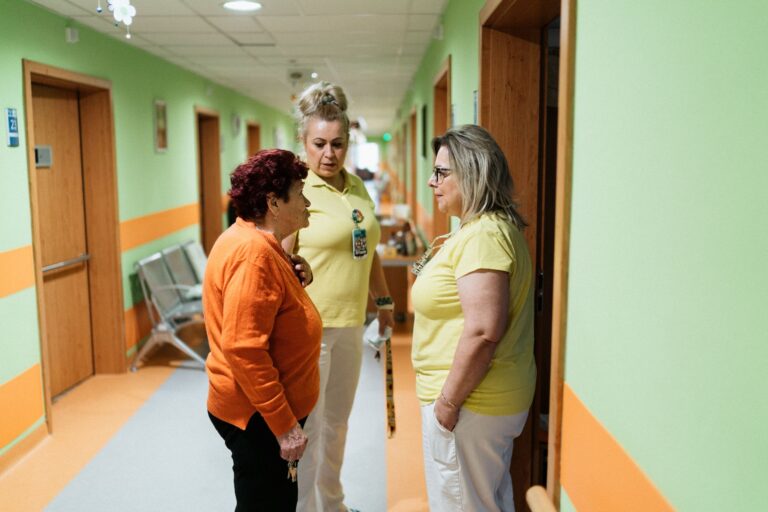
Caregiver sleep matters in dementia care because an exhausted caregiver cannot reliably manage medications, monitor safety, or recognize warning signs of health crises. A caregiver who loses even one night of sleep has measurably slower reaction times—about 30% slower—than someone driving legally drunk. When you’re responsible for another person’s wellbeing, that impairment isn’t just dangerous; it’s often fatal. A single missed dose of blood pressure medication, a fall on a night when you didn’t hear the person trying to get up, or misidentifying a stroke symptom because you’re too tired to focus clearly can mean the difference between a managed situation and an emergency department visit. Dementia caregiving is uniquely exhausting because the person being cared for doesn’t follow a predictable schedule.
They may wander at 2 AM, wake up agitated at 4 AM, or sleep through the day and stay awake all night. Unlike caring for a child who will eventually sleep through the night, dementia-related sleep disruption often persists for years. A 58-year-old daughter caring for her mother with Alzheimer’s disease might wake up an average of 4 to 5 times per night for three years straight. That cumulative sleep loss drives up the caregiver’s risk for heart attack, stroke, depression, and weakened immune function—health crises that then pull the caregiver out of the caregiving role entirely. The hard reality is this: the caregiver’s sleep is not a luxury or self-care bonus. It’s essential infrastructure for safe dementia care.
Table of Contents
- How Sleep Loss Impairs Caregiver Judgment and Response Time
- The Health Crisis Caregivers Don’t See Coming
- How Caregiver Sleep Loss Affects Dementia Patient Safety
- Creating a Sleep Plan: What Works and What Doesn’t
- Common Sleep Disruptions Caregivers Face
- When Professional Respite Care Becomes Essential
- Recognizing Sleep Deprivation Emergency Signs
How Sleep Loss Impairs Caregiver Judgment and Response Time
Sleep deprivation affects the prefrontal cortex, the part of the brain responsible for decision-making, impulse control, and risk assessment. After 24 hours without sleep, a person’s cognitive performance is roughly equivalent to having a blood alcohol level of 0.10%—legally intoxicated. For someone making dozens of micro-decisions every day—whether to give a PRN medication, whether that confusion is normal or a sign of infection, whether to call 911—that level of cognitive fog is dangerous. A caregiver running on 4 hours of fragmented sleep per night will show measurable delays in reaction time, difficulty reading facial expressions and emotional cues, and reduced ability to multitask. These aren’t minor inconveniences.
They affect the caregiver’s ability to notice when the person with dementia is in pain (dementia patients often cannot say “my hip hurts” or “I need the bathroom”), to catch medication errors before they happen, and to stay alert during high-risk periods like nighttime bathroom trips or medication administration. A caregiver who is exhausted is more likely to accidentally give the wrong dose, miss a fall, or misinterpret behavioral changes as “sundowning” when they’re actually signs of a urinary tract infection. The cognitive impairment is temporary but cumulative. Each night of poor sleep makes the next day’s decisions harder. After a week of broken nights, a caregiver is operating on a constantly depleted cognitive reserve, like trying to drive a car with the fuel light on and only fumes in the tank.
The Health Crisis Caregivers Don’t See Coming
Chronic sleep deprivation activates the stress response system, flooding the body with cortisol and adrenaline night after night. Over months, this dysregulates the immune system, increases inflammation throughout the body, and raises blood pressure. Caregivers who sleep fewer than 5 hours per night have a 65% higher risk of heart attack compared to those who sleep 7 to 8 hours. They also have double the risk of stroke. Depression is almost inevitable in chronically sleep-deprived caregivers. The lack of deep sleep disrupts the brain’s ability to regulate neurotransmitters like serotonin and dopamine.
A caregiver who was never depressed before may find themselves unable to get out of bed on certain mornings, or feeling a pervasive numbness that makes caregiving feel even more overwhelming. This is not weakness or lack of willpower; it’s a direct neurochemical consequence of sleep loss. The trap is that the depression often goes unrecognized because the caregiver attributes it to the stress of caregiving rather than the sleep deprivation itself. One limitation to keep in mind: some caregivers in intensive care situations literally cannot get more sleep, no matter how hard they try. A spouse caring for a dementia patient who wakes up 6 to 8 times per night may physically be unable to reach the 7-hour minimum. In these cases, caregiver health is on a countdown timer unless respite care or facility placement becomes available. Ignoring this reality and simply telling the caregiver to “sleep more” adds guilt on top of exhaustion.
How Caregiver Sleep Loss Affects Dementia Patient Safety
When the caregiver is exhausted, the person with dementia is at higher risk. An alert, well-rested caregiver will notice subtle changes—a slightly different gait that suggests pain, a new tremor, confusion that’s different from baseline. An exhausted caregiver might miss these signs entirely. Dementia patients often cannot report their own symptoms clearly. A person with moderate Alzheimer’s disease cannot say “I think I have a bladder infection” or “My arthritis is worse today.” The caregiver has to observe and interpret. Miss the signs because you’re too tired, and the infection can progress to sepsis before anyone realizes it. Falls are a major cause of death and disability in older adults with dementia.
A caregiver who is awake and alert can often catch a fall in progress, or at least respond quickly to a fall on the floor. An exhausted caregiver might be asleep when a fall happens, delaying emergency response by crucial minutes. Falls in dementia patients often result in fractures, head injuries, and hospitalization—and hospitalization itself is a major risk factor for rapid cognitive decline. Medication errors also increase when caregivers are sleep-deprived. A caregiver managing five different medications at different times of day, with complicated interactions and specific instructions about food and timing, is performing a cognitively demanding task. Fatigue makes errors more likely: giving a dose twice by accident, forgetting a dose, or mixing up medications between family members. Some of these errors are caught immediately; others cause harm before anyone realizes the mistake.
Creating a Sleep Plan: What Works and What Doesn’t
An effective sleep plan for caregivers acknowledges that perfect sleep is not possible and focuses on protected sleep—a period of guaranteed uninterrupted time. This might mean hiring overnight respite care a few nights per week so the caregiver can sleep without waking to monitor sounds. Or it might mean moving the person with dementia to sleep in a room with a baby monitor so the caregiver can sleep in another room and will hear but not be startled by every movement. The comparison between “more sleep” and “better sleep” matters here. A caregiver who gets 5 hours of uninterrupted deep sleep may be more functional than one who gets 8 hours of fragmented, light sleep.
Deep sleep requires a certain window of time in a safe, quiet environment. If the caregiver is sleeping lightly because they’re listening for sounds, or waking every hour because of ambient noise, the sleep quality is poor even if the duration looks adequate on paper. Investing in a white noise machine, blackout curtains, or a separate sleeping space can improve sleep quality dramatically. One tradeoff: some caregivers try to “catch up” on sleep by sleeping in during the day. Weekend sleep binges or irregular sleep schedules can actually make the sleep deprivation worse over time because the body’s circadian rhythm gets disrupted. Consistent sleep timing—going to bed at the same time each night and waking at the same time—improves sleep quality more than sleeping more hours at irregular times.
Common Sleep Disruptions Caregivers Face
Dementia patients experience their own sleep disruptions—sundowning, where confusion and agitation increase in late afternoon and evening, is extremely common. A person with dementia might be agitated and unable to sleep from 6 PM to midnight, then sleep deeply from 1 AM to 4 AM, then wake and be unable to go back to sleep. If the caregiver tries to follow the patient’s schedule, their own sleep becomes entirely inverted, with severe consequences for their circadian rhythm and overall health. A caregiver cannot sustainably stay awake all evening and all night just because the patient is awake. Incontinence is another major disruptor. If the person with dementia cannot use the toilet independently and has no consistent toileting schedule, the caregiver might need to change soiled bedding multiple times per night.
This is not just a single wake-up; it’s a 15-minute task that fully wakes the caregiver’s brain and makes returning to sleep difficult. Some caregivers use protective briefs specifically to minimize nighttime disruption, trading dignity for caregiver sustainability—a difficult ethical tradeoff. A warning about sleep medications: many caregivers consider giving the person with dementia a sedating medication to make them sleep longer so the caregiver can get uninterrupted sleep. This is extremely risky. Sedating medications in older adults, especially those with dementia, increase the risk of falls, confusion, urinary retention, and aspiration. The medication might help the person sleep, but it can cause serious harm. This is not a legitimate solution and should never be pursued without explicit instruction from the person’s neurologist or physician—and usually should not be pursued at all.
When Professional Respite Care Becomes Essential
Respite care is care provided by someone other than the primary caregiver, specifically to give the caregiver time off. This might be a part-time aide who comes 3 afternoons per week, or a facility-based program where the person with dementia spends a few nights in a care facility. The caregiver uses this time to sleep, or to handle other life tasks, or simply to not be “on call” for a few hours. For a caregiver in severe sleep deprivation, respite care is not a luxury; it can be the difference between the caregiver having a stroke or not.
A caregiver who manages to get 2 uninterrupted nights of 8-hour sleep per month can recover some of the cognitive and physical damage from chronic sleep deprivation. Even partial respite—a few hours once a week—helps. The financial cost is significant, and not all families can afford it, which is part of why caregiver burnout is so common. But if respite care is available, using it to protect the caregiver’s sleep is not selfish; it’s essential for safe, sustainable care.
Recognizing Sleep Deprivation Emergency Signs
Some caregivers reach a crisis point where they can no longer safely manage alone. Warning signs include: falling asleep while sitting up during the day, inability to remember simple conversations or instructions, angry or emotional outbursts over minor issues, physical symptoms like chest pain or severe headaches, or active thoughts of harming themselves or the person they’re caring for. These are not signs of weakness; they’re signs that the system is failing.
When a caregiver reports falling asleep while responsible for another person, or hearing alarm bells but not being able to respond because they’re too groggy, that caregiver is in crisis and needs immediate intervention—whether that’s emergency respite care, a temporary facility placement for the person with dementia, or family members taking over care temporarily. Waiting for the caregiver to “rest a bit more on the weekend” will not fix this level of sleep deprivation. What it requires is structural change: different staffing, different living arrangements, or acknowledgment that the current care situation is not sustainable.
- —