Reviewed by the Help Dementia Editorial Team — our editors review every article for accuracy against guidance from the National Institute on Aging, the Alzheimer’s Association, and peer-reviewed sources.
Balance exercises are now recognized as a direct dementia prevention strategy, not merely a tool to prevent falls in older adults. Research shows that people with better balance performance have lower risk of developing dementia, and targeted balance training programs can improve cognitive outcomes alongside physical stability.
This shift reflects a fundamental change in how gerontologists and neuroscientists understand the connection between physical and cognitive aging—balance training strengthens the very systems in your brain that slow cognitive decline. The evidence is compelling: a 65-year-old who participates in regular balance exercises 1-2 times per week over several months is not just protecting themselves from a fall-related injury; they’re actively reducing their risk of developing dementia in their later years. This article explores why balance has moved from the periphery of dementia prevention to a central pillar of brain health strategy, what the latest research reveals about the mechanisms at work, and how to approach balance training as part of a comprehensive brain protection plan.
Table of Contents
- What Changed in How We View Balance and Dementia Risk?
- How Balance Training Actually Protects Your Brain
- The Role of Balance in Multicomponent Dementia Prevention
- Building a Sustainable Balance Practice
- Who Benefits Most, and When Balance Training Has Limitations
- The November 2025 JAMA Study and Recent Exercise Research
- The Future of Balance Training in Dementia Prevention
- Conclusion
What Changed in How We View Balance and Dementia Risk?
For decades, balance training was prescribed almost exclusively as a fall-prevention strategy—the logic being straightforward: improve stability, reduce falls, reduce serious injuries. That framing was never wrong, but it was incomplete. Recent research has revealed a much deeper connection: the neurological systems that control balance are intimately linked with cognitive function and neurodegeneration. Studies now show a non-linear association between better balance performance and lower likelihood of developing dementia, meaning that even modest improvements in balance correlate with measurable reductions in dementia risk.
The shift also reflects the World Health Organization’s updated approach to dementia prevention in older adults aged 65 and above. Rather than treating balance as one isolated concern among many, current WHO frameworks now position balance exercises as part of a multicomponent strategy that includes aerobic training, progressive resistance training, and cognitive-motor dual tasks—essentially, activities that challenge the brain and body simultaneously. This is not a minor recategorization; it represents recognition that balance is a cognitive process as much as it is a physical one. What makes this particularly important is that balance training has proven efficacy even in people who already have mild to moderate dementia. A consistent body of evidence shows that prolonged balance-based exercise programs (typically 1-2 sessions per week over 12 to 25 weeks) improve balance in this population, but the benefits don’t stop there—these programs also support broader cognitive functioning and may slow decline.

How Balance Training Actually Protects Your Brain
The mechanisms behind balance training’s cognitive benefits are rooted in brain biology. Regular exercise, including balance work, reduces inflammation and amyloid plaque formation—the toxic protein accumulations that damage brain cells and drive neurodegenerative diseases like Alzheimer’s. In addition, recent research from 2026 shows that exercise strengthens the blood-brain barrier, the specialized membrane that filters what enters the brain and protects neural tissue from harmful substances. A healthier blood-brain barrier means better overall brain health and potentially stronger defenses against dementia. The cognitive component is equally important. When you perform balance exercises—especially those that combine physical stability with cognitive demands, like balancing while counting backward or remembering a sequence—you’re engaging multiple brain systems simultaneously.
This dual-task training strengthens neural pathways involved in attention, processing speed, and executive function. A February 2026 study on cognitive speed training found that individuals who completed 8-10 sessions of intensive cognitive training, plus periodic booster sessions, had a 25% lower risk of dementia diagnosis over a 20-year follow-up period. While this study focused specifically on cognitive speed, it illustrates a broader principle: targeted, sustained cognitive engagement is one of the most powerful dementia prevention tools available. However, it’s important to note that these benefits require consistency. A single balance session or a brief exercise program will not produce lasting cognitive protection. The research demonstrates benefits from programs sustained over weeks and months, indicating that balance training must be integrated into a long-term lifestyle pattern to meaningfully reduce dementia risk.
The Role of Balance in Multicomponent Dementia Prevention
Dementia prevention is not a single intervention but a collection of reinforcing strategies. Current evidence supports multicomponent programs that combine aerobic training (like brisk walking), progressive resistance training (strength work), balance exercises, and cognitive-motor dual tasks to maximize cognitive outcomes. No single element stands alone; instead, they amplify each other. A person who walks regularly for aerobic fitness, adds resistance training to maintain muscle and bone health, performs balance exercises, and engages in dual-task activities (like walking while solving mental math problems) is building redundancy into their brain’s defense systems.
A practical example: a 70-year-old woman might participate in a twice-weekly class that combines 10 minutes of aerobic warm-up, 15 minutes of strength work using light weights or resistance bands, 20 minutes of balance training (standing on one leg, tandem walking, reaching movements), and 10 minutes of dual-task exercises like stepping while reciting the alphabet backward. This integrated approach addresses multiple risk factors simultaneously—cardiovascular fitness, muscle strength, stability, and cognitive agility—in a single time-efficient session. The advantage of this multicomponent approach is that it addresses the reality of aging: dementia risk doesn’t arise from a single cause but from multiple interconnected biological changes. A program that targets only balance leaves other risk factors unaddressed. Conversely, a program that addresses multiple domains simultaneously creates broader protection.

Building a Sustainable Balance Practice
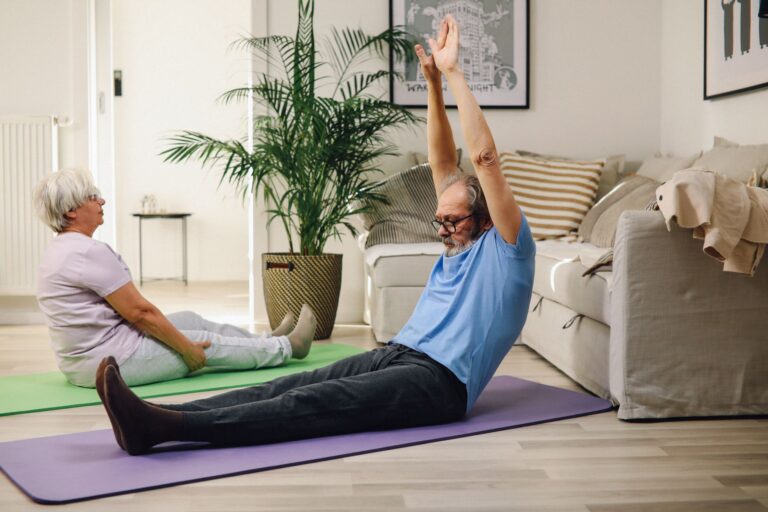
Starting a balance program doesn’t require expensive equipment or a specialized trainer, though both can be helpful. The most effective programs are those that people actually sustain over time, which means finding an approach that fits your current abilities, preferences, and lifestyle. A person with normal balance might begin with exercises like standing heel-to-toe (tandem stance), walking a straight line, or standing on one leg for increasing durations. Someone with balance difficulties or dementia-related motor changes would work with a physical therapist to modify these exercises appropriately. The frequency matters: research supports 1-2 sessions per week as a minimum for seeing meaningful cognitive benefits. A person with serious fall risk or existing balance impairment might benefit from more frequent sessions initially, potentially under professional guidance.
However, frequency alone isn’t the metric—consistency and progression are. The goal is to sustain balance training across years, which means the program must feel sustainable rather than burdensome. A 15-minute daily practice that someone maintains for five years will likely provide more cognitive benefit than an intensive two-month program followed by abandonment. One important distinction: balance exercises designed for dementia prevention are often different from those designed purely for fall prevention. Fall prevention emphasizes high-challenge movements that build reactive balance. Dementia prevention balance programs often integrate cognitive elements—like performing balance movements while reciting information or solving problems—to maximize engagement of the cognitive systems you’re trying to protect.
Who Benefits Most, and When Balance Training Has Limitations
Balance training appears to benefit most older adults, but the evidence is strongest in people with at least some baseline cognitive or physical decline. A cognitively healthy 60-year-old will likely see some benefit from balance training, but a 75-year-old with subjective cognitive complaints or early balance problems will probably see more pronounced protective effects. Similarly, people with mild to moderate dementia show clear improvements in balance from structured training, though the long-term cognitive benefits for this population are still being researched.
However, balance training is not a complete solution to dementia risk on its own, and this is an important limitation to acknowledge. Dementia is a multifactorial disease influenced by genetics, cardiovascular health, sleep quality, cognitive engagement, social connection, diet, and many other factors. Someone with a strong family history of early-onset Alzheimer’s disease, or with significant cardiovascular disease, cannot rely solely on balance exercises to prevent dementia. Additionally, balance training in the context of severe cognitive impairment or other neurological conditions may have different risk-benefit ratios—a person with advanced dementia and significant fall risk, for example, might need fall prevention strategies that supersede cognitive optimization.

The November 2025 JAMA Study and Recent Exercise Research
In November 2025, a significant study in JAMA demonstrated that exercise in mid- to late-life is particularly effective at reducing dementia risk, with especially strong benefits when exercise is sustained over years. This finding aligns with the multicomponent balance training literature and reinforces a key message: the dementia prevention benefits of balance work are greatest when balance training is part of a sustained, multicomponent exercise program.
The 2025-2026 research cycle has produced three major insights: the sustained effectiveness of exercise programs over months and years; the cognitive benefits of dual-task training (combining physical and mental challenges); and the blood-brain barrier mechanism—showing that exercise literally strengthens the structural barriers protecting the brain. These findings have shifted the conversation from “exercise prevents falls” to “exercise prevents dementia,” and balance exercises sit squarely in the center of this evidence base.
The Future of Balance Training in Dementia Prevention
As research continues, balance training is likely to become even more integrated into standard dementia prevention protocols—similar to how cardiovascular exercise has moved from optional health advice to central public health guidance. Health systems and aging programs are beginning to recognize balance training not as a specialty intervention but as a fundamental preventive health practice, alongside blood pressure screening and cognitive assessment.
The practical implication is clear: if you are over 50, cognitively healthy, and looking to reduce your dementia risk, balance training should already be part of your approach. If you are over 65, have any cognitive concerns, or have noticed changes in your balance, balance training becomes even more important. The evidence now supports what was once considered a peripheral concern as a central pillar of brain health.
Conclusion
Balance exercises have shifted from being viewed primarily as fall prevention tools to being recognized as a direct intervention for dementia prevention. Research demonstrates that better balance performance is associated with lower dementia risk, that balance training improves balance even in people with mild to moderate dementia, and that the mechanisms—reduced inflammation, stronger blood-brain barriers, and enhanced cognitive engagement—are deeply protective to the aging brain. The World Health Organization, Johns Hopkins researchers, and major health institutions have all incorporated balance training into their dementia prevention frameworks.
The next step is translating this evidence into your own life. Whether through a structured class, a physical therapist’s program, or a home-based routine, starting or sustaining a regular balance practice (1-2 times per week, integrated with other forms of exercise) is a concrete, evidence-backed step toward preserving your cognitive health. The research shows that this action matters—not someday, but measurably over years and decades of cognitive protection.
You Might Also Like
- The Chair Exercise Routine for Seniors That Still Provides Dementia Prevention Benefits
- Why Yoga Is Being Studied as a Dementia Prevention Activity and the Results Are Encouraging
- Why the MIND Diet Is Now Considered the Gold Standard for Dementia Prevention Eating
For more, see NIH MedlinePlus — dementia.