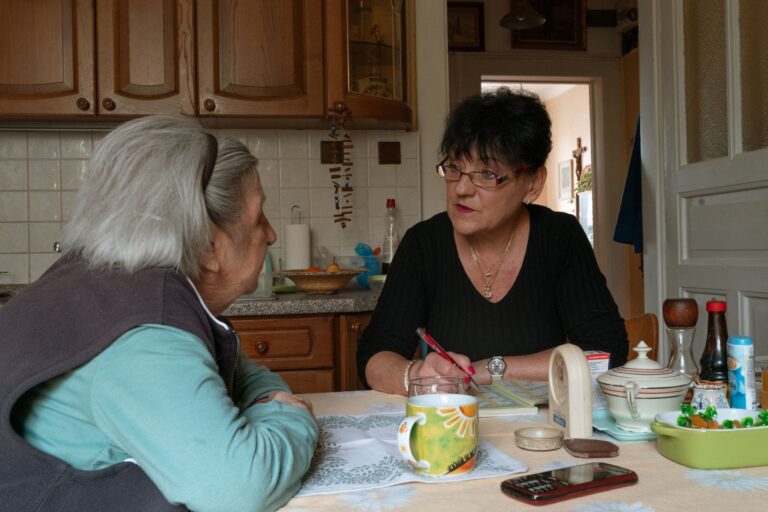
Tell close family soon after the diagnosis, after asking the person with dementia for permission to share it. Start with a small circle of trusted relatives in a calm, private, unhurried talk, then widen the circle later as needed. Dementia means ongoing decline in memory, thinking, and daily function caused by brain disease. Early, planned sharing reduces secrecy and confusion, helps relatives respond with support, and lets the family agree on next help.
Medical information disclaimer: This article is for general educational purposes only and does not provide medical advice, diagnosis, or treatment. Always consult a physician or other qualified health professional about symptoms, medications, tests, or treatment decisions.
Table of Contents
- Who decides what to share?
- How should the conversation go?
- What should children and teens be told?
- What helps after family knows?
Who decides what to share?
Before telling wider family, caregivers should first ask the person with dementia for permission to share the diagnosis, respecting privacy, then jointly decide who needs to know and how to tell them, according to the Mayo Clinic Press in its guidance after an Alzheimer's or related dementia diagnosis. That joint choice protects dignity. It also prevents disagreements about who was told and why.
Disclosure works best in stages, the Alzheimer's Association explains in its "I Have Something to Tell You" article. Tell a small circle of close family and friends first, then widen later to others only as needed. Expect more than one conversation over time as questions arise.
How should the conversation go?
Choose a quiet time alone with selected family, without rushing or distractions. The Alzheimer's Association advises this calm, private setting because a relaxed talk increases the chance of a supportive reaction. Sit down, allow pauses, and let each person react in their own way. Be honest and plain.
The U.S. National Institute on Aging advises caregivers to say it is Alzheimer's, explain it is a brain disease, and share basic facts and resources. Family and friends often already sense something is wrong. Clear facts replace guesswork and invite practical help.
What should children and teens be told?
Tell children honestly in age-appropriate language what dementia is and how it is changing their loved one, as Dementia UK recommends in its support for children and adolescents. Use short words for young children. Give teens more detail about symptoms and care.
Give them time to express feelings and ask questions. Shielding them tends to cause more confusion and worry. A simple follow-up helps, such as asking what felt hardest about the visit.
What helps after family knows?
Ask for concrete help right away. The U.S. National Institute on Aging lists this practical follow-up in its next steps after an Alzheimer's diagnosis.
Be specific so relatives can say yes. The World Health Organization also advises preparatory discussion of preferences and cultural sensitivities, plus clear information and ongoing support. Invite family to join an education and support group with you.
- cooking meals or shopping for groceries
- help with bills and paperwork
- rides to visits and errands