When a person with dementia can no longer speak, it means the disease has damaged the parts of their brain responsible for producing language. This is called expressive aphasia or non-fluent aphasia, and it occurs because dementia progressively destroys the neural pathways that convert thoughts into words. The person may understand what you say, may know exactly what they want to communicate, but cannot retrieve or form the words to say it out loud. For example, Margaret, a 72-year-old woman with advanced Alzheimer’s disease, could point to a cup when thirsty and nod or shake her head at yes/no questions, but could not say the word “water” or construct a sentence—the bridge between her thoughts and speech had collapsed. This loss happens on a spectrum. Some people in mid-stage dementia begin to repeat the same words or phrases, speak in fragmented sentences, or struggle to find specific words before eventually becoming largely non-verbal.
Others experience a more sudden decline, where speech becomes slurred, monotone, or reduced to a few automatic words (like “yes” or “no” regardless of context). The timeline and severity depend on the type of dementia, the regions of the brain affected, and the individual’s baseline health. For caregivers, this shift is disorienting. Speech is how we connect, reassure, and negotiate daily care. When it vanishes, the relationship doesn’t end—but it transforms. Communication doesn’t stop; it becomes multimodal. Caregivers must learn to read non-verbal cues, adapt their own speech, and understand that understanding may persist even when words do not.
Table of Contents
- At What Stage of Dementia Does Speech Loss Occur?
- What Neurological Changes Cause Speech to Disappear?
- How Does Speech Loss Affect Communication and Relationships?
- What Strategies Help When Someone Cannot Speak?
- What Complications Can Arise When Speech Is Lost?
- Non-Verbal Communication Methods That Work
- Preparing for Medical Encounters When Your Family Member Cannot Speak
- Frequently Asked Questions
At What Stage of Dementia Does Speech Loss Occur?
Speech loss is not inevitable in early-stage dementia. In early Alzheimer’s or early-stage vascular dementia, most people retain full or nearly full language ability—they may be forgetful, confused about dates, or misplace objects, but they can still hold conversations. Speech problems typically emerge in mid-stage dementia, sometimes after 2–10 years of disease progression, depending on type and individual variation. In frontotemporal dementia (FTD), speech loss can arrive much earlier and more severely. Some variants of FTD, particularly primary progressive aphasia (PPA), are characterized by language loss from the start, appearing before significant memory problems.
A person with PPA might lose the ability to speak fluently within months, while memory for past events remains intact—a cruel inversion of the typical Alzheimer’s pattern. By contrast, someone with Lewy body dementia may retain speech longer but experience severe fluctuations in clarity, with some hours or days of near-normal conversation followed by periods of near-muteness. Advanced or late-stage dementia almost always involves profound speech loss. By this point, the person may be largely or completely non-verbal, communicating through gesture, facial expression, vocalizations, or no apparent intentional communication at all. The progression is not reversible; once these neural pathways are destroyed, medications and therapy may slow decline but cannot restore lost speech.
What Neurological Changes Cause Speech to Disappear?
Speech production relies on an interconnected network: Broca’s area (which constructs sentences), Wernicke’s area (which processes meaning), the arcuate fasciculus (which connects them), and the motor cortex (which controls the mouth and voice box). Dementia slowly destroys neurons in these regions, and sometimes the white matter pathways that connect them. As cells die, the brain’s ability to formulate words, retrieve vocabulary, or coordinate the muscles needed to speak deteriorates. The specific type of dementia determines which areas are hit hardest and in what order. Alzheimer’s disease spreads somewhat unpredictably but often affects the temporal and parietal lobes early, which can disrupt language networks. Vascular dementia causes stroke-like damage in specific regions—a stroke in the left frontal lobe can wipe out speech overnight, while slower vascular damage may blur speech gradually.
frontotemporal dementia is uniquely destructive to the very brain regions most critical for language, which is why it often begins with speech problems rather than memory loss. A critical limitation: imaging a dementia brain and predicting exactly when and how speech will be lost is impossible. Two people with identical Alzheimer’s pathology on a brain scan can experience completely different speech trajectories. Biomarker tests, MRI, and PET scans can show where damage exists, but they cannot tell you whether your family member will lose language in two years or ten, or whether comprehension will remain intact when speech is gone. This uncertainty is frustrating for families seeking a timeline, but it reflects the brain’s complexity and individual variation.
How Does Speech Loss Affect Communication and Relationships?
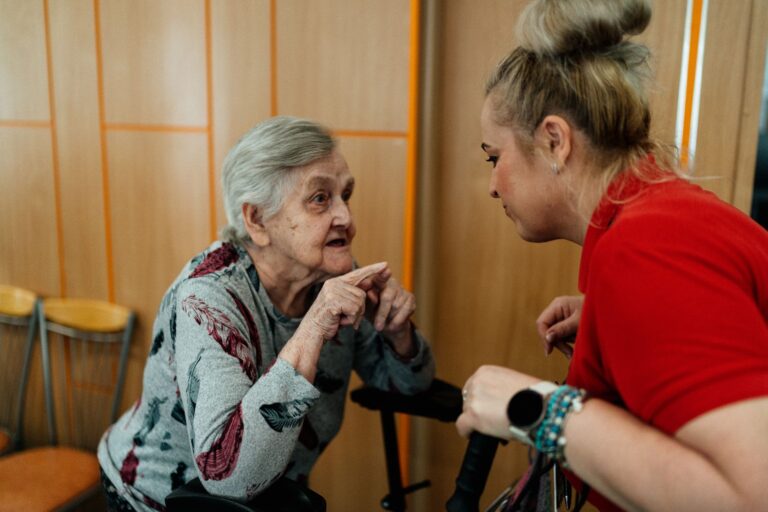
When speech disappears, the fundamental way a person and their caregiver relate to each other changes. The non-verbal person may still recognize their spouse, laugh at familiar jokes, or reach for a beloved grandchild—signs that emotional connection and memory persist beneath the silence. But the inability to ask for pain relief, request a bathroom break, or say “I love you” creates a new loneliness for both parties. The caregiver often grieves the loss of conversation even before the person dies. Importantly, expressive aphasia is not the same as comprehension loss. A person who cannot speak may still understand spoken words, recognize tone of voice, and respond to questions with a nod, shake of the head, or gesture. This partial loss is cognitively isolating—the world is still coming in, but the person cannot send anything back.
Others may mistakenly assume that someone who doesn’t speak also cannot understand, leading them to talk about the person in their presence as if they are not there. Research shows this is often incorrect; even people with severe expressive aphasia often retain receptive language, and speaking about someone in their presence as though they cannot hear is psychologically damaging. The social consequences are profound. Visitors may stop coming because they feel awkward with silence. Medical encounters become more difficult because the person cannot describe symptoms, concerns, or preferences. The non-verbal person may become withdrawn or frustrated, acting out behaviorally because they have no linguistic way to express needs or emotions. Some people become angry; others seem to retreat into passivity.
What Strategies Help When Someone Cannot Speak?
The first practical shift is slowing down and simplifying your own speech. Use short, clear sentences: “Do you want water?” instead of “Are you thirsty and would you prefer some water or perhaps juice?” Pause frequently to give the person time to respond, even if the response is nonverbal. Use yes/no questions rather than open-ended ones. Speak face-to-face so the person can read your lips and expression. Maintain a calm, respectful tone; tone of voice carries emotion even when words are lost. Second, develop a non-verbal communication system tailored to the individual. For some people, a picture board with common items (bathroom, water, pain, tired, happy, sad) allows them to point to their meaning. Others respond to objects—holding up a toothbrush signals a bath.
Some rely heavily on gesture and expression. Others learn to use a letter board or alphabet chart, pointing to letters to spell out words, though this is slower and works best for people with intact motor control and focus. The system that works is the one you discover through trial—it’s not one-size-fits-all. Third, watch for non-verbal communication the person is already using. Does the person touch their stomach when they are hungry, or point to their mouth? Do they have particular vocalizations—a rising “uh?” for questions, a falling sound for contentment? Build on what they are already doing. A caregiver who learns to read these patterns can often understand needs before they become crises. One limitation is that non-verbal systems require both parties to be engaged; if the person is fatigued, in pain, or experiencing delirium, they may not reliably use the system you’ve established. On difficult days, caregivers must rely on observation—watching for signs of discomfort, distress, or a need to use the bathroom.
What Complications Can Arise When Speech Is Lost?
The most serious complication is swallowing dysfunction (dysphagia). Speech and swallowing share neural pathways and muscles; dementia that damages speech production often damages swallowing too. A person who cannot speak may also struggle to swallow safely, putting them at risk for aspiration—when food or liquid enters the airway instead of the esophagus. Aspiration pneumonia is a common cause of death in advanced dementia. Warning signs include coughing after eating or drinking, wet-sounding speech (if they have any), or a rattling sound in the throat. A speech-language pathologist can assess swallowing safety and recommend dietary modifications (thickened liquids, soft foods). Behavioral and emotional complications also emerge. Frustration at the inability to communicate can manifest as aggression, hitting, or yelling.
Some people become depressed and withdrawn. Others seem to lose the desire to interact altogether. It’s unclear whether these changes reflect a worsening of the underlying disease, the emotional toll of isolation, or a combination. Medications can sometimes help—antidepressants for withdrawn mood, low-dose antipsychotics for severe agitation—but they carry their own risks, especially in older adults. Medications are not a solution; they are one tool among many, and their effects are often modest. A second warning: non-verbal people become vulnerable to abuse or neglect because they cannot report it. A caregiver who is overwhelmed, underpaid, or unsuitable may become harsh, and the person cannot tell anyone. Families must remain vigilant, conduct unannounced visits, watch for signs of physical or emotional distress, and maintain oversight even in professional care settings. The inability to speak is not consent to mistreatment.
Non-Verbal Communication Methods That Work
Music often remains accessible when speech is lost. Playing familiar songs can prompt vocalizations, movement, or visible emotional response in people who are otherwise non-verbal. Music therapy is not a cure, but it is one of the few interventions that can create moments of connection and apparent joy in advanced dementia. A person who cannot speak may sing along to a remembered song from their youth, or sway to a rhythm, or make eye contact during a familiar tune in a way they do not during other interactions.
Touch and physical presence matter profoundly. Holding hands, stroking the arm, or sitting close to someone conveys care and presence without requiring speech. For some people, this is more meaningful than any words. Families often report that their non-verbal family member seems more calm, present, or satisfied when held or when someone is simply sitting nearby. This is not sentimental—it is a legitimate form of communication and caregiving.
Preparing for Medical Encounters When Your Family Member Cannot Speak
Doctors and nurses need detailed information about your family member’s baseline functioning and how to read their non-verbal cues. Before an appointment, give the healthcare provider a one-page summary: Does the person nod for yes and shake their head for no? Do they have pain behaviors—grimacing, guarding, rapid breathing? Are they usually agitated or calm? What are their communication strategies? Do not assume the doctor will figure this out during the visit. A person who cannot speak and cannot describe symptoms is invisible in the medical system unless you make them visible. Bring someone to medical visits who knows the person well and can advocate.
Some healthcare providers deprioritize people with dementia who are non-verbal, assuming they have low quality of life or limited life expectancy. Your presence and advocacy—stating that this person is loved, has responded well to certain treatments in the past, and deserves thorough evaluation—matters. For example, a non-verbal person with a urinary tract infection may only show behavioral changes (aggression, withdrawal, confusion), not report burning or frequency. If a doctor does not ask about recent behavioral changes and does not order a urinalysis, the infection will go untreated, pain will worsen, and behavior will deteriorate. Caregivers who know to mention “he’s been more irritable this week” provide the essential clue.
- —
Frequently Asked Questions
If my family member with dementia can’t speak, do they still understand what I’m saying?
Often yes, but not always. Some people lose expressive speech (the ability to produce words) while keeping receptive language (the ability to understand what others say). Others lose both. There’s no way to know for certain without careful observation. Assume they can understand until proven otherwise—speak respectfully in their presence.
Is speech loss the same in all types of dementia?
No. Frontotemporal dementia often causes speech loss early and severely. Alzheimer’s disease typically brings speech problems in mid to late stages. Lewy body dementia may preserve speech longer. The timeline and severity vary widely even within one diagnosis.
Can speech therapy help a person who has already lost speech?
Speech therapy cannot restore lost brain cells, but a speech-language pathologist can assess swallowing safety (critical for preventing aspiration), help establish non-verbal communication strategies, and offer techniques to maximize remaining language abilities. If the person still has some speech but is struggling, therapy may help them use it more effectively.
What should I do if my family member becomes aggressive or agitated because they can’t communicate?
First, rule out pain, infection, or other medical issues by consulting a doctor. Then assess your communication strategies—are you asking yes/no questions? Giving enough time for a response? Using pictures or objects? Sometimes a change in approach reduces frustration. If behavioral symptoms are severe, a doctor may recommend medications, but these are not a first step.
Should I put my family member in a facility if they can no longer speak?
This is a personal decision depending on your health, resources, available family support, and the person’s stage of dementia. Home care of a non-verbal person is physically and emotionally demanding. Professional facilities can provide specialized care, but quality varies widely. The ability or inability to speak does not determine where someone should live; care needs and family capacity do.
How do I know if my non-verbal family member is in pain?
Watch for physical signs: grimacing, guarding (holding a body part still to avoid pain), rapid or shallow breathing, pupil dilation, increased muscle tension, or changes in vocalizations. Behavioral signs include new or increased agitation, aggression, or withdrawal. Baseline knowledge matters—you must know how this person usually acts in order to detect changes. If you suspect pain, inform the doctor and ask for a trial of pain medication to see if behavior improves. —