The supplements with the strongest current evidence for brain health after 60 are a daily multivitamin, omega-3 fatty acids, and vitamin D — ideally taken together and combined with regular exercise. Research from the COSMOS trials, published and analyzed across multiple institutions including Mass General Brigham and the NIH, found that daily multivitamin use slowed age-related cognitive decline by an average of two years in adults over 60.
That is not a minor benefit — for someone watching a parent struggle with memory loss, or trying to preserve their own cognitive independence, two years represents a meaningful difference in quality of life. This article covers what the current science actually supports, what remains uncertain, and what to avoid wasting money on. It includes findings from a large three-year omega-3 trial published in Nature Aging in 2025, recent data on vitamin D and B vitamins, emerging research on creatine and plant-based compounds like saffron, and an honest look at supplements like ginkgo biloba and curcumin that still lack conclusive evidence despite their popularity.
Table of Contents
- Which Vitamins and Supplements Have the Strongest Evidence for Brain Health After 60?
- What Does the Research Say About Omega-3 Fatty Acids and Aging?
- How Do B Vitamins Support Brain Function in Older Adults?
- Should People Over 60 Take Vitamin D for Brain Health?
- What Are the Limits of Supplements Like Ginkgo Biloba and Curcumin?
- Emerging Research — Creatine and Plant-Based Compounds
- The Role of Lifestyle — Why Supplements Work Better as Part of a Broader Strategy
- Conclusion
- Frequently Asked Questions
Which Vitamins and Supplements Have the Strongest Evidence for Brain Health After 60?
The clearest answer from current research is this: a combination of a daily multivitamin, omega-3 fatty acids, and vitamin D, alongside regular exercise, shows the strongest evidence for protecting cognitive health in older adults. No single pill does everything, but this combination has been tested in rigorous trials and shown measurable results. The COSMOS trials — a coordinated set of studies including the COcoa Supplement and Multivitamin Outcomes Study — conducted a meta-analysis of three separate cognition studies and found that adults 60 and older who took a daily multivitamin performed significantly better on memory and cognitive assessments than those who took a placebo.
The multivitamin used contained more than 20 micronutrients: B vitamins, vitamins A, C, D, and E, plus minerals including calcium, magnesium, selenium, zinc, copper, and manganese. This is an important detail. The benefit likely comes from correcting multiple small nutritional deficiencies simultaneously, not from any single ingredient acting as a “brain booster.” By comparison, supplements that isolate one compound — like a standalone vitamin E or a single antioxidant — have generally failed to show the same results in large trials. The multivitamin approach essentially hedges against the many small nutritional gaps that accumulate with age, when absorption efficiency declines and dietary variety often narrows.
What Does the Research Say About Omega-3 Fatty Acids and Aging?
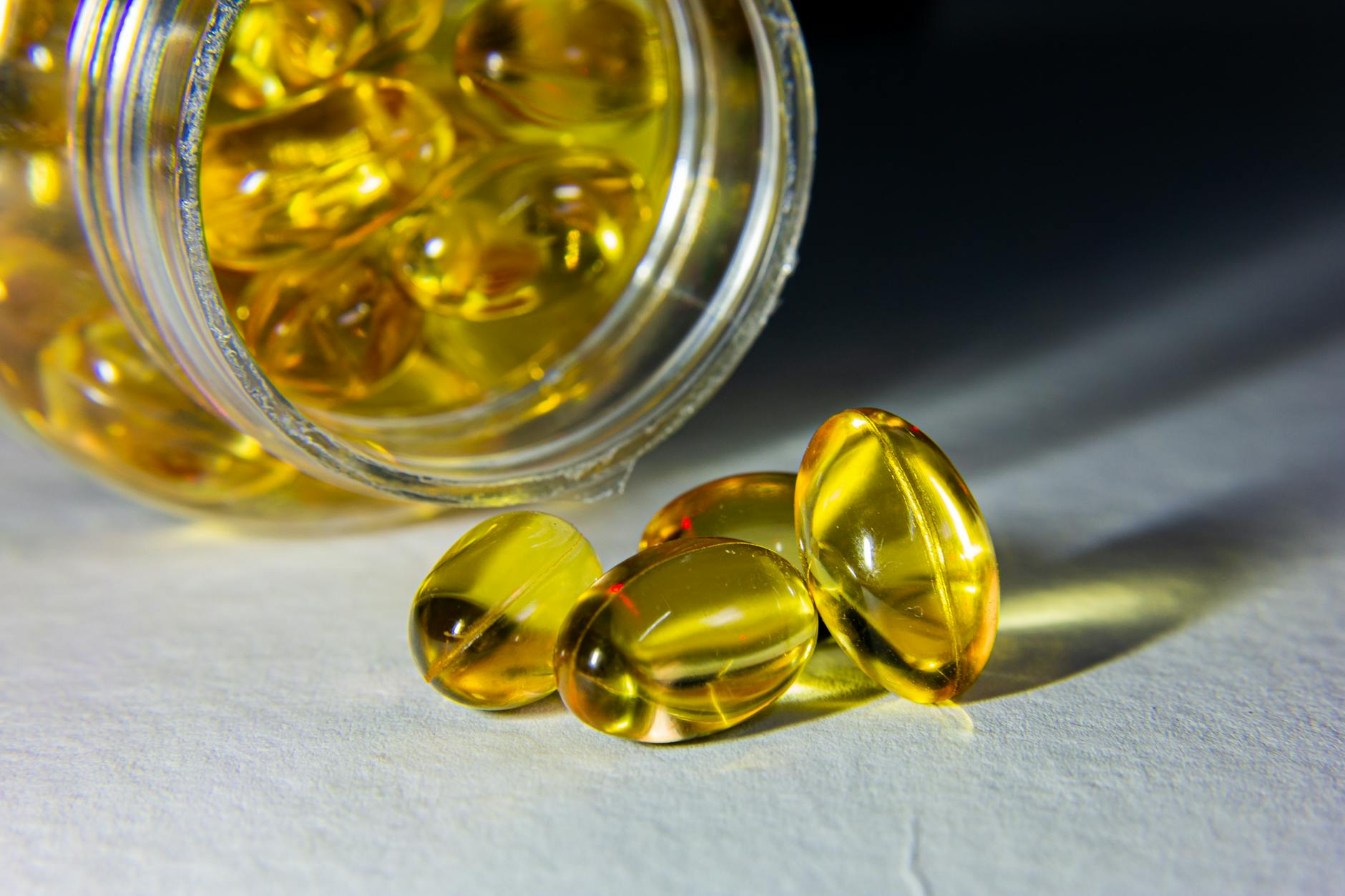
The DO-HEALTH trial, published in February 2025 in Nature Aging, is one of the most detailed studies on supplementation and biological aging to date. It followed 777 participants over three years and found that one gram per day of omega-3 slowed biological aging — measured across multiple epigenetic clocks — by up to four months compared to placebo. That may sound modest, but epigenetic aging clocks measure cellular deterioration, not just memory test scores, which makes this a meaningful biological finding. The combination effect is where the results get more interesting. When omega-3 was taken alongside 2,000 IU of vitamin D per day and at least 30 minutes of exercise three times per week, biological aging slowed by 2.9 to 3.8 months over the three-year study period.
Vitamin D alone did not slow epigenetic aging in this trial — it needed the other two components to show benefit. This is an important caveat for people who take vitamin D in isolation and assume it is fully protective. A separate 2025 dose-response meta-analysis drawing on 58 studies found that 2,000 mg per day of omega-3 produced significant improvements in attention and perceptual speed. For perspective, most fish oil capsules contain around 300–600 mg of combined EPA and DHA, meaning many people who take one capsule a day are well below the doses used in the studies that showed cognitive benefit. If you are taking omega-3 for brain health specifically, it is worth checking the actual EPA/DHA content on the label rather than the total fish oil weight.
How Do B Vitamins Support Brain Function in Older Adults?
B vitamins — particularly B6, B9 (folate), and B12 — are consistently identified in nutritional neuroscience as critical for brain maintenance. They play a central role in homocysteine metabolism; elevated homocysteine is associated with increased risk of cognitive decline and is more common in older adults, particularly those with low B12 intake. Getting adequate B vitamins helps keep homocysteine in check, which is one of the more well-established mechanisms connecting nutrition to brain health. Vitamin B12 deserves particular attention after 60 because absorption declines with age.
The stomach produces less intrinsic factor, a protein required for B12 uptake, and B12 is bound to protein in food in ways that become harder for older digestive systems to break down. A person who ate the same diet at 40 and 70 might have significantly lower B12 levels at 70 simply due to age-related changes in absorption — not any dietary change on their part. This is one reason a broad multivitamin can help: it delivers B12 in a form that does not rely as heavily on stomach acid for absorption. A 2024 review in PMC identified B vitamins as among the most consistently supported nutritional interventions for cognitive health in older populations, with benefits spanning memory, processing speed, and overall mental function. They are not a dramatic intervention — they will not reverse existing dementia — but they appear to contribute meaningfully to maintenance and slowing of decline when taken consistently.
Should People Over 60 Take Vitamin D for Brain Health?
Vitamin D is one of the most common deficiencies in older adults, and the evidence connecting it to brain function has strengthened in recent years. A 2025 cross-sectional analysis published in Frontiers in Nutrition found that higher dietary vitamin D intake positively influenced brain and mental function in elderly Americans. The mechanism is not entirely understood, but vitamin D receptors are found throughout the brain, including in regions involved in learning and memory. The critical limitation, as the DO-HEALTH trial showed, is that vitamin D alone does not appear to slow epigenetic aging. It works in concert with other interventions.
This makes it less useful as a standalone brain supplement and more useful as part of a broader regimen — the multivitamin plus omega-3 plus vitamin D plus exercise framework that the strongest current research supports. Someone who takes vitamin D expecting it to independently protect their cognition may be disappointed; someone who includes it as one piece of a consistent health routine is using it appropriately. The tradeoff on dosing is worth noting. The 2,000 IU daily dose used in the DO-HEALTH trial is higher than the 600–800 IU recommended daily allowance for older adults set by most health authorities. Many people over 60 are already taking 1,000–2,000 IU based on advice from their physicians, particularly in northern climates with limited winter sun exposure. Getting bloodwork to check 25-hydroxyvitamin D levels before supplementing heavily is a reasonable step, since very high levels can cause problems of their own.
What Are the Limits of Supplements Like Ginkgo Biloba and Curcumin?
Ginkgo biloba remains one of the best-selling supplements marketed for memory and brain health, but the evidence does not support it as a preventive or therapeutic agent for dementia. The National Center for Complementary and Integrative Health (NCCIH) is direct on this point: there is no conclusive evidence that ginkgo prevents or slows dementia. Large, well-designed trials have repeatedly failed to show meaningful benefit. People who take it based on decades of marketing claims are spending money without support from current science. Curcumin — the active compound in turmeric — is a more nuanced case. The preliminary human data is genuinely interesting, and there are plausible mechanisms by which curcumin might reduce neuroinflammation.
The problem is bioavailability: the body absorbs curcumin very poorly from standard supplements, and while formulations designed to improve absorption exist, the clinical data in humans remains limited and inconsistent. Calling it promising is fair; calling it proven is not. For someone allocating a supplement budget, curcumin is a lower-priority choice than multivitamins or omega-3. Harvard Health has issued broader cautions about the supplement industry’s brain health claims, noting that most products lack large clinical trial validation and that the marketing often runs far ahead of the science. This is not a reason to avoid all supplements — the evidence for multivitamins and omega-3 is real — but it is a reason to be skeptical of any product making dramatic or specific claims about reversing decline or preventing Alzheimer’s. No supplement currently on the market has been approved by the FDA to treat or prevent dementia.

Emerging Research — Creatine and Plant-Based Compounds
Two areas worth watching are creatine and certain plant-based extracts, though both are at earlier stages of evidence. A pilot study at the University of Kansas Medical Center found that creatine supplementation produced moderate improvements in working memory and executive function in Alzheimer’s patients. Creatine is better known in athletic contexts, but it plays a role in cellular energy production in the brain as well as in muscle, which may explain why some cognitive benefit has been observed. This is a single pilot study, not a basis for strong recommendations, but it is a legitimate line of ongoing research.
On the plant-based side, two compounds showed meaningful results in a 2025 PMC review of Alzheimer’s supplement trials. Saffron supplementation for up to 16 weeks improved attention, memory, and visual-motor coordination in patients with mild-to-moderate Alzheimer’s disease. Lemon balm (Melissa officinalis) at 500 micrograms per day for 16 weeks improved cognitive scores and reduced agitation in Alzheimer’s patients. These are notable findings, but the study populations were already diagnosed with Alzheimer’s, which limits how directly the results apply to healthy older adults looking to prevent decline.
The Role of Lifestyle — Why Supplements Work Better as Part of a Broader Strategy
No researcher reviewing this evidence argues that supplements replace diet and lifestyle. The DO-HEALTH trial’s finding — that omega-3, vitamin D, and exercise together outperformed any single intervention alone — reinforces what nutritional science has consistently shown: the brain responds to a pattern of health behaviors, not isolated inputs. Regular physical activity increases brain-derived neurotrophic factor (BDNF), supports cerebrovascular health, and appears to amplify the benefits of nutritional supplementation in ways that taking pills without exercise does not replicate.
As research continues into 2025 and beyond, the strongest signals point toward combination strategies rather than silver-bullet supplements. The multivitamin data from COSMOS and the omega-3 aging data from DO-HEALTH both represent meaningful scientific advances, and future trials may clarify optimal dosing, timing, and which subgroups benefit most. For now, the practical guidance for adults over 60 is clearer than it has been in years: a daily multivitamin, omega-3 at meaningful doses, vitamin D, and consistent exercise represent a defensible, evidence-based approach to protecting brain health.
Conclusion
The supplements with the clearest current evidence for brain health after 60 are a daily multivitamin containing a broad range of micronutrients, omega-3 fatty acids at doses of one to two grams per day, and vitamin D at around 2,000 IU — ideally combined with regular exercise three or more times per week. The COSMOS trials showed a two-year slowing of cognitive aging from multivitamin use alone. The DO-HEALTH trial showed meaningful slowing of biological aging from the omega-3, vitamin D, and exercise combination.
B vitamins, particularly B12, address a common age-related absorption problem that quietly undermines cognitive maintenance in many older adults. The supplements to be cautious about are those with long marketing histories but weak clinical evidence: ginkgo biloba lacks conclusive benefit data, and curcumin’s promise remains limited by absorption problems. Before starting any new supplementation regimen, particularly for older adults who may be taking prescription medications, a conversation with a physician or registered dietitian is the appropriate first step. Supplements interact with medications, and doses that are appropriate for healthy adults may not be right for everyone.
Frequently Asked Questions
What is the single most evidence-backed supplement for brain health after 60?
Based on current research, a daily multivitamin is the most broadly supported single supplement. The COSMOS meta-analysis found it slowed cognitive aging by an average of two years in adults over 60. However, the strongest overall evidence supports combining a multivitamin with omega-3 fatty acids, vitamin D, and regular exercise rather than relying on any single product.
How much omega-3 should someone over 60 take for brain health?
The dose-response meta-analysis published in 2025 found significant cognitive improvements at 2,000 mg per day of omega-3. Many standard fish oil capsules contain 300–600 mg of active EPA and DHA, so checking the label for actual omega-3 content — not total fish oil weight — is important to ensure you are reaching a meaningful dose.
Does vitamin D alone protect against cognitive decline?
Not on its own, based on current evidence. The DO-HEALTH trial found that vitamin D alone did not slow epigenetic aging clocks, but it was effective when combined with omega-3 and regular exercise. Vitamin D is a useful component of a brain health regimen but should not be relied on as a standalone intervention.
Is ginkgo biloba worth taking for memory?
No, based on current evidence. The NCCIH states there is no conclusive evidence that ginkgo biloba prevents or slows dementia, and multiple large trials have failed to demonstrate meaningful benefit. Its popularity has outrun its evidence base.
Can creatine help with brain health?
It is too early to make a firm recommendation. A pilot study at the University of Kansas found moderate improvements in working memory and executive function in Alzheimer’s patients, which is promising. However, this is early-stage research and not yet a basis for broad supplementation recommendations for healthy older adults.
Should I take a multivitamin if I already eat a healthy diet?
The COSMOS research included adults across a range of dietary patterns, and the benefit of daily multivitamin use was observed broadly. Older adults absorb certain nutrients — particularly B12 and vitamin D — less efficiently regardless of diet quality, which is one reason a multivitamin may offer benefit even for people who eat well. Discussing your specific situation with a physician can help determine whether supplementation adds value given your existing diet and bloodwork.