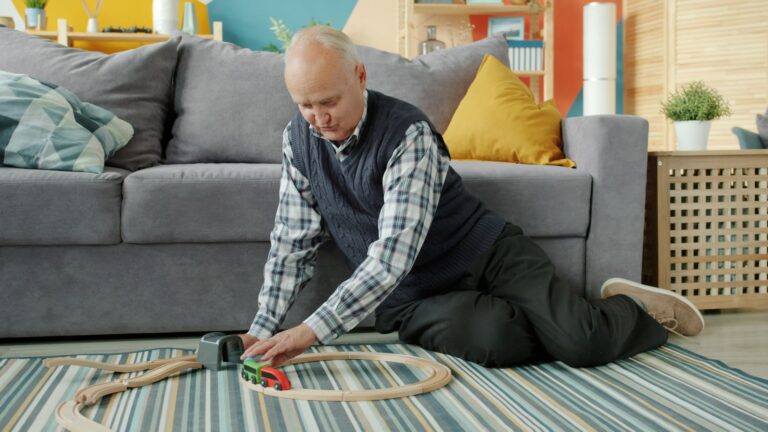
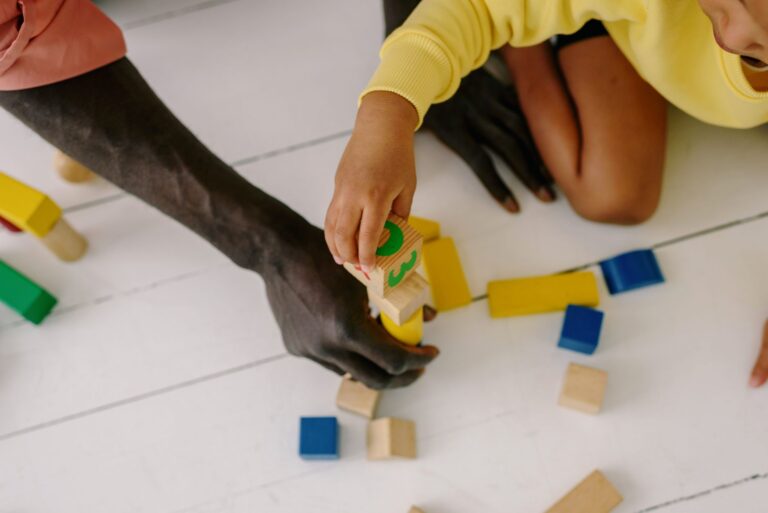
Painting and drawing supplies, simple puzzles, board or card games, building blocks, knitted twiddle muffs, and wooden fidget tools help memory care residents with fine motor decline. Fine motor decline means loss of small hand and finger control needed for buttoning, gripping, and handling objects. That loss matters because reduced dexterity in mild cognitive impairment and Alzheimer's dementia is linked to worse daily living activities, according to research reported in the Brazilian Journal of Psychiatry Brazilian psychiatry study. Toys that invite grasp, pinch, twist, and release give residents repeated, low-pressure finger practice during social time.
Medical information disclaimer: This article is for general educational purposes only and does not provide medical advice, diagnosis, or treatment. Always consult a physician or other qualified health professional about symptoms, medications, tests, or treatment decisions.
Table of Contents
- Which everyday play items support hand skills?
- What are twiddle muffs?
- What are fidget widgets?
- How should caregivers choose and use them safely?
Which everyday play items support hand skills?
The National Institute on Aging advises caregivers to offer arts and crafts such as painting or drawing, plus puzzles, board or card games, and building blocks NIA activity guidance. Each uses a different grip: brush hold, piece pinch, card shuffle, and block stack.
Match the item to current ability. Large-piece puzzles, thick brushes, large cards, and lightweight blocks reduce frustration while still working fingers, wrists, and eye-hand coordination. Rotate two or three options so the resident can choose.
What are twiddle muffs?
Twiddle muffs are double-thick knitted hand-muffs with attached ribbons, buttons, beads, and textures, described by Derbyshire Healthcare NHS Foundation Trust NHS twiddle-muff description. Hands stay warm inside while fingers explore the surface attachments.
They suit residents with restless hands, fidgeting, or limited attention for rule-based games. A resident can stroke, rub, tug, or roll each texture without instructions, scoring, or turn-taking.
What are fidget widgets?
The Fidget Widget Toolkit was co-developed by the Alzheimer's Society and University of Central Lancashire for mid- to late-stage dementia. It provides five wooden tactile tools using distinct spin, slide, twist, turn, and roll motions.
Those tools are deliberately unfamiliar objects with no right or wrong way to use them. Residents do not need memory, language, or past skill to join in, which helps when puzzles and cards have become too hard.
How should caregivers choose and use them safely?
Start with interests and hand strength. A former painter may accept brushes, while a restless picker may prefer a muff or wooden widget.
Evidence for calm and engagement is still limited. Most twiddle-muff findings come from small samples or staff reports rather than objective motor gains, so use these toys to supplement supervised care rather than replace it.
- Offer one item at a time in good light
- Check for loose buttons, sharp edges, and small detachable parts
- Choose washable materials and clean shared items often
- Stay nearby, encourage gently, and remove an item that causes irritation