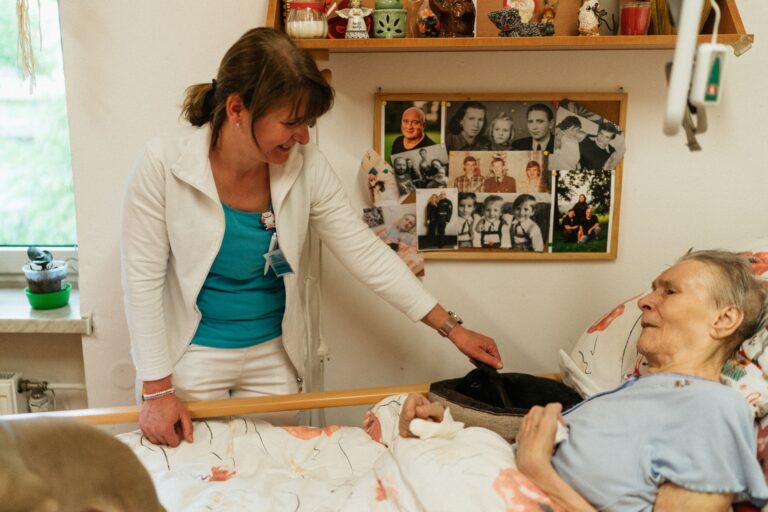
The most important thing to say to an exhausted dementia caregiver is something honest and specific. Instead of “Let me know if you need anything,” try: “I’m going to pick up groceries on Thursday at 3 PM. I’ll grab what you texted me and drop it off. You don’t need to be home.” The best words acknowledge that their exhaustion is real, that their situation is hard, and that you understand they cannot articulate every need—especially when they’re running on fumes. Dementia caregiving is relentlessly isolating work.
A caregiver spends their day managing behavioral changes, memory loss, incontinence, medication schedules, and the emotional weight of watching someone they love slip away. They often haven’t slept through the night in months. They’ve missed friends’ weddings, gone to work unwashed, or sat in their car in a parking lot crying. When you approach them, they’re usually too tired to perform social normalcy, and many people around them don’t know how to respond to that. What an exhausted caregiver needs to hear is that you see how hard this is, that their feelings are valid, and that they are not a bad person for sometimes resenting the person they’re caring for or for feeling angry at their situation.
Medical information disclaimer: This article is for general educational purposes only and does not provide medical advice, diagnosis, or treatment. Always consult a physician or other qualified health professional about symptoms, medications, tests, or treatment decisions.
Table of Contents
- How to Validate an Exhausted Dementia Caregiver’s Experience
- What Not to Say to an Exhausted Dementia Caregiver
- Concrete Ways to Offer Support to an Exhausted Caregiver
- Understanding Why Dementia Caregiving Is Uniquely Demanding
- Avoiding Common Pitfalls When Supporting a Caregiver
- Acknowledging What Caregivers Cannot Do Alone
- Phrases That Actually Help an Exhausted Dementia Caregiver
How to Validate an Exhausted Dementia Caregiver’s Experience
Validation means reflecting back what the caregiver is actually experiencing without trying to fix it or minimize it. If a caregiver says, “My mother asked me who I was for the third time this morning and then became angry when I explained,” a validating response is not “At least she’s still eating well” or “Try to remember she can’t help it.” A validating response is: “That must be heartbreaking. Having the same conversation over and over, and then being blamed for her confusion—that’s exhausting.” A specific example: When a caregiver mentions they haven’t left the house in three weeks, do not respond with “You need to take care of yourself” or “A little break would help.” That’s advice they’ve already heard, and it implies they’re failing at self-care. Instead, say: “Three weeks without leaving sounds incredibly isolating.
I can imagine how that wears on you.” This acknowledges the reality without adding guilt. Caregivers often carry shame about their own mental and physical health during caregiving. They feel guilty for being tired, for losing patience, for resenting the person they love, and for not being the “good” caregiver they imagined they’d be. Validation does not reinforce shame. It holds space for the contradiction of loving someone deeply while also being angry or overwhelmed by caring for them.
What Not to Say to an Exhausted Dementia Caregiver
Avoid spiritual bypassing or false positivity. Phrases like “She’s in a better place mentally now” or “God never gives us more than we can handle” or “At least they don’t remember their suffering” are meant to comfort but often land as dismissive. They suggest that the caregiver’s suffering is somehow noble or that they should find meaning in their exhaustion. An exhausted caregiver is not looking for philosophical reframing. They’re looking for someone to acknowledge that this is, in fact, too much to handle—and that it’s okay to feel that way. Avoid comparing their situation to other caregivers’ situations.
“My neighbor cares for two parents with Alzheimer’s” or “At least they’re not aggressive like my mother-in-law is” or “You should see what my sister deals with” subtly suggests that the caregiver’s exhaustion is not that bad or that they shouldn’t be struggling as much. Every dementia caregiving situation is distinct and overwhelming in its own way. There is no hierarchy of suffering. Do not offer unsolicited advice about their approach to caregiving. Caregivers are often managing competing medical advice, guilt about decisions they’ve made, and uncertainty about whether they’re doing enough. Suggesting they try a different medication, move their loved one to a facility, or use a new behavior management technique—especially without being asked—adds to their burden. If they ask for advice, provide it gently and acknowledge the constraints they’re working within.
Concrete Ways to Offer Support to an Exhausted Caregiver
Specific, time-bound offers are more valuable than open-ended ones. Instead of “I’ll help however I can,” say “I’m free on Tuesday mornings for the next four weeks. I can sit with your mom while you shower and have coffee” or “I’ll pay for a cleaning service for February. It’s already booked.” Exhausted people cannot problem-solve or reach out. They need you to think through what might help and then do it without requiring their input. Examples of concrete help include taking over one recurring task (grocery shopping, medication management, a specific appointment), hiring and paying for a service (cleaning, lawn care, meal delivery), bringing prepared meals, doing laundry, or simply sitting with the person with dementia so the caregiver can leave the house alone.
Some caregivers need help at night—sitting with their loved one so they can sleep. Others need someone to take their loved one for an outing so they have quiet at home. The limitation here is that many caregivers feel they cannot accept help because of guilt, worry about how their loved one will behave with someone else, or fear that accepting help means they’re admitting defeat. If someone declines your offer, you can say: “I know this is hard to accept. I’m offering because I care about you, not because I think you’re doing something wrong. The offer stands—no pressure.” Then follow through if they eventually say yes.
Understanding Why Dementia Caregiving Is Uniquely Demanding
Dementia care is not like other caregiving. A parent with a broken leg recovers. A child grows more independent. But someone with dementia becomes progressively more dependent and less like the person the caregiver knew. This loss happens slowly and then suddenly, in real time, while the caregiver is responsible for keeping them alive and safe. There is no finish line. The unpredictability is also specific to dementia caregiving. A stroke patient’s needs are stable.
An Alzheimer’s patient might be calm one hour and aggressive the next. They might recognize their child one day and not the next. They might refuse medication, refuse food, or resist personal care in ways that are violent or frightening. The caregiver cannot predict what the day will bring and cannot rest in their planning. Many dementia caregivers also experience anticipatory grief—mourning someone who is still alive. They’re caring for their parent or spouse while also grieving the loss of the person they were. This doubled emotional burden is not visible to outsiders. When someone looks at an exhausted dementia caregiver, they might see a difficult job. The caregiver is also carrying deep, complicated grief.
Avoiding Common Pitfalls When Supporting a Caregiver
A common mistake is asking the caregiver how their loved one is doing but not asking how the caregiver themselves is doing. Both questions matter, but the caregiver’s wellbeing is often invisible. Dementia support groups talk about the person with dementia’s progression, medications, and behavior. The caregiver sits silent, unraveling. Ask about them specifically: “How are you sleeping?” “Have you eaten today?” “What’s the hardest part right now for you?” Another pitfall is disappearing when the situation becomes sad or difficult. Some friends pull away because they don’t know what to say or because visiting the person with dementia is uncomfortable. This abandonment, even if unintentional, deepens the caregiver’s isolation precisely when they need connection most. Consistency matters more than perfect words.
Showing up regularly, even briefly, sends the message that the caregiver is not alone in this. Be cautious about expecting gratitude. Exhausted caregivers often cannot access positive emotions about help they receive. They might not thank you effusively or seem relieved. They might cry or seem unmoved. This is not ingratitude. It’s what happens when someone’s nervous system is flooded with stress and grief. Help because you care, not because you expect a particular emotional response.
Acknowledging What Caregivers Cannot Do Alone
One of the most powerful things you can say is: “This is too much for one person. It’s not because you’re weak or failing. Dementia caregiving is genuinely too much for one person to do alone.” Many caregivers are trying to provide 24-hour supervision, manage medications, handle behavioral challenges, manage finances, maintain the home, work, and process their own emotions—all while being told they need better self-care. They cannot do all of this.
They should not have to do all of this. Caregivers who access support—whether that’s adult day programs, respite care, a home health aide, or a facility—often feel they’ve failed. Saying “You’re making a wise decision” or “This is not giving up, this is being smart” can shift that shame slightly. Some caregivers need permission to not do this alone, and that permission can come from someone who sees them and believes they’ve already given enough.
Phrases That Actually Help an Exhausted Dementia Caregiver
“You’re doing a good job with impossible circumstances” works because it doesn’t deny the difficulty or expect them to find silver linings. It acknowledges both reality and their effort. “I see how hard you’re working” is simple and true. It doesn’t try to solve anything or reframe the situation.
“This is temporary” can help if you’re specific: “I’m bringing dinner Tuesday and Thursday of next week. That’s something you don’t have to think about those two days.” It gives the caregiver a small window where something is taken off their plate. “You don’t have to figure this out right now” frees them from the pressure to make decisions or plan while their brain is exhausted. “Can I sit with you while you eat?” offers presence without requiring them to be social or perform normalcy.