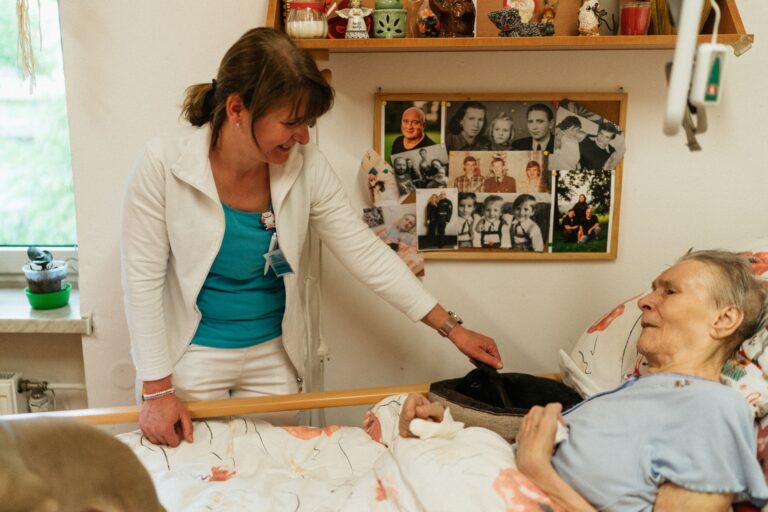
When taking a dementia patient to the emergency room, you should pack a folder with their medical history, current medications, and insurance documents; comfort items like a photo album or blanket; identification and contact information; and behavioral aids such as noise-canceling headphones or fidget objects. The ER environment—bright lights, beeping machines, unfamiliar faces, and long waits—can trigger confusion, agitation, or withdrawal in people with dementia, so having familiar items and clear medical documentation with you reduces misunderstandings with staff and helps keep the patient calmer during an already stressful situation. The goal isn’t to recreate home in the emergency room. Rather, you’re bringing the specific information and objects that will help medical staff understand your loved one’s baseline cognition, communicate effectively, prevent medication errors, and manage behavioral distress during what is often a short but crucial window of care.
Medical information disclaimer: This article is for general educational purposes only and does not provide medical advice, diagnosis, or treatment. Always consult a physician or other qualified health professional about symptoms, medications, tests, or treatment decisions.
Table of Contents
- What Medical Documents Should You Bring to an Emergency Department Visit?
- Documentation of Baseline Cognition and Health History
- Comfort Items That Reduce Agitation and Confusion
- Communication Aids and Cognitive Supports
- Behavioral and Delirium Management Strategies
- Practical Preparation for the ER Visit
- Follow-Up and Discharge Planning Specific to Dementia
What Medical Documents Should You Bring to an Emergency Department Visit?
Gather originals or copies of all current medications, listed by name, dose, frequency, and prescribing doctor—not a photo of the bottle, but a written or printed list. Include over-the-counter medications and supplements, as these interact with ER medications in ways staff might not anticipate. Bring the patient’s healthcare proxy or power of attorney documents; a DNR (Do Not Resuscitate) order if one exists; and a list of known drug allergies or adverse reactions, highlighting any antihistamines, sedatives, or anticholinergics that may worsen dementia symptoms or cause delirium.
If the patient has had previous ER or hospital stays, bring discharge summaries or hospital letters mentioning baseline cognitive status, behavioral patterns, or complications that occurred during earlier hospitalizations. For example, if your loved one became acutely confused after receiving a certain painkiller during a prior visit, that note in the medical record can prevent the same drug being prescribed again. Most ER staff do not have access to your patient’s full outpatient records, so this bridge of information is often the only way critical context reaches the treating doctor.
Documentation of Baseline Cognition and Health History
Bring a one-page written summary describing what your loved one was like before this illness—their normal speech patterns, how they typically spend their day, what makes them anxious, and what calms them. For instance: “Mom usually wakes at 7 a.m., enjoys listening to classical music, becomes agitated if rushed, and does not like being alone.” This simple narrative helps ER staff distinguish between changes caused by the acute illness and the patient’s longstanding dementia, preventing misdiagnosis or overtreatment of normal baseline behavior. Include a copy of the most recent cognitive or neuropsychological testing if available, as well as the patient’s primary care physician’s name and contact number.
The ER may call to verify information or obtain clarification about how aggressive to pursue certain tests or interventions. One limitation: many ERs are understaffed and overbooked, so even with perfect documentation, staff may not have time to read everything. Highlight the single most critical piece of information at the top of your folder—for example, “BASELINE CONFUSION: Patient does not usually speak; assume non-verbal is normal, not new.”.
Comfort Items That Reduce Agitation and Confusion
Bring a small blanket or familiar item with the patient’s scent, a photo album or printed photos of family members, and any comfort object that the patient uses at home (a stuffed animal, small pillow, or hand-held fidget toy). Dementia patients often recognize familiar faces in photographs even when they cannot place the names, and holding a family photo can ground them during disorientation. Music, through a portable speaker or headphones, can be remarkably effective; a playlist of songs from the patient’s youth or favorite era often soothes anxiety and reduces the need for sedation.
Bring a change of clothes if the patient is incontinent, as well as incontinence pads, since ER gowns can increase distress and the bathroom may be far away or unfamiliar. Avoid bringing valuables—watches, rings, hearing aids left unattended in an ER are frequently lost. However, if the patient depends on glasses, a hearing aid, or dentures, these are worth bringing and keeping with you or securely labeled with the patient’s name.
Communication Aids and Cognitive Supports
If your loved one uses any speech or communication aids—an alphabet board, picture cards, a written list of “yes/no” questions, or a digital communication app—bring those in the bag. For non-verbal or minimally verbal patients, bring a printed sheet showing basic needs: “I need water,” “I have pain,” “I feel cold,” with simple images or words that staff can point to if the patient becomes too distressed to respond to questions. Many dementia patients lose the ability to report pain verbally but will point to pictures or nod at suggestions, and this simple tool can prevent staff from missing serious treatable conditions.
Bring a list of the patient’s life history, key people in their life, and occupation or interests, so staff can use these to engage and redirect if the patient becomes agitated. Some ER staff will take five seconds to mention that the patient was a teacher or musician, and that small connection can shift the patient’s entire demeanor. Do not assume the ER staff know or will remember any of this; you are their most reliable source.
Behavioral and Delirium Management Strategies
Dementia patients are at high risk for delirium—an acute, reversible state of extreme confusion, hallucinations, or agitation—when exposed to infection, dehydration, medication changes, or the ER environment itself. Before arriving, consider whether your patient has a sundowning pattern (afternoon or evening confusion and agitation) and note the time of day the ER visit occurs, as this affects behavior predictions and may warrant additional reassurance from you or one-to-one supervision.
Some ER doctors will prescribe sedative medications to “manage” a confused elderly patient, but sedatives in dementia often backfire, causing more confusion, falls, or breathing problems. Advocate for non-pharmacological management first: a calm voice, dim lighting, familiar faces nearby, and reassurance. Bring a list of what behaviors you have observed—for example, does the patient try to leave the bed? become violent? withdraw into silence? repeat the same question? —so the medical team can prepare and respond appropriately rather than misinterpreting normal dementia behaviors as psychiatric symptoms requiring restraint.
Practical Preparation for the ER Visit
Before leaving home, ensure the patient has used the bathroom, eaten a light snack if they can safely eat, and consumed water, since ER waits can last hours and the patient may be unable to communicate thirst or a full bladder. If the patient uses incontinence protection, change it before leaving.
Bring your own chair or stool to sit beside the patient rather than relying on ER seating, which is often uncomfortable or far away; staying close reduces the patient’s sense of abandonment and allows you to interpret non-verbal cues that staff might miss. Keep all documents in a folder or binder with tabs, not a loose collection of papers that will scatter in a busy ER environment. Label your folder clearly: “Medical Information for [Patient Name], DOB [date].” If possible, photograph or scan the folder’s contents before the visit so you have a backup on your phone.
Follow-Up and Discharge Planning Specific to Dementia
Before leaving the ER (or hospital if admitted), ask the discharging doctor or nurse to write down any new medications, new diagnoses, and changes to the home routine or care plan in plain language, not medical jargon. Ask specifically: “What should we watch for over the next 48 hours that would mean my loved one needs to come back?” Dementia patients often do not remember ER visits or discharge instructions, so it falls entirely on caregivers to manage follow-up appointments, medication timing, and watching for recurrent symptoms.
If your loved one was prescribed a new antibiotic, pain medication, or other drug during the ER visit, ask the pharmacist or ER nurse whether this medication is on your dementia patient’s list of “high-risk” drugs—those known to worsen confusion, cause falls, or interact badly with other medications. Keep a copy of the ER discharge summary and give it to the patient’s primary care doctor within a few days so they can integrate the ER visit into the full medical record and adjust ongoing care as needed.