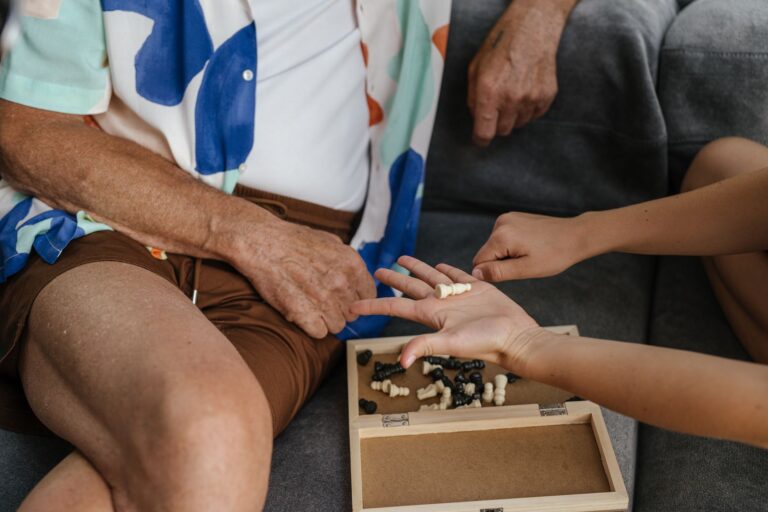
Card and board games with simple rules and flexible difficulty keep caregivers and care recipients connected over the holidays. Cooperative video games and remote party games played over video chat also keep nearby and distant family involved.
Cooperative play means players work together toward a shared goal instead of competing. The National Institute on Aging reports that older adults who joined social activities such as games lived longer than nonparticipants, which supports game time as health-related connection time (enjoyable activities as you age). Holidays work best when play fits energy, attention, and dementia stage.
Medical information disclaimer: This article is for general educational purposes only and does not provide medical advice, diagnosis, or treatment. Always consult a physician or other qualified health professional about symptoms, medications, tests, or treatment decisions.
Table of Contents
- Why do simple table games work so well?
- How do you match the game to dementia stage?
- What keeps distant family included?
- How do you make game time calm and joyful?
Why do simple table games work so well?
Familiar board and card games lower pressure because turns are short and rules are easy to repeat. They create natural talk, laughter, eye contact, and touch without demanding memory or speed.
In a June-July 2023 survey, AARP found that a majority of grandparents played board games with grandchildren and almost half said board games help them connect (survey on board games and grandparent connection). Those are self-reported perceptions, not clinical outcomes, but they point to shared play as connection time. Caregivers can treat the game as visit time first and mental exercise second.
How do you match the game to dementia stage?
Choose games that let everyone contribute at a different level. The Alzheimer's Association says in its 2024 Holiday Gift Guide that card and board games let family spend time with a person living with dementia, with some games offering varied skill levels by disease stage (2024 Holiday Gift Guide for dementia).
Early-stage players may enjoy dominoes, Uno, large-piece puzzles, or trivia with teams. Middle- and late-stage players often do better with matching pairs, sorting by color or suit, rolling dice, or holding cards with a holder. Watch for fatigue, frustration, or withdrawal and shorten the game before stress builds.
What keeps distant family included?
Daily contact by phone, text, social media, video chat, or in person helps close distance during holidays. Video chat plus a shared game gives remote relatives a clear role instead of passive watching.
For remote party games, Jackbox Games advises holiday hosts to run the game on a PC or Mac, share the screen over video chat, have guests join at jackbox.tv with the room code, and turn on the Family-Friendly filter (tips for playing virtually over the holidays). Caregivers can support the person with dementia as a co-player.
- Host the game on one computer and share the screen.
- Read prompts aloud and enter answers together.
- Keep groups small and rounds short.
- Use the family-friendly setting for mixed ages.
How do you make game time calm and joyful?
Set up for success before play starts. Use good light, low background noise, large print, and a clear table. Offer drinks, blankets, and a bathroom break first.
Keep teams cooperative when competition causes worry. Let younger players move pieces, keep score, or read cards while the older adult makes choices. Stop while fun remains, name one pleasant moment, and save the same game for next time.