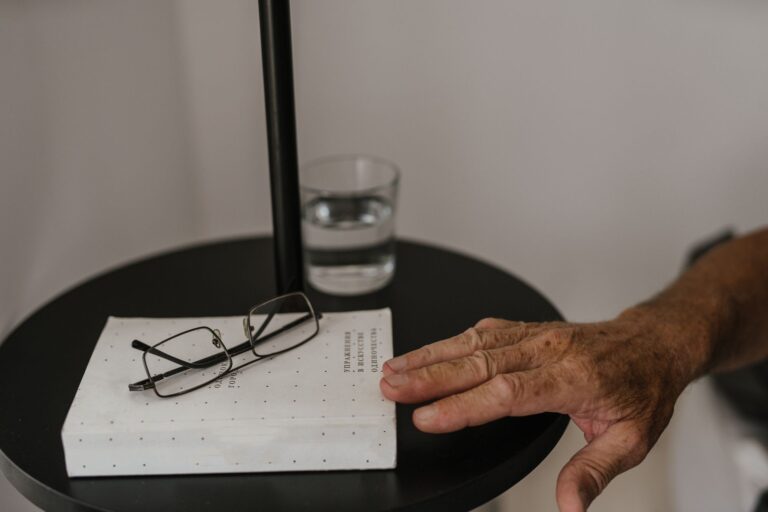
Sundowning is restlessness, agitation, irritability or confusion that begins or worsens as daylight fades, and in Alzheimer's disease it stems from brain changes that disrupt the body's internal clock. The National Institute on Aging explains that this damage scrambles sleep-wake cycles, which is why the same person can be calm at noon and distressed at five o'clock. The clock, though, is only part of it. Fatigue, hunger, thirst, pain, depression and boredom all push late-day behavior in the same direction — and unlike the brain changes, caregivers can act on those directly today.
Medical information disclaimer: This article is for general educational purposes only and does not provide medical advice, diagnosis, or treatment. Always consult a physician or other qualified health professional about symptoms, medications, tests, or treatment decisions.
Table of Contents
- What's happening in the brain and body at dusk
- Rule out a treatable cause first
- Triggers you can fix the same day
- Shape the room and the schedule
- Before you buy a light box
- Where to get help the same day
- Frequently Asked Questions
What's happening in the brain and body at dusk
The NIA's description of sundowning ties it to Alzheimer's-related damage to the structures that keep a person oriented in time, producing confused sleep-wake cycles rather than a reaction to anything that happened that afternoon. Understood that way, late-day agitation is a symptom, not misbehavior, and arguing with it rarely helps. Research has not reduced it to one mechanism.
A 2011 review in *Psychiatry Investigation* concluded that sundown syndrome still lacks a clinically operational definition and that its causes are likely multifactorial — neurobiological, pharmacological, physiological, medical and environmental at once. That is the honest reason no single treatment is established. The same review found the epidemiological literature sparse, with estimates among people with Alzheimer's ranging from 2.4% to 66% depending on the setting, the highest figures coming from people living in the community. A number anywhere in that span tells you little about one household, which is why observation at home matters more than prevalence statistics.
Rule out a treatable cause first
Before accepting a behavioral explanation, the NIA advises a medical exam to look for something fixable: pain, a sleep disorder, another illness, or a medication side effect. An untreated urinary infection or a new prescription can look exactly like sundowning, and both respond to treatment rather than to routine changes. This step is easy to skip because the pattern seems self-explanatory.
Bring specifics to the appointment — what time the agitation starts, how long it lasts, what was happening beforehand, and every medication including over-the-counter sleep aids. Pain deserves particular attention in someone who can no longer report it clearly. Guarding a limb, grimacing during transfers, or resisting a particular movement is often the message.
Triggers you can fix the same day
The NIA's list of non-circadian contributors is short and practical: being overly tired, unmet needs such as hunger or thirst, depression, pain, and boredom. Most of these have a direct remedy and none require a specialist.
When distress does arrive, the NIA favors distraction over argument: a favorite snack or drink, or a simple familiar task such as folding laundry. The Alzheimer's Association's sundowning tip sheet adds that a walk can discharge restlessness that has nowhere else to go.
- Offer food and a drink before the usual trouble window, not after it starts
- Discourage long naps and late-afternoon dozing, which deepen the evening confusion
- Cut caffeine late in the day, and avoid alcohol entirely — the NIA notes both add to confusion and anxiety
- Give the day some structure, since boredom and empty afternoons leave agitation nothing to compete with
Shape the room and the schedule
The NIA's environmental advice is unusually concrete. Reduce noise, clutter and the number of people in the room; let natural light in during the day; play soothing music; and keep familiar objects and photographs within sight. Consistency does as much work as calm.
Keeping bathing, dressing and eating on a fixed daily schedule removes decisions the person can no longer make easily, and the Alzheimer's Association recommends moving appointments, bathing and other demanding activities to earlier in the day while also making sure the person gets adequate rest. In practice that often means re-planning the afternoon rather than managing it. A bath at seven in the evening competes with the worst hour of the day; the same bath at ten in the morning usually does not.
Before you buy a light box
Bright light therapy is widely marketed for dementia-related sleep and behavior problems, and the evidence does not support it. A 2014 Cochrane review of eleven trials found no effect of bright light therapy on cognition, sleep, challenging behaviour including agitation, or psychiatric symptoms in dementia, with a single activities-of-daily-living benefit from one study that the authors themselves said should be treated with caution.
This is distinct from the NIA's advice to let natural light into the home during the day, which is part of a routine rather than a device purchase. Opening the curtains costs nothing; a light box costs money that a family stretched by care may need elsewhere.
Where to get help the same day
Caregivers who need to talk through a specific evening can reach the Alzheimer's Association's helpline at 800.272.3900, which runs 24 hours a day and is staffed by dementia specialists and social workers. It is a reasonable call to make at the hour the behavior is actually happening. For written material, the NIA's ADEAR Center sends free print publications and can be reached at 800-438-4380 — useful when several family members share the care and need the same instructions in front of them.
Frequently Asked Questions
Does sundowning mean the dementia is getting worse?
Not on its own. The NIA advises a medical exam first to look for a treatable cause such as pain, a sleep disorder, another illness or a medication side effect, since any of those can produce the same late-day pattern.
How common is sundowning?
Estimates vary widely. The 2011 *Psychiatry Investigation* review found figures among people with Alzheimer's ranging from 2.4% to 66% depending on the setting, with the highest rates reported in community-dwelling samples.
Should I correct the person when they are confused in the evening?
The NIA recommends distraction over argument — a favorite snack or drink, or a simple task such as folding laundry.