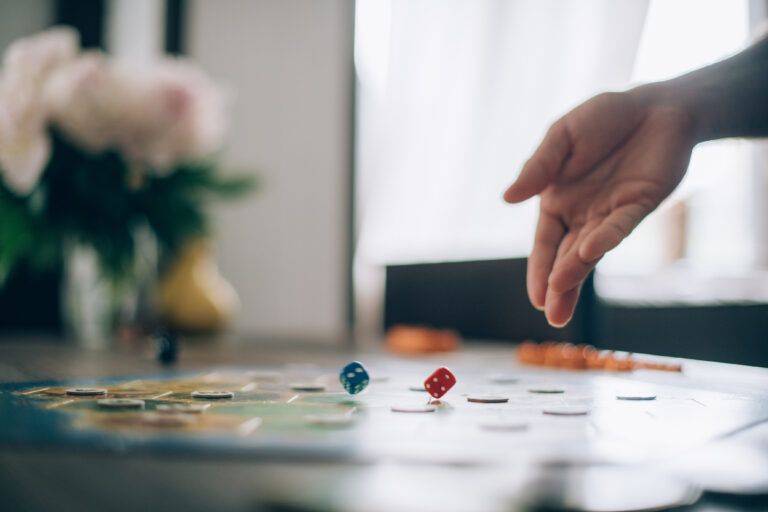
The best puzzles and games for brain health include crossword puzzles, speed-of-processing computer training, Sudoku, jigsaw puzzles, chess, and certain 3D video games — each backed by varying degrees of clinical evidence. Among these, speed-of-processing training stands out with the strongest long-term data: a landmark 20-year randomized trial published in February 2026 found that this specific type of cognitive exercise reduced dementia risk by 25 percent, making it the only brain-training approach in the study to show such a lasting protective effect. Crossword puzzles, meanwhile, have proven superior to generic computer games for people already experiencing mild cognitive impairment, according to research from Columbia and Duke universities.
But not all brain games are created equal, and the commercial hype around “brain training” apps often outpaces the science. The difference between a puzzle that genuinely supports cognitive health and one that simply passes time comes down to what kind of mental challenge it poses, how consistently you do it, and whether it pushes you beyond your comfort zone. This article breaks down the most evidence-backed games and puzzles by type, examines what major studies actually found, and offers practical guidance on building a brain-healthy game routine — including how long to play, what to vary, and where popular apps fall short.
Table of Contents
- Which Puzzles and Games Have the Strongest Evidence for Brain Health?
- What the ACTIVE Study and BrainHQ Research Actually Proved
- Why Crossword Puzzles Outperformed Computer Games for Memory Loss
- How to Build a Daily Brain Game Routine That Actually Works
- Where Brain Training Apps Fall Short — and When They Help
- Chess and 3D Video Games as Cognitive Exercise
- What the Future of Brain-Health Gaming Looks Like
- Conclusion
- Frequently Asked Questions
Which Puzzles and Games Have the Strongest Evidence for Brain Health?
Not all brain games carry the same scientific weight. At the top of the evidence pyramid sits speed-of-processing training, specifically a task called Double Decision available through BrainHQ. The ACTIVE Study — a randomized clinical trial that enrolled 2,802 adults beginning in 1998-99 and followed them for two decades — found that participants who completed 5 to 6 weeks of speed-of-processing sessions, plus booster sessions one to three years later, had a 25 percent lower risk of developing dementia up to 20 years after training. This was the only type of cognitive training in the entire trial (which also tested memory and reasoning exercises) to produce that result. The findings were published in *Alzheimer’s & Dementia: Translational Research & Clinical Interventions* and covered by Johns Hopkins Medicine, the NIH, and NPR. Crossword puzzles hold the next strongest position, particularly for people already noticing cognitive changes. In a study published in *NEJM Evidence*, researchers at Columbia and Duke randomized 107 adults with mild cognitive impairment to either crossword puzzles or computerized cognitive games over 12 weeks, with booster sessions extending to 78 weeks.
The crossword group performed better on memory tests at both time points, showed improved daily functioning scores at 78 weeks, and — notably — had less brain shrinkage visible on MRI scans. For someone already dealing with early memory loss, that is a meaningful finding. Sudoku, jigsaw puzzles, chess, and 3D video games round out the list with solid but less extensive evidence. A large observational study found that people who did number puzzles like Sudoku more than once a day performed cognitively at a level comparable to people eight years younger. Jigsaw puzzles engage both brain hemispheres and strengthen spatial reasoning. Chess demands planning, pattern recognition, and working memory in ways few other activities match. And research has shown that older adults who played 3D video games involving spatial exploration improved their recognition memory after just two weeks. Each of these offers something different, which is part of the point — variety matters.

What the ACTIVE Study and BrainHQ Research Actually Proved
The ACTIVE Study is frequently cited in brain-training marketing, so it is worth understanding exactly what it did and did not show. The study tested three distinct types of cognitive training: memory exercises, reasoning exercises, and speed-of-processing exercises. Only speed-of-processing training — where participants rapidly identified visual details on a computer screen under time pressure — reduced long-term dementia risk. Memory training and reasoning training, while they improved performance on their specific tasks, did not translate into lower dementia incidence over 20 years. This is an important distinction that many brain-training companies gloss over when advertising their products. More recently, a clinical trial from McGill University published in October 2025 in *JMIR Serious Games* shed light on a possible biological mechanism behind these benefits. The study of 92 adults ages 65 and older found that 10 weeks of BrainHQ exercises produced a 2.3 percent increase in acetylcholine production in the anterior cingulate cortex — a brain region involved in attention and cognitive control.
The control group, which played entertainment games, showed no significant change. Senior author Dr. Etienne de Villers-Sidani stated that “the training restored cholinergic health to levels typically seen in someone 10 years younger.” Acetylcholine is the same neurotransmitter targeted by several Alzheimer’s medications, so the idea that a behavioral intervention could boost its production is noteworthy. However, these findings come with caveats. The ACTIVE Study participants completed structured training protocols with booster sessions — not casual, occasional gameplay. And the McGill study, while promising, involved only 92 participants over 10 weeks. No one has yet proven that downloading a brain-training app and using it sporadically produces the same effects as the carefully supervised regimens used in these trials. If you are considering speed-of-processing training for yourself or a family member, the evidence supports following a consistent schedule that mirrors what was actually tested, not just dabbling when you remember.
Why Crossword Puzzles Outperformed Computer Games for Memory Loss
The Columbia and Duke study comparing crossword puzzles to computerized cognitive games is one of the more surprising results in this field, because it challenges the assumption that high-tech tools must be superior. The 107 participants, all of whom had mild cognitive impairment, were randomly assigned to one group or the other. At 12 weeks, the crossword group scored better on the ADAS-Cog, a standard clinical measure of memory and cognition used in Alzheimer’s drug trials. At 78 weeks, the crossword group maintained their advantage and also showed better scores on measures of daily functioning — things like managing finances, following recipes, and keeping track of appointments. Perhaps the most striking finding was structural: MRI scans revealed that the crossword group experienced less brain shrinkage over the study period. Brain volume loss is a hallmark of Alzheimer’s disease progression, and the idea that a pen-and-paper puzzle could slow it more effectively than a purpose-built computer program is both humbling and encouraging.
The researchers speculated that crosswords engage a broader network of cognitive skills — vocabulary retrieval, semantic memory, pattern recognition, and sustained attention — than many computer games, which tend to isolate a single ability like reaction time or visual tracking. This does not mean computer-based training is useless. As noted, the ACTIVE Study found powerful results for speed-of-processing training, which is fundamentally a computer-based exercise. The key difference may be the type of computerized game. Generic “brain games” that amount to dressed-up matching or memory card exercises are probably less effective than tasks specifically designed to challenge processing speed under adaptive difficulty. For someone with MCI, a daily crossword habit appears to be a better bet than a generic brain-training app. For someone without cognitive impairment who wants to reduce future risk, structured speed-of-processing training has stronger long-term evidence.

How to Build a Daily Brain Game Routine That Actually Works
Consistency trumps intensity when it comes to brain games. According to research cited by Healthline, playing for 15 minutes a day produces better results than a single three-hour session once a week. This mirrors what we know about physical exercise — frequency and regularity matter more than occasional marathons. The practical challenge is making that daily habit stick without it becoming tedious, which is where variety becomes essential. UCLA Health recommends varying your games rather than sticking to just one type. A reasonable weekly rotation might look like this: crossword puzzles on three days, a speed-of-processing exercise like Double Decision on two days, and a jigsaw puzzle or chess game on weekends.
This approach targets different cognitive domains — language and semantic memory with crosswords, processing speed and visual attention with computer training, and spatial reasoning with jigsaws or strategic thinking with chess. If you enjoy Sudoku, substituting it for a crossword day gives your numerical reasoning a workout while resting the verbal circuits. The tradeoff with this approach is that you will not become an expert at any single game as quickly, and some people find that frustrating. A person who does crosswords every day will improve faster at crosswords than someone who rotates through multiple activities. But the goal is not crossword mastery — it is cognitive resilience across multiple domains. Sticking exclusively with a game you have already mastered may feel satisfying, but once an activity becomes automatic, it stops challenging your brain in the ways that matter for long-term health. When a puzzle starts feeling easy, that is your signal to increase the difficulty or try something new.
Where Brain Training Apps Fall Short — and When They Help
The brain-training app industry is worth billions of dollars, but the scientific evidence behind most commercial products remains thin. In 2016, the makers of Lumosity paid $2 million to settle charges from the Federal Trade Commission that their advertising claimed unfounded cognitive benefits. Since then, the marketing has become more careful, but the gap between what apps promise and what clinical research supports has not fully closed. Most commercial apps have not been tested in large, long-term randomized trials, and many of the studies they cite were small, short-term, or funded by the app makers themselves. The exception, as noted, is BrainHQ, whose speed-of-processing exercise was the specific intervention tested in the ACTIVE Study and the McGill acetylcholine trial. If you are going to use a brain-training app, BrainHQ has by far the strongest clinical backing.
But even here, the evidence applies to the specific Double Decision exercise and the structured training protocol used in those studies — not necessarily to every exercise in the BrainHQ catalog. Traditional puzzles — crosswords, Sudoku, jigsaw puzzles — may actually have an edge over most apps for a simple reason: they tend to be more cognitively complex. A crossword puzzle simultaneously engages vocabulary retrieval, general knowledge, pattern recognition, and spelling, all while requiring sustained focus. Many app-based games, by contrast, target a single narrow skill. As Live Science reported, traditional puzzles show stronger overall evidence than most commercial brain-training apps. The best approach is probably a combination: use BrainHQ’s Double Decision for its specific, well-documented benefits, and fill the rest of your brain-game time with traditional puzzles that engage broader cognitive networks.

Chess and 3D Video Games as Cognitive Exercise
Chess stands apart from other puzzles because it demands real-time strategic planning against an unpredictable opponent, which engages working memory, pattern recognition, and executive function simultaneously. The Fisher Center for Alzheimer’s Research identifies it as one of the best games for brain health, and it has the added benefit of being social when played in person — an important factor, since social isolation is itself a risk factor for cognitive decline. Online chess platforms make it easy to find opponents at any skill level, and even casual play forces the kind of multi-step planning that keeps the prefrontal cortex engaged. 3D video games represent a more unexpected entry on this list.
Research has shown that older adults who played 3D games involving spatial exploration — navigating virtual environments, remembering landmarks, tracking their position in three-dimensional space — improved their recognition memory after just two weeks of play. This likely relates to the hippocampus, the brain region critical for both spatial navigation and memory formation. Not every video game qualifies; the key ingredient appears to be active spatial exploration in a three-dimensional environment, not passive or two-dimensional gameplay. Games that involve exploring open worlds or navigating complex environments are more likely to offer these benefits than simple puzzle or card games on a screen.
What the Future of Brain-Health Gaming Looks Like
The convergence of the ACTIVE Study’s 20-year results and the McGill acetylcholine findings suggests we are entering a new phase in understanding how cognitive training affects the aging brain. Researchers are now investigating whether combining speed-of-processing training with other interventions — physical exercise, social engagement, dietary changes — could produce even larger protective effects. The FINGER trial in Finland and similar multi-domain prevention studies are exploring exactly this kind of combined approach.
What seems increasingly clear is that passive entertainment does not count. Watching television, scrolling social media, and playing games that require no real cognitive effort do not produce the same benefits as activities that genuinely challenge your brain. The specific mechanism may involve neuroplasticity — the brain’s ability to reorganize and strengthen neural connections in response to demanding tasks — combined with neurochemical effects like the acetylcholine boost documented at McGill. For anyone concerned about cognitive decline, the practical message from the research is encouraging: structured mental challenge, done consistently and varied across different cognitive domains, appears to offer real, measurable protection.
Conclusion
The strongest evidence points to two specific interventions: speed-of-processing training, which reduced dementia risk by 25 percent over 20 years in the ACTIVE Study, and crossword puzzles, which outperformed computer games for people with mild cognitive impairment in a rigorous Columbia and Duke trial. Beyond those, Sudoku, jigsaw puzzles, chess, and 3D video games each offer documented cognitive benefits, particularly when done regularly and at a challenging difficulty level. The emerging BrainHQ research from McGill adds a biological explanation, showing that structured brain exercises can boost acetylcholine production to levels typical of someone a decade younger.
The practical takeaway is straightforward: play a variety of mentally challenging games for at least 15 minutes a day, increase difficulty as you improve, and do not rely on any single app or puzzle type. Traditional puzzles like crosswords and Sudoku have stronger evidence behind them than most commercial brain-training products, with the notable exception of BrainHQ’s Double Decision exercise. If you or a family member is concerned about cognitive decline, these are low-cost, low-risk activities that the research increasingly supports as part of a broader strategy for brain health.
Frequently Asked Questions
How long do I need to play brain games each day to see benefits?
Research suggests that 15 minutes of daily play is more effective than longer, less frequent sessions. The ACTIVE Study participants completed structured sessions over 5 to 6 weeks with booster sessions afterward — consistency was central to the approach that produced a 25 percent reduction in dementia risk.
Are brain-training apps like Lumosity worth paying for?
Most commercial brain-training apps lack the large, long-term clinical trials needed to back up their marketing claims. BrainHQ is the notable exception, as its Double Decision exercise was the specific intervention tested in the 20-year ACTIVE Study and the McGill acetylcholine trial. For other apps, the evidence is weaker than what exists for traditional crosswords and Sudoku.
Can brain games reverse dementia or Alzheimer’s disease?
No clinical study has shown that brain games can reverse dementia. The evidence supports brain games as a preventive or slowing measure — reducing the risk of developing dementia or slowing cognitive decline in people with mild cognitive impairment. They are best understood as one part of a broader approach that includes physical exercise, social engagement, and medical care.
Are crossword puzzles better than Sudoku for brain health?
Crossword puzzles have more clinical trial evidence, particularly the Columbia and Duke study showing they outperformed computer games for people with MCI and correlated with less brain shrinkage on MRI. Sudoku has strong observational data — daily players performed cognitively like people eight years younger — but has not been tested as rigorously in randomized trials. Ideally, do both to engage different cognitive domains.
At what age should I start doing brain-training exercises?
The ACTIVE Study enrolled adults with an average age in their seventies, but there is no evidence suggesting that starting earlier is harmful and some reason to think it could be beneficial. Most experts recommend building cognitively stimulating habits well before any signs of decline appear, as part of a long-term approach to brain health.
Can playing chess or video games really help prevent cognitive decline?
Chess engages planning, pattern recognition, and working memory in ways that are considered highly beneficial for brain health, according to the Fisher Center for Alzheimer’s Research. Research on 3D video games has shown improvements in recognition memory in older adults after just two weeks — but the games must involve active spatial exploration, not passive or simple gameplay. Neither has been tested in a trial as large or long as the ACTIVE Study, so the evidence, while promising, is not yet as strong.