The best breathing exercises for brain oxygenation include Kapalabhati (skull-shining breath), diaphragmatic belly breathing, cyclic sighing, alternate nostril breathing, and controlled hyperventilation techniques like the Wim Hof Method. Each of these works through a different mechanism, but they share a common outcome: they increase the amount of oxygen reaching your brain, which research suggests can improve attention, mood, and cognitive performance. A 2019 Penn State University study confirmed that increased respiration packs more oxygen into hemoglobin, providing a dynamic pathway for modulating cerebral oxygenation — a finding that holds true across all mammals.
This matters more than most people realize. A study using 30% oxygen administration (compared to the normal 21% in ambient air) found that accuracy rates on verbal tasks were enhanced, suggesting that higher blood oxygen saturation in the brain directly facilitates cognitive performance. For anyone concerned about brain health — particularly those navigating dementia caregiving or looking to maintain cognitive sharpness — breathing exercises represent one of the most accessible, zero-cost interventions available. This article breaks down each technique, the science behind it, practical instructions, important safety considerations, and how to choose the right approach for your situation.
Table of Contents
- Which Breathing Exercises Increase Brain Oxygenation the Most?
- How Cyclic Sighing Improves Both Mood and Brain Function
- What Alternate Nostril Breathing Does to Both Hemispheres of the Brain
- How to Build a Daily Breathing Routine for Brain Health
- Safety Warnings and Who Should Avoid Certain Breathing Techniques
- Breathing Exercises in Dementia Care Settings
- What Ongoing Research Suggests About Breathing and Cognitive Decline
- Conclusion
- Frequently Asked Questions
Which Breathing Exercises Increase Brain Oxygenation the Most?
Not all breathing exercises affect cerebral oxygenation equally. Research published in PMC using near-infrared spectroscopy — a tool that measures hemoglobin changes in the brain in real time — found that fast breathing techniques like Kapalabhati elicit a significant increase in cerebral oxygenation in both right and left prefrontal cortex regions. Oxygen consumption rates during Kapalabhati are approximately 1.1 to 1.8 times higher than while sitting quietly. Transcranial Doppler monitoring has also shown significant changes in middle cerebral artery blood flow velocity and pulsatility index during practice. In practical terms, this means the brain is receiving measurably more oxygenated blood during fast rhythmic breathing than during rest. On the gentler end of the spectrum, diaphragmatic breathing works by maximizing lung inflation with each breath.
Nasal diaphragmatic breathing warms incoming air and increases airway resistance, which allows for maximum lung inflation and greater oxygen delivery to nerve tissues. While this approach does not produce the dramatic spikes in cerebral blood flow that Kapalabhati does, it offers a sustained, steady improvement in oxygenation that is safe for virtually everyone, including older adults and people with respiratory limitations. The distinction matters when choosing a technique. If you are a healthy adult looking for a short, intense brain oxygenation boost — say, before a cognitively demanding task — Kapalabhati may be more appropriate. If you are a caregiver looking for something calming that also supports brain oxygen levels throughout the day, diaphragmatic breathing is the more practical choice. The two are not competing options; they serve different needs.

How Cyclic Sighing Improves Both Mood and Brain Function
Cyclic sighing is a breathing pattern where the exhale is deliberately longer than the inhale, often involving a double inhale followed by one extended exhale. A 2023 Stanford study led by David Spiegel and Andrew Huberman, published in Cell Reports Medicine, randomized 111 volunteers to either daily five-minute breathwork sessions or mindfulness meditation over one month. The cyclic sighing group showed the greatest daily improvement in positive affect, with effects that actually increased over time rather than plateauing. All breathing groups reported increases in energy, joy, and peacefulness, averaging 1.91 points above baseline on positive affect scales. What makes cyclic sighing particularly interesting for brain health is that it significantly lowered resting breathing rate more than mindfulness meditation or other breathing techniques (p < 0.05).
A lower resting breathing rate is generally associated with better autonomic regulation and more efficient gas exchange in the lungs, meaning the brain receives a steadier supply of oxygen even outside of the active breathing practice. This is not a temporary spike — it is a physiological shift that carries over into your daily life. However, if you are someone who tends toward shallow breathing or who has chronic respiratory conditions like COPD, the exhale-emphasis of cyclic sighing may initially feel uncomfortable or even anxiety-provoking. It is worth starting with shorter sessions — two minutes rather than five — and building up gradually. People who experience dizziness or lightheadedness should stop and return to their normal breathing pattern. The technique is generally very safe, but forcing an unnaturally long exhale before your body is ready can be counterproductive.
What Alternate Nostril Breathing Does to Both Hemispheres of the Brain
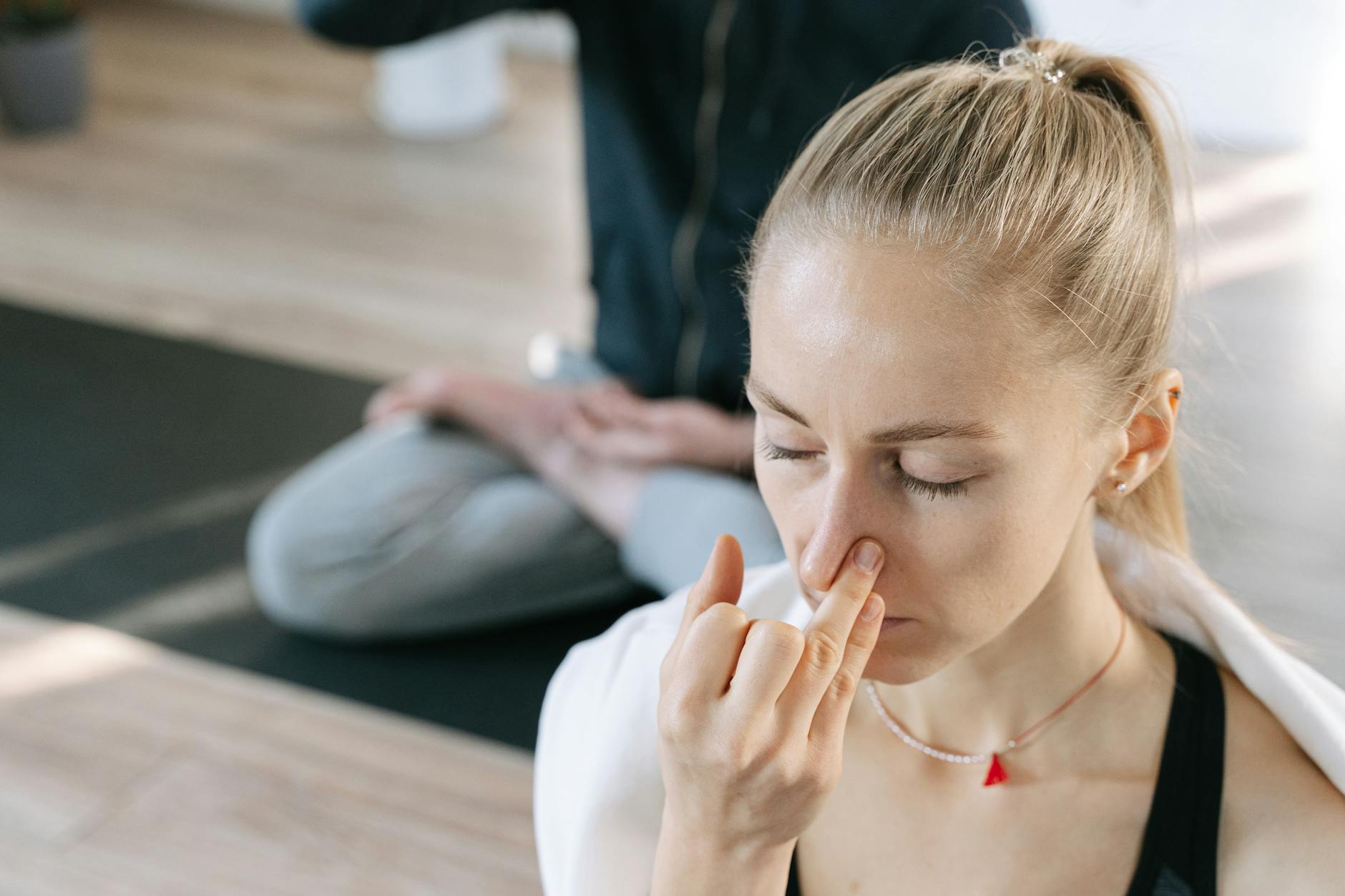
Alternate nostril breathing, known in yoga as Nadi Shodhana, involves closing one nostril while inhaling through the other, then switching sides for the exhale. Research associates this technique with increased attention and suggests it may promote motor learning. The proposed mechanism is that it balances activity in both brain hemispheres, essentially encouraging the left and right sides of the brain to synchronize rather than one dominating the other. In practice, this looks like closing the right nostril with your thumb, inhaling slowly through the left nostril for a count of four, closing the left nostril with your ring finger, and exhaling through the right nostril for a count of four. You then inhale through the right nostril and repeat the cycle.
A typical session lasts five to ten minutes. Some practitioners use this before tasks that require both creative and analytical thinking — writing, problem-solving, or navigating complex caregiving decisions — because of its proposed balancing effect on bilateral brain activity. The limitation here is that the research on hemisphere-balancing specifically is still emerging. While the attention improvements have been documented, the exact mechanism is not fully settled in the scientific literature. This does not mean the technique is ineffective — it clearly produces subjective and measurable cognitive benefits — but anyone claiming it “activates your whole brain” is overselling what the current evidence supports. Use it as one tool among several, not as a standalone cognitive enhancement strategy.
How to Build a Daily Breathing Routine for Brain Health
Choosing between these techniques involves weighing intensity, safety, time commitment, and your specific goals. Kapalabhati delivers the most dramatic short-term increase in cerebral oxygenation but requires more physical effort and carries some contraindications for people with high blood pressure or seizure disorders. Cyclic sighing requires only five minutes a day and produces cumulative benefits to mood and resting breathing rate. Diaphragmatic breathing can be practiced almost anywhere without anyone noticing, making it the easiest to integrate into a daily routine. A practical daily routine might look like this: start the morning with five minutes of cyclic sighing to set a calm, oxygenated baseline for the day. Before any cognitively demanding activity — a medical appointment, financial planning, or a complex conversation — practice two to three minutes of alternate nostril breathing.
If you are healthy enough for vigorous breathing, a short Kapalabhati session of two to three minutes in the afternoon can counteract the post-lunch cognitive dip that most people experience. Throughout the day, periodically check in with your breathing and shift to deliberate diaphragmatic breathing whenever you notice you have been breathing shallowly. The tradeoff with any routine is consistency versus variety. Sticking with one technique makes habit formation easier and allows you to notice subtle changes over weeks. Rotating between techniques keeps things engaging and addresses multiple mechanisms of brain oxygenation. For most people, starting with one technique for two weeks and then adding a second is a reasonable middle ground.
Safety Warnings and Who Should Avoid Certain Breathing Techniques
The Wim Hof Method, which involves controlled hyperventilation through rapid deep breathing cycles followed by breath retention holds, can supercharge blood oxygen levels in the short term. It has a dedicated following and some intriguing research behind it. However, intense multi-round sessions can in rare cases cause loss of consciousness. This is not a theoretical risk — it has been documented. The technique should never be practiced in water, while driving, or in any situation where fainting could result in injury. Kapalabhati also warrants caution. While a study of 61 participants showed that 18 minutes of Kapalabhati reduced anxiety and improved attention levels, the technique involves forceful abdominal contractions and rapid breathing that can spike blood pressure temporarily.
People with uncontrolled hypertension, epilepsy, hernia, or who are pregnant should avoid it entirely. Even healthy individuals should start with shorter sessions — 30 seconds to one minute — and increase gradually. If you experience tingling in the hands, visual disturbances, or a sense of panic, stop immediately and breathe normally. Research published in PMC in 2022 confirmed that changes in breathing can dynamically modulate blood oxygenation and, by consequence, oxygenation in the brain. This is powerful, but “powerful” cuts both ways. Hyperventilation-based techniques can also cause hypocapnia — a drop in carbon dioxide levels — which paradoxically constricts blood vessels in the brain and temporarily reduces cerebral blood flow. The goal is controlled, purposeful practice, not aggressive overbreathing. More is not better with these techniques.
Breathing Exercises in Dementia Care Settings
For caregivers working with individuals who have dementia, guided diaphragmatic breathing is often the most realistic option. Complex techniques like alternate nostril breathing or Kapalabhati require instruction-following and coordination that may not be accessible for someone with moderate to advanced cognitive impairment. A caregiver can sit facing the person, place their own hand visibly on their abdomen, and breathe slowly and audibly, inviting the person to mirror them.
This co-regulation approach often works when verbal instructions alone do not. Even when the person with dementia cannot follow along perfectly, the act of slowing down and breathing together often reduces agitation in both the caregiver and the care recipient. The caregiver benefits directly from the oxygenation effects, which matters enormously given that caregiver stress and cognitive fatigue are well-documented problems. A simple three-minute diaphragmatic breathing break before meals or during transitions between activities can become a grounding ritual for both parties.
What Ongoing Research Suggests About Breathing and Cognitive Decline
The Penn State finding that respiration provides a dynamic pathway for modulating cerebral oxygenation has opened new lines of inquiry into whether habitual breathing patterns contribute to long-term cognitive outcomes. If breathing directly controls how much oxygen the brain receives moment to moment, then chronic shallow breathing — common in sedentary, stressed, or aging populations — may be a modifiable risk factor for cognitive decline that has been largely overlooked. Researchers are beginning to investigate whether regular breathwork practice can slow age-related changes in cerebral blood flow.
No large-scale longitudinal trials have been completed yet, so it would be premature to claim that breathing exercises prevent dementia. But the mechanistic evidence is solid: breathing changes blood oxygenation, blood oxygenation affects brain function, and structured breathing practices improve both oxygenation and cognitive performance in controlled studies. As this field matures, we may see breathing protocols incorporated into standard recommendations for brain health alongside exercise, sleep, and nutrition.
Conclusion
The evidence is clear that deliberate breathing practices — from gentle diaphragmatic breathing to intense Kapalabhati — can meaningfully increase the amount of oxygen reaching your brain. The 2023 Stanford study on cyclic sighing, the Penn State research on respiration and cerebral oxygenation, and multiple neuroimaging studies all point in the same direction: how you breathe matters for how your brain functions. The best technique for you depends on your health status, your goals, and how much time you are willing to invest daily.
Start simple. Five minutes of cyclic sighing or diaphragmatic breathing costs nothing, requires no equipment, and based on current research, produces measurable benefits to mood, attention, and brain oxygenation. If you are a caregiver, remember that you need these benefits as much as the person you are caring for. Build from there as comfort and confidence allow, and consult a healthcare provider before attempting vigorous techniques like Kapalabhati or the Wim Hof Method if you have any cardiovascular, respiratory, or neurological conditions.
Frequently Asked Questions
How long do I need to practice breathing exercises before seeing cognitive benefits?
The Stanford cyclic sighing study showed daily improvements in positive affect that increased over the course of one month with just five minutes of practice per day. Acute effects on brain oxygenation — such as those measured during Kapalabhati — occur during and immediately after each session, but the cumulative benefits to resting breathing rate and baseline mood appear to build over weeks.
Can breathing exercises replace medication for brain health conditions?
No. Breathing exercises are a complementary practice, not a substitute for prescribed medications. They can improve oxygenation and reduce stress, both of which support brain health, but they do not treat underlying neurological conditions. Always discuss any changes to your health routine with a physician.
Is it possible to breathe too much oxygen to the brain?
In practical terms, voluntary breathing exercises do not push oxygen levels to dangerous highs. However, aggressive hyperventilation (as with improper Wim Hof practice) can cause hypocapnia — low carbon dioxide — which paradoxically reduces cerebral blood flow by constricting blood vessels. The risk is not too much oxygen but rather the chemical imbalance caused by expelling too much carbon dioxide.
Are breathing exercises safe for people with dementia?
Gentle diaphragmatic breathing is generally safe for people at all stages of dementia. More vigorous techniques like Kapalabhati or the Wim Hof Method are not appropriate for this population. Guided, mirrored breathing with a caregiver is often the most effective approach for people who cannot follow complex verbal instructions.
Does nose breathing matter, or can I breathe through my mouth?
Nasal breathing is generally preferred because it warms and filters incoming air and creates airway resistance that promotes maximum lung inflation and greater oxygen delivery. Mouth breathing bypasses these benefits. For techniques like alternate nostril breathing, nasal breathing is inherently part of the practice.