A bulging disc in the lower back typically feels like a dull, persistent ache in the affected area, though some people experience a burning or stinging sensation that may radiate down one or both legs. The sensation varies widely depending on which spinal nerves are compressed: you might feel sharp, electric shock-like pain when you stand or walk, or a numbness and tingling that extends from your lower back down to your feet. For example, if the bulge presses on the L5 nerve on one side, you’ll likely feel shooting pain on the outside of that leg, possibly reaching your toes, whereas compression at L3/L4 tends to create pain in the front of the thigh.
The experience is highly individual—some people with bulging discs feel nothing at all, while others are significantly limited by pain and weakness. This article walks through exactly what bulging disc pain feels like across different spinal levels, how the sensation changes throughout the day, what distinguishes a simple bulge from a severe herniation, and what the typical recovery timeline looks like. We’ll also cover the physical mechanisms behind the pain—both mechanical compression and chemical irritation from the disc itself—and practical information about when symptoms typically resolve on their own versus when medical intervention becomes necessary.
Table of Contents
- How Bulging Disc Pain Actually Manifests in Your Lower Back and Legs
- The Specific Sensations by Nerve Level in Your Lower Spine
- The Sensation of Sciatica and Why Bulging Discs Cause Leg Pain
- How Pain Patterns Change Throughout the Day and With Different Activities
- When a Bulging Disc Becomes a Herniated Disc and Pain Intensifies
- Numbness, Tingling, and Weakness—When Nerve Damage Signs Appear
- The Recovery Timeline and What to Expect Over Weeks and Months
- Conclusion
How Bulging Disc Pain Actually Manifests in Your Lower Back and Legs
A bulging disc produces two distinct types of pain sensations. The first is localized pain at the site of the bulge itself, typically described as a dull, persistent ache that feels worse at the end of the day or after prolonged sitting or standing. this local pain comes from inflammation around the disc and the surrounding spinal structures. The second type is radiating pain that travels down one or both legs, a condition called sciatica when the sciatic nerve is involved.
This radiating pain is often more distressing than the local back pain because it feels unpredictable—a sharp, burning, or electric shock-like sensation that can change throughout the day depending on your position and movement. The intensity of these sensations depends on which nerve root is being compressed. More than 3 million Americans per year experience a herniated disc, with most reporting one of three primary symptoms: severe, unremitting pain in the back and/or leg; numbness or tingling in specific patches of the leg or foot; or actual weakness in the muscles controlled by the affected nerve. The pain often worsens with certain movements—standing straight, walking, or straightening the affected leg—making everyday activities like grocery shopping or walking to your car suddenly feel risky. However, for many people, the pain is intermittent rather than constant, flaring up with activity and settling down with rest.

The Specific Sensations by Nerve Level in Your Lower Spine
The exact location and character of your pain depends entirely on which segment of your lower spine is affected. If the bulge is at the L1/L2 level, pain typically radiates to your lower back and groin, sometimes extending into the upper front and inside of the thigh. Move down to L3/L4, and the pain concentrates in the front of the thigh—people often describe this as a pulling or aching sensation across the quadriceps. At the L5 level, which is the most common site for bulging discs to cause symptoms, pain radiates down the outside of the lower leg all the way to the toes, frequently accompanied by numbness in the top of the foot or between the first and second toes, or tingling in the sole of the foot.
This specificity matters because it helps explain why your pain is in that exact location and not somewhere else. The bad news is that pain at the L5 level often includes weakness—your foot might feel floppy when you try to lift it upward, making climbing stairs or walking on uneven surfaces feel unsafe. However, the good news is that most herniated discs heal on their own within 4 to 6 weeks, with most patients becoming symptom-free within 3 to 4 months. If your pain fits the L5 pattern but you’re still experiencing significant symptoms after four months, that’s when further investigation or intervention becomes more likely to be necessary.
The Sensation of Sciatica and Why Bulging Discs Cause Leg Pain
When a disc bulge compresses the sciatic nerve or its nerve roots, the resulting pain often feels nothing like typical back pain. Instead, people describe it as a burning, stabbing, or electric shock running down the back or outside of the leg, sometimes extending into the foot or ankle. The pain may feel as though it’s traveling along a specific line down your leg, and it often intensifies when you cough, sneeze, or bend forward—movements that increase pressure inside the spinal canal. Many people report that the leg pain is far more bothersome than any back pain, especially because it affects mobility and can make simple tasks like putting on socks or driving a car extremely uncomfortable.
Two distinct physical mechanisms create this radiating leg pain. First, the mechanical compression—the physical pressure of the bulging disc material squeezing the nerve itself. Second, the chemical irritation from inflammatory proteins and chemical irritants released from the damaged disc material, which causes the nerve to swell and become irritated even beyond the point of direct compression. This is why even modest bulges can sometimes produce intense pain, and why resting the spine—reducing pressure on the affected structures—often provides at least temporary relief. The downside is that you may become cautious or deconditioned from avoiding movement, which can ultimately slow your recovery.
How Pain Patterns Change Throughout the Day and With Different Activities
Most people with bulging discs notice their pain follows predictable patterns tied to specific activities or times of day. Morning stiffness is common—pain that feels worse when you first get out of bed, as the disc space has narrowed overnight due to the spine’s natural position during sleep. Throughout the day, pain typically worsens with prolonged sitting, especially if you’re hunched forward at a desk, because this position increases pressure within the disc. Conversely, many people find relief by lying down, because lying flat reduces the force pushing the disc material outward. Some people feel best walking slowly or doing gentle movement, while others find that any activity triggers pain.
The relationship between activity and pain creates a tradeoff that many people find frustrating. Rest reduces pain acutely, but complete bed rest can lead to deconditioning—your muscles weaken, your spine becomes stiffer, and recovery actually slows down. This is why doctors typically recommend activity modification rather than bed rest: stay moving gently, but avoid activities that clearly trigger pain spikes. If you notice your pain is worst when sitting and better when standing and moving, that’s valuable information—it suggests you should set up your work station differently or take frequent breaks. If pain is worst with standing and better with sitting, the opposite adjustment applies.
When a Bulging Disc Becomes a Herniated Disc and Pain Intensifies
It’s important to distinguish between a bulging disc and a herniated disc, because the terminology affects how people interpret their condition’s severity. A bulging disc is when the entire disc—still contained within its outer shell—pushes outward symmetrically or asymmetrically against the spinal nerves. A herniated disc is when the outer shell actually ruptures and inner disc material protrudes into the spinal canal or directly contacts a nerve root. In practice, herniated discs cause more intense pain and a higher likelihood of nerve compression symptoms like weakness and numbness.
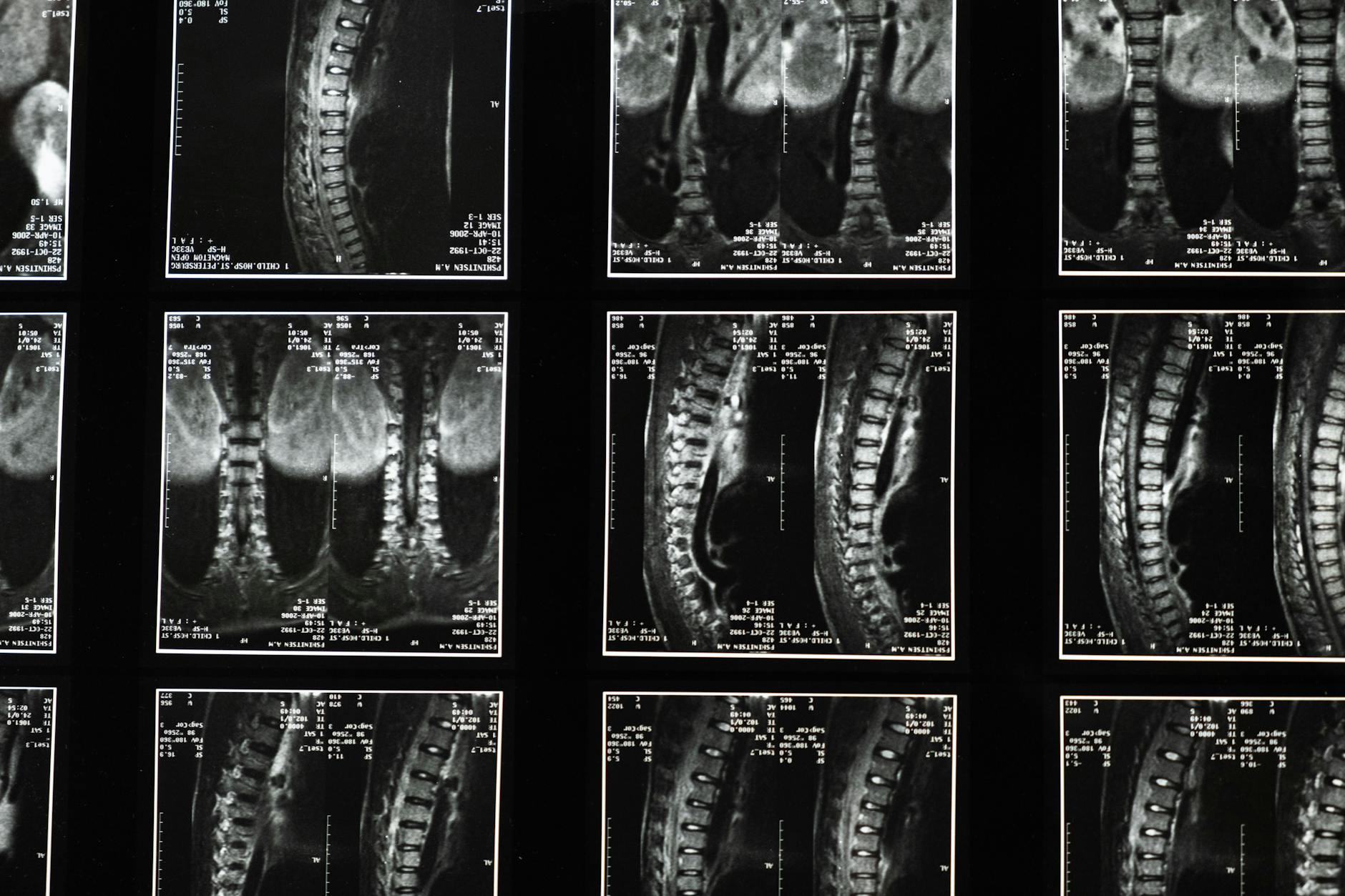
Here’s an important limitation to understand: many people have bulging or even herniated discs visible on imaging (MRI or CT scans) but experience zero pain. More than 3 million Americans per year experience symptomatic herniated discs, but imaging studies show that bulging discs are incredibly common in people without any back pain at all. This means that imaging findings don’t always correlate with symptoms, and a “bulging disc” seen on imaging isn’t automatically a disaster—most bulging discs never become symptomatic or cause progressive damage. The reverse is also true: if your pain is severe, don’t assume imaging will show a corresponding disc problem. Significant pain can exist with minimal imaging findings, especially in the early inflammatory phase of a disc injury.

Numbness, Tingling, and Weakness—When Nerve Damage Signs Appear
Beyond pain, a bulging disc can produce numbness and tingling (paresthesias) in the distribution of the affected nerve. You might feel a “pins and needles” sensation, a numb patch on your thigh or calf, or a loss of sensation in your foot. Weakness is the most concerning symptom—if you can’t lift your foot upward (foot drop), can’t press your foot downward against resistance, or notice your leg feeling floppy or unreliable, those are signs of nerve root compression that warrant prompt medical attention.
Weakness suggests more substantial compression than pain alone, and early intervention can sometimes prevent permanent nerve damage. Tingling and numbness are generally less urgent than weakness, though progressive numbness or numbness that’s spreading should be evaluated. A single episode of numbness in one foot from a bulging disc is common and often resolves as the inflammation decreases. However, if numbness is progressing or if it’s accompanied by weakness or loss of bowel/bladder control, seek immediate medical evaluation—these can be signs of cauda equina syndrome, a rare but serious condition requiring emergency surgery.
The Recovery Timeline and What to Expect Over Weeks and Months
Most herniated discs show significant improvement within 4 to 6 weeks as inflammation decreases and the body reabsorbs the disc material that has protruded. By 3 to 4 months, most patients report being largely symptom-free or managing symptoms easily with activity modification and occasional medication. This timeline is encouraging because it means you’re not necessarily facing months of severe pain—in many cases, you’re looking at weeks. However, this timeline assumes you’re not re-injuring the disc through poor posture, heavy lifting, or repeated strenuous activity.
The forward-looking insight is that recovery is not always linear. You might feel much better after two weeks, then have a setback after overdoing an activity, causing pain to spike again. This doesn’t mean you’re starting from scratch—setbacks are common and typically resolve faster than the initial injury. Most importantly, recovering from a bulging disc takes active participation: gentle movement, proper body mechanics, and activity modification work far better than hoping the pain simply goes away on its own. The vast majority of people with bulging discs never need surgery—they recover through conservative management, but that recovery requires engagement and patience.
Conclusion
A bulging disc in the lower back feels like anything from a dull, persistent ache to sharp, electric shock-like pain radiating down the leg, depending on which nerve is compressed and how severely. The sensation often worsens with certain activities like sitting or standing, and may include numbness, tingling, or weakness. What makes bulging discs especially frustrating is the unpredictability—the same disc can cause debilitating pain one day and minimal discomfort the next, or it might produce no symptoms at all despite visible findings on imaging. Understanding exactly where and why your pain is occurring helps explain your experience and informs which activities to modify.
The encouraging reality is that most bulging discs heal on their own within 4 to 6 weeks to 3 to 4 months with conservative management: activity modification, gentle movement, and avoiding movements that trigger acute pain spikes. If your pain follows a predictable pattern based on specific activities or positions, use that information to restructure your daily routine. If you develop new neurological symptoms like progressive weakness, spreading numbness, or loss of bowel/bladder control, seek prompt medical evaluation. For the vast majority of people, a bulging disc is a temporary setback, not a permanent condition or harbinger of future spinal problems.