Reviewed by the Help Dementia Editorial Team — our editors review every article for accuracy against guidance from the National Institute on Aging, the Alzheimer’s Association, and peer-reviewed sources.
Itchy eyes sits at the center of this dementia and brain health question.
Unisom should not be used for itchy eyes, despite the fact that many sleep aid formulations contain antihistamines that theoretically reduce itching. The products in the Unisom line are specifically formulated and dosed as sleep aids, not topical or systemic treatments for eye symptoms. When taken at sleep-aid dosages, Unisom carries significant risks—particularly dry mouth, drowsiness, and cognitive effects—that often worsen dry eye conditions rather than improve them.
If you or a loved one is experiencing itchy eyes, there are much safer and more effective options than reaching for a nighttime sleep aid. Consider the case of Margaret, a 72-year-old whose daughter noticed her mother rubbing her eyes constantly during the day. Margaret’s daughter suggested trying Unisom because “it has antihistamine in it.” After one dose, Margaret was so drowsy she could barely function the next morning, and her eyes actually felt worse due to the medication’s drying effects. This is a common misunderstanding—just because a medication contains an active ingredient doesn’t mean it’s appropriate for off-label use, especially for older adults or those managing dementia.
Table of Contents
- Why Antihistamines in Sleep Aids Don’t Treat Itchy Eyes
- The Specific Risks for Aging Brains and Dementia Patients
- What Actually Causes Itchy Eyes and Why It Matters
- The Right Way to Address Itchy Eyes Safely
- The Hidden Risks of “Just One Dose”
- When Itchy Eyes Signal Something Serious
- The Broader Context of Medication Safety in Dementia Care
- Conclusion
Why Antihistamines in Sleep Aids Don’t Treat Itchy Eyes
The antihistamine in Unisom—either doxylamine succinate or diphenhydramine—does block histamine receptors, which can reduce itching caused by allergies. However, these sleep aid products are formulated at concentrations designed to induce sleep, not to treat localized eye irritation. The dosing is wrong for eye treatment, and the route of administration bypasses the eye tissue entirely.
Additionally, antihistamines taken orally work throughout the entire body, not specifically where you need them. Worse, antihistamines are well-known for causing dry eyes and dry mouth as side effects. This means taking Unisom for itchy eyes often creates a vicious cycle: the medication reduces itching temporarily through systemic antihistamine effects, but simultaneously dries out the eye surface, leading to more irritation hours later. For people with dementia, the sedating effects of these medications can also increase confusion, increase fall risk, and interfere with normal sleep architecture—the very opposite of what you’re trying to achieve.

The Specific Risks for Aging Brains and Dementia Patients
For older adults and especially those managing cognitive decline, antihistamine sleep aids carry particular dangers that make them unsuitable for any use, let alone off-label eye treatment. First-generation antihistamines like those in Unisom cross the blood-brain barrier and have anticholinergic properties, meaning they block a neurotransmitter critical for memory, attention, and executive function. Research consistently shows that regular use of anticholinergic medications accelerates cognitive decline in older adults and worsens symptoms in people with Alzheimer’s disease or other dementias.
The sedation from Unisom also masks underlying sleep disorders rather than treating them. Many older adults experience fragmented sleep patterns or conditions like sleep apnea, and masking these with a sedating medication can actually increase nighttime breathing problems and daytime confusion. A pharmacist reviewing a medication list for someone with dementia would flag Unisom as a high-risk medication and recommend exploring the actual cause of the itchy eyes instead—whether it’s dry eye syndrome, allergies, or another treatable condition. Using a sleep aid to treat itchy eyes is like using a sledgehammer to hang a picture; you might achieve something, but you’ll damage everything around it in the process.
What Actually Causes Itchy Eyes and Why It Matters
Itchy eyes have several distinct causes, and the treatment depends entirely on the underlying problem. Dry eye syndrome is extremely common in older adults because tear production naturally decreases with age. Allergic reactions to pollen, pet dander, or dust cause a different kind of itching and require antihistamine eye drops, not systemic medications. Some people experience itching from blepharitis (inflammation of the eyelid margin), which requires warm compresses and lid hygiene, not medication.
Others have itching from contact lens irritation or early cataracts. In dementia patients specifically, itchy eyes might stem from medication side effects—particularly anticholinergic drugs already in their regimen—or from reduced self-care (like not removing makeup or avoiding eye hygiene). A 68-year-old man with early Alzheimer’s started complaining of itchy eyes; his daughter assumed he needed allergy medication, but a visit to the optometrist revealed he had severe dry eye from his anticholinergic bladder medication combined with reduced blinking due to cognitive changes. The solution wasn’t another medication but rather artificial tears, increased blinking exercises, and adjusting his existing medications. This is why you need to identify the cause before treating the symptom.
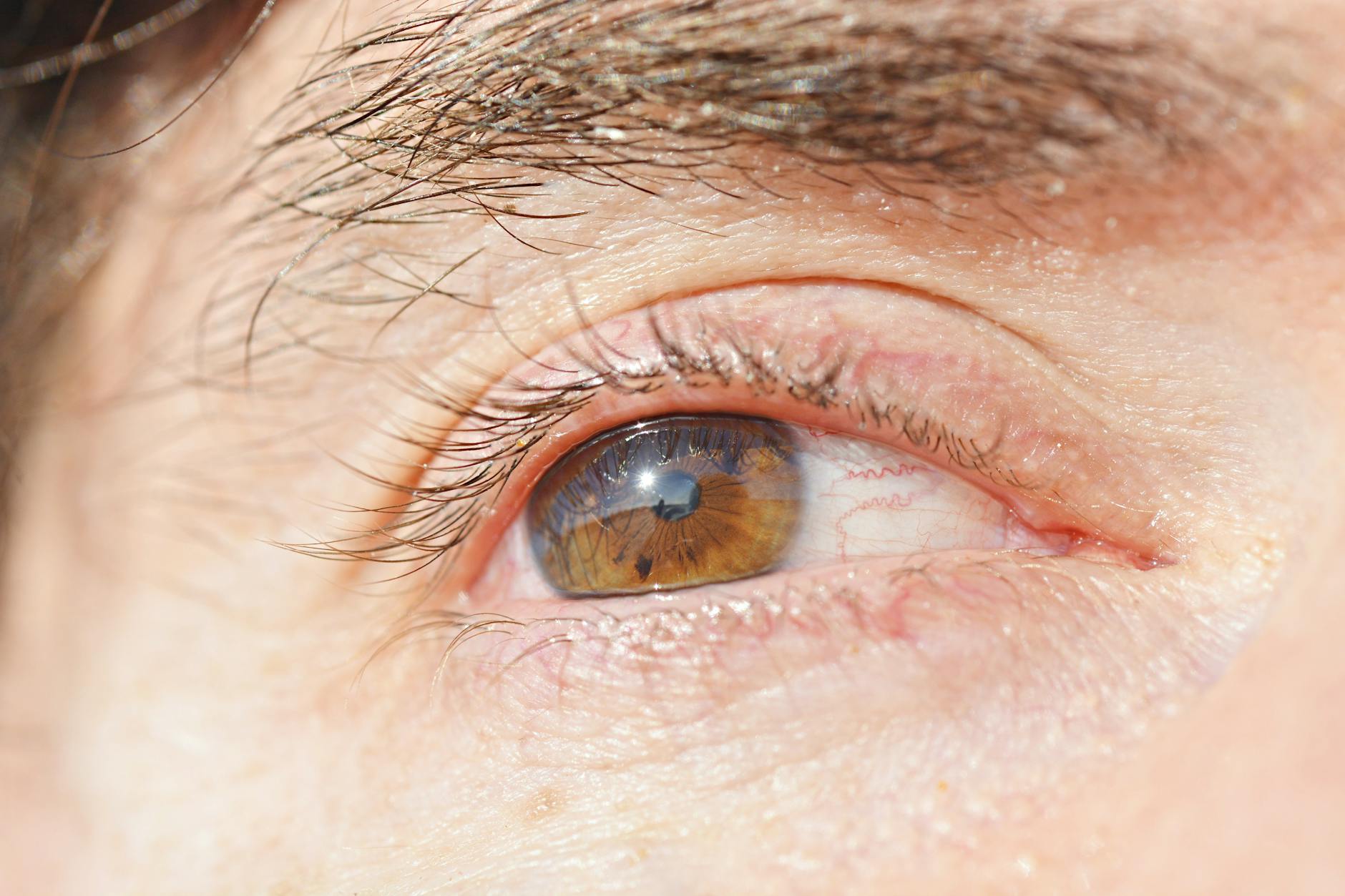
The Right Way to Address Itchy Eyes Safely
The safest and most effective approach to itchy eyes is to start with preservative-free artificial tears, which address dry eye without any systemic side effects. These can be used as frequently as needed—even every hour if necessary—and work by supplementing natural tears. For allergic itching, over-the-counter antihistamine eye drops like ketotifen are specifically formulated for eye use and deliver medication directly to the affected tissue without systemic absorption. These topical approaches avoid the cognitive risks of oral antihistamines entirely.
If itching persists after two weeks of artificial tears, or if it’s accompanied by redness, discharge, or vision changes, a visit to an eye care professional is essential. An optometrist or ophthalmologist can identify whether you’re dealing with dry eye, allergies, blepharitis, or something else—and prescribe targeted treatment. For dementia patients, involving the family caregiver in this process is critical because cognitive changes may make it hard for the patient to communicate symptoms clearly or remember to use eye drops. The comparison is straightforward: artificial tears are safe, inexpensive, and work immediately for dry eye; antihistamine eye drops are safe and effective for allergies; Unisom is neither safe nor effective for either condition.
The Hidden Risks of “Just One Dose”
Many people assume that taking Unisom once or occasionally for itchy eyes won’t cause harm—just like having a glass of wine. This assumption is wrong, especially for older adults. Even a single dose of a first-generation antihistamine can cause next-day drowsiness, confusion, and impaired balance, increasing the risk of falls. For someone with dementia, a single disorienting dose can trigger behavioral changes, agitation, or wandering that takes hours to resolve.
Additionally, tolerance develops quickly to the sedating effects of antihistamines, which means people escalate doses or frequency to maintain the effect—exactly the pattern that leads to anticholinergic toxicity and cognitive decline. A pharmacist would warn that using Unisom “just occasionally” for any reason is the foot in the door to regular use. If itchy eyes are bothersome enough to reach for medication, they’re bothersome enough to deserve proper diagnosis and targeted treatment. The limitation here is that proper care takes slightly more effort than grabbing a sleep aid, but the payoff in safety and actual symptom relief is enormous.

When Itchy Eyes Signal Something Serious
Sometimes itchy eyes are the first sign of a more serious condition requiring medical attention. Sjögren’s syndrome, an autoimmune disorder where the immune system attacks tear and salivary glands, causes intense dry eye and itching along with dry mouth. Blepharitis, inflammation of the eyelid, progresses if untreated and can lead to infections.
Chemical exposure, whether from harsh cleaning products or environmental irritants, causes acute itching that resolves only once the irritant is removed. In dementia patients, itchy eyes might also indicate pain or discomfort the person can’t articulate clearly—so “itchy” might actually mean the eye is dry and irritated, or it could indicate an infection, injury, or growth. A person with advanced dementia might rub their eyes constantly without being able to explain why, and assuming it’s simple itching while missing an eye infection or corneal abrasion would be dangerous. This is another reason why professional eye care is essential rather than self-treating with over-the-counter sleep aids.
The Broader Context of Medication Safety in Dementia Care
This conversation about Unisom illustrates a larger principle in dementia care: medications should be chosen with extreme caution, and off-label use of systemic drugs should generally be avoided. A growing body of research supports “deprescribing”—removing unnecessary medications from the regimens of older adults and dementia patients—rather than adding more.
Sleep aids are actually on the list of medications recommended against in people with dementia by major health organizations like the American Geriatrics Society, precisely because the risks (cognitive decline, falls, delirium) outweigh the benefits. As healthcare providers and families become more aware of these risks, the standard of care is shifting toward safer alternatives: environmental changes (better lighting, humidity control), behavioral strategies (cool compresses, relaxation techniques), and targeted treatments (eye drops, optometry visits). Looking forward, if itchy eyes remain a persistent problem despite these approaches, working with an ophthalmologist to understand the underlying cause—and potentially treating it with safer, more specific medications—is the path that actually protects brain health and quality of life.
Conclusion
Unisom should not be used for itchy eyes. It was designed and dosed as a sleep aid, carries significant risks for older adults and dementia patients due to its anticholinergic effects, and ironically often worsens dry eye symptoms. The evidence strongly supports using preservative-free artificial tears for dry eye, topical antihistamine eye drops for allergies, or seeking professional eye care if symptoms persist.
For dementia patients especially, the stakes are too high to experiment with systemic medications when safer, more effective options are available. If you or a loved one is experiencing persistent itchy eyes, start by scheduling an eye exam with an optometrist or ophthalmologist. They can identify the underlying cause and recommend treatment that will actually solve the problem without putting brain health at risk. In the meantime, preservative-free artificial tears are safe, inexpensive, and often all you need.
You Might Also Like
- Ventolin for Ear Pressure: Honest Answer From a Pharmacist
- Breo Ellipta for Mouth Breathing: Honest Answer From a Pharmacist
- Why People Are Switching From Delsym to Advil
For more, see Alzheimer’s Association.