Simple blood sits at the center of this dementia and brain health question.
Yes, a simple blood test can now identify Alzheimer’s disease markers and predict symptom onset years before cognitive decline appears. Researchers have developed blood tests that measure p-tau217, a protein linked to the brain changes characteristic of Alzheimer’s disease, allowing doctors to detect the disease in its earliest stages. For example, a person with elevated p-tau217 levels might learn they have brain changes associated with Alzheimer’s disease years before they experience memory loss or confusion.
This article explores how these tests work, what they can and cannot do, their current limitations, and what they mean for people concerned about their brain health and dementia risk. The discovery of reliable blood biomarkers represents a major shift in Alzheimer’s detection. Instead of relying on cognitive testing or expensive brain imaging, doctors can now order a simple blood draw that reveals whether pathological changes are occurring in the brain. However, it’s important to understand that these blood tests have specific uses and limitations—they are not recommended for screening people without symptoms, and they should not be used as the only tool for diagnosis.
Table of Contents
- How Blood Tests Can Detect Alzheimer’s Disease Markers
- Prediction Accuracy and Timeline: What the Numbers Actually Show
- Long-Term Risk Detection: Predicting Dementia Decades in Advance
- Genetic Risk and ApoE4: Who Carries the Highest Risk?
- Current Limitations: What These Blood Tests Cannot and Should Not Do
- Clinical Trial Applications and Research Use
- What to Do If You’re Concerned About Alzheimer’s Risk
- The Future of Alzheimer’s Detection: Moving Toward Prevention
- Conclusion
- Frequently Asked Questions
How Blood Tests Can Detect Alzheimer’s Disease Markers
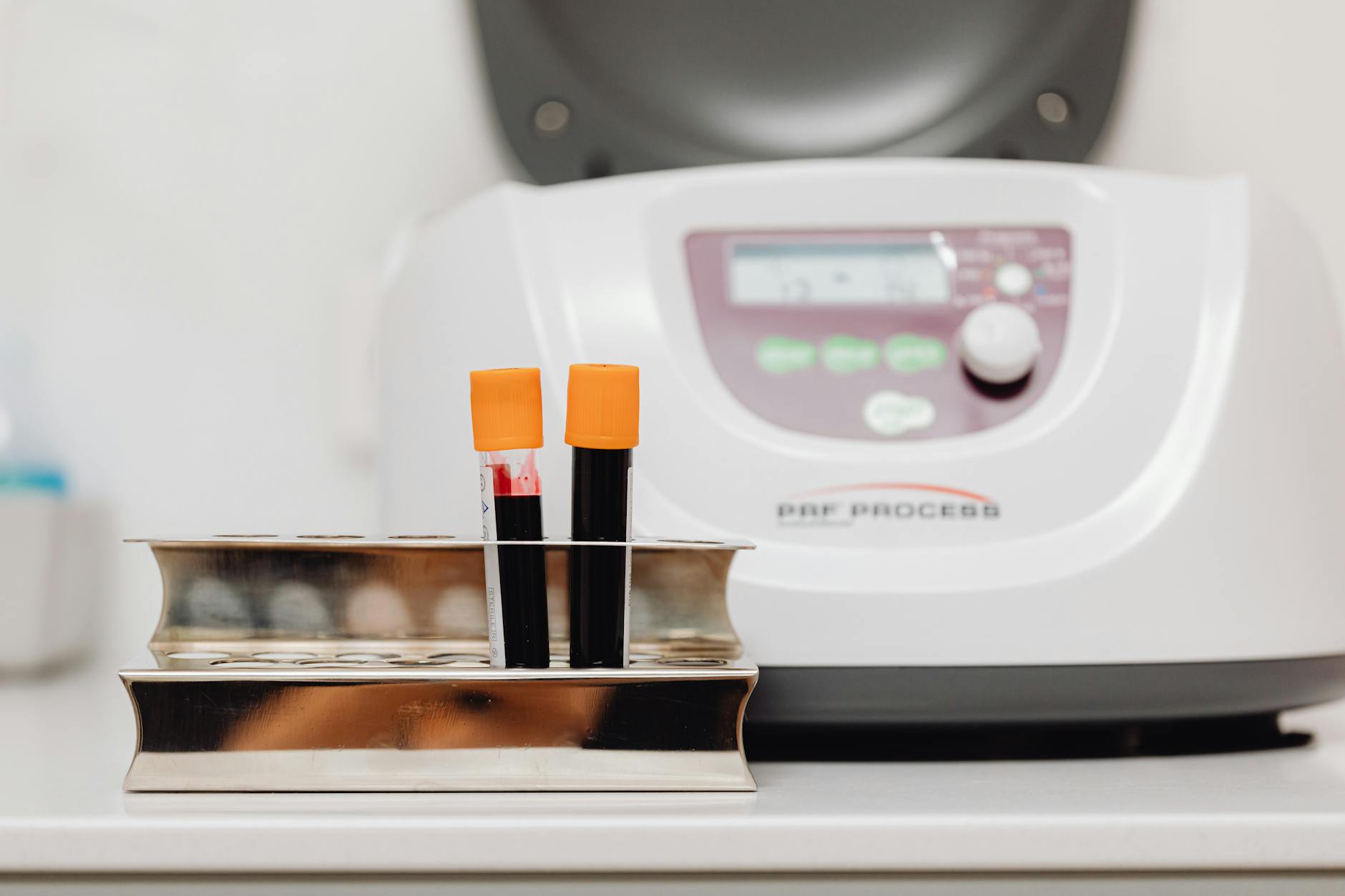
The p-tau217 blood test works by measuring phosphorylated tau 217, a modified form of the tau protein that accumulates abnormally in the brains of people with Alzheimer’s disease. When neurons are damaged by amyloid-beta and tau pathology, these misfolded proteins enter the bloodstream and can be detected through a simple laboratory test. Researchers analyzed blood samples from 603 older people across two separate study groups to validate how well this marker predicts disease progression.
What makes this breakthrough significant is that the test detects the disease’s biological signature in blood rather than waiting for symptoms to appear. For someone with concerns about family history or genetic risk, a positive result reveals that Alzheimer’s pathology may already be developing in the brain—even if thinking and memory remain completely normal. The test essentially catches the disease in its preclinical stage, before neurons have died and cognitive symptoms emerge.
Prediction Accuracy and Timeline: What the Numbers Actually Show
The p-tau217 blood test can predict when Alzheimer’s symptoms will begin with a median error of 3 to 4 years, according to research from Washington University School of Medicine. this means if a test result suggests symptom onset in 10 years, the actual onset could occur anywhere between 6 and 14 years—a useful timeframe for planning, but not precise enough for individual life decisions. While knowing someone is likely to develop symptoms in roughly a decade is valuable information, the margin of error is important to understand when considering how to act on test results.
However, this level of accuracy makes the test more useful for research and clinical trials than for screening the general population. The individual variations are too wide to predict who will or won’t develop Alzheimer’s with enough certainty to recommend preventive treatments that carry their own risks. A person with a 3-4 year prediction error might avoid unnecessary medical interventions, while someone with a 10-14 year window might reasonably pursue lifestyle modifications or participate in prevention trials.
Long-Term Risk Detection: Predicting Dementia Decades in Advance
A UC San Diego study found that blood tests can predict dementia risk up to 25 years before symptoms appear, particularly in women. This extended timeframe opens possibilities for early intervention—imagine knowing at age 55 that dementia might develop by age 80, giving 25 years to pursue brain-healthy habits like exercise, cognitive engagement, Mediterranean-style diet, and social connection.
For women concerned about dementia risk, especially those with family history, this long-term prediction window represents an unprecedented opportunity for prevention. The sex difference noted in the UC San Diego research—that women showed the 25-year prediction window—suggests that biological sex may play a role in how Alzheimer’s develops and how biomarkers change over time. More research is needed to understand why women might show earlier biomarker changes or whether other populations have different prediction timeframes.

Genetic Risk and ApoE4: Who Carries the Highest Risk?
The ApoE4 genetic variant is one of the strongest genetic risk factors for Alzheimer’s disease, present in up to 60% of people with Alzheimer’s. Roche Diagnostics received CE mark approval for blood tests that identify carriers of the ApoE4 gene, making it possible to know one’s genetic vulnerability through a simple blood test. If you carry one copy of ApoE4, your risk is elevated; two copies dramatically increases risk.
For those with a family history of Alzheimer’s, learning ApoE4 status can clarify whether genetic factors are likely contributing. The relationship between ApoE4 and p-tau217 is not yet fully understood. Some people with ApoE4 develop brain pathology and cognitive decline, while others with the same genetic variant live into advanced age without significant symptoms. This genetic variation between individuals is one reason why the blood tests alone cannot predict disease with perfect accuracy—genes load the gun, but environment and other factors pull the trigger.
Current Limitations: What These Blood Tests Cannot and Should Not Do
The FDA has cleared blood tests for diagnosing Alzheimer’s in people who already show cognitive symptoms, but explicitly does not recommend their use for screening cognitively normal individuals. This is a critical distinction that many people misunderstand. Having a positive blood test without any memory problems does not mean someone should start taking Alzheimer’s drugs or make major life changes based on a single test result.
Clinical trial data show that p-tau217 models demonstrate promise for identifying candidates for research studies but lack sufficient individual accuracy for general population screening. In other words, the test is better at identifying groups of people likely to develop Alzheimer’s than at predicting individual outcomes. Blood tests are not stand-alone diagnostic tools and should always be interpreted by a healthcare provider in context with cognitive testing, imaging if needed, and clinical judgment. Someone with a family history of early-onset Alzheimer’s might warrant testing, but routine screening of healthy older adults is not currently recommended.

Clinical Trial Applications and Research Use
The primary value of these blood tests right now lies in Alzheimer’s research and clinical trials rather than routine clinical practice. Researchers can use p-tau217 blood tests to identify people with preclinical pathology who might benefit from experimental prevention treatments, potentially testing interventions before irreversible cognitive decline occurs. For someone interested in participating in Alzheimer’s prevention studies, a blood test could help determine eligibility and may become a standard part of trial screening in the coming years.
This use in research represents the path toward future clinical applications. As prevention therapies are developed and proven effective, blood tests will likely become more important for identifying who should receive those treatments. The timeline for moving from research tool to clinical screening tool typically takes years of additional study.
What to Do If You’re Concerned About Alzheimer’s Risk
If you have a family history of Alzheimer’s or are worried about cognitive decline, the appropriate first step is a conversation with your primary care doctor, not a direct-to-consumer blood test. Your doctor can assess your actual cognitive status through conversation and brief testing, evaluate whether your concerns match your real-world function, and determine whether a blood biomarker test makes sense in your situation.
For most cognitively normal older adults without concerning cognitive symptoms, a blood test would not be indicated under current guidelines. Practical steps that don’t require any testing include maintaining cardiovascular health, staying cognitively and socially active, sleeping well, managing stress, and following a Mediterranean-style diet—all interventions with solid evidence supporting cognitive health. If you do choose to be tested (usually through a neurologist or as part of a research study), having realistic expectations about what a positive result means is essential.
The Future of Alzheimer’s Detection: Moving Toward Prevention
Blood biomarker testing represents a fundamental shift in how Alzheimer’s disease will be detected and managed over the next decade. As more prevention treatments are developed and validated, blood tests will likely play a larger role in identifying people early enough to benefit from intervention.
The current research focus is on whether early treatment in the preclinical stage can delay or prevent symptom onset entirely. This transformation mirrors what has already happened with cardiovascular disease, where screening for cholesterol and blood pressure before symptoms develop became standard practice. The eventual goal for Alzheimer’s is to identify and treat the disease when interventions are most likely to be effective—years or decades before someone experiences memory problems.
Conclusion
Blood tests measuring p-tau217 and other Alzheimer’s biomarkers represent a genuine scientific breakthrough, offering the first reliable way to detect Alzheimer’s pathology before symptoms appear. The test can predict symptom onset within a 3-4 year window and may even predict dementia risk up to 25 years in advance for some individuals.
However, these tests are not currently recommended for screening healthy, cognitively normal people, and positive results should be interpreted with a healthcare provider’s guidance rather than acted upon independently. For most people, the practical path forward involves discussing concerns about memory or family history with a doctor, maintaining healthy habits that support brain health, and staying informed about emerging prevention treatments. As research advances and new therapies are proven effective, blood biomarker testing will likely become increasingly important for identifying who stands to benefit from early intervention.
Frequently Asked Questions
If I have a family history of Alzheimer’s, should I get a blood test now?
Not necessarily. Discuss your specific concerns with your doctor first. Most cognitively normal people without symptoms don’t benefit from biomarker testing under current guidelines. Your doctor can help determine whether testing is appropriate for your situation.
What does a positive p-tau217 blood test mean if I have no memory problems?
It means you likely have Alzheimer’s pathology developing in your brain, but it does not mean you will definitely develop dementia symptoms or that you should start treatment. The test shows your brain is changing, but individual prediction is still uncertain. Your healthcare provider should discuss the implications and appropriate follow-up.
Can I get this blood test at my regular doctor’s office?
Some medical centers offer these tests, but they’re not yet routine for most primary care practices. Your doctor can order specialized testing if they believe it’s indicated, or you may need a referral to a neurologist or memory care specialist.
If I carry the ApoE4 gene, will I definitely get Alzheimer’s?
No. Having ApoE4 increases risk, but many people with one or even two copies of ApoE4 live into advanced age without significant dementia. Genes are a risk factor, not a destiny. Lifestyle factors and other genetic variations also influence outcome.
Are there medications I can take now if my blood test is positive?
Currently, FDA-approved Alzheimer’s treatments are only for people with cognitive symptoms. If you’re cognitively normal, standard medications are not recommended. However, participation in clinical trials testing preventive treatments may be an option worth discussing with a neurologist.
How often would I need to repeat the blood test?
This depends on your individual situation and your doctor’s recommendations. There is no standard protocol yet for repeat testing in cognitively normal people, as guidelines are still evolving.
You Might Also Like
- Early detection may come from something as simple as your voice
- Your speech could reveal Alzheimer’s years before diagnosis
- Scientists warn that common illnesses may play a role in earlier dementia onset
For more, see CDC — Alzheimer’s and Dementia.