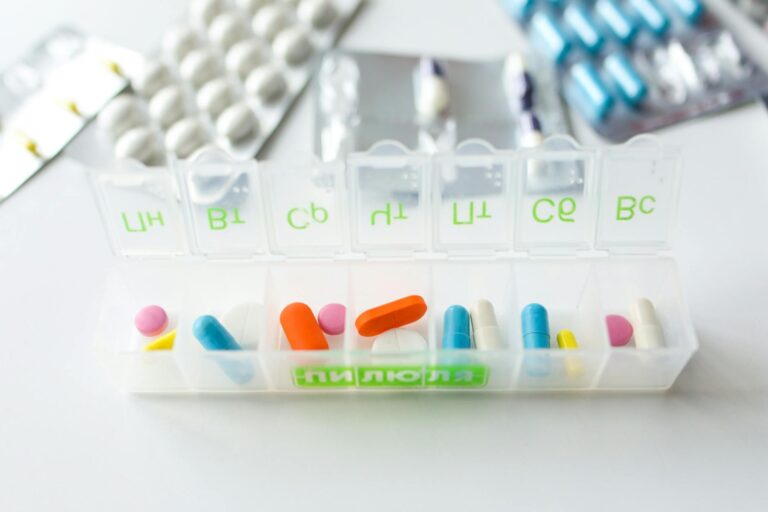
The answer is iron. Intravenous iron infusions are administered in hospitals and clinics to treat iron deficiency anemia, a condition that the vast majority of patients initially manage with simple oral supplements like ferrous sulfate tablets. Iron deficiency anemia affects an estimated 1.2 billion people worldwide, making it the most common nutritional deficiency on the planet, and while most of those people reach for a pill bottle, a significant number end up in an infusion chair because their bodies cannot absorb or tolerate the oral form. For anyone caring for a loved one with dementia, this distinction matters more than you might expect — iron deficiency anemia is remarkably common in older adults, and its symptoms of fatigue, confusion, and cognitive decline can mimic or worsen dementia itself.
Another strong candidate for a drug given intravenously for a condition most people treat orally is acetaminophen. IV acetaminophen, sold under the brand name Ofirmev, was FDA-approved in 2010 for hospital use, even though nearly every household in America has a bottle of oral Tylenol in the medicine cabinet. But iron is the more compelling and widespread example, and it carries particular relevance for brain health and aging. This article will walk through why oral iron fails for so many patients, what IV iron infusions actually involve, how this relates to cognitive health in older adults, and what caregivers should watch for.
Table of Contents
- Why Is Iron Given Intravenously When Most People Take It Orally?
- How Iron Deficiency Mimics and Worsens Dementia Symptoms
- What Happens During an IV Iron Infusion
- Oral Iron vs. IV Iron — Comparing Effectiveness, Cost, and Practicality
- Risks and Limitations Caregivers Should Know
- IV Acetaminophen — Another Oral-to-IV Example Relevant to Dementia Care
- Looking Ahead — Better Options for Patients Who Cannot Take Oral Medications
- Conclusion
- Frequently Asked Questions
Why Is Iron Given Intravenously When Most People Take It Orally?
The short answer is tolerability and absorption. Oral iron supplements are cheap, widely available, and effective for many patients, which is why they remain the first-line treatment. But roughly 60% of patients on oral iron experience gastrointestinal side effects — nausea, constipation, cramping, and stomach pain severe enough that many simply stop taking the medication. For older adults already dealing with appetite loss, medication fatigue, or digestive issues common in dementia, adding a pill that makes them feel worse is a hard sell. When oral iron fails or cannot be tolerated, IV iron steps in to bypass the gut entirely. IV iron formulations such as Injectafer, Venofer, and Feraheme deliver iron directly into the bloodstream, where it is absorbed more rapidly and completely than anything swallowed as a tablet.
this route is especially critical for patients with inflammatory bowel disease, chronic kidney disease, or conditions that impair intestinal absorption. It is also used when rapid correction is needed, such as in cases of severe anemia, active gastrointestinal bleeding, or pregnancy. In a patient-preference study published in PMC, 74.9% of patients who had tried both oral and IV iron said they preferred the intravenous route — a striking number that reflects just how poorly tolerated those pills can be. The tradeoff is access and cost. IV iron must be administered at a healthcare facility under medical supervision, typically over 15 to 60 minutes depending on the formulation. It is significantly more expensive than a bottle of ferrous sulfate from the pharmacy. This is why physicians do not start with IV iron even though patients tend to prefer it — the healthcare system reserves it for cases where oral treatment has clearly failed or is inappropriate.

How Iron Deficiency Mimics and Worsens Dementia Symptoms
One of the most underappreciated dangers of iron deficiency in older adults is how closely its symptoms overlap with dementia. Fatigue, difficulty concentrating, memory lapses, irritability, and general cognitive fog are hallmarks of both conditions. In a person already diagnosed with Alzheimer’s disease or another form of dementia, untreated iron deficiency anemia can accelerate cognitive decline and make it nearly impossible to tell which symptoms belong to the anemia and which to the underlying neurological disease. Iron plays a direct role in brain function. It is essential for oxygen transport, neurotransmitter synthesis, and myelin production — the insulating sheath around nerve fibers that allows signals to travel efficiently. When iron levels drop, the brain receives less oxygen, and the neurochemical environment shifts in ways that impair memory and executive function.
For a person with dementia, this is like pouring water on a fire that is already burning through their cognitive reserves. However, this overlap also presents an opportunity. If a caregiver or clinician identifies iron deficiency anemia as a contributing factor and treats it effectively — whether orally or intravenously — some of those cognitive symptoms may improve. This does not reverse dementia, but it can meaningfully improve quality of life, alertness, and day-to-day functioning. The warning here is that iron deficiency in older adults is frequently missed because its symptoms are attributed entirely to age or dementia. A simple blood test checking ferritin, serum iron, and transferrin saturation can reveal whether anemia is playing a role.
What Happens During an IV Iron Infusion
For caregivers accompanying an older adult to an IV iron appointment, knowing what to expect can ease anxiety for everyone involved. The infusion typically takes place in a hospital outpatient unit or infusion center. A nurse places a standard IV line, usually in the arm, and the iron solution is dripped slowly into the bloodstream. Depending on the specific medication used, the process takes anywhere from 15 minutes for newer formulations like Injectafer to several hours for older ones like iron dextran, which requires a test dose to check for allergic reactions. Most patients tolerate IV iron well. The most common side effects are mild and temporary — a metallic taste in the mouth, slight nausea, headache, or muscle aches.
Serious allergic reactions are rare but possible, which is why the infusion is done under medical supervision. Some patients notice a dramatic improvement in energy and mental clarity within a few days, though full correction of anemia typically takes two to three weeks as the body uses the iron to produce new red blood cells. For a person with dementia, the infusion setting can be disorienting. The unfamiliar environment, the IV line, and the wait time may provoke agitation or confusion. Caregivers should plan ahead by bringing familiar comfort items, sitting with the patient during the infusion, and asking the clinical team about scheduling during the patient’s best time of day. Some facilities allow patients to recline or nap during the process, which can make the experience considerably smoother.

Oral Iron vs. IV Iron — Comparing Effectiveness, Cost, and Practicality
Both oral and IV iron effectively raise hemoglobin levels, which is the ultimate goal of treatment. For a patient with mild to moderate iron deficiency anemia who can tolerate the pills, oral iron remains a perfectly reasonable choice. It is inexpensive — often just a few dollars per month — and can be taken at home without medical appointments. The standard recommendation is to take oral iron on an empty stomach with vitamin C to enhance absorption, though many patients take it with food to reduce stomach upset, which somewhat decreases how much iron the body absorbs. IV iron wins decisively in situations involving poor absorption, severe deficiency, or intolerance. It bypasses the gastrointestinal tract entirely, so conditions like celiac disease, inflammatory bowel disease, or prior gastric surgery that impair intestinal absorption are no longer barriers.
The hemoglobin response tends to be faster and more reliable with IV iron, particularly in patients who have failed oral supplementation. The downside is cost and inconvenience — IV iron treatments can run several hundred to over a thousand dollars per session, and patients must travel to a medical facility. For caregivers managing an older adult’s health, the practical calculus often tips toward IV iron sooner than clinicians might expect. If the patient with dementia is already struggling to take multiple medications, adding an oral iron supplement that causes constipation and nausea may reduce compliance across all their medications. In these cases, a single IV infusion or a short series of infusions can resolve the anemia without the daily battle over pills. This is a conversation worth having with the prescribing physician, especially when the patient’s overall medication burden is already high.
Risks and Limitations Caregivers Should Know
IV iron is not without its drawbacks, and caregivers should go into the process with realistic expectations. The most significant risk, though uncommon, is anaphylaxis — a severe allergic reaction that can cause difficulty breathing, swelling, and a dangerous drop in blood pressure. This is why IV iron is never administered at home and why patients are monitored during and briefly after the infusion. Older iron dextran formulations carried a higher anaphylaxis risk; newer products like ferric carboxymaltose and ferumoxytol have improved safety profiles, but the risk is not zero. Iron overload is another concern. The body has no efficient mechanism for excreting excess iron, so repeated infusions without proper monitoring can lead to iron accumulation in organs, including the liver and heart.
This is why physicians check iron studies before and after treatment and do not simply schedule infusions on a recurring basis without bloodwork. For patients with certain genetic conditions like hemochromatosis, IV iron could be actively dangerous. There is also the issue of misdiagnosis. Not all anemia is iron deficiency anemia. Anemia of chronic disease, B12 deficiency, folate deficiency, and anemia related to chronic kidney disease all present similarly but require different treatments. Giving IV iron to a patient whose anemia stems from B12 deficiency will not help and wastes time during which the actual cause goes untreated. For older adults with dementia, where the history may be unreliable and multiple conditions often coexist, thorough laboratory workup before treatment is essential.

IV Acetaminophen — Another Oral-to-IV Example Relevant to Dementia Care
Iron is not the only medication that bridges the oral-to-IV divide. Acetaminophen, universally known as Tylenol, has an intravenous formulation called Ofirmev that was FDA-approved in 2010 for managing pain and fever in hospitalized patients. Most people take acetaminophen orally — it is the single most widely used over-the-counter pain reliever in the United States. But for patients who cannot swallow, are nil by mouth before surgery, or need rapid pain control, IV acetaminophen reaches peak effect within 10 minutes compared to roughly one hour for the oral form, and it achieves 70% greater peak concentration than the equivalent oral dose.
The catch is cost. IV acetaminophen costs more than 20 times the equivalent oral dose, which has led to ongoing debate about when its use is truly justified. For dementia patients hospitalized after a fall or surgery, IV acetaminophen can provide pain relief without the confusion-worsening effects of opioids — a significant advantage in a population already vulnerable to delirium. But once the patient can swallow safely, switching back to oral acetaminophen is standard practice precisely because the clinical benefit rarely justifies the price difference outside of acute situations.
Looking Ahead — Better Options for Patients Who Cannot Take Oral Medications
The broader trend in medicine is toward developing more patient-friendly routes of administration, and this has particular implications for dementia care. Researchers are studying longer-acting IV iron formulations that could correct deficiency in a single session rather than multiple visits, reducing the burden on patients and caregivers. There is also growing interest in subcutaneous iron delivery and improved oral formulations with better tolerability profiles.
For the dementia care community, the key development to watch is how these advances intersect with the growing recognition that treatable conditions like iron deficiency anemia deserve aggressive identification and management in cognitively impaired patients. As more clinicians screen for anemia as part of dementia workups, and as IV iron becomes more accessible through outpatient infusion centers, fewer patients will suffer the compounded effects of anemia on top of neurodegeneration. The technology already exists — the gap is in awareness and consistent clinical practice.
Conclusion
Iron is the drug most commonly given intravenously for a condition that most people treat orally, and the reasons for that shift from pill to IV — poor tolerability, inadequate absorption, and the need for rapid correction — are especially relevant in older adults with cognitive impairment. For caregivers, understanding this distinction can mean the difference between watching a loved one decline from a treatable condition and getting them the intervention that restores some of their energy, clarity, and engagement with the world.
If your loved one with dementia seems more fatigued, confused, or withdrawn than their baseline, ask the doctor about checking iron levels. A simple blood test can reveal whether anemia is compounding their cognitive symptoms, and if oral iron is not working or not tolerable, IV iron is a well-established alternative that the majority of patients who have tried both actually prefer. Not every decline is irreversible, and not every symptom belongs to dementia alone.
Frequently Asked Questions
How long does an IV iron infusion take?
Depending on the formulation, an IV iron infusion takes anywhere from 15 minutes to several hours. Newer products like Injectafer can be given in one or two shorter sessions, while older formulations may require a test dose and longer observation periods.
Can iron deficiency anemia cause dementia-like symptoms?
Yes. Iron deficiency anemia causes fatigue, difficulty concentrating, memory problems, and irritability that can closely mimic or worsen dementia symptoms. Treating the anemia will not cure dementia, but it can meaningfully improve cognitive function and quality of life.
Why not just start with IV iron instead of oral supplements?
IV iron must be administered at a healthcare facility and is significantly more expensive than oral supplements. It also carries a small risk of allergic reaction. Because oral iron works well for many patients and is cheap and convenient, it remains the standard first-line treatment. IV iron is reserved for patients who fail or cannot tolerate oral therapy.
Is IV iron safe for elderly patients with dementia?
Generally, yes. IV iron is well-tolerated by most older adults. The main concerns are allergic reactions, which are uncommon with modern formulations, and the potential for iron overload if levels are not monitored with blood tests. The infusion setting may be disorienting for dementia patients, so caregiver presence and planning are recommended.
How quickly does IV iron work?
Many patients notice improved energy within a few days, but full correction of anemia typically takes two to three weeks as the body produces new red blood cells. Hemoglobin levels are usually rechecked four to six weeks after the infusion to confirm adequate response.