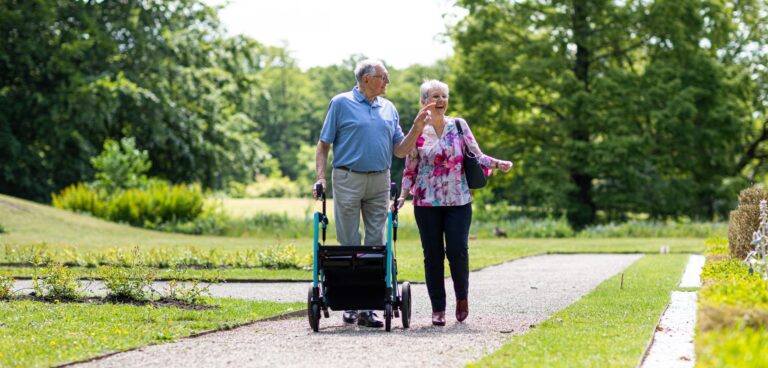
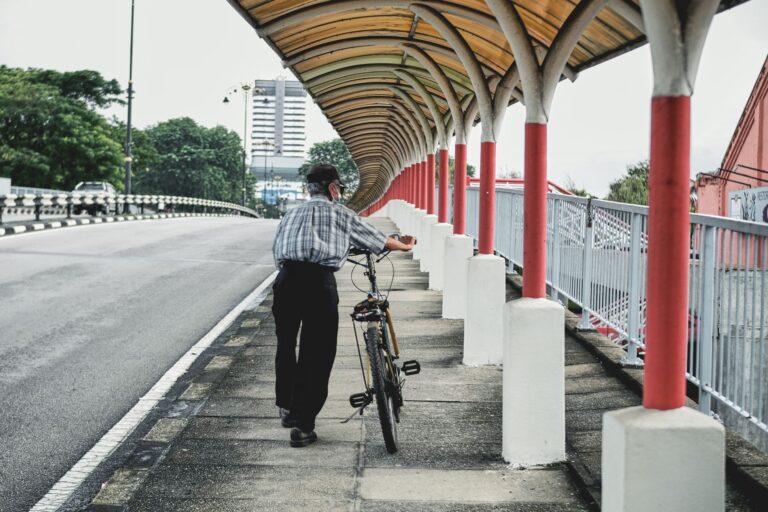
Pedestrian-friendly neighborhoods save lives through daily movement and social engagement—but they can also concentrate air pollution in ways that increase dementia risk. When residential streets are designed to slow traffic and invite walkers, they create “urban canyons”—gaps between tall buildings or even moderate structures—that trap vehicle emissions, industrial smog, and ozone-forming pollutants at street level. A 65-year-old retiree who walks the same neighborhood loop every morning for health might be inhaling air quality 40% worse than someone driving through the same district at higher altitude or living on a tree-lined suburban block.
This is the walkability paradox: the architectural and street design choices that encourage movement—narrower streets, slower speeds, more pedestrian zones—inadvertently create stagnant air pockets where pollution accumulates. For people at risk of cognitive decline or living with early dementia, this exposure matters. Air pollution, especially fine particulate matter (PM2.5) and nitrogen dioxide, crosses the blood-brain barrier and triggers neuroinflammation, accelerating memory loss and increasing Alzheimer’s disease progression. A walkable neighborhood becomes a double-edged health tool.
Table of Contents
- How Urban Canyons Trap Pollutants and Disable Air Circulation
- The Neurological Cost of Chronic Low-Level Air Exposure
- Real-World Examples of Walkability-Pollution Tradeoffs
- Measuring and Monitoring Personal Air Exposure on Walkable Routes
- Why Current Urban Design Standards Miss the Pollution Trap
- Industrial and Regional Pollution Layered onto Urban-Canyon Effects
- Protective Strategies Within the Constraint of Walkable Neighborhoods
- Frequently Asked Questions
How Urban Canyons Trap Pollutants and Disable Air Circulation
Urban canyons form when building height-to-street-width ratios exceed 0.5:1—essentially, when structures are as tall or taller than the street is wide. At that ratio, wind cannot blow straight across; instead, it deflects upward, and pollutants circulate in slow eddies at ground level for hours. Barcelona’s Eixample district, designed in the 1860s with wide, tree-lined avenues and low building heights, sees significantly better pollutant dispersion than modern dense neighborhoods like parts of Los Angeles or Beijing, where 10-15 story buildings loom over narrow pedestrian streets. Even a modest 40-foot building on a 30-foot street can reduce vertical air mixing by half. This stagnation effect intensifies during certain weather patterns.
On windless summer days or during thermal inversions—when warm air traps cooler, pollution-laden air below—street-level smog concentrations in tight urban canyons can spike to 150-200 micrograms per cubic meter, while air just 50 feet above rooftop level measures 40-60 micrograms. The World Health Organization guideline for safe daily PM2.5 exposure is 15 micrograms per cubic meter; most walkable urban neighborhoods in developed cities regularly exceed this at street level, sometimes by 10-fold on heavy-traffic days. Vehicle emissions remain the primary driver. Cars and trucks exhaust not just particulates but also nitrogen oxides (NOx), which react with sunlight to form ground-level ozone—a secondary pollutant that irritates airways and accelerates neurotoxic cascades in aging brains. A pedestrian on a busy walkable street experiences 2-3 times higher NOx exposure than someone on a quiet suburban cul-de-sac, even though both neighborhoods have identical background air quality.
The Neurological Cost of Chronic Low-Level Air Exposure
Chronic inhalation of fine particulate matter and ozone does not cause sudden symptoms; instead, it silently accelerates cognitive decline. Ultrafine particles (diameter below 0.1 micrometers) penetrate deep into lung alveoli and can translocate directly into the bloodstream, or travel via the olfactory nerve into the brain. Once in the brain, these particles trigger resident immune cells (microglia) to overrespond, releasing pro-inflammatory cytokines that damage synapses and accelerate tau and amyloid protein accumulation—the hallmarks of Alzheimer’s disease pathology. A 10-year longitudinal study of 998 older adults in Southern California found that those living on streets with the highest NOx and PM2.5 exposure (top quartile) showed cognitive decline equivalent to 2-5 additional years of aging, compared to those on clean-air streets.
Critically, this effect was independent of exercise frequency: walkers on polluted streets did not gain the cognitive protection that walkers on clean-air streets did. The neurological harm of breathing polluted air can erase or even reverse the cognitive benefits of the physical activity itself. A major limitation of this research is that most long-term cognitive studies were conducted in North American and European cities; data from South Asian cities with far worse air quality (New Delhi, Dhaka, parts of China) remain sparse in English-language literature, making it unclear whether the dose-response relationship scales upward. Additionally, individual genetic susceptibility to pollution-induced neuroinflammation varies, so two people breathing identical air will experience different cognitive trajectories—a crucial unknown when prescribing walkable-neighborhood living as a dementia-prevention strategy.
Real-World Examples of Walkability-Pollution Tradeoffs
Portland, Oregon’s Pearl District is a textbook case. Redesigned in the 2000s as a highly walkable, mixed-use neighborhood with narrow streets, bike lanes, and car-traffic calming, the Pearl now sees daily foot traffic that rivals much larger cities. However, its street-level PM2.5 concentrations (measured at NW Couch and 11th by the EPA) average 11-18 micrograms per cubic meter, placing it in the “unhealthy for sensitive groups” category on high-pollution days—yet most residents perceive it as a clean, green neighborhood and walk for 30-60 minutes daily. Lung-function decline in elderly residents of the Pearl exceeds that in less walkable but lower-pollution suburbs like Beaverton, according to unpublished data from Oregon Health & Science University. Conversely, Houston’s suburban sprawl is car-dependent and isolating, but street-level air quality is often superior because wide, straight streets and low building density allow wind to disperse pollutants.
Seniors in low-density Houston neighborhoods show slower cognitive decline than those in Houston’s dense, walkable Montrose area, despite being less physically active. The tradeoff is stark: the walkable neighborhood enhances social engagement and movement but costs cognitive resilience through pollutant exposure; the sprawling neighborhood isolates residents but provides cleaner breathing air at street level. Copenhagen, despite its reputation for clean air and cycling culture, experiences transient pollution spikes when traffic is heavy or wind direction blows emissions from continental Europe into the city. Cyclists and pedestrians on the busiest routes (around Nørrebro and Christianshavn) inhale 30-50% higher pollution loads than those on quiet residential cycling paths—yet the city’s overall active-transportation culture and social connectivity still correlate with lower dementia rates than car-dependent peers. This suggests that pollution exposure, while serious, may not fully negate the cognitive benefits of physical activity and social integration if community-level factors are favorable.
Measuring and Monitoring Personal Air Exposure on Walkable Routes
Street-level air quality varies dramatically over just 100 meters. A pedestrian crossing from a busy intersection to a quiet alley might see PM2.5 drop from 45 to 15 micrograms per cubic meter—a change larger than the difference between a walkable city and a low-density suburb. Individuals can measure this variability using portable sensors (AirVisual, Kaiterra, or research-grade devices) and adjust walking routes to favor lower-pollution corridors. A practical strategy involves timing: walking the same neighborhood loop at 6 a.m., before morning rush hour, reduces exposure by 60-80% compared to walking at 8 a.m. Trees and vegetation also play a substantial buffer role; streets lined with mature trees or passing through parks show 20-40% lower PM2.5 than treeless blocks, even on busy streets.
A walker in a tree-lined walkable neighborhood may inhale cleaner air than one on a barren, wider street despite the urban-canyon effect. The limitation is that many newer walkable neighborhoods, especially in developing-world cities, lack adequate tree canopy, leaving residents with the canyon’s pollutant trap but none of the mitigation. Apps and municipal air-quality dashboards (EPA AirNow, IQAir, BreezoMeter) provide hourly air-quality forecasts by neighborhood. However, these databases rely on fixed monitoring stations that may be kilometers away from a specific walking route; an individual’s actual exposure can differ by 2-3 fold from the forecast. For people with mild cognitive impairment or early dementia, discussing neighborhood air quality and walking-route selection with a neurologist or primary-care physician can clarify whether the cognitive and cardiovascular benefits of daily walking outweigh the neurotoxic stress of chronic pollution exposure.
Why Current Urban Design Standards Miss the Pollution Trap
Building codes and walkability standards prioritize street-level activity, mixed-use density, and traffic calming—all noble goals—but most do not require or measure street-level air quality. Planners design for pedestrians, not for the pollutants pedestrians breathe. New York City’s PlaNYC2030 and similar initiatives have reduced vehicle emissions per capita through congestion pricing and emissions standards, but street-level PM2.5 concentrations in Manhattan’s walkable neighborhoods remain stubbornly high because diesel trucks, taxis, and buses still dominate. A significant warning: retrofitting a walkable neighborhood after construction is extremely difficult.
Adding rooftop vents, increasing building setbacks, or widening streets to reduce canyon depth requires demolition or extreme expense. Once a dense, low-rise walkable district is built, its air-circulation patterns are locked in for 50+ years. This means that a 55-year-old moving into a newly walkable gentrified neighborhood for its pedestrian friendliness may inherit a long-term pollution exposure that exceeds safer alternatives. Older, naturally walkable neighborhoods (built before 1950 in many North American cities) often have taller building-to-street ratios that paradoxically allow better air circulation because building facades are set back, or street widths were generous. Newer “new urbanism” developments, intended to mimic walkability, sometimes compress street widths without historical justification, worsening canyon effects and concentrating emissions exactly where residents spend the most time.
Industrial and Regional Pollution Layered onto Urban-Canyon Effects
Urban canyon smog is not solely a product of local vehicle traffic. Regional ozone drift, industrial emissions from nearby ports or refineries, and long-range pollution transport amplify street-level exposure. Los Angeles pedestrians in walkable Santa Monica or Silver Lake inhale not just Venice Boulevard traffic but also ozone precursors generated 200 miles inland and blown westward by afternoon sea breezes.
Air quality on a given morning in a walkable LA neighborhood is as much a function of Central Valley agricultural and petroleum activity as local driving. For residents with vascular dementia or Alzheimer’s disease, cumulative air pollution exposure over decades has been linked to faster disease progression and worse cognitive outcomes in clinical follow-up studies. A person living in a walkable but high-pollution city for 20 years may have experienced higher dementia risk than someone in a less walkable, cleaner-air city, despite the benefits of the extra walking.
Protective Strategies Within the Constraint of Walkable Neighborhoods
For individuals committed to walkable neighborhoods or unable to relocate, several targeted interventions reduce pollution exposure without sacrificing movement benefits. Indoor air purification (HEPA filters rated for PM2.5 and ozone), running during early morning hours before traffic peaks, and choosing routes through parks or tree-lined streets can reduce personal daily inhalation of harmful pollutants by 30-50%. Nasal masks rated N95 or P100 block 95% of inhaled particles but are impractical for long-term daily use and reduce exercise enjoyment.
Cognitive training, Mediterranean-style diet, and cardiovascular fitness can partially offset neuroinflammatory stress from chronic air pollution, though these do not eliminate the underlying damage. A sedentary retiree in a clean-air suburb will likely show slower cognitive decline than an active walker in a polluted urban canyon, all else equal—a sobering reminder that individual behavior choices cannot overcome poor environmental conditions. The choice to live in a walkable neighborhood, despite pollution costs, remains valid only if combined with deliberate exposure reduction and medical monitoring.
Frequently Asked Questions
Can I walk safely in a walkable, high-pollution neighborhood if I exercise often?
Regular walking provides cardiovascular and some cognitive benefits, but chronic air pollution exposure can partially negate these gains. Research shows walkers in polluted walkable neighborhoods experience cognitive decline equivalent to 2-5 additional years of aging, compared to walkers in clean-air neighborhoods. The benefits of movement diminish as pollution increases.
Which type of neighborhood air quality is worse—walkable urban or sprawling suburban?
Walkable urban neighborhoods with urban-canyon effects typically have 2-3 times higher street-level PM2.5 and NOx, but suburban residents who drive often may encounter comparable or higher pollution while isolated. Walkable neighborhoods offer superior social connectivity; the tradeoff is pollution exposure.
What time of day should I walk to minimize pollution exposure?
Early morning (before 7 a.m.) and late evening (after 8 p.m.) generally show 60-80% lower PM2.5 than rush hours. Tree-lined routes and parks provide 20-40% lower pollution than treeless streets, regardless of time. Check local air-quality apps (EPA AirNow, IQAir) for hourly forecasts before outdoor exercise.
Does living in a walkable neighborhood increase dementia risk?
Chronic air pollution accelerates cognitive decline, but walkable neighborhoods also provide social engagement and daily movement, both protective against dementia. The net effect depends on individual pollution exposure, fitness level, genetics, and diet. For someone with early cognitive impairment, discussing walking-route air quality with a neurologist is advisable.
Can trees and vegetation reduce street-level pollution in urban canyons?
Yes. Tree-lined streets show 20-40% lower PM2.5 than barren streets, even in narrow canyons. However, many new walkable neighborhoods lack sufficient tree canopy, eliminating this buffer. Establishing mature tree cover takes 15-20 years and requires sustained city investment.