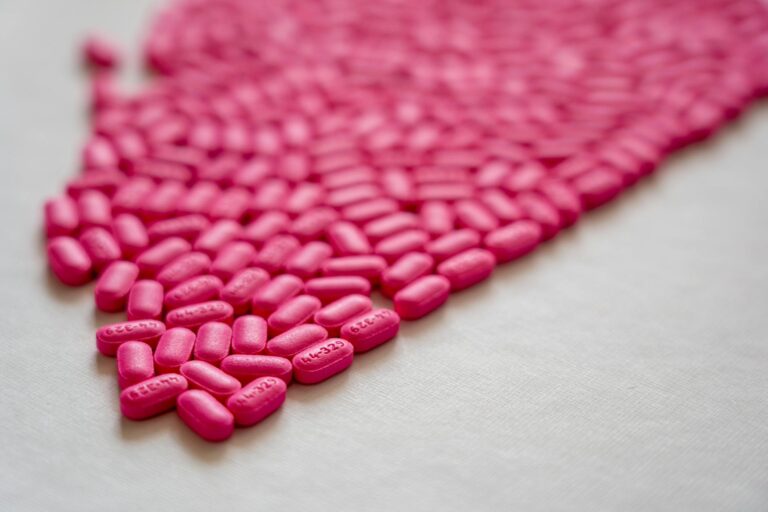
For the roughly 40 to 60 percent of OCD patients who do not respond adequately to SSRIs, a drug called troriluzole is emerging as one of the most promising alternatives in years. Developed by Biohaven Pharmaceuticals, troriluzole works by regulating glutamate rather than serotonin, targeting a completely different neurotransmitter pathway than the SSRIs that have dominated OCD treatment for decades. Results presented at the 2021 American Psychiatric Association meeting showed troriluzole was effective for OCD when administered as adjunctive therapy alongside existing medications, offering a lifeline to patients stuck in a treatment dead end.
Troriluzole is not yet FDA-approved for OCD and remains investigational for this indication, but it sits at the front of a broader wave of glutamate-targeting therapies gaining serious clinical traction. A systematic review and meta-analysis of 27 double-blind, placebo-controlled trials published in JAMA Network Open in January 2025 found that glutamatergic medications produced a significant mean reduction in Yale-Brown Obsessive Compulsive Scale scores of 4.17 points in OCD-specific trials, with minimal adverse effects. That may sound modest on paper, but for someone whose compulsions consume hours of every day, it can represent the difference between functioning and not. This article covers the science behind glutamate-targeting drugs for OCD, the emerging evidence for ketamine and psilocybin, how deep brain stimulation fits into the picture, and what the four main treatment pathways look like in 2026 for patients who have failed standard therapy.
Table of Contents
- Why Are New OCD Drugs Needed When SSRIs Fail So Many Patients?
- Troriluzole and the Glutamate Hypothesis of OCD
- The Broader Evidence for Glutamate-Targeting Medications
- Ketamine and Psilocybin as Experimental OCD Treatments
- Deep TMS and the Role of Brain Stimulation
- The Four Emerging Treatment Pathways for SSRI-Resistant OCD
- What This Means for Brain Health and the Road Ahead
- Conclusion
- Frequently Asked Questions
Why Are New OCD Drugs Needed When SSRIs Fail So Many Patients?
OCD affects roughly 2 to 3 percent of the global population, and SSRIs have been the frontline pharmacological treatment for decades. They work well enough for some patients, but the numbers tell a sobering story. When somewhere between 40 and 60 percent of people with OCD do not get adequate relief from SSRIs alone, you are looking at millions of patients worldwide caught in a gap between available medicine and their actual neurochemistry. The standard clinical response has been to increase SSRI doses, switch between SSRIs, or add antipsychotics as augmentation, but these strategies carry diminishing returns and growing side effect burdens. The problem, researchers now believe, is that OCD is not purely a serotonin disorder. The fixation on serotonin pathways may have been too narrow from the start.
Converging evidence from neuroimaging and pharmacological studies points to glutamate, the brain’s primary excitatory neurotransmitter, as a key player in the cortico-striato-thalamo-cortical circuits that go haywire in OCD. When glutamate signaling is dysregulated in these circuits, the brain gets stuck in loops of intrusive thoughts and compulsive behaviors that serotonin modulation alone cannot break. This realization has opened the door for an entirely different class of medications. The distinction matters for patients and caregivers because it reframes treatment-resistant OCD not as a personal failure to respond to medication, but as a mismatch between the drug‘s mechanism and the patient’s underlying neurobiology. A patient who does not respond to three different SSRIs is not untreatable. They may simply need a drug that speaks to a different part of their brain chemistry.

Troriluzole and the Glutamate Hypothesis of OCD
Troriluzole, also known as BHV-4157, is a next-generation version of riluzole, an older glutamate-modulating drug already approved for amyotrophic lateral sclerosis. Biohaven Pharmaceuticals engineered troriluzole to retain riluzole’s glutamate-regulating properties while reducing side effects and improving tolerability. The Phase III clinical trial, registered as NCT03299166 on ClinicalTrials.gov, tested troriluzole as adjunctive therapy in adults with OCD who had inadequate response to their current treatment. Rather than replacing SSRIs, troriluzole was layered on top of them, targeting glutamate while the SSRI continued to modulate serotonin. The results were encouraging. Troriluzole showed efficacy in reducing OCD symptoms when added to existing medication regimens, suggesting that addressing glutamate dysfunction can provide relief where serotonin-only approaches fall short.
However, it is important to understand the limitations. Troriluzole is not yet FDA-approved for OCD, and the path from positive trial results to market availability is neither short nor certain. Biohaven currently has a separate new Drug Application under FDA review for troriluzole for spinocerebellar ataxia, a neurodegenerative condition, with the PDUFA date extended by three months as of May 2025. An OCD-specific approval, if it comes at all, would follow its own regulatory timeline. For patients hoping to access troriluzole now, the options are limited to clinical trial enrollment or off-label prescribing at a physician’s discretion. The broader takeaway is not that a single miracle drug has arrived, but that the glutamate pathway is real, clinically validated, and producing measurable results in controlled trials. That shift in understanding is itself a form of progress.
The Broader Evidence for Glutamate-Targeting Medications
Troriluzole is the most prominent glutamate-targeting OCD drug in development, but it is far from the only one. The January 2025 JAMA Network Open meta-analysis reviewed 27 double-blind, placebo-controlled trials examining a range of glutamatergic medications for OCD. The drugs studied included memantine, N-acetylcysteine (commonly known as NAC), minocycline, L-carnosine, riluzole, lamotrigine, and topiramate. Across OCD-specific trials, these medications produced a significant mean reduction in Y-BOCS scores of 4.17 points, with the evidence rated at moderate certainty. What makes this finding particularly compelling is the safety profile. The meta-analysis reported minimal adverse effects across trials, which matters enormously for a patient population that often struggles with SSRI side effects including sexual dysfunction, weight gain, and emotional blunting.
Some of these glutamatergic drugs, particularly NAC and memantine, are already available and relatively well tolerated, making them accessible options for off-label use right now. Memantine is FDA-approved for Alzheimer’s disease and is familiar to many clinicians working in brain health and dementia care. NAC is available as an over-the-counter supplement, though supplement-grade quality can vary and therapeutic dosing should be guided by a physician. However, the meta-analysis comes with caveats. A 4.17-point reduction on the Y-BOCS is statistically significant but may not represent clinical remission for severely affected patients. The Y-BOCS scale runs from 0 to 40, and a score reduction of that magnitude might move someone from severe to moderate OCD, which is meaningful but not transformative on its own. Glutamatergic medications appear to work best as part of a combined strategy rather than as standalone cures, and individual response varies considerably across the different agents studied.

Ketamine and Psilocybin as Experimental OCD Treatments
For patients who have exhausted conventional options, two experimental approaches are generating substantial research interest. Intravenous ketamine has shown preliminary efficacy for treatment-resistant OCD when added to SSRIs in randomized controlled trials. Ketamine’s mechanism is distinct from both SSRIs and the glutamatergic agents discussed above. It produces a neuroplastic window of approximately 24 to 72 hours after infusion, during which the brain appears more receptive to new learning and behavioral change. Clinicians are now exploiting this window by combining ketamine infusions with Exposure and Response Prevention therapy, scheduling the most challenging exposure exercises during the period when the brain is neurochemically primed to form new associations. This combination approach represents a genuine conceptual shift. Rather than using a drug to suppress symptoms indefinitely, ketamine is being used as a temporary catalyst that makes psychotherapy more effective.
The tradeoff is practical: ketamine requires IV administration in a clinical setting, the effects are temporary, repeated infusions carry unknown long-term risks, and the treatment remains off-label and experimental for OCD. Insurance coverage is inconsistent at best. Psilocybin research is even earlier in its trajectory. The Yale OCD Research Clinic and other centers are conducting controlled studies testing whether a single 25-milligram dose of psilocybin can reduce OCD symptoms compared to placebo. Additional studies are investigating repeated dosing with two doses separated by one week. Previous uncontrolled research suggested psilocybin may reduce OCD symptoms, but no completed controlled study results have been published yet. Patients should be cautious about extrapolating from anecdotal reports or open-label data, as the history of psychiatry is littered with treatments that looked promising in small, uncontrolled studies and failed in rigorous trials.
Deep TMS and the Role of Brain Stimulation
Deep transcranial magnetic stimulation, or deep TMS, holds a unique position among emerging OCD treatments because it is already FDA-cleared for this indication. Unlike the drugs discussed in this article, deep TMS does not require swallowing a pill or receiving an injection. It uses magnetic fields to stimulate specific brain regions involved in OCD circuitry, particularly the anterior cingulate cortex and medial prefrontal cortex. For patients who cannot tolerate medication side effects or who prefer a non-pharmacological approach, deep TMS offers a fundamentally different treatment modality. The limitations are worth understanding clearly. Deep TMS requires multiple sessions per week over several weeks, typically administered in a specialized clinic.
It is not a one-time fix. Response rates vary, and not all patients experience meaningful improvement. The cost can be significant, and while insurance coverage has expanded since FDA clearance, it is not universal. Deep TMS also does not address the underlying neurochemical imbalances that medications target, so it may work best in combination with pharmacological and behavioral treatments rather than as a replacement for them. For caregivers helping a loved one navigate treatment-resistant OCD, deep TMS is worth discussing with a psychiatrist precisely because it is already cleared and available, unlike many of the investigational drugs that may take years to reach the market. It represents a concrete option that exists right now, not a future possibility.

The Four Emerging Treatment Pathways for SSRI-Resistant OCD
As of 2026, clinicians treating patients who fail SSRIs and standard ERP are converging on four main pathways. The first is FDA-cleared brain stimulation, specifically deep TMS, which can be pursued immediately without waiting for new drug approvals. The second is off-label glutamate-targeting medications such as memantine, NAC, and riluzole, which are already available for other indications and can be prescribed at a clinician’s discretion based on the growing evidence base. The third pathway involves experimental psychedelic research with psilocybin and ketamine, which requires clinical trial enrollment or access to specialized treatment centers.
The fourth combines adjunctive behavioral interventions with novel pharmacological agents, recognizing that the most durable improvements often come from pairing medication with structured therapy. No single pathway is right for every patient, and many clinicians are combining elements from multiple pathways simultaneously. A patient might receive deep TMS while also taking memantine as an adjunct to their SSRI, with ERP therapy scheduled throughout. The era of one-drug, one-therapy OCD treatment is giving way to a more layered, individualized approach.
What This Means for Brain Health and the Road Ahead
The glutamate hypothesis of OCD has implications that extend beyond obsessive-compulsive disorder itself. Glutamate dysregulation has been implicated in a range of neurological and psychiatric conditions, including Alzheimer’s disease, where memantine is already a standard treatment. For families dealing with both dementia and OCD in aging relatives, the overlap in neurochemistry is more than academic. It suggests that advances in one field may inform treatment in the other, and that clinicians who understand glutamatergic pharmacology in one context can apply that knowledge across conditions. Looking forward, the most important development may not be any single drug but the broader recognition that OCD is neurochemically heterogeneous.
Some patients have primarily serotonergic dysfunction. Others have glutamatergic dysfunction. Still others may have disruptions in both systems or in pathways we have not yet characterized. The next generation of OCD treatment will likely involve biomarkers or clinical profiles that help match patients to the right mechanism of action from the start, rather than cycling through SSRIs for months or years before trying something different. That future is not here yet, but the groundwork is being laid in the trials and meta-analyses happening right now.
Conclusion
The landscape of OCD treatment is shifting in ways that matter for the millions of patients who have not found relief from SSRIs alone. Troriluzole and the broader class of glutamate-targeting medications represent a genuine alternative mechanism of action, backed by Phase III trial data and a rigorous meta-analysis of 27 controlled trials. Ketamine, psilocybin, and deep TMS add further options at various stages of clinical validation.
For the first time in decades, patients with treatment-resistant OCD have multiple scientifically grounded pathways to explore beyond increasing their SSRI dose. None of these treatments is a guaranteed cure, and patients should approach emerging therapies with informed caution rather than desperate hope. The most effective path forward for most people will involve working with a psychiatrist who is current on the glutamate research, willing to consider off-label options where evidence supports them, and skilled in combining pharmacological and behavioral approaches. OCD treatment is no longer a one-size-fits-all proposition, and that complexity, while daunting, is ultimately a sign of progress.
Frequently Asked Questions
What is troriluzole and how does it differ from SSRIs for OCD?
Troriluzole (BHV-4157) is a glutamate-modulating drug developed by Biohaven Pharmaceuticals. Unlike SSRIs, which target serotonin, troriluzole regulates glutamate, a completely different neurotransmitter system. Phase III trial results presented at the 2021 American Psychiatric Association meeting showed it was effective as adjunctive therapy for OCD patients with inadequate response to current treatment. It is not yet FDA-approved for OCD.
What percentage of OCD patients do not respond to SSRIs?
Approximately 40 to 60 percent of OCD patients do not respond adequately to SSRIs as monotherapy. This is a well-documented treatment gap that has driven research into alternative mechanisms of action, particularly glutamate-targeting medications.
Is ketamine approved for treating OCD?
No. IV ketamine for OCD remains off-label and experimental. It has shown preliminary efficacy in randomized controlled trials when added to SSRIs, and clinicians are combining it with Exposure and Response Prevention therapy during the 24-to-72-hour neuroplastic window following infusion. However, it is not FDA-approved for this use.
What glutamate-targeting drugs are currently available for off-label OCD use?
Several glutamatergic medications are already available for other conditions and can be prescribed off-label. These include memantine (approved for Alzheimer’s disease), NAC (available as a supplement), riluzole (approved for ALS), lamotrigine (approved for epilepsy and bipolar disorder), and topiramate (approved for epilepsy and migraine). A 2025 JAMA Network Open meta-analysis found these medications produced significant OCD symptom reduction with minimal side effects.
Is deep TMS FDA-approved for OCD?
Yes. Deep transcranial magnetic stimulation is FDA-cleared for OCD, making it one of the few non-pharmacological treatment options with regulatory approval. It requires multiple sessions per week over several weeks and is available at specialized clinics, though insurance coverage varies.
Are psilocybin studies for OCD showing results yet?
Controlled studies are underway at institutions including the Yale OCD Research Clinic, testing single 25-milligram doses and repeated dosing protocols against placebo. Previous uncontrolled research suggested benefit, but no completed controlled study results have been published yet. Patients should wait for rigorous data before drawing conclusions.