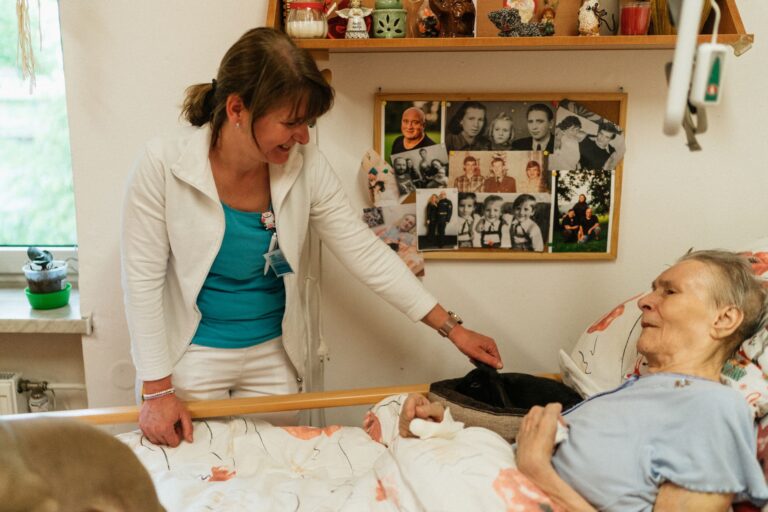
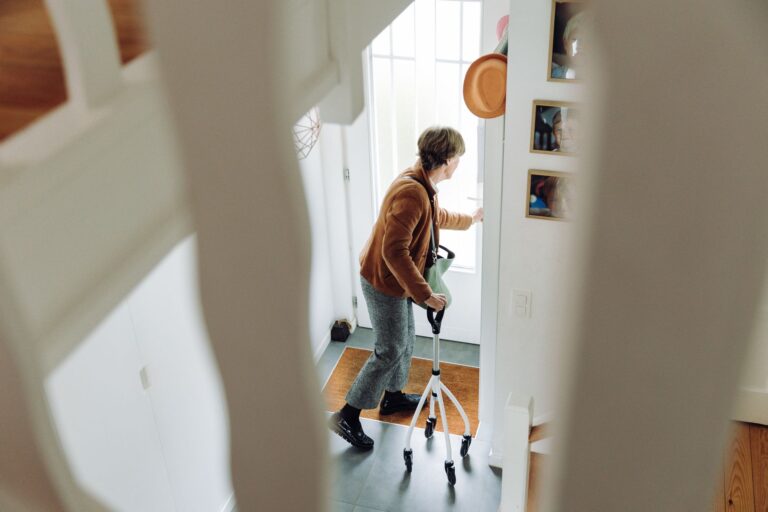
Nursing facilities operate under standards that haven’t meaningfully evolved in decades, despite dramatic shifts in resident acuity, medication complexity, and the prevalence of dementia. Current federal regulations establish baseline requirements for staffing ratios, infection control, and documentation—but these baselines are often insufficient to prevent neglect, medication errors, and deteriorating quality of life for vulnerable patients. A resident with advanced dementia in a facility with minimal certified nursing assistant (CNA) support may wait hours for help with toileting, eating, or repositioning, simply because federal minimum staffing rules allow it. The stakes are highest for people with dementia.
This population cannot always advocate for itself, report problems clearly, or leave a situation that’s harming them. When a facility meets technical regulatory compliance but operates with chronic understaffing, inadequate staff training in dementia care, and poorly designed physical environments, residents suffer preventable decline—falls, malnutrition, behavioral crises that could have been managed with better design and expertise. Better standards would establish not just minimum thresholds, but evidence-based benchmarks for staffing mix, training requirements, environmental design, and outcome monitoring. Yet most facilities operate in a regulatory landscape that rewards cost containment over resident quality, creating a system where mediocrity is legal and excellence is optional.
Table of Contents
- What’s Wrong with Current Nursing Facility Standards?
- Where Standards Fall Short on Staffing and Expertise
- How Poor Standards Harm Residents with Dementia
- What Better Standards Should Look Like
- Why Better Standards Don’t Exist Yet
- What Families Can Look for When Choosing a Facility
- The Gap Between Regulation and Reality in Dementia Units
- Frequently Asked Questions
What’s Wrong with Current Nursing Facility Standards?
Existing federal regulations (primarily the Centers for Medicare and Medicaid Services rules) set minimum staffing requirements at 0.55 registered nurse (RN) hours per resident per day and 2.45 certified nursing assistant hours per resident per day. These numbers were established in the 1990s and have not been updated for inflation, increased resident complexity, or the documented care needs of dementia units. In comparison, assisted living facilities have no federal staffing minimum at all—only state-level rules that vary wildly. A 120-bed facility in a mid-sized city might employ one RN per shift overseeing 60 residents, with three CNAs to assist with activities of daily living. During night shift, that staffing may drop to one RN and two CNAs for the entire facility.
For a dementia unit where residents have complex medication regimens, behavioral needs, and physical dependencies, this represents a ratio that makes quality individualized care impossible. The RN spends the shift managing paperwork, medications, and acute incidents rather than monitoring resident well-being, and CNAs are perpetually behind on basic care tasks. Another gap is the lack of specific standards for dementia care training. Federal rules require only generic nursing assistant training and certification—they don’t mandate or even specify training in dementia behavior, communication with people who have cognitive loss, or person-centered care approaches. A CNA might have received their certification in one-week classes focused on lifting techniques and vital signs, with zero hours on how to respond to a resident who’s frightened, agitated, or unable to understand what’s happening to them.
Where Standards Fall Short on Staffing and Expertise
The staffing minimum is further eroded by how facilities count hours. A nurse working in the facility’s front office handling admissions counts toward the staffing ratio, as does time spent on training or administrative duties—not bedside care. This creates a legal fiction where facilities meet the ratio while actual patient care staff may be substantially lower. Additionally, many facilities employ more LPNs (licensed practical nurses) than RNs because LPNs cost less, yet LPNs have less training in complex medical decision-making and cannot supervise other nurses—a limitation that leaves RNs spread even thinner. Turnover is the hidden crisis that standards don’t address. Nursing facilities experience CNA turnover rates of 40–75% annually in many regions, meaning residents rarely have consistent caregivers and institutional knowledge is constantly lost.
A regulation that sets a minimum ratio but ignores turnover is like setting a speed limit without addressing tire quality—the written standard becomes meaningless. Facilities often fill shifts with temporary agency staff who have no continuity with residents and limited knowledge of facility protocols or individual resident needs. No current standard requires facilities to track or report turnover, so this churn is invisible to regulators and families. Training depth is another critical gap. States require between 16 and 150 hours of initial CNA training depending on the state, and dementia-specific training is rarely mandated or funded. A CNA in a dementia unit might receive excellent on-the-job coaching from senior staff—or they might receive none, learning by trial and error in an environment where a frustrated, confused resident’s behavior is misinterpreted as “acting out” rather than as a sign of unmet needs or delirium.
How Poor Standards Harm Residents with Dementia
Dementia residents are uniquely vulnerable to poor standards because their conditions make self-advocacy nearly impossible. A resident with moderate Alzheimer’s disease cannot press a call button and clearly explain that they haven’t eaten since breakfast, are uncomfortable, or are frightened by a staff member’s rushed approach. They cannot file a complaint with the state health department. They cannot call their daughter and describe a medication error. This dependency amplifies the harm caused by inadequate staffing and training. Consider a realistic scenario: A 78-year-old woman with vascular dementia is admitted to a nursing facility after a stroke. She needs frequent repositioning to prevent pressure sores, assistance with eating because of swallowing difficulty, and help with toileting every 2–3 hours. The facility meets federal staffing minimums.
Her family visits three times a week and notices her becoming withdrawn, eating less at meals, and developing a rash on her lower back. The physician attributes the behavioral changes to “progression” of dementia. The rash is documented as “skin breakdown” in the chart. What’s actually happening: the facility’s CNA assignments have changed due to a staffing gap, so this resident is now repositioned by different staff members at irregular intervals. She’s often left in wet incontinence pads longer than ideal because the CNA is managing 15 residents alone. Her nutritional decline isn’t because of dementia—it’s because meals are rushed and no one has noticed she struggles to bring a spoon to her mouth independently. This situation—substandard care masked by regulatory compliance—is common. Families report it repeatedly, yet the facility’s inspection scores may be acceptable because inspectors do spot audits of a sample of charts and direct care, not continuous observation. A better standard would establish specific assessment intervals for nutritional status, skin integrity, and functional decline, with triggers that require investigation when a resident’s status worsens unexpectedly.
What Better Standards Should Look Like
Evidence-based standards would establish minimum staffing at 4.0 RN hours and 3.5 CNA hours per resident per day—higher than current minimums—with a requirement that at least one RN be present per shift and that CNA time is counted as direct patient care only (excluding breaks, training, or administrative duties). Research from facilities that maintain these ratios shows measurably better outcomes: fewer hospital transfers for preventable acute conditions, lower infection rates, and better quality of life scores from family surveys. Better standards would also require that all nursing facility staff receive dementia care training specific to their role, with initial training of at least 40 hours for direct care staff before they work in a dementia unit, and ongoing annual education. This training would cover topics like person-centered care, how to respond to behavioral symptoms, recognizing delirium, and communication strategies for people with cognitive loss. Some facilities in Scandinavian countries and Australia mandate even more extensive training, and their outcomes reflect it. However, implementing higher standards carries real costs. A facility that increases CNA staffing and adds structured training will see higher operational expenses, which under the current reimbursement model means lower margins and reduced incentive to expand services.
Some facilities would need to close or reduce bed count to stay solvent. This trade-off—better care vs. facility financial viability—is real and uncomfortable, but it’s also why higher standards require policy support and reimbursement reform, not just regulation. Environmental standards are equally important and equally neglected. Most nursing facilities were designed as institutional warehouses, not therapeutic environments for people with dementia. Better standards would mandate design features that reduce overstimulation and confusion: secure outdoor spaces, lower-noise construction, clear wayfinding cues, private or semi-private rooms rather than dense dormitory-style wards, and access to natural light. These changes reduce behavioral symptoms, wandering incidents, and the need for sedating medications.
Why Better Standards Don’t Exist Yet
The primary barrier is financial. Nursing facilities operate on thin margins, and many are not independently profitable—they’re owned by large corporations that generate returns by managing chains of facilities and extracting operational efficiency. Higher staffing and training requirements would pressure these margins further, and facilities would lobby against them or locate in states with less stringent rules. Additionally, Medicare and Medicaid reimbursement rates are set by government formulae that don’t always cover the cost of truly excellent care, so facilities that want to provide high quality either absorb the cost or serve a wealthier private-pay population. Another barrier is political will.
Nursing facility residents are among the least politically powerful groups—many are elderly, many are Medicaid-funded, and many have no family advocates. Powerful industry lobbying groups representing facility chains and owners actively work against stricter standards, framing them as “unnecessary costs.” Meanwhile, families and advocates pushing for change are typically focused on their own facility crisis rather than systemic reform. A significant warning: even where higher standards do exist (in some states, through accreditation standards, or in private facilities), enforcement is weak. Inspections are infrequent, unannounced but predictable, and inspectors may lack expertise in assessing dementia care quality. A facility can fail residents repeatedly and still receive a “conditional” license that allows them to operate. Penalties for violations are often financial rather than operational—a fine that doesn’t stop harmful behavior because the facility absorbs it as a cost of business.
What Families Can Look for When Choosing a Facility
Families should ask direct questions about staffing: “What is your RN-to-resident ratio on each shift?” “What is your CNA-to-resident ratio?” “Do you count administrative or non-direct-care time in those numbers?” Many facilities won’t answer clearly, which is itself revealing. Request to speak with staff (CNAs and nurses) about their role and ask them about turnover and training. High-quality facilities attract and retain staff, and staff are usually willing to talk about why they stay.
Ask about dementia-specific training, and specifically whether CNAs have documented training in dementia care before they work with dementia residents. Ask about staffing continuity—do the same caregivers work with your family member each day, or does it rotate constantly? Ask what happens when a staff member calls in sick—is a consistent substitute called, or does anyone available fill in? Observe the physical environment. Are residents in rooms alone, two to a room, or in larger wards? Are there windows, natural light, outdoor spaces? Do residents have access to activities and engagement, or are they parked in hallways and common areas with a television? Is it quiet enough to think, or is it a constant din of alarms, music, and overhead announcements?.
The Gap Between Regulation and Reality in Dementia Units
Many dementia units are marketed as “specialized” or “secured” but operate under the same standards as general nursing facility floors—the difference is locked doors and often higher rates, not higher staffing or better training. A “secured” unit legally needs only the same CNA ratio as any other unit, yet residents with behavioral symptoms often require more attention, not less. This marketing-to-reality gap means families may believe they’re paying for specialized care when they’re actually paying a premium for security features that don’t improve care quality. Documentation also creates a false sense of safety.
Facilities maintain detailed charts that show medications given, vital signs monitored, and care performed. These charts often appear comprehensive when reviewed by inspectors or family members. What they don’t capture is quality: the rushed meal where a resident with swallowing difficulty gets pureed food pushed too quickly, the “supervision” where a CNA is standing in a doorway watching three residents rather than engaged with each one, the wound care performed technically correctly but without the comfort measures that reduce suffering. Real improvement in nursing facility standards requires simultaneous changes: federal minimum staffing levels tied to actual direct care hours, mandatory dementia care training for all staff, environmental design standards, transparent reporting of staffing and turnover, and reimbursement rates that support quality rather than reward cost-cutting. Until those changes happen, families navigating facility choice are choosing among imperfect options, and residents—especially those with dementia—remain unnecessarily vulnerable to the mediocrity that current standards permit.
- —
Frequently Asked Questions
What is the current federal minimum staffing ratio for nursing facilities?
Federal rules require 0.55 RN hours and 2.45 CNA hours per resident per day, set in the 1990s and not updated since. Many states and quality organizations recommend higher ratios for dementia-specialized care.
Do all nursing assistants in dementia units have dementia-specific training?
No. Federal rules require only basic nursing assistant certification, which doesn’t mandate dementia care training. Requirements vary by state, and many facilities provide no specialized dementia education before hiring.
How can I tell if a nursing facility actually meets the staffing ratios it claims?
Ask for the ratio on each shift during your tour, specify that you want direct care hours only (not administrative time), and talk with staff directly about their workload and patient-to-caregiver assignments.
What happens when a nursing facility violates standards?
Enforcement is inconsistent. Facilities may receive financial penalties or conditional licenses but continue operating. Serious violations sometimes result in loss of certification, but inspections are infrequent and unannounced but predictable.
Are dementia units typically held to higher standards than general nursing facility floors?
Not in most cases. “Secured” or “specialized” dementia units may have locked doors and higher resident fees, but they operate under the same federal staffing standards as other units, despite residents often requiring more attention.
What should I look for in a facility’s commitment to staff training and continuity?
Ask about turnover rates, how staff are trained in dementia care, whether the same caregivers work with your family member daily, and how shifts are covered when staff call in sick. High turnover and reliance on agency staff are warning signs. —