Reviewed by the Help Dementia Editorial Team — our editors review every article for accuracy against guidance from the National Institute on Aging, the Alzheimer’s Association, and peer-reviewed sources.
Memory care sits at the center of this dementia and brain health question.
The most effective memory care activity director technique is tailored, group-based programming that combines cognitive stimulation with familiar activities from residents’ personal histories. Research shows that when activities are modified to match individual capabilities and delivered in social group settings, engagement rates jump dramatically—with residents participating constructively up to 50.9% of the time during well-designed sessions, compared to facilities where residents spend 65% of their time doing nothing at all.
The difference often comes down to one core practice: activity directors who assess each resident’s cognitive level, interests, and remaining abilities, then deliberately create conditions where residents can succeed socially, not just sit passively in a room together. This article explores the evidence-based techniques that keep dementia patients engaged for extended periods—from cognitive stimulation therapy to reminiscence-based activities, along with practical strategies for addressing the apathy and depression that affect more than half of all dementia patients. You’ll learn why group dynamics matter more than activity type alone, what research shows about successful activity modifications, and how to implement these approaches in real facility settings where staff are often stretched thin and struggling to understand what engagement actually looks like.
Table of Contents
- Why Standard Activity Programming Fails to Keep Dementia Patients Engaged
- The Evidence for Cognitive Stimulation and Group-Based Activities
- Reminiscence Therapy and Leveraging Long-Term Memory
- Music and Animal Therapy as Engagement Tools for Advanced Dementia
- Managing Apathy and Depression as Engagement Barriers
- Staff Training and the Modern Memory Care Director Role
- Creating Sustainable Engagement Programs in Real Facility Settings
- Conclusion
Why Standard Activity Programming Fails to Keep Dementia Patients Engaged
Most nursing homes operate with a passive baseline. Residents with dementia typically spend only 12% of their time in social activities, while nearly two-thirds of their day involves no structured engagement at all. This isn’t because facilities lack good intentions—it’s because standard activity programming treats dementia as a one-size-fits-all condition, when in reality, engagement barriers are highly individual. Apathy occurs in 55.5% of dementia patients, and depression in 44.9%, meaning staff often misinterpret withdrawal as disinterest rather than recognizing it as a symptom requiring a different intervention approach.
The research is clear: when activity spaces, social demands, and task difficulty are modified to match the resident’s remaining abilities, success rates improve dramatically. In a systematic review of activity engagement interventions, 100% of modifications targeting space or social demands produced positive outcomes, and 85.7% of combined modifications (using two or more elements together) were successful. However, implementing this requires more than scheduling bingo or craft time. It requires activity directors who understand that a resident with moderate dementia might engage beautifully with a familiar task in a small group, but become overwhelmed in a large room with complex instructions.

The Evidence for Cognitive Stimulation and Group-Based Activities
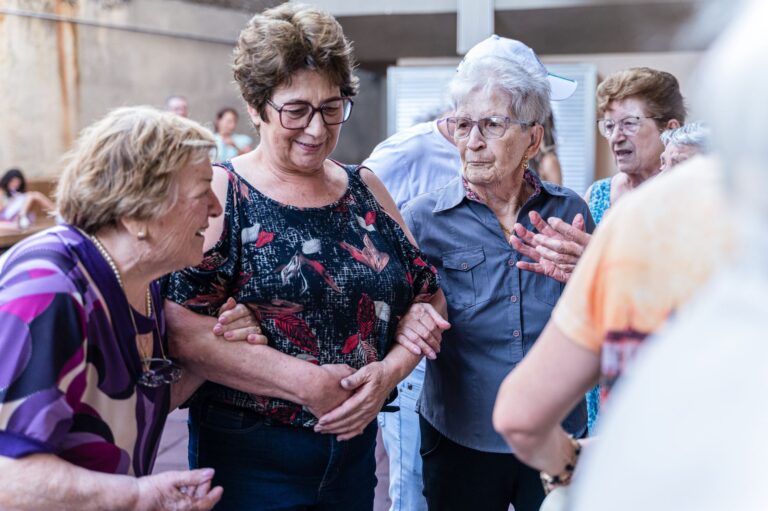
Cognitive Stimulation Therapy (CST) stands as one of the most rigorously tested engagement approaches in dementia care, with randomized controlled trials backing its effectiveness for improving both cognitive function and quality of life in mild-to-moderate dementia. CST works because it combines structured mental exercise with the social interaction that dementia patients desperately need but often avoid due to shame or confusion about their declining abilities. When delivered in group settings, these sessions produce measurable physiological signs of engagement—residents sit upright longer, make more eye contact, and participate in conversation at higher rates. Group-based recreational activities are particularly powerful.
Research consistently shows that residents display more behavioral and physiological engagement signs during group activities than in one-on-one or isolated settings, even when the activity itself is simple. The limitation here is critical: group dynamics only work if the group is sized appropriately and paced correctly. A room of 20 people with dementia moving at a standard activity pace will see most participants tune out. But a group of 4-6 residents with similar cognitive levels, with an activity director who can pause, repeat, and adjust on the fly, maintains engagement much higher. This is why memory care facilities are increasingly implementing empathy-building training for staff—to help them understand that a confused resident who appears resistant is often frightened, not stubborn, and needs a completely different facilitation approach.
Reminiscence Therapy and Leveraging Long-Term Memory
One of the most underutilized engagement techniques is reminiscence therapy, which deliberately taps into the long-term memories that persist longest in dementia brains. As short-term memory deteriorates, many residents retain vivid recollections of events from decades earlier—a wedding, a favorite job, children’s names, beloved pets. When activity directors structure sessions around these retained memories, engagement naturally follows because the resident isn’t struggling to understand new information; they’re recalling something their brain can still access. Reminiscence therapy shows consistent benefits for improving mood, reducing agitation, and even producing measurable cognitive improvements.
A practical example: an activity director working with a resident who had been a gardener for 40 years might create a gardening-themed group activity—sorting seed packets, discussing favorite plants, or handling soil and bulbs. The resident may no longer remember yesterday’s breakfast, but their hands remember what soil feels like, and their brain lights up when discussing roses or tomatoes. This approach also works beautifully in combination with music—playing songs from the era when the resident was young, which often triggers vivid memories and emotional connection. However, reminiscence therapy requires knowing something about each resident’s history, which demands either family input or time spent building that knowledge base—resources many busy facilities lack.

Music and Animal Therapy as Engagement Tools for Advanced Dementia
Music therapy and animal therapy have emerged as particularly promising interventions for advanced dementia stages, when traditional cognitive activities become less feasible. Music doesn’t require intact memory or language comprehension—the emotional and physiological response to familiar songs can occur even in late-stage dementia, producing visible signs of pleasure, movement, and social response. Animal therapy, including animatronic pet visits, offers similar benefits without the logistical complexity of live animals in a care facility. The practical advantage of these approaches is their accessibility.
Unlike cognitive stimulation activities that require tailoring and staff expertise, music and animal therapy can be implemented by any staff member with minimal training—play the music or bring the pet, and many residents respond naturally. The tradeoff is that these interventions alone, without combination with other engagement strategies, may provide moments of connection rather than sustained engagement over hours. A 90-minute music session might generate 20 minutes of active engagement followed by passivity if the resident isn’t then transitioned to another activity or social interaction. This is why evidence-based facilities combine multiple techniques—music as an opener to draw residents in, followed by a reminiscence-based group activity or cognitive game.
Managing Apathy and Depression as Engagement Barriers
Beyond activity design itself, activity directors must recognize that nearly 70% of dementia patients experience either apathy, depression, or both—conditions that actively prevent engagement even when activities are well-designed. A resident with significant apathy may sit through a perfectly tailored activity with no visible response, not because the activity failed, but because the neurological and psychological barriers to initiation are overwhelming. This is why behavioral interventions addressing sleep, exercise, and mental health often precede or run parallel to activity programming. Research on sleep and behavioral interventions (like the NITE-AD program) shows that when dementia care combines activity programming with structured sleep improvement and daily exercise, residents experience measurably less depression and apathy.
Participants in these combined programs reported 36 minutes less nightly wakefulness and 5.3 fewer nighttime awakenings, along with significantly lower depression levels. The warning here is important: activity directors should not assume that a resident who doesn’t respond to programming is unmotivated. Often, untreated sleep disruption, pain, or depression is the real barrier. Effective memory care requires activity directors working closely with clinical staff to address these underlying issues.

Staff Training and the Modern Memory Care Director Role
Today’s memory care activity directors need training that goes far beyond activity scheduling. Leading operators are implementing evidence-based training modules like CARES (Connect, Assess, Respond, Evaluate, Share) that build empathy and teach staff to recognize the sensory and cognitive challenges residents face. This training helps activity directors understand that a resident’s apparent refusal to participate might stem from difficulty processing the activity instructions, sensory overwhelm from background noise, or fear of embarrassment about cognitive decline.
The emerging trend in 2026 is toward technology-assisted activity programming, with early-stage adoption of AI tools that help identify individual resident routines, preferences, and cognitive patterns, then generate personalized programming ideas. While still developing, these tools promise to reduce the guesswork and allow activity directors to focus their expertise on facilitation rather than hours spent researching resident backgrounds and activity logistics. However, technology integration is not a substitute for skilled human facilitation—an AI-generated activity idea still requires a director who understands how to adapt it in real-time when a resident becomes confused or overwhelmed.
Creating Sustainable Engagement Programs in Real Facility Settings
Implementing these evidence-based techniques in actual facilities faces a persistent challenge: while hundreds of studies validate these approaches, the broader healthcare and senior living field lacks widespread, long-term adoption. Research shows very limited evidence supporting general care approaches at scale, highlighting the need for larger, longer-term studies. This gap between research evidence and facility practice exists primarily because activity programming requires trained, engaged staff with reasonable workloads—yet many facilities remain understaffed and undertrained.
Forward-looking memory care is moving toward specialized activity director certifications, smaller resident-to-staff ratios in memory units, and integrated care models where activity directors work closely with nursing, therapy, and clinical teams. Facilities that implement systematic, resident-centered activity assessment—rather than one-size-fits-all programming—consistently report higher engagement rates and fewer behavioral incidents. The future of memory care activity direction isn’t new technology or exotic activities; it’s treating activity programming as a core clinical intervention with the same rigor and accountability as medication or therapy.
Conclusion
The memory care activity director technique that keeps dementia patients engaged for hours is, at its core, a systematic approach to matching activities with individual residents’ remaining abilities and leveraging group dynamics, reminiscence, and familiar tasks. The evidence shows that when activity modifications target social demands and activity difficulty, engagement rates reach 50.9% constructively versus the baseline of 12%, and combined interventions produce 85.7% success rates. Yet this success requires activity directors trained to recognize apathy and depression as engagement barriers, skilled in facilitation that adapts moment-to-moment, and supported by facilities that prioritize activity programming as a clinical intervention.
If you’re a family member of someone in memory care, ask your facility about their activity assessment process and staff training. If you’re an activity director, the evidence supports investing time in learning each resident’s history, practicing group facilitation techniques, and advocating for adequate staffing to implement these approaches consistently. The data is clear: engagement is not about entertainment—it’s about creating conditions where residents with dementia can succeed, connect, and maintain quality of life.
You Might Also Like
- The Memory Care Activity Director Technique That Keeps Dementia Patients Engaged for Hours
- The Free Dementia Day Program That Gives Caregivers 8 Hours of Relief 5 Days a Week
- The Free Dementia Day Program That Gives Caregivers 8 Hours of Relief 5 Days a Week
For more, see Alzheimer’s Association — caregiving.