Reviewed by the Help Dementia Editorial Team — our editors review every article for accuracy against guidance from the National Institute on Aging, the Alzheimer’s Association, and peer-reviewed sources.
Life doula sits at the center of this dementia and brain health question.
End-of-life doula training programs with a specific focus on dementia care are becoming more widely available across the United States, though the precise “25 States” figure cannot be independently verified. What is confirmed is that multiple institutions—from community colleges to universities—have launched or expanded specialized training programs in recent years to prepare caregivers, healthcare workers, and volunteers to provide dignity-centered support to people with dementia at the end of life. The University of New England, University of Vermont, Community College of Allegheny County, and the International Doula Life Movement are among the organizations now offering these dementia-focused end-of-life doula certifications, with classes beginning in 2025 and 2026.
The emergence of dementia-specific doula training reflects a critical gap in end-of-life care. For years, death doula programs existed, but few addressed the unique emotional, cognitive, and behavioral challenges that accompany dementia. A caregiver sitting with an Alzheimer’s patient in their final weeks faces different obstacles than supporting someone with clear cognition—communication may be nonverbal, memory may be fragmented, and anxiety or confusion may dominate the final days. These new programs teach caregivers how to navigate those specific challenges with presence and skill.
Table of Contents
- What Are Dementia-Focused End-of-Life Doula Programs?
- The Dementia-Specific Curriculum and Its Limitations
- Who Is Pursuing This Training and Why?
- How to Find and Choose a Dementia Doula Training Program
- Barriers and Challenges in Accessing These Programs
- What Graduates Do After Certification
- The Broader Movement and Future of Dementia-Informed End-of-Life Care
- Conclusion
What Are Dementia-Focused End-of-Life Doula Programs?
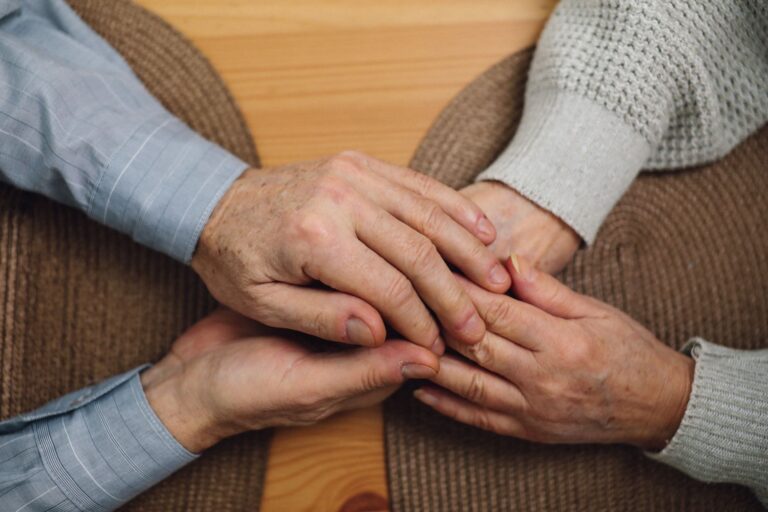
End-of-life doulas are trained to provide physical, emotional, and spiritual presence to dying people and their families. They do not provide medical care—they are not nurses or doctors—but rather offer practical support like hand-holding, reading, music, and helping families communicate their wishes and values. When specialized for dementia, this training includes techniques for communicating with people who may no longer speak clearly, managing behavioral symptoms like agitation or resistance to care, and helping family members process the unique grief of watching someone fade cognitively before they die.
The University of Vermont’s 8-week online End-of-Life Doula Professional Certificate, for example, covers general doula work but can be paired with additional dementia-focused coursework. Meanwhile, the University of New England offers a dedicated 4-week online program called “Dementia-Informed Deathcare: Tools for Presence & Practice,” starting September 15, 2025, specifically designed for people supporting those with dementia. The Community College of Allegheny County launched a 45-hour in-person certification beginning February 2025, with an additional Alzheimer’s Disease and Dementia Care seminar to deepen expertise. These programs vary in length, format (online versus in-person), and cost, giving people with different schedules and budgets options to pursue training.

The Dementia-Specific Curriculum and Its Limitations
Dementia-specific doula training goes beyond standard end-of-life doula education by teaching caregivers about the neurobiology of dementia, how cognitive decline affects communication and behavior, and evidence-based techniques for providing comfort without relying on complex verbal exchanges. Curricula often cover topics like validation therapy, creating sensory-rich environments, recognizing pain signals in non-verbal patients, and supporting family members through anticipatory grief. The International Doula Life Movement’s End-of-Life Dementia Doula program, running from January 20 to April 2, 2026, includes intensive training on dementia-specific care alongside broader doula principles. However, there is an important limitation: certification from these programs does not guarantee employment or income.
Most end-of-life doulas work as independent contractors or volunteers, and demand varies widely by region. While some families hire doulas privately, insurance rarely covers doula services, and Medicare does not. A caregiver who completes a doula certification should view it as expertise and a calling rather than a guaranteed career path. The programs also require emotional resilience—this is work with dying people—and some people complete the training only to discover it’s not what they expected emotionally.
Who Is Pursuing This Training and Why?
These programs are attracting diverse learners: professional caregivers looking to expand their skill set, family members who are primary caregivers for a relative with dementia, nurses and social workers seeking additional tools, grief counselors, and people interested in end-of-life work as a second career or volunteer role. The University of New England explicitly markets its program to caregivers, death doulas, community members, and healthcare workers, recognizing that no single profession has a monopoly on this work. The motivation varies.
Some are caring for someone with dementia right now and want to provide better support. Others have experienced a family member’s difficult death and feel called to help others avoid similar experiences. Nurses and social workers might take the training to bring more humanistic, presence-based approaches into their clinical work. The emotional foundation is usually personal: dementia training in the end-of-life space appeals to people who have confronted the illness directly and understand its particular cruelty.

How to Find and Choose a Dementia Doula Training Program
Prospective students should start by considering format and timing. The University of Vermont’s Spring 2026 sessions begin February 9 and April 13, 2026, and run for eight weeks online—accessible if you’re working or caregiving but require consistent commitment. The University of New England’s four-week program compresses the content, making it faster but potentially more intensive. In-person programs like CCAC’s 45-hour certification offer hands-on practice and community but require local presence or travel.
Cost and specialization are equally important. Some programs, like UNE’s, specifically brand themselves as dementia-informed from the start; others, like UVM’s, offer a general doula certificate that can be supplemented with dementia-specific training. Verify whether the organization is affiliated with the National End-of-Life Doula Alliance (NEDA), which coordinates training standards, or whether it operates independently. Ask whether the training includes supervised practice, whether you’ll receive a certificate recognized beyond the institution, and what kind of ongoing support or community the program offers after graduation. Comparing a four-week online program to a 45-hour in-person program is not straightforward—they may cover different depths and offer different networking opportunities.
Barriers and Challenges in Accessing These Programs
Cost is the first barrier. While exact pricing varies, online certificates typically range from several hundred to over a thousand dollars, and in-person programs may cost more. For family caregivers already stretched thin financially and time-wise, this is a real obstacle. The second barrier is availability. These programs exist in certain locations (Vermont, Pennsylvania, Maine, and others where the institutions are based), and while many are online, geographic clusters still exist. Rural caregivers in areas without nearby programs may need to travel or rely entirely on online learning, which some people find less engaging.
A third challenge, often overlooked, is that completing training does not automatically create a role or income. A nurse or social worker can use doula training within their existing job. A family caregiver gains skills for their immediate situation. But someone hoping to become a full-time paid doula should know that demand is still growing in many areas, and competition may be fierce. Finally, dementia is advancing and variable—no training can prepare someone for every scenario or guarantee that techniques will work with every patient. Realistic expectations about the training’s scope are essential.

What Graduates Do After Certification
Post-certification paths are diverse. Some graduates integrate doula skills into existing healthcare roles—nurses bring presence-based techniques into hospital or hospice settings; social workers offer doula-informed family counseling. Family caregivers use the training to support their own relative, having gained confidence and evidence-based approaches. Others become independent doulas, building a private practice through word-of-mouth referrals or partnerships with hospice agencies, funeral homes, and senior communities.
Some volunteer with hospices or organizations that match trained doulas with families who cannot afford private services. The International Doula Life Movement’s programs, for instance, include a Baton Rouge-based Death/End of Life Doula Specialist program running March 7 to May 23, 2026, designed to produce practitioners ready to work in their communities. Graduates report that the training deepens their sense of purpose and gives them concrete skills that reduce their own anxiety in high-stakes moments. However, income potential is variable and depends heavily on regional demand, business acumen, and whether the doula is working independently or within an established organization.
The Broader Movement and Future of Dementia-Informed End-of-Life Care
Dementia-specific doula training is part of a larger movement toward person-centered, values-driven end-of-life care that rejects the medical model’s focus on curative intervention and embraces presence, dignity, and meaning-making. As the population ages and dementia rates climb, the demand for this kind of support is expected to grow.
The existence of multiple programs across different institutions—universities, community colleges, and independent organizations—suggests that the field is maturing and becoming more accessible, even if the infrastructure is still being built. Looking forward, we may see more integration of doula training into standard healthcare education, formalization of certification standards, and greater insurance and Medicare recognition of doula services. For now, end-of-life doula training—especially dementia-focused—remains a growing but still emerging field that attracts people called to this intimate, essential work.
Conclusion
End-of-life doula training with a dementia focus is genuinely expanding, with established programs now operating through universities, community colleges, and specialized organizations across multiple states. While the exact “25 States” claim cannot be verified, the presence of programs in New England, the Mid-Atlantic, and beyond, combined with the growth trajectory of this field, points to increasing accessibility. These trainings address a real gap in end-of-life care: the need for skilled, compassionate support tailored to the unique challenges of dementia.
If you or someone you know is interested in pursuing this training—whether as a healthcare professional, family caregiver, or volunteer—start by reviewing the offerings from the University of Vermont, University of New England, Community College of Allegheny County, and the International Doula Life Movement. Consider your own circumstances: budget, timeline, preferred learning format, and what you hope to do with the training afterward. The work is demanding but deeply meaningful, and having the right preparation makes all the difference.
You Might Also Like
- The Indoor Air Quality Study That Found Higher Dementia Rates in Homes With Poor Ventilation
- The Dementia Prevention Summit That Brought Together 500 Researchers and Made 10 Key Recommendations
- The Dementia Prevention Master Class Available Free Through Coursera From a Leading University
For more, see Alzheimer’s Association — caregiving.