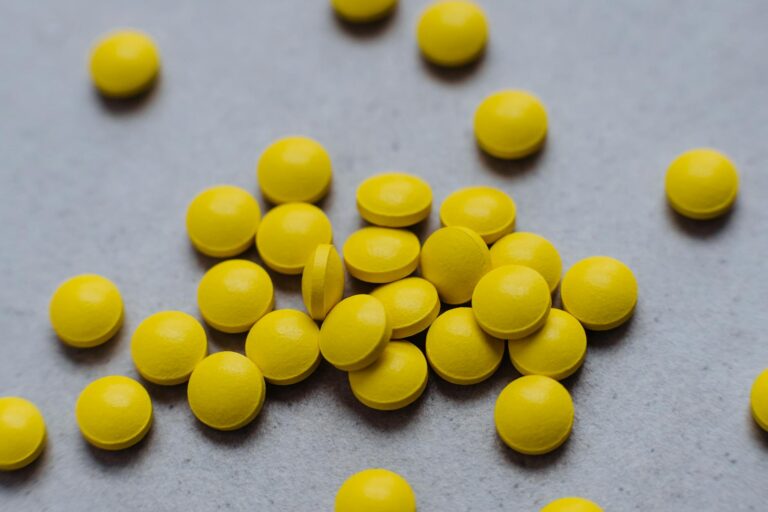
Low-dose aspirin — the same pill you can buy for pennies at any drugstore — is the drug that has been quietly boosting IVF success rates for years. Prescribed off-label by fertility clinics around the world, baby aspirin works by improving blood flow to the uterus and ovaries, potentially enhancing the endometrial lining’s ability to accept an embryo. A landmark 1999 study by Rubio et al. found that women taking just 100 mg per day had nearly twice as many eggs retrieved, along with significantly higher implantation and pregnancy rates compared to placebo. And yet, despite decades of accumulating evidence, aspirin remains one of the least discussed tools in the fertility conversation — probably because it costs about two to ten cents per pill, making it nobody’s blockbuster revenue stream.
But the story doesn’t end with aspirin. Several other medications originally developed for entirely different conditions have carved out quiet roles in fertility treatment. Human growth hormone, the diabetes drug metformin, and the hormone supplement DHEA have all shown promise for specific groups of IVF patients, even as the evidence for broad application remains mixed. This article walks through what the research actually says about each of these drugs, who they help most, where the data falls short, and how the IVF landscape is shifting in 2026 with AI-assisted embryo grading and personalized medication protocols. If you or someone you care about is navigating fertility treatment, understanding these options — and their real limitations — matters.
Table of Contents
- What Is the Drug That Has Been Secretly Helping IVF Success Rates, and How Does It Work?
- Human Growth Hormone and IVF — A Powerful Tool With a Narrow Window
- DHEA Supplementation — Promising Numbers, Complicated Reality
- Metformin for IVF — How a Diabetes Drug Became a Fertility Ally
- Why the Evidence Remains Mixed and What That Means for Patients
- The Cost Factor — Why Cheap Drugs Get Overlooked
- Where IVF Is Headed in 2026 and Beyond
- Conclusion
- Frequently Asked Questions
What Is the Drug That Has Been Secretly Helping IVF Success Rates, and How Does It Work?
The drug in question is low-dose aspirin, typically prescribed at 100 mg per day during IVF cycles. Its mechanism is straightforward: aspirin inhibits platelet aggregation, which is a clinical way of saying it thins the blood slightly and improves circulation. In the context of IVF, better blood flow to the uterine lining may create a more hospitable environment for embryo implantation. Think of it like improving irrigation to a garden — the soil itself might be fine, but without adequate blood supply delivering nutrients and oxygen, even a healthy embryo can struggle to take hold.
A 2017 meta-analysis pooling data from 13 randomized controlled trials concluded that aspirin at 100 mg per day “may increase the success rate of IVF/ICSI treatment.” More recently, a 2021 systematic review by Mourad et al., published in the Journal of Obstetrics and Gynaecology Canada, found significant evidence that aspirin used during endometrial preparation improved live birth rates — the outcome that matters most to patients. A 2024 study in Frontiers in Endocrinology added nuance by showing that BMI modifies aspirin’s effectiveness, suggesting the benefits may be strongest in certain weight categories rather than across the board. What makes aspirin unusual in the fertility world is the gap between its widespread clinical use and its formal evidence base. Many reproductive endocrinologists prescribe it almost reflexively during IVF cycles, yet a Cochrane review — considered the gold standard for evidence synthesis — found no substantial positive effect on pregnancy likelihood in unselected patients and stated that aspirin “should not be routinely recommended for all women undergoing IVF/ICSI.” That tension between everyday clinical practice and the formal evidence is worth sitting with, because it mirrors a broader truth about fertility medicine: what works for a specific patient may not show up in population-level averages.

Human Growth Hormone and IVF — A Powerful Tool With a Narrow Window
Human growth hormone, marketed under names like Omnitrope, has generated genuine excitement in fertility medicine — but only for a specific subset of patients. A 2021 Cochrane review of 16 trials found that growth hormone co-treatment for poor responders increased clinical pregnancy rates by 16 percent, live birth rates by 17 percent, and the proportion of women reaching embryo transfer by 22 percent. A separate 2021 study in Fertility and Sterility reported that women treated with Omnitrope retrieved 23 percent more eggs and 36 percent more cleavage-stage embryos compared to controls. For women who have been told their ovaries aren’t responding well to standard stimulation, those numbers represent real hope. However, growth hormone is not a universal IVF enhancer, and prescribing it to the general IVF population appears to be a waste of money.
The largest randomized controlled trial to date, published in 2024 in Human Reproduction by Oxford Academic, concluded that “empirical use of growth hormone in IVF is useless” for women on standard GnRH antagonist protocols. There was no improvement in implantation rates, no reduction in miscarriage, and no bump in clinical pregnancy rates. The drug is also expensive — costing hundreds to thousands of dollars per cycle depending on dosing — which makes the distinction between who benefits and who doesn’t a financial question as much as a medical one. The takeaway is that HGH appears to genuinely help poor responders and older women with diminished ovarian reserve, but extending it to the broader IVF population is not supported by the current evidence. If a clinic suggests adding growth hormone to your protocol, the first question to ask is whether your specific diagnosis places you in the group where the evidence is favorable.
DHEA Supplementation — Promising Numbers, Complicated Reality
Dehydroepiandrosterone, or DHEA, is a hormone supplement that has gained a loyal following in fertility circles, particularly among women with diminished ovarian reserve. The typical protocol involves taking 75 mg per day, started six to sixteen weeks before beginning IVF stimulation. That long lead time is part of what makes DHEA unusual — it’s not something you add during a cycle but rather a preparatory step meant to improve ovarian function before stimulation drugs even enter the picture. The numbers for specific populations are striking. One study found that poor ovarian responders taking DHEA showed a 4.93-fold increase in clinical pregnancy rate compared to controls, a statistically significant result.
Another study focused on women with diminished ovarian reserve found a clinical pregnancy rate increase with a relative risk of 2.13 compared to placebo. These are meaningful effect sizes for a population that often faces discouraging odds. But a 2025 meta-analysis combining results from 16 studies delivered a sobering caveat: DHEA supplementation showed no improvement in live birth rates overall, even though it did improve clinical pregnancy numbers, endometrial thickness, and the number of eggs retrieved. The gap between clinical pregnancy and live birth is important — it means more pregnancies were established, but they didn’t necessarily result in babies being born. For patients considering DHEA, this distinction matters enormously. Improved egg retrieval numbers and pregnancy rates are encouraging signals, but they are not the same as the outcome most people are actually hoping for.

Metformin for IVF — How a Diabetes Drug Became a Fertility Ally
Metformin was developed to manage blood sugar in type 2 diabetes, but its role in fertility treatment — particularly for women with polycystic ovary syndrome — has been building for over two decades. A meta-analysis published in JAMA Network Open, covering seven studies and 702 PCOS patients, found that metformin significantly increased pregnancy rates compared to placebo. Equally important, a 2020 Cochrane review found that metformin may reduce the incidence of ovarian hyperstimulation syndrome in PCOS patients undergoing IVF, a potentially dangerous complication that can land women in the hospital. The comparison between metformin’s benefits and limitations is instructive. When combined with clomiphene citrate, metformin improves ovulation and clinical pregnancy rates, but it does not improve live birth rates — a pattern similar to what we see with DHEA.
The Cochrane review found that if the baseline live birth rate is 32 percent, metformin brings it somewhere between 28 and 53 percent, which is a range so wide it essentially tells us the evidence is uncertain. For PCOS patients specifically, the drug’s value may lie as much in reducing complication risk as in boosting success rates. What’s particularly interesting is a 2025 study published in Frontiers in Endocrinology showing that metformin improves pregnancy outcomes even in non-PCOS women who have insulin resistance and recurrent implantation failure. This expands the potential patient population considerably. If you’ve had multiple failed embryo transfers and your doctor hasn’t evaluated you for insulin resistance, this research suggests that conversation might be worth having — regardless of whether you carry a PCOS diagnosis.
Why the Evidence Remains Mixed and What That Means for Patients
One of the most frustrating aspects of these adjunct fertility drugs is that the evidence often points in two directions at once. Aspirin helps in some studies but not in Cochrane reviews of unselected patients. Growth hormone works for poor responders but fails in the general population. DHEA improves pregnancy rates but not live births. Metformin helps PCOS patients but its effect on live birth rates remains uncertain. This is not contradictory science — it is science working as intended, slowly narrowing down who benefits and under what circumstances.
The core limitation is that IVF patients are not a homogeneous group. A 28-year-old with unexplained infertility and a 41-year-old with diminished ovarian reserve are both “IVF patients,” but their biology, their response to drugs, and their odds of success are fundamentally different. When a large trial lumps everyone together, a drug that dramatically helps a subgroup can appear to do nothing at all because the benefit gets diluted by the majority who don’t respond to it. This is why the largest growth hormone trial found the drug “useless” in the general population while smaller studies focused on poor responders found meaningful benefits. For patients, the practical warning is this: be skeptical of any clinic that adds these drugs to every protocol without a clear rationale tied to your specific diagnosis. Aspirin is cheap enough that the risk-benefit calculation is different from growth hormone, which can add thousands of dollars to an already expensive process. Ask your doctor not just whether a drug might help, but whether there is evidence it helps someone with your particular profile.

The Cost Factor — Why Cheap Drugs Get Overlooked
There is an uncomfortable economic reality behind why low-dose aspirin doesn’t get the attention it arguably deserves. At roughly two to ten cents per pill, aspirin generates essentially no revenue for pharmaceutical companies, which means no one is funding large-scale promotional campaigns or sponsoring conference presentations about its fertility benefits. Compare that to growth hormone, which costs hundreds to thousands of dollars per cycle and attracts far more research funding and clinical attention.
This doesn’t mean expensive drugs are unnecessary — for the right patients, they clearly help — but it does mean the fertility conversation is shaped partly by economics, not just evidence. Patients navigating IVF should understand that cost and efficacy are not correlated in this space. The cheapest adjunct on the list has decades of evidence behind it, while some of the most expensive additions remain uncertain for the general IVF population. Asking your reproductive endocrinologist about low-cost options like aspirin and metformin alongside the more expensive interventions is a reasonable way to ensure your protocol is grounded in evidence rather than defaults.
Where IVF Is Headed in 2026 and Beyond
The IVF landscape in 2026 is being reshaped by technologies that go well beyond adjunct medications. AI-assisted embryo grading is helping clinicians select the most viable embryos with greater accuracy. Time-lapse imaging allows continuous monitoring of embryo development without physically disturbing the culture environment.
Vitrification — the flash-freezing of embryos — has dramatically improved the success of frozen embryo transfer cycles compared to the slow-freezing methods of earlier decades. On the pharmaceutical front, hypoglycosylated FSH is an emerging drug designed to more closely match the hormonal profile of reproductive-age women rather than relying on follicle-stimulating hormone derived from menopausal urine, which has been the standard for years. Personalized medication protocols based on age, hormone levels, and prior IVF history are becoming standard practice, moving the field away from one-size-fits-all stimulation toward something closer to precision medicine. These advances don’t replace the adjunct drugs discussed in this article — they complement them, creating a toolkit that fertility specialists can tailor more precisely to each patient’s biology.
Conclusion
Low-dose aspirin remains the strongest candidate for the drug that has been quietly helping IVF success rates for years. With evidence stretching back to the late 1990s, widespread off-label use in fertility clinics, and a cost that rounds to zero, it occupies a unique position in reproductive medicine. Growth hormone, DHEA, and metformin each have legitimate roles for specific patient populations — poor responders, women with diminished ovarian reserve, and PCOS patients respectively — but none of them are silver bullets for the general IVF population.
The most important takeaway is that fertility treatment is becoming increasingly personalized, and the right adjunct drug depends entirely on your diagnosis, your biology, and your treatment history. No single medication is the answer for everyone, and the best outcomes come from protocols that are tailored rather than standardized. If you’re preparing for IVF or have experienced unsuccessful cycles, bring these drugs up with your reproductive endocrinologist — not as demands but as questions. The research supports their use in the right context, and understanding your options is the first step toward making informed decisions about your care.
Frequently Asked Questions
Is it safe to take baby aspirin during IVF without a doctor’s recommendation?
While low-dose aspirin is available over the counter, you should not add it to your IVF protocol without consulting your reproductive endocrinologist. Aspirin affects blood clotting and may interact with other medications used during fertility treatment. Your doctor can evaluate whether it’s appropriate for your specific situation.
How long before an IVF cycle should I start taking DHEA?
The standard supplementation period for DHEA is six to sixteen weeks before IVF stimulation begins, at a typical dose of 75 mg per day. This extended timeline is necessary because DHEA works by gradually influencing ovarian function over time rather than producing immediate effects.
Does metformin help with IVF if I don’t have PCOS?
Emerging research suggests it might. A 2025 study found that metformin improves pregnancy outcomes in non-PCOS women who have insulin resistance and recurrent implantation failure. If you’ve had repeated unsuccessful embryo transfers, it may be worth asking your doctor to evaluate you for insulin resistance.
Should I ask my doctor about growth hormone for my IVF cycle?
Growth hormone has shown meaningful benefits specifically for poor responders and older women with diminished ovarian reserve, increasing live birth rates by about 17 percent in that group. However, the largest randomized controlled trial found it ineffective for the general IVF population. The key question is whether your diagnosis puts you in the group where evidence supports its use.
How much does adding these adjunct drugs cost on top of standard IVF?
Costs vary enormously. Low-dose aspirin costs pennies per day. Metformin is a generic drug and relatively affordable. DHEA supplements are moderately priced. Growth hormone, however, can add hundreds to thousands of dollars per cycle depending on dosing and duration, making it the most expensive adjunct on this list.