The drug generating the most attention for its potential to prevent PTSD before it takes hold is propranolol, a common beta-blocker that has been prescribed for heart conditions since the 1960s. Military researchers and trauma scientists have been studying whether administering propranolol within hours of a traumatic event can disrupt the way fear memories consolidate in the brain, effectively stopping post-traumatic stress disorder from forming in the first place. The idea is not to erase the memory itself but to strip away the intense emotional charge that turns an ordinary bad memory into a recurring psychological wound. In early clinical work, soldiers and emergency responders given propranolol shortly after combat exposure or critical incidents showed reduced physiological stress responses when later recalling those events, though the research remains far from settled.
This concept represents a significant shift in how the military and mental health communities think about trauma. Rather than waiting months or years for PTSD symptoms to emerge and then treating them with therapy or medication, the goal is pharmacological prevention, intervening during the narrow biological window when a traumatic memory is still being encoded. For the millions of families navigating brain health and cognitive decline, this research matters because PTSD is itself a risk factor for dementia later in life. Veterans with PTSD have been shown in multiple studies to face a substantially elevated risk of developing Alzheimer’s disease and other forms of cognitive impairment. This article examines how propranolol works in the brain, what the military trials have found, the significant limitations and ethical questions involved, and what this line of research could mean for long-term brain health.
Table of Contents
- How Does a Common Heart Drug Prevent PTSD in Soldiers?
- What Military Research Has Actually Shown — And Where the Evidence Falls Short
- Reconsolidation Therapy — Rewriting Old Trauma Memories With Propranolol
- PTSD, Chronic Stress, and the Road to Dementia — Why Prevention Matters for Brain Health
- Ethical Concerns and the Limits of Pharmacological Memory Modification
- Other Pharmacological Approaches Under Investigation
- Where This Research Is Headed and What It Means for Brain Health
- Conclusion
- Frequently Asked Questions
How Does a Common Heart Drug Prevent PTSD in Soldiers?
Propranolol belongs to a class of drugs called beta-adrenergic blockers, which work by blocking the effects of adrenaline and noradrenaline on the body’s beta receptors. When a person experiences something terrifying, these stress hormones surge, and among their many effects, they help the brain’s amygdala lock in the emotional intensity of the experience. This is an evolutionary feature, not a bug. Our ancestors needed to vividly remember where the predator attacked so they could avoid that spot in the future. But in modern combat, where soldiers may face dozens of life-threatening situations in a single deployment, this memory-consolidation system can become pathologically overactive. The traumatic memory gets encoded with such overwhelming emotional force that it replays involuntarily, triggers panic responses, and resists the normal fading that most memories undergo over time. Propranolol, when given within roughly six hours of a traumatic event, appears to interfere with this consolidation process.
It crosses the blood-brain barrier and dampens noradrenergic activity in the amygdala, theoretically allowing the factual memory to be stored without the crippling emotional signature. A soldier would still remember that an IED exploded near their vehicle, but the memory would not carry the same visceral terror that causes flashbacks and hypervigilance. Compared to benzodiazepines like Valium, which were sometimes given to trauma survivors in earlier decades and actually appeared to worsen PTSD outcomes by impairing the brain’s natural fear-processing mechanisms, propranolol works through a fundamentally different pathway. It does not sedate or impair cognition. It specifically targets the stress-hormone amplification of emotional memory. The distinction matters because earlier pharmacological approaches to acute trauma often backfired. Studies from the late 1990s and early 2000s found that benzodiazepines given after trauma could interfere with the brain’s ability to contextualize and process the event, leaving the raw fear intact while suppressing the cognitive tools needed to manage it. Propranolol, at least in theory, does the opposite: it leaves cognitive processing intact while dialing down the emotional volume.

What Military Research Has Actually Shown — And Where the Evidence Falls Short
The most frequently cited early work on propranolol and PTSD prevention came from Roger Pitman and his colleagues at Harvard, who conducted small randomized trials beginning in the early 2000s with emergency room patients. Participants who received propranolol within six hours of a traumatic event showed reduced physiological responses, such as heart rate and skin conductance, when later exposed to script-driven imagery of their trauma, compared to those who received a placebo. These were not military-specific studies, but they laid the groundwork for the Department of Defense and Veterans Affairs to take the concept seriously. Military interest escalated as PTSD rates among returning service members climbed during the conflicts in Iraq and Afghanistan. The concept of a pill that could be given immediately after a firefight, an ambush, or the discovery of a comrade’s death was understandably appealing to military medical planners. However, the larger follow-up trials have produced mixed results. Some studies failed to find statistically significant differences in PTSD diagnosis rates between propranolol and placebo groups at follow-up periods of one to three months.
The problem is partly methodological. PTSD is a complex, multi-causal condition influenced by genetics, prior trauma history, social support, and the nature and duration of the traumatic exposure. A single pharmacological intervention may be insufficient to override all of these factors. It is important to state clearly that as of recent reports, propranolol has not been approved by the FDA specifically for PTSD prevention, nor has it been adopted as standard protocol in military medicine for this purpose. The research is promising enough to sustain ongoing investigation but not definitive enough to change clinical guidelines. Anyone reading about this topic should be cautious about media headlines that present propranolol as a proven PTSD vaccine. The science is genuinely interesting, but it is still developing.
Reconsolidation Therapy — Rewriting Old Trauma Memories With Propranolol
Beyond prevention at the moment of trauma, a second and arguably more revolutionary line of propranolol research involves memory reconsolidation. Neuroscientists discovered in the early 2000s that when a stored memory is actively recalled, it temporarily becomes unstable and must be re-saved, or reconsolidated, back into long-term storage. During this brief reconsolidation window, the memory is again vulnerable to modification. Researchers, notably Alain Brunet at McGill University, developed a protocol in which PTSD patients take propranolol and then deliberately recall their traumatic memory in a clinical setting. The drug dampens the stress-hormone response during reconsolidation, and over repeated sessions, the emotional intensity of the memory appears to diminish significantly.
Brunet’s work has been tested with combat veterans, sexual assault survivors, and other trauma populations. In published studies, participants who underwent six weekly reconsolidation sessions with propranolol showed marked reductions in PTSD symptoms, with some no longer meeting diagnostic criteria for the disorder. For veterans who had carried debilitating trauma for years or even decades, the results were striking. One widely reported case involved a Canadian veteran of the war in Afghanistan who had been unable to function in daily life for years and reported substantial improvement after the reconsolidation protocol. This approach is particularly relevant for the brain health community because it suggests that even old, deeply entrenched trauma memories are not permanently fixed in their emotional intensity. For older adults with decades-old PTSD, whether from military service, childhood abuse, or other causes, reconsolidation-based treatment could potentially reduce the chronic stress load that accelerates cognitive decline.
PTSD, Chronic Stress, and the Road to Dementia — Why Prevention Matters for Brain Health
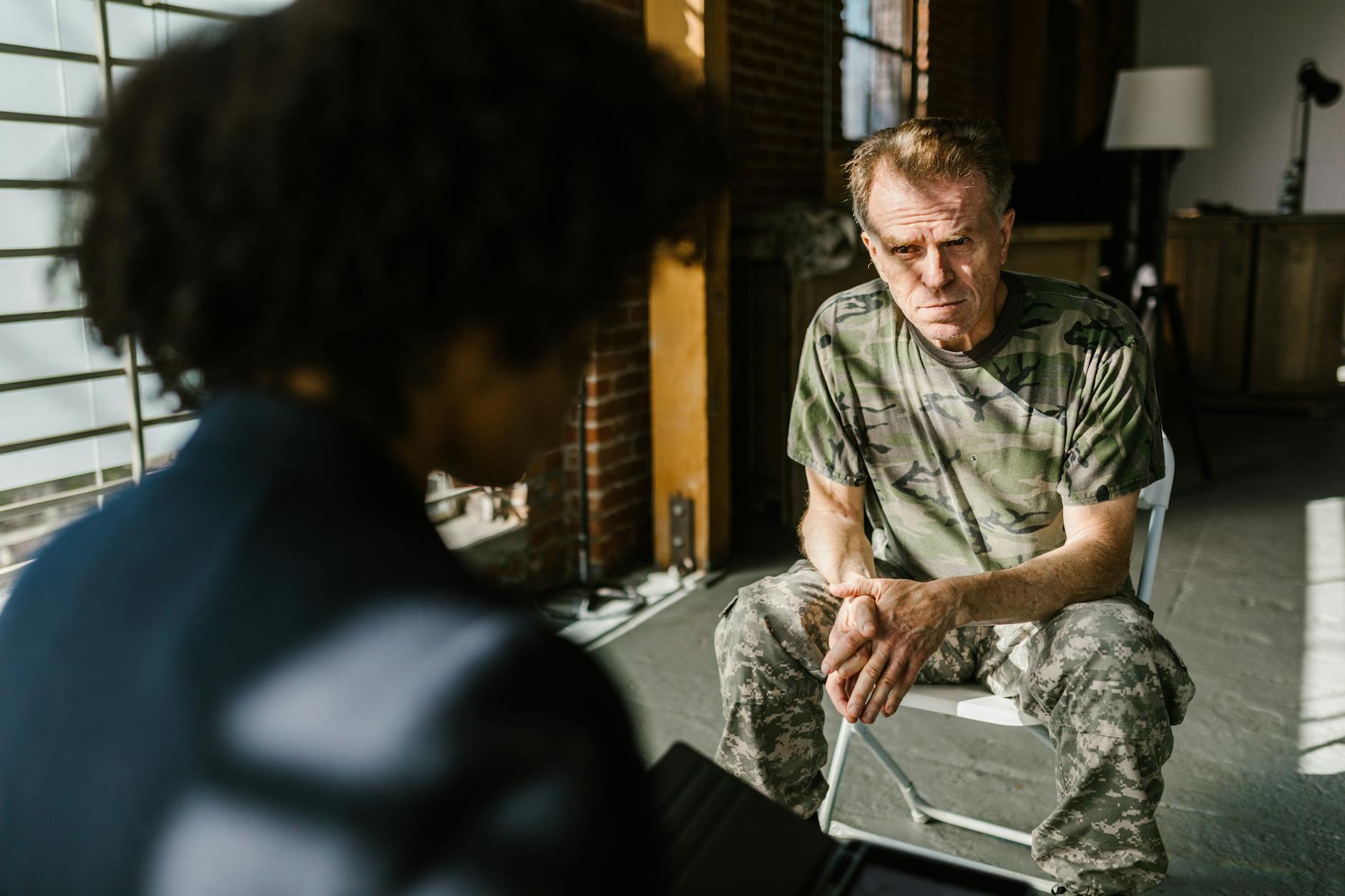
The connection between PTSD and later-life dementia is one of the most important reasons this research extends beyond military medicine. Multiple large-scale epidemiological studies have found that veterans diagnosed with PTSD face a meaningfully higher risk of developing dementia compared to veterans without the condition. The biological mechanisms are not fully understood, but the leading theories center on chronic stress. PTSD keeps the body’s stress-response system, particularly the hypothalamic-pituitary-adrenal axis, in a state of persistent activation. Elevated cortisol levels over years and decades are associated with hippocampal atrophy, the shrinking of the brain region most critical for memory formation and most vulnerable in Alzheimer’s disease. There is a difficult tradeoff embedded in this research.
If propranolol or similar interventions could genuinely prevent PTSD in a significant fraction of trauma-exposed individuals, the downstream benefits for brain health could be enormous, potentially reducing dementia risk in an entire generation of service members. However, the emphasis on pharmacological prevention carries a risk of overshadowing the structural and systemic factors that contribute to military PTSD: inadequate deployment-to-rest ratios, insufficient mental health staffing, stigma around seeking help, and the moral injuries that come from certain types of combat operations. A pill cannot fix a broken system, and critics rightly warn that framing PTSD as a problem solvable at the molecular level could reduce pressure on institutions to address its root causes. For families already navigating dementia care, the practical takeaway is that treating PTSD in a loved one, whether a veteran or a civilian, is not just about improving their current quality of life. It may also be a form of neuroprotection. Ensuring that a person with a history of trauma has access to effective PTSD treatment should be considered part of a comprehensive brain health strategy.
Ethical Concerns and the Limits of Pharmacological Memory Modification
The prospect of modifying traumatic memories with medication raises ethical questions that the scientific community has been debating for over two decades. The most fundamental concern is whether it is appropriate to chemically alter a person’s emotional relationship to their own past. Some ethicists and veterans’ advocates have argued that the suffering associated with traumatic memories serves an important moral and psychological function. A soldier who witnessed atrocities and feels anguish about them is, in some philosophical frameworks, responding appropriately to a genuinely terrible experience. Removing that anguish could, in theory, make it easier for individuals and institutions to tolerate violence that should be intolerable. This concern is not merely theoretical. If a military could routinely administer a pill that prevents psychological damage from combat, it could lower the perceived human cost of war and make it easier to send soldiers into repeated deployments without adequate recovery time.
The President’s Council on Bioethics raised this exact concern in a 2003 report, questioning whether pharmacological memory modification could create a society of “happy soldiers” detached from the moral weight of their experiences. Propranolol advocates counter that PTSD is a pathological condition, not an appropriate emotional response, and that no ethical framework should require people to suffer preventable psychological injury. There are also practical limitations that temper the ethical debate. Propranolol must be administered within a narrow time window after trauma to affect consolidation, which is logistically challenging in combat zones. It does not work for everyone, and its effects may be modest in the context of severe, repeated, or prolonged trauma exposure. It also has medical contraindications, including asthma, certain cardiac conditions, and diabetes, that would exclude a portion of service members from receiving it. Anyone considering propranolol for trauma-related purposes should only do so under medical supervision, as the drug can cause dangerously low blood pressure and heart rate in susceptible individuals.

Other Pharmacological Approaches Under Investigation
Propranolol is not the only drug being studied for PTSD prevention or early intervention. Researchers have also investigated hydrocortisone, a synthetic form of cortisol, administered in the immediate aftermath of trauma. The rationale, somewhat counterintuitively, is that a controlled dose of cortisol may enhance the brain’s ability to suppress fear memories through negative feedback on the stress-response system. Early military studies, including work with soldiers in intensive care after combat injuries, have shown some promise, though the evidence base remains small.
MDMA-assisted therapy, while not a prevention strategy, has attracted substantial attention for treating established PTSD. Clinical trials conducted in the United States showed that MDMA combined with psychotherapy produced significant symptom improvements, though regulatory developments around this treatment have been complex and evolving. Stellate ganglion block, an injection of local anesthetic into a nerve cluster in the neck, has also been used experimentally in military settings, with some veterans reporting rapid and dramatic reductions in PTSD symptoms. Each of these approaches has a different risk profile, mechanism, and evidence base, and none has yet become standard of care for PTSD prevention.
Where This Research Is Headed and What It Means for Brain Health
The next phase of research on pharmacological PTSD prevention is likely to focus on precision and personalization. Not every soldier who experiences combat develops PTSD, and emerging work in genetics and biomarker identification aims to predict who is most vulnerable. If researchers can identify high-risk individuals before deployment through genetic screening, stress-hormone profiling, or neuroimaging, it becomes possible to target preventive interventions more effectively rather than administering drugs broadly.
This approach would address both the ethical concern about unnecessary medication and the practical challenge of limited effectiveness in low-risk populations. For the dementia care community, the broader lesson is that trauma is a modifiable risk factor for cognitive decline, and the tools for modifying it are expanding. Whether through propranolol, reconsolidation therapy, MDMA-assisted psychotherapy, or interventions yet to be developed, reducing the burden of PTSD across a lifetime has implications that extend well beyond mental health and into the territory of neurodegeneration and brain aging. Families caring for a loved one with both a trauma history and cognitive decline should discuss this intersection with their healthcare providers, as treating the trauma component may yield benefits for overall brain function and quality of life.
Conclusion
Propranolol’s journey from a humble blood pressure medication to a potential PTSD prevention tool illustrates how our understanding of traumatic memory has evolved. The drug’s ability to dampen the emotional encoding of new traumatic memories and to weaken the emotional charge of old ones during reconsolidation represents a genuinely novel approach to one of the most devastating consequences of military service. However, the research, while promising, has not yet produced the kind of large-scale, definitive results that would justify calling propranolol a proven solution. The military and scientific communities continue to study it alongside other pharmacological and therapeutic approaches, and the evidence base is still being built.
For those focused on brain health and dementia prevention, the key insight is that PTSD is not just a mental health condition — it is a neurological one with long-term consequences for brain structure and function. Any intervention that can reduce the incidence or severity of PTSD, whether pharmacological or otherwise, is potentially an intervention against future cognitive decline. Families and caregivers should advocate for comprehensive trauma screening and treatment as part of brain health care, particularly for veterans and others with significant trauma histories. The science of memory modification is still young, but its implications for lifelong brain health are profound and worth following closely.
Frequently Asked Questions
Is propranolol currently prescribed to prevent PTSD?
Propranolol is not FDA-approved specifically for PTSD prevention. Some clinicians may prescribe it off-label in acute trauma situations, but it is not part of standard military or civilian protocols for this purpose. Any use for trauma prevention should be discussed with a qualified physician.
Can propranolol erase traumatic memories entirely?
No. Propranolol does not erase memories. It appears to reduce the emotional intensity associated with a memory, particularly when given during the initial encoding period or during reconsolidation. The factual content of the memory remains intact.
Does PTSD really increase the risk of dementia?
Multiple large studies have found a significant association between PTSD diagnosis and later development of dementia, including Alzheimer’s disease. The relationship is believed to involve chronic stress, elevated cortisol, and resulting damage to the hippocampus, though research into the exact mechanisms is ongoing.
How soon after a traumatic event does propranolol need to be given?
Most research protocols have administered propranolol within six hours of the traumatic event, targeting the memory consolidation window. Some studies have used slightly longer windows, but the general consensus is that earlier administration is more likely to be effective.
Are there risks to taking propranolol after trauma?
Propranolol can lower blood pressure and heart rate, which may be dangerous for individuals with certain cardiac conditions, asthma, or diabetes. It should never be taken without medical supervision, particularly in a post-trauma context where other injuries may be present.
Is this research relevant to civilians, not just soldiers?
Absolutely. While much of the funding and attention has come from military contexts, the underlying biology of traumatic memory is the same in civilians. Emergency room studies with accident victims, assault survivors, and other trauma-exposed populations have also explored propranolol’s potential, and the brain health implications apply to anyone with a trauma history.