Triple therapy inhalers combining an inhaled corticosteroid, a long-acting muscarinic antagonist, and a long-acting beta-agonist reduce moderate-to-severe COPD exacerbations by approximately 25 percent compared to dual bronchodilator therapy alone. That single statistic, confirmed across multiple landmark clinical trials and a systematic review published in the Annals of the American Thoracic Society, represents thousands of avoided emergency room visits and hospital admissions each year. For the millions of families already managing a loved one’s cognitive decline, an unexpected COPD hospitalization can derail caregiving routines, accelerate cognitive deterioration from the stress of an ICU stay, and introduce delirium that mimics or worsens dementia symptoms. The inhaler combination that achieves this reduction is now available in two FDA-approved single-device options, and the latest international guidelines recommend it as a front-line strategy for high-risk patients.
This matters more than most people realize for brain health. Repeated hospitalizations in older adults with COPD are independently associated with accelerated cognitive decline, partly because of the oxygen deprivation that accompanies severe exacerbations and partly because of the disorientation and sedation that come with inpatient treatment. A 74-year-old with mild cognitive impairment who lands in the hospital for a COPD flare-up faces a cascade of risks that extend well beyond the lungs. This article covers the clinical evidence behind triple therapy, what the two available inhalers actually contain, how real-world adherence data compares to clinical trial results, and what caregivers should know when advocating for better COPD management in someone who also lives with cognitive challenges.
Table of Contents
- What Is the COPD Inhaler Combination That Cuts Hospitalizations by 25 Percent?
- The Mortality Benefit That Changed Treatment Guidelines
- Why COPD Hospitalizations Are Especially Dangerous for People with Cognitive Decline
- Trelegy Ellipta vs. Breztri Aerosphere — Choosing Between the Two Options
- Adherence Is the Real Obstacle — and Single Inhalers Help
- Recognizing When It Is Time to Escalate to Triple Therapy
- What Comes Next in COPD Treatment for Older Adults
- Conclusion
- Frequently Asked Questions
What Is the COPD Inhaler Combination That Cuts Hospitalizations by 25 Percent?
The combination is known as triple therapy: an inhaled corticosteroid (ICS) paired with a long-acting muscarinic antagonist (LAMA) and a long-acting beta-agonist (LABA), delivered through a single inhaler. Two products currently hold FDA approval. Trelegy Ellipta, manufactured by GSK, combines fluticasone furoate, umeclidinium, and vilanterol. Breztri Aerosphere, from AstraZeneca, combines budesonide, glycopyrrolate, and formoterol fumarate. Each component addresses a different mechanism of airway obstruction: the corticosteroid tamps down inflammation, the LAMA relaxes smooth muscle by blocking acetylcholine receptors, and the LABA keeps airways open through sustained beta-2 receptor stimulation. The distinction between triple therapy and the older standard of dual bronchodilator therapy (LAMA/LABA without the corticosteroid) is not subtle. In the IMPACT trial, published in the new England Journal of Medicine, 10,355 patients with COPD were randomized and followed for 52 weeks.
Those on Trelegy Ellipta experienced a moderate-to-severe exacerbation rate of 0.91 per year compared to 1.21 per year for patients on dual therapy alone — a 25 percent reduction that reached high statistical significance (p<0.001). More critically for hospitalization rates, severe exacerbations requiring hospital admission dropped by 34 percent in the triple therapy group (0.13 vs. 0.19 per year; p<0.001). For a patient averaging one hospitalization every five years on dual therapy, that reduction could mean avoiding an admission entirely over a decade of treatment. The ETHOS trial told a remarkably similar story. Among 8,572 randomized patients followed for 52 weeks, Breztri Aerosphere produced an annual exacerbation rate of 1.08 compared to 1.42 for dual LAMA/LABA therapy — a 24 percent reduction (rate ratio 0.76; p<0.0001). The trial also showed a 20 percent reduction in severe cardiopulmonary events and, perhaps most strikingly, a 46 percent reduction in all-cause mortality risk compared to the dual therapy comparator. Both trials were published in the New England Journal of Medicine, and the consistency of their findings is what ultimately shifted international treatment guidelines.
The Mortality Benefit That Changed Treatment Guidelines
Beyond preventing hospitalizations, the mortality data from these trials forced a serious reconsideration of how aggressively COPD should be treated in older adults. The IMPACT trial found a 42.1 percent reduction in the risk of on-treatment all-cause mortality for patients using triple therapy compared to LAMA/LABA alone — 1.20 percent versus 1.88 percent, a difference that reached statistical significance (p=0.011). The ETHOS trial found an even larger mortality reduction of 46 percent versus its dual therapy comparator. A systematic review and meta-analysis published in the Annals of the American Thoracic Society subsequently confirmed the pattern: 42 percent lower all-cause mortality across pooled data from triple versus dual bronchodilator studies. These numbers prompted the 2025 update to the Global Initiative for Chronic Obstructive Lung disease (GOLD) guidelines, which now recommend single-inhaler triple therapy as first-line or escalation therapy for high-risk COPD patients — defined as those with at least one severe exacerbation or two or more moderate exacerbations in the prior year.
The shift toward single-inhaler delivery rather than prescribing three separate devices was deliberate. Guideline authors cited better adherence and fewer emergency visits when patients use one device instead of juggling multiple inhalers with different techniques and dosing schedules. However, triple therapy is not appropriate for every person with COPD. Patients whose disease is stable, who have not had recent exacerbations, and whose symptoms are well controlled on a single bronchodilator or dual therapy do not benefit from the added corticosteroid component and may face unnecessary side effects, including increased pneumonia risk, oral thrush, and bone density loss over time. The GOLD guidelines are explicit that escalation to triple therapy should be reserved for patients whose exacerbation history justifies it. For caregivers managing someone with both COPD and dementia, this means having a frank conversation with the pulmonologist about whether the patient’s recent history meets that threshold, rather than assuming more medication is automatically better.
Why COPD Hospitalizations Are Especially Dangerous for People with Cognitive Decline
A COPD exacerbation severe enough to require hospitalization is a medical crisis for anyone. For someone living with dementia or mild cognitive impairment, it can be catastrophic in ways that extend far beyond the respiratory system. Hospital delirium — the acute confusion that frequently develops in older adults during inpatient stays — occurs in an estimated 30 to 50 percent of hospitalized patients over age 65 and at substantially higher rates in those with pre-existing cognitive impairment. Each episode of delirium is associated with a measurable, sometimes permanent, step down in cognitive function. Consider a practical scenario: a 78-year-old woman with moderate Alzheimer’s disease and COPD is hospitalized after three days of worsening breathlessness. She receives nebulized bronchodilators, systemic corticosteroids, and possibly antibiotics. The unfamiliar environment, disrupted sleep, medications with anticholinergic properties, and separation from her usual routine and caregivers create a perfect storm for delirium.
She may become agitated, pull out IVs, or become profoundly withdrawn. When she returns home a week later, her family often discovers that the cognitive baseline has shifted — she may never return to where she was before the admission. The 34 percent reduction in hospitalizations demonstrated by triple therapy in the IMPACT trial translates directly into fewer of these devastating episodes. Oxygen desaturation during severe COPD exacerbations adds another layer of risk. Chronic intermittent hypoxia has been linked in longitudinal studies to accelerated amyloid deposition and hippocampal atrophy. Even exacerbations managed at home can temporarily drop blood oxygen levels low enough to stress an already vulnerable brain. Reducing the frequency and severity of these episodes through optimized inhaler therapy is one of the few modifiable factors that sits at the intersection of pulmonary and cognitive care.

Trelegy Ellipta vs. Breztri Aerosphere — Choosing Between the Two Options
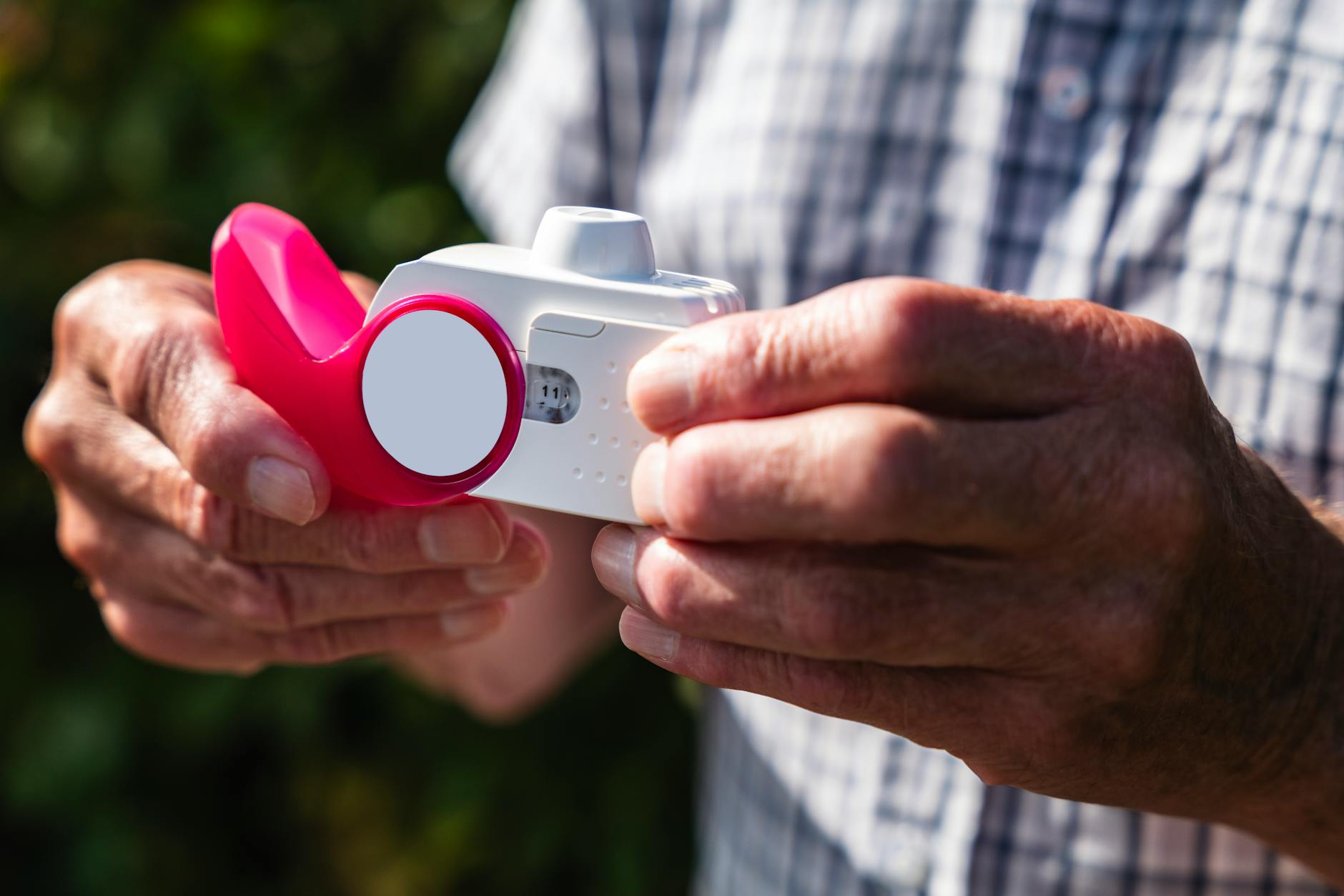
Both FDA-approved triple therapy inhalers have strong clinical evidence behind them, but they are not identical, and the differences may matter for patients with cognitive challenges. Trelegy Ellipta is a dry powder inhaler that requires the patient to breathe in firmly through the device. It is taken once daily, which simplifies dosing. Breztri Aerosphere is a metered-dose inhaler (MDI) that uses a propellant to deliver the medication and requires coordination between pressing the canister and inhaling — a task that can be difficult for patients with cognitive impairment or reduced dexterity. Breztri is dosed twice daily. For a dementia caregiver helping a loved one manage their COPD, the once-daily dosing and simpler inhalation technique of Trelegy Ellipta often makes it the more practical choice.
The dry powder mechanism eliminates the need for hand-breath coordination, though it does require a sufficiently forceful inhalation. Patients with very severe airflow limitation may not generate enough inspiratory flow to activate the device effectively. Breztri’s MDI format can be paired with a spacer or valved holding chamber to reduce the coordination demand, which is a reasonable adaptation if the patient’s pulmonologist prefers the budesonide-based formulation for clinical reasons. The tradeoff is not purely about device design. The corticosteroid components differ — fluticasone furoate in Trelegy versus budesonide in Breztri — and some patients respond differently to each. Budesonide has a somewhat lower systemic bioavailability, which may translate to a modestly lower risk of corticosteroid-related side effects like adrenal suppression, though head-to-head comparative data between the two triple therapy products remain limited. The decision should ultimately be guided by a pulmonologist who understands the patient’s exacerbation history, their ability to use the device correctly, and the caregiver’s capacity to assist with daily administration.
Adherence Is the Real Obstacle — and Single Inhalers Help
The most effective inhaler in the world does nothing if it stays in the medicine cabinet. Poor adherence to COPD medications is endemic, with studies consistently showing that 40 to 60 percent of patients do not use their inhalers as prescribed. For patients with cognitive impairment, the problem compounds. They may forget doses, use incorrect technique, or become confused when managing multiple inhalers with different instructions. The TRIPOLI study, a 2025 post-authorization retrospective analysis of extrafine single-inhaler triple therapy (beclometasone/formoterol/glycopyrronium), quantified the adherence advantage of consolidating treatment into one device. When patients switched from multiple inhalers to single-inhaler triple therapy, poor adherence dropped from 30.2 percent to just 9.9 percent. Complete adherence rose from 55.8 percent to 81.7 percent.
The clinical benefits followed: total exacerbations fell by 27.56 percent and moderate exacerbations by 29.56 percent. These real-world numbers closely mirror the trial data, which is not always the case — clinical trial adherence tends to be artificially high because of regular monitoring and motivated study populations. There is a critical limitation to acknowledge. Even a single daily inhaler requires consistent use, correct technique, and the cognitive capacity to incorporate it into a daily routine. For patients with moderate to advanced dementia, caregiver-administered dosing becomes essential. If the primary caregiver is not trained in proper inhaler technique, the medication may be delivered incorrectly despite perfect timing. Pulmonary rehabilitation programs and pharmacist-led inhaler technique assessments are underused resources that can make a significant difference. Caregivers should not hesitate to request a demonstration and return-demonstration session, and to ask for reassessment at every pulmonology visit.

Recognizing When It Is Time to Escalate to Triple Therapy
Not every COPD patient needs triple therapy from the start, and the decision to escalate should be based on specific clinical criteria rather than a general sense that symptoms are worsening. The 2025 GOLD guidelines define high-risk patients as those who have experienced at least one severe exacerbation (requiring hospitalization or emergency department visit) or two or more moderate exacerbations (requiring treatment with antibiotics or systemic corticosteroids) in the prior 12 months. Meeting this threshold is the clearest indication that dual therapy is not providing adequate protection.
For caregivers, the practical challenge is recognizing and documenting exacerbations accurately. A three-day period of increased coughing, thicker sputum, and worsened breathlessness that prompts a call to the doctor and a course of prednisone counts as a moderate exacerbation, even if it was managed at home. Keeping a simple log — dates of symptom worsening, medications prescribed, and any emergency visits — gives the pulmonologist concrete data to support an escalation decision. In patients with dementia who cannot reliably report their own symptom changes, this caregiver-maintained record becomes indispensable.
What Comes Next in COPD Treatment for Older Adults
The evidence base for triple therapy is now mature enough that the remaining questions center on personalization and long-term outcomes. Ongoing research is examining biomarker-guided prescribing — using blood eosinophil counts, for instance, to identify which patients will benefit most from the inhaled corticosteroid component and which can safely remain on dual bronchodilator therapy without it. This matters because the corticosteroid carries real risks over years of use, including pneumonia, osteoporosis, and skin thinning, all of which are already concerns in frail older adults.
There is also growing interest in the intersection of COPD management and cognitive preservation. As the population of older adults living with both conditions continues to expand, pulmonologists and neurologists will need to coordinate care more deliberately. The recognition that preventing COPD hospitalizations is itself a form of brain protection — by avoiding delirium, hypoxia, and the functional decline that accompanies each admission — may eventually reshape how aggressively respiratory disease is treated in patients with co-existing cognitive impairment. For now, the practical takeaway is clear: if a loved one with COPD is being hospitalized repeatedly despite being on two inhalers, triple therapy is a proven option that the clinical evidence strongly supports.
Conclusion
Triple therapy inhalers represent one of the most significant advances in COPD management in the past decade. The evidence from the IMPACT and ETHOS trials — each enrolling thousands of patients and published in the New England Journal of Medicine — demonstrates a consistent 24 to 25 percent reduction in moderate-to-severe exacerbations, a 34 percent reduction in hospitalizations, and a striking 42 to 46 percent reduction in all-cause mortality compared to dual bronchodilator therapy. Real-world data from the TRIPOLI study confirms that these benefits hold outside of clinical trial conditions, particularly when patients switch to a single-inhaler format that dramatically improves adherence. For families caring for someone with both COPD and cognitive decline, the stakes of each preventable hospitalization extend well beyond the lungs.
Every avoided admission is a delirium episode that never happens, a cognitive baseline preserved, and a caregiving routine left intact. If your loved one has had two or more moderate exacerbations or any hospitalization for COPD in the past year, ask their pulmonologist whether escalation to Trelegy Ellipta or Breztri Aerosphere is appropriate. Bring a log of recent exacerbations, ask for an inhaler technique review, and discuss whether once-daily dosing makes sense given the patient’s cognitive status. The evidence is there. The next step is making sure it reaches the people who need it.
Frequently Asked Questions
Is triple therapy safe for elderly patients with dementia?
Triple therapy has been studied in patients with a mean age of 65, and many trial participants were older. The main safety concerns — increased pneumonia risk, oral thrush, and bone density loss from the corticosteroid component — are the same regardless of cognitive status. Patients with dementia may need caregiver assistance to rinse their mouth after each dose, which reduces thrush risk. The decision should weigh the exacerbation prevention benefits against these side effects, with input from both the pulmonologist and the patient’s primary care or neurology team.
Can someone with dementia use these inhalers independently?
It depends on the stage of cognitive impairment. Patients with mild cognitive impairment or early-stage dementia can often manage a once-daily dry powder inhaler like Trelegy Ellipta with reminders. As dementia progresses, most patients will need a caregiver to prepare and coach them through each dose. Metered-dose inhalers like Breztri require more coordination and are generally harder for cognitively impaired patients to use without a spacer and direct assistance.
What is the difference between a moderate and severe COPD exacerbation?
A moderate exacerbation is one that requires treatment beyond the patient’s usual maintenance inhalers — typically a course of oral corticosteroids, antibiotics, or both — but can be managed outside the hospital. A severe exacerbation requires an emergency department visit or hospitalization. The distinction matters because the GOLD guidelines use exacerbation frequency and severity to determine when escalation to triple therapy is warranted.
Does triple therapy cure COPD?
No. COPD is a chronic, progressive disease, and no inhaler combination reverses the underlying lung damage. Triple therapy reduces the frequency and severity of exacerbations, which slows functional decline and lowers mortality risk, but it does not restore lost lung function. Smoking cessation remains the single most important intervention for slowing COPD progression.
Are there generic versions of these triple therapy inhalers?
As of early 2026, no generic versions of Trelegy Ellipta or Breztri Aerosphere are available. Both remain under patent protection. Patients facing cost barriers should ask about manufacturer patient assistance programs, which both GSK and AstraZeneca offer, or discuss alternative arrangements of individual generic components with their physician, though using separate inhalers sacrifices the adherence benefits of single-device delivery.
How quickly does triple therapy start working?
Patients typically notice symptom improvement within the first few days, as the long-acting bronchodilators begin opening airways. However, the full exacerbation-reduction benefit develops over weeks to months as the anti-inflammatory effect of the corticosteroid takes hold. The clinical trials measured outcomes over 52 weeks, and the mortality and hospitalization benefits were cumulative over that period.