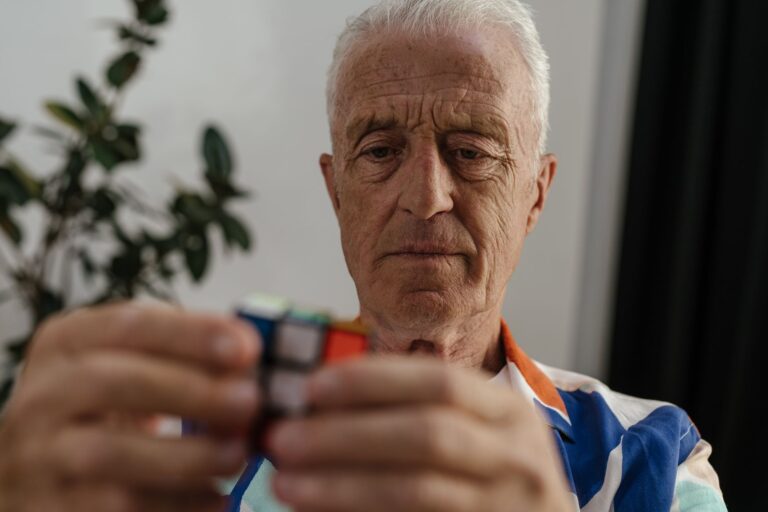
Watching a loved one decline isn’t one event—it’s hundreds of small losses stacked on top of each other, each one a subtle shift that adds up to an unrecognizable version of the person you knew. Your mother forgets a name she’s used for forty years. Your father repeats the same story within the same conversation. Your spouse stops recognizing the house they’ve lived in for a decade. These aren’t dramatic moments that announce themselves; they arrive quietly and then accumulate, and suddenly you’re managing someone whose judgment you can no longer trust and whose independence has frayed in ways that feel both obvious now and impossibly gradual when you trace back.
The complexity sits in the fact that this decline rarely happens at a predictable pace, and the person experiencing it often doesn’t match what their diagnosis suggests should be happening. Your mother might not know what year it is but can still express opinions about her care with real conviction. Your father might repeat himself obsessively about one topic but demonstrate surprising clarity about something else. The person doesn’t disappear in a linear way—they flicker, they plateau, they regress suddenly, and then stay stable for longer than you expected. And while all of this is unfolding, you’re still supposed to show up every day and figure out what they can do, what they can’t, and what they might be able to do with help.
Table of Contents
- How Does Cognitive and Physical Decline Actually Progress in Dementia?
- The Identity Crisis—Who Are They Becoming, and Who Are You Becoming?
- The Accumulated Weight of Practical Complications
- How Your Relationship Transforms and What You Lose
- Why the “Stay Positive” Advice Actually Makes Things Worse
- Making Decisions When the Person Can’t, But Won’t Accept It
- The Endurance Aspect Nobody Prepares You For
- Frequently Asked Questions
How Does Cognitive and Physical Decline Actually Progress in Dementia?
Decline in dementia doesn’t follow a single path. One person might lose language ability while maintaining physical mobility; another might retain conversation skills but lose the ability to walk safely. Some people decline steadily over months; others plateau for years and then drop quickly. This variation means that no two caregivers have the same job, and the strategies that work for one person might do nothing for another. The person you’re caring for might be entirely lucid about their limitations one day and adamantly deny anything is wrong the next—both versions are real, both are genuine expressions of what that person is experiencing.
The physical changes can be as disorienting as the mental ones. You might be managing someone who can no longer button their shirt but can argue passionately about politics. Or someone whose balance is gone, which means they can’t climb stairs, but whose memory of their childhood is clearer than their memory of their own children. These disconnects aren’t contradictions—they’re the actual nature of how the brain degrades in piecemeal fashion. A caregiver might spend weeks troubleshooting why their parent won’t eat, only to realize it’s not that they’ve lost appetite; it’s that they’ve forgotten how to use a fork.
The Identity Crisis—Who Are They Becoming, and Who Are You Becoming?
One of the hardest aspects of watching someone decline is the identity question: how much of your loved one remains as they lose the cognitive abilities that made them “them”? Your father was a lawyer known for his precision; now he can’t complete a thought. Your mother was a planner, a detail-oriented organizer; now she can’t find her own belongings or remember that she’s already eaten lunch. The version of them that other people knew, that they knew about themselves, is fading. This creates a specific kind of grief that happens while the person is still alive, and it can sit uncomfortably alongside the love you still have for them. But there’s a hidden danger in leaning too hard into the “they’re not really here anymore” narrative, which some caregivers adopt to protect themselves.
Yes, the personality may be muted, the capabilities diminished. But the person is still having emotional reactions, still having preferences, still capable of feeling disrespected or confused or loved. You might notice that your mother doesn’t recognize you, but she might still know that you’re someone safe or someone who makes her anxious. That matters. Treating them as though they’ve already disappeared can lead to neglect dressed up as realism, to speaking about them in third person while they’re in the room, to making decisions about their life with their input written off as unreliable.
The Accumulated Weight of Practical Complications
Beyond the emotional exhaustion, there’s the grinding logistics of managing someone who can’t manage themselves. You’re coordinating doctors’ appointments with specialists who don’t talk to each other. You’re managing medications, some of which interact badly or have been prescribed by different doctors without anyone checking the full list. You’re trying to keep track of when they last ate something substantial or if they’ve been to the bathroom, or if that incident three days ago means their health is declining or if it was just a bad day.
You’re making decisions about their safety while they actively resist those decisions because they don’t recognize they need help. One specific complication that catches many caregivers off-guard: the person declining often has more credibility with professionals than the caregiver does. A doctor listens to your parent’s version of events—which might be confused or incomplete—and believes them over you, because the doctor sees them for thirty minutes and doesn’t realize what memory gaps or confabulation looks like in real time. You know they didn’t have that surgery last month, but they’re telling the doctor they did, and the doctor is adjusting their care based on information that isn’t true. You can’t force the doctor to believe you without making the patient feel accused or controlled, which damages the care relationship.
How Your Relationship Transforms and What You Lose
The relationship you have with this person is changing whether you accept that or not. If you’re caring for a parent, you might find yourself reverting into a parental role with them, making decisions about their daily life that used to be theirs alone. If you’re caring for a spouse, you’re dealing with the person you married shifting into someone who needs care, and the loss of the partnership itself—no one is taking care of you in the way they used to. If you’re caring for a sibling, you’re watching someone who was your equal become dependent. These relationship reversals feel both necessary and wrong, and carrying both feelings at once is part of the burden.
There’s also a profound loss of reciprocity. You can’t talk to this person about things that matter to you the way you used to. You can’t seek their advice, can’t rely on their judgment, can’t have the conversation with them about what they’d want because they can’t hold the thread of that conversation anymore. Or you have it multiple times, repeating the same discussion, which is its own particular exhaustion. The relationship becomes one-directional in a way that feels isolating, even though you’re spending most of your time with this person.
Why the “Stay Positive” Advice Actually Makes Things Worse
Many caregivers encounter the suggestion to stay positive, to find the good moments, to remember that your loved one is still in there somewhere. This advice comes from a good place, but it can become a source of shame and guilt for caregivers who are having negative feelings—anger, resentment, sadness, disgust—which are entirely normal and don’t mean you don’t love this person. Requiring yourself to be positive while managing someone’s decline is an additional emotional labor that exhausts people and makes them less resilient, not more.
There’s also a practical downside: staying positive can mask what’s actually happening with the person’s health and safety. If you’re committed to interpreting everything through the lens of “but look, they had a good moment today,” you might miss signs that they’re declining faster, that a medication isn’t working, that a living situation isn’t safe enough anymore. Decline isn’t linear, and some people plateau for a long time, but the commitment to positivity can prevent you from noticing when the plateau has ended. The hardest caregiving involves both love and clear sight, and the two aren’t incompatible—you can deeply care for someone while acknowledging that their situation is getting worse and your options are narrowing.
Making Decisions When the Person Can’t, But Won’t Accept It
At some point, you’ll be making decisions on behalf of someone who doesn’t agree that they need your help making decisions. Your parent is no longer safe to drive, but they insist they’re fine. Your spouse needs to move to a facility, but they’re convinced they’re just staying temporarily and will go home soon. Your family member can’t manage their own medications, but they deny anything is wrong. You’re caught between respecting their autonomy and ensuring their safety, and these two goals are in direct conflict.
The temptation is to trick them—to give them the medication dissolved in food, to convince them the move is temporary, to set up situations that feel autonomous but are actually controlled by you. This sometimes works in the short term. But it also erodes trust when they realize they’ve been manipulated, and it sets a pattern where the caregiver is constantly managing, controlling, and deceiving rather than supporting. A better approach, harder but more sustainable, is to tell them the truth in simple terms, to accept their refusal, to set boundaries about what you can and can’t do without their cooperation, and then to follow through. Sometimes this means the person experiences consequences—they don’t get their medication because they won’t take it, or they don’t go to the appointment because they refuse to go. These are painful, but they maintain the person’s agency and your integrity.
The Endurance Aspect Nobody Prepares You For
Caregiver burnout is real and well-documented, but what’s less discussed is how long this actually takes. A dementia diagnosis doesn’t mean someone declines for two years and then stabilizes at a new baseline. Some people decline steadily for a decade. Some people plateau for years. You’re not managing a crisis with a known endpoint; you’re managing a chronic slow-motion emergency that becomes your entire life. You learn to schedule things in segments—an hour to yourself while a nurse is there, or the two hours on Thursday morning when a family member can take over.
You miss events, you cancel plans, you watch friendships fade because you’re not available. One specific hardship: the anticipatory grief. You’re not just grieving losses that have already happened; you’re anticipating losses that haven’t happened yet. You know what’s coming, roughly, based on what you’ve seen in others or what you’ve read about the disease. You’re carrying both the loss you’re experiencing now and the losses you know are coming. Some days this manifests as urgency—getting things done, documenting things, trying to do something meaningful with the time remaining. Other days it’s just a background despair, a heaviness that colors every interaction because you know this is not sustainable, this cannot go on forever, and the ending you know is coming is not good.
Frequently Asked Questions
How can I tell if what I’m seeing is normal aging or something more serious?
Normal aging involves forgetting details or names occasionally—it’s inconvenient but doesn’t affect daily function. Serious cognitive decline shows up as a pattern: repeated questions within the same conversation, getting lost in familiar places, losing track of important tasks, or forgetting that major events even happened. The difference is consistency. Normal aging is inconsistent; disease is a progressive pattern.
Should I tell my loved one they have dementia?
That depends on whether they can meaningfully understand and retain the information. If they can hold the concept, then yes, they have the right to know. If they can’t retain new information or become extremely distressed by it, then telling them repeatedly is cruel and pointless. You’ll find a version of the truth they can handle—something true but simpler.
How do I know if I’m doing this right?
You’re doing it right if the person is safe, fed, and treated with dignity. You’re doing it right if you’re not pretending to be fine when you’re not, and if you’re willing to ask for help. You’re not required to do it alone, and doing it alone doesn’t make you more noble—it just makes you exhausted.
When do I consider a facility or more intensive care?
When you can no longer safely manage their medical and physical needs, or when the care required is preventing you from having any life outside of caregiving. The fact that you’re exhausted doesn’t automatically mean it’s time; many caregivers are exhausted. The time comes when you’re preventing harm, not causing it.