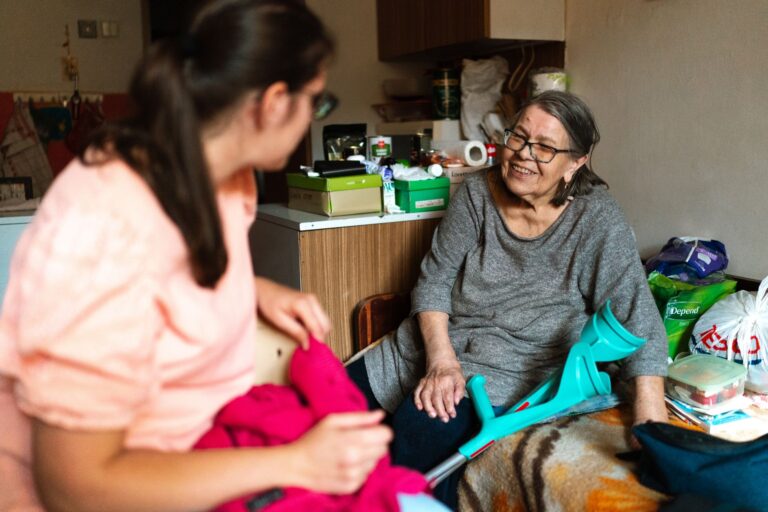
The $781 billion figure was the inaugural 2025 total economic burden estimate for Alzheimer's and related dementias, disorders that impair memory, thinking, and daily function. The 2026 follow-up estimates $818 billion in costs and points spouses and partners toward prompt legal, financial, and care planning. That burden falls heavily outside clinics and hospitals. Only about 27 cents of every dementia dollar flows through the health system, so spouses, family, and friends absorb most costs through unpaid care, out-of-pocket spending, and reduced quality of life, according to the Association of Health Care Journalists analysis of USC Schaeffer estimates.
Medical information disclaimer: This article is for general educational purposes only and does not provide medical advice, diagnosis, or treatment. Always consult a physician or other qualified health professional about symptoms, medications, tests, or treatment decisions.
Table of Contents
- What the $781 billion estimate covers
- What changed in the 2026 update
- Spouse and partner checklist for 2026
- Where to find care coordination and respite help
- Read national estimates with care
- Frequently Asked Questions
What the $781 billion estimate covers
The inaugural U.S. Cost of Dementia Project estimated $781 billion in total 2025 economic burden for Alzheimer's and related dementias. The work was led by USC with Alzheimer's Association and University of Pennsylvania collaborators, according to the USC Schaeffer Center project description.
The project is funded through a multi-year cooperative agreement with the National Institute on Aging, part of NIH. It uses Health and Retirement Study survey data and Medicare administrative data to model national costs. Total burden means more than medical bills. It combines medical and long-term care, unpaid caregiving time, lost wages, and quality-of-life losses into one national figure.
What changed in the 2026 update
The June 2026 update estimates $818 billion in 2026 costs for 5.7 million Americans living with dementia, including 5.1 million ages 65 and older, according to the USC Mann School report on the update. The study was published in Alzheimer's and Dementia. For 2026, researchers attribute about $237 billion to 6.8 billion unpaid caregiving hours by 5.2 million caregivers.
They attribute another $222 billion to medical and long-term care, with the remainder from lost wages and quality-of-life losses. A separate Alzheimer's Association projection covers a narrower slice: $409 billion in 2026 health and long-term-care costs excluding unpaid care. It counts 7.4 million Americans age 65 and older living with Alzheimer's dementia.
Spouse and partner checklist for 2026
The National Institute on Aging advises spouses and partners to prepare or update key legal and care documents promptly after an Alzheimer's diagnosis, according to the NIA guide to next steps after diagnosis. Act while the person with dementia can still state wishes clearly.
Keep signed copies where both partners and a backup contact can find them. Revisit the packet after hospitalization, a move, a behavior change, or new paid help. Bring updated documents to primary care, neurology, hospital, and long-term-care visits.
- Review or create wills and living wills.
- Assign health-care and financial powers of attorney.
- Document long-term-care preferences, contacts, medications, and paid and unpaid help.
- List accounts, passwords, benefits, and monthly bills for the caregiving partner.
Where to find care coordination and respite help
Medicare's 8-year GUIDE Model, launched in July 2024, pays participating dementia programs for care coordination. It also provides respite up to $2,500 annually per eligible patient. For the performance year starting July 1, 2026, that respite cap is inflation-adjusted to $2,625.
Ask a dementia clinic or health system whether it participates in GUIDE. Ask what coordination, caregiver training, and respite billing it offers. If the program does not participate, ask for social work, caregiver support, and local respite referrals. Track hours, mileage, time off work, and out-of-pocket costs from the start.
Read national estimates with care
These figures are modeled national estimates, not bills paid by any one family. Methods matter because unpaid time and quality-of-life losses are valued by assumption, not by receipt.
The 2025 total was later revised from $781 billion to $788 billion as methods and data were refined. Published estimates include uncertainty intervals, so treat year-to-year changes as updated modeling rather than exact household change.
Frequently Asked Questions
Does $818 billion mean my household will pay that much?
No. It is a modeled national total covering medical care, unpaid caregiving, lost wages, and quality-of-life losses across millions of families.
Why is the spouse burden so large?
Most dementia costs sit outside the health system, so partners absorb time, out-of-pocket costs, lost work, and daily strain.
What should we sign first after diagnosis?
Update wills, living wills, health-care and financial powers of attorney, and a written long-term-care plan.
You Might Also Like
- The NIA 2026 Dementia Care and Caregiving Summit Report: A 2026 Follow-Up Checklist for Spouses and Partners
- AAIC 2026 p-tau217 Alzheimer’s Risk Prediction Research: A Source-Checked Research Briefing for People With Mild Cognitive Impairment
- AAIC 2026 Findings on Retired Elite Soccer Players: Research Participation Questions for People With Mild Cognitive Impairment