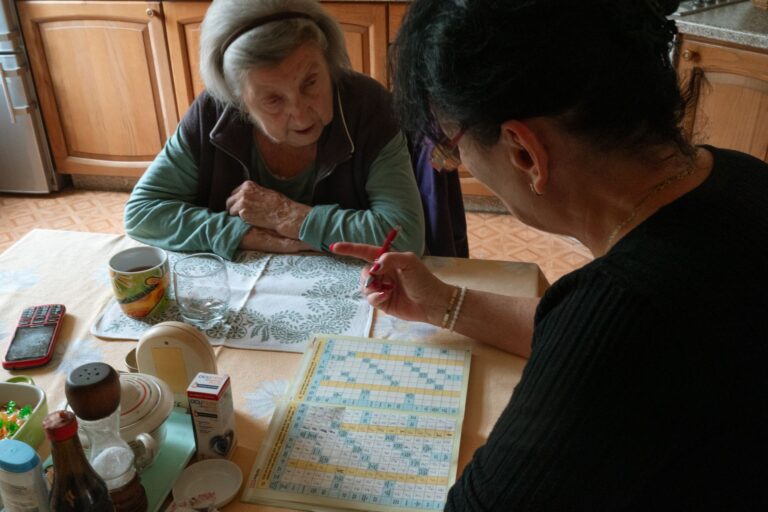
Swallowing problems in dementia mean dysphagia, difficulty moving food or liquid from mouth to throat. Caregivers can help by saying less and doing more: seat the person upright, slow the pace, and offer small bites.
Swallowing difficulty grows more common as dementia advances. A systematic review in European Geriatric Medicine found it affects up to 93% of people with dementia when measured with instrumental testing systematic review. That testing sees problems caregivers cannot see at the table.
Medical information disclaimer: This article is for general educational purposes only and does not provide medical advice, diagnosis, or treatment. Always consult a physician or other qualified health professional about symptoms, medications, tests, or treatment decisions.
Table of Contents
- Why caregivers often spot trouble first
- Which warning signs matter most?
- What can you say and do during meals?
- When to get help and what about feeding tubes?
Why caregivers often spot trouble first
Caregivers who cook and share meals often notice change first. They know whether a food is disliked or truly hard to chew and swallow.
The Wisconsin Alzheimer's Disease Research Center points to that daily knowledge as an early signal. A new refusal may look like preference but reflect fear of choking. Longer meals, left food, or avoided textures deserve attention, not pressure.
Which warning signs matter most?
Elder describes several mealtime signs caregivers can watch for in its guide to chewing and swallowing difficulties. When food, liquid, or saliva enters the airway instead of the esophagus, risk rises. Elder notes the result can be aspiration pneumonia, plus dehydration, malnutrition, and weight loss.
- coughing or choking during or after swallowing
- pocketing food in cheeks
- prolonged chewing, drooling, or wet gurgly voice
- feeling of food stuck in throat, or fatigue at meals
- weight loss and repeated chest infections
What can you say and do during meals?
Say less and do more. Being Patient, reporting speech-language pathologists Rinki Varindani Desai and Nicole Rogus-Pulia, recommends calm, simple cues in its caregiver strategies from speech-language pathologists. The Alzheimer's Association advises soft, moist, bite-sized foods with head tilted slightly forward.
Check the mouth to confirm each swallow. Avoid nuts, popcorn, and raw carrots. Allow an hour or more for meals in late-stage disease.
- seat the person fully upright
- minimize noise and distractions
- offer small bites with slow pacing
- use a chin-tuck on swallowing, and allow double swallows to clear residue
When to get help and what about feeding tubes?
Alert the doctor promptly when signs persist. The Wisconsin Alzheimer's Disease Research Center recommends requesting referral to a speech-language pathologist for swallow evaluation and advice on food texture and liquid thickness. Bring notes on coughing, weight loss, chest infections, and problem foods.
Ask what textures and thicknesses are safe now and when to recheck. In advanced dementia, feeding tubes do not prolong life, prevent aspiration pneumonia, or improve quality of life, finds AMDA in its Choosing Wisely guidance. The group advises careful oral assisted feeding instead.