The most common caregiver mistakes are rushing meals, feeding in poor position, offering unsafe textures, and crushing pills without checking. These errors raise choking and lung infection risk for a person with dysphagia, or difficulty swallowing. Dysphagia lets food, liquid, or saliva enter the airway. Gilmore-Bykovskyi and colleagues report this can cause aspiration pneumonia, a leading cause of death in dementia.
Medical information disclaimer: This article is for general educational purposes only and does not provide medical advice, diagnosis, or treatment. Always consult a physician or other qualified health professional about symptoms, medications, tests, or treatment decisions.
Table of Contents
- Does rushing or pressuring raise risk?
- Are you seating the person safely?
- Are food textures and drinks safe?
- What about medicines and mouth care?
Does rushing or pressuring raise risk?
Yes. Rushed, task-centered feeding increases danger. In 33 recorded dementia mealtimes, observable aspiration indicators were significantly more likely during or after task-centered caregiver actions than during person-centered care, according to Gilmore-Bykovskyi and colleagues in this analysis of mealtime interactions.
Pressure sounds like hurry up, take another bite, or loading the next spoon too fast. It shortens chewing time and sends food toward the airway before the person is ready. Safer feeding is slow and calm. The National Institute on Aging advises a quiet setting with TV and radio off, extra time, small bites and sips, and confirming each mouthful is swallowed before the next.
Are you seating the person safely?
Poor positioning is a frequent mistake. Never feed while the person is drowsy, slumped, or lying down. The person needs full attention and an upright trunk before the first bite.
The Alzheimer's Association advises seating the person fully upright with the head slightly forward or chin slightly tucked, in this food and eating guidance. Keep that position through the meal. Use the same posture after eating:.
- stay upright for about 30 minutes after meals
- avoid reclining, transfers, or naps right away
- watch for coughing, wet voice, or pocketed food
- pause and allow extra swallows when needed
Are food textures and drinks safe?
Wrong textures cause choking. Choose soft, moist, bite-size foods that form a smooth ball in the mouth. Cut meat small, add sauce or gravy, and mash or chop firm fruit and vegetables. Avoid hard, dry, or fibrous foods such as nuts, popcorn, raw carrots, tough meat, and stringy celery.
The Alzheimer's Association lists these textures as higher risk. Offer one texture at a time and keep sips small. Do not assume thicker drinks solve the problem. East Lancashire Hospitals NHS Trust, citing the 515-patient Logemann trial in dementia and Parkinson's disease, found no difference in 3-month pneumonia rates between chin-down posture with thin liquids and nectar- or honey-thick liquids, with more dehydration on thickened fluids, in this dysphagia guidance for care homes. Use thickened liquids only at the exact consistency a clinician prescribes.
What about medicines and mouth care?
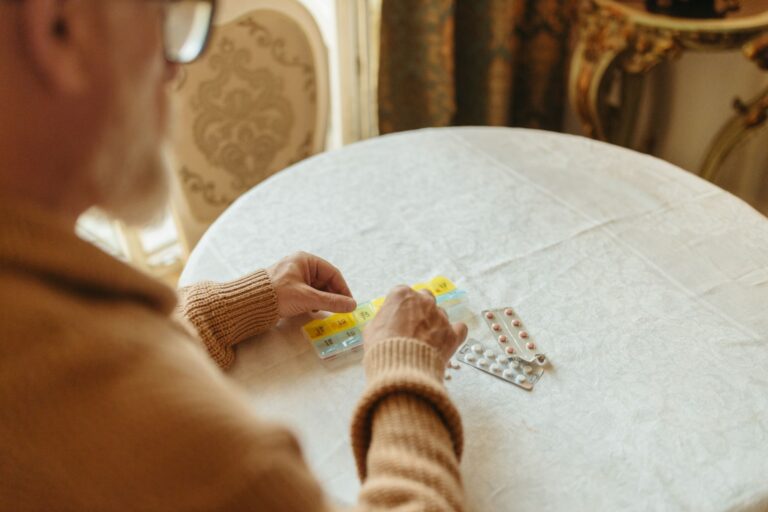
Crushing pills or opening capsules without checking is unsafe. Slow-release or coated medicines can fail or cause harm when crushed. Ask a pharmacist or prescriber about liquid, dissolvable, or alternative forms, as advised in NHS swallowing guidance. Skipping mouth care also raises risk.
Bacteria from plaque and food debris can be aspirated into the lungs. Brush teeth and gums twice daily and remove denture debris. Seek a doctor and speech-language pathologist early for coughing, choking, weight loss, repeated chest infections, or food held in the cheek. Bring the medicine list and note which bites, sips, or pills cause trouble.