Reviewed by the Help Dementia Editorial Team — our editors review every article for accuracy against guidance from the National Institute on Aging, the Alzheimer’s Association, and peer-reviewed sources.
State investment sits at the center of this dementia and brain health question.
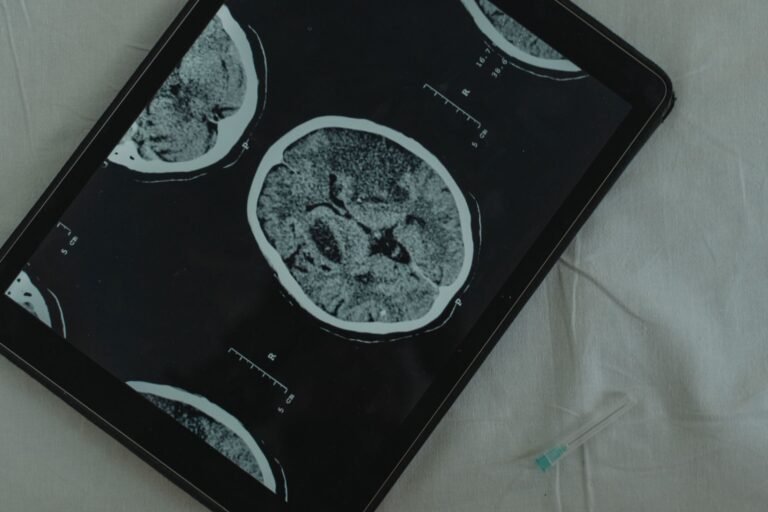
State investments in advanced emergency services are directly improving survival rates and health outcomes, particularly for time-sensitive medical crises like stroke and cardiac events. West Virginia, Pennsylvania, Florida, California, and other states have allocated hundreds of millions of dollars to strengthen EMS systems, hire more paramedics, and establish specialized emergency centers—and the data shows these investments work. Better-funded EMS systems demonstrate measurably improved survival rates for stroke, myocardial infarction, and cardiac arrest, conditions where every minute counts.
For individuals with dementia or their families, this matters enormously: older adults experiencing cardiac emergencies or stroke-like episodes depend on rapid, well-trained emergency response to maximize recovery and minimize brain damage. Beyond the immediate life-saving benefit, state funding creates systemic improvements across emergency healthcare. These investments address long-standing gaps between urban and rural services, expand the emergency workforce, and establish centers of excellence for critical care. This article examines the recent wave of state and federal funding, how it translates to real health improvements, and what these advances mean for vulnerable populations including older adults with cognitive conditions.
Table of Contents
- How States Are Investing in Emergency Medical Services
- The Mechanism: From Funding to Survival Rate Improvements
- Rural Emergency Services and the Challenge of Geographic Disparities
- Federal Emergency Preparedness Funding and Its Role
- Specialized Emergency Centers and Advanced Care Pathways
- Workforce Development and the Training Pipeline
- The Future of Emergency Services Investment and System Integration
- Conclusion
How States Are Investing in Emergency Medical Services
States across the country have recognized that emergency medical services require dedicated, stable funding. West Virginia made history by becoming the first state to establish a permanent funding source for EMS through lottery proceeds—$12 million allocated with new policy protections that also expanded benefits for partially disabled EMS workers. This shift from grant-to-grant funding to permanent appropriations means ambulance services can hire full-time staff, invest in equipment, and build reliable infrastructure rather than scrambling year to year.
Pennsylvania committed $6 million in new EMS funding through its 2025-26 budget and created a $5,000 tuition reimbursement program for residents earning emergency medical certifications. This dual approach tackles the workforce shortage directly: funding services while also removing financial barriers for people entering the profession. Florida deployed $4.9 million to local EMS agencies and $10 million in capital improvements benefiting 22 rural hospitals, emphasizing that funding doesn’t flow only to large urban centers. California’s $1.9 billion allocation for behavioral health workforce expansion, beginning in 2026, recognizes that mental health crises demand trained emergency response—a reality that intersects with cognitive decline, dementia-related behavioral episodes, and co-occurring psychiatric conditions in older adults.

The Mechanism: From Funding to Survival Rate Improvements
The connection between EMS funding and patient outcomes is not theoretical; research from the CDC documents that better-funded EMS systems consistently achieve improved survival rates for time-sensitive emergencies including stroke, myocardial infarction, and cardiac arrest. The pathway is straightforward: adequate funding allows systems to maintain higher staffing levels, faster response times, better equipment, and more advanced training. However, funding alone doesn’t guarantee results—a well-funded system still requires proper oversight, regular training, and integration with receiving hospitals. Some states have invested heavily without simultaneously addressing gaps in hospital preparedness or coordination protocols, limiting the full benefit of faster ambulance arrival.
The relevance to dementia care is direct. Individuals with Alzheimer’s disease or other dementias face higher rates of stroke and cardiac events, both conditions where response time is critical. A patient experiencing stroke symptoms has a window of about 4.5 hours for some clot-busting medications to be effective; a 10-minute delay in EMS arrival and transport can mean the difference between recovery and permanent disability or death. Similarly, cardiac arrest patients who receive early CPR and defibrillation have significantly better neurological outcomes. Underfunded EMS systems, more common in rural areas, cannot guarantee rapid response, which compounds health disparities for older adults in those regions.
Rural Emergency Services and the Challenge of Geographic Disparities
Rural patients face a fundamental challenge: they experience longer ambulance transportation times, and this disparity worsens when rural hospitals close. Patients over 64 years old in rural areas experience the greatest increases in ambulance response time, according to the Rural Health Information Hub. A rural resident experiencing stroke in a county without a hospital may wait 45 minutes or more for EMS arrival and then face additional transport time to a stroke center—time the brain cannot afford to lose. federal and state funding is beginning to address these disparities.
The CDC notes that addressing funding gaps between urban and rural EMS systems may directly reduce geographic disparities in patient outcomes. New York received $2.4 million from the federal Safe Streets & Roads for All grants specifically for high-speed roadway crash prevention and EMS capacity. Yet the scale of rural underinvestment means that a $2.4 million investment, while meaningful, is incremental. A 75-year-old with mild cognitive impairment living in rural Montana still faces a different emergency care reality than an 75-year-old in Denver, and closing that gap requires sustained investment beyond temporary grant cycles.

Federal Emergency Preparedness Funding and Its Role
Beyond state-level initiatives, federal investment provides additional resources. The Safe Streets & Roads for All program distributed $38 million to EMS and 911 systems in September 2024 with an explicit focus on reducing crash fatalities and serious injuries—important because traumatic brain injury can trigger or accelerate cognitive decline. The Department of Homeland Security allocated $319.5 million in FY 2025 emergency management performance funding to states, supporting all-hazards preparedness and emergency management capabilities.
Federal funding has advantages and limitations. It typically comes with accountability requirements and mandates that ensure money is spent strategically rather than piecemeal. The tradeoff is bureaucracy and restrictions: a state may need to follow specific guidelines that don’t perfectly fit local conditions, or wait for grant cycles rather than funding immediately when emergencies arise. Some rural communities have found that federal grant writing is itself a barrier—smaller counties lack grant administration expertise, so federal funding ends up concentrated among larger jurisdictions better equipped to navigate application processes.
Specialized Emergency Centers and Advanced Care Pathways
Florida has established 18 hospitals as Resuscitation Centers of Excellence for advanced cardiac care, a specialized designation that requires protocols, equipment, and staff training focused on saving cardiac arrest patients and optimizing recovery. These centers represent a tiered approach: not every hospital needs full specialty capability, but the emergency system should funnel critically ill patients to facilities equipped to provide the highest level of care. For dementia care specifically, the concept of specialized centers extends beyond cardiac emergencies.
Older adults with dementia experiencing acute delirium, medication interactions, or behavioral crises benefit from emergency departments with geriatric expertise and protocols that address cognitive conditions. However, a limitation of the current funding wave is that much emphasis falls on EMS response and cardiac/trauma care, with less focus on geriatric emergency protocols or cognitive health pathways. A well-funded ambulance service gets a dementia patient to the hospital quickly, but if the emergency department lacks dementia-specific care protocols, that speed advantage narrows. Comprehensive system improvement requires funding emergency departments and training emergency physicians in dementia care alongside EMS upgrades.

Workforce Development and the Training Pipeline
Pennsylvania’s tuition reimbursement program highlights a critical challenge: EMS attracts fewer qualified candidates when the profession demands substantial education investment and offers modest wages. Paramedic certification requires hundreds of hours of classroom and field training; without tuition assistance, many potential candidates are priced out. States that combine service funding with workforce pipeline investment—paying for training while also improving service pay and benefits—see better retention and more reliable staffing.
West Virginia’s expansion of benefits for partially disabled EMS workers signals another practical reality: emergency services work is physically demanding and produces injuries. By protecting workers who sustain career-ending injuries, the state reduces turnover driven by occupational hardship and increases long-term service stability. This benefits patients because experienced paramedics deliver better care than constantly-turning-over minimally-trained responders.
The Future of Emergency Services Investment and System Integration
The current wave of state funding reflects growing recognition that emergency response is a public health priority, not an afterthought. The trend toward permanent funding mechanisms (like West Virginia’s approach) rather than year-to-year appropriations suggests this investment will persist. However, the next frontier involves integrating fragmented systems: EMS, 911 dispatch, emergency departments, and specialty centers must coordinate seamlessly to translate fast ambulance response into optimal patient outcomes.
For vulnerable populations including older adults with dementia, the next generation of emergency services investment should prioritize coordination with primary care, cognitive health specialists, and long-term care facilities. A patient with dementia who calls 911 during a confused episode or falls should reach an emergency response trained to recognize cognitive conditions and de-escalate behavioral crises. Future state investments will likely expand beyond traditional EMS funding into broader emergency health system coordination—ensuring that advanced services reach the people who need them most.
Conclusion
State and federal investments in advanced emergency services are yielding measurable health improvements, particularly for time-sensitive emergencies like stroke and cardiac events that threaten older adults with dementia. From West Virginia’s $12 million permanent EMS funding to Pennsylvania’s workforce pipeline investment to Florida’s Resuscitation Centers of Excellence, these dollars translate directly into faster ambulance response, better-trained paramedics, and more equipped emergency departments. The evidence is clear: better-funded EMS systems save lives.
Yet significant work remains, particularly in rural areas where funding gaps and geographic disparities persist. If you or a family member relies on emergency services—especially in a rural community—advocating for adequate local EMS funding is concrete action that improves the odds of survival and recovery during a medical crisis. Stay informed about your state’s emergency services investments, support permanent funding mechanisms over temporary grants, and ensure your community’s emergency department has protocols for cognitive conditions. Emergencies don’t wait, and neither should investment in the systems meant to save lives.
You Might Also Like
- Building Social Networks: One Approach to Supporting Those Facing Cognitive Challenges
- Building Social Networks: One Approach to Supporting Those Facing Cognitive Challenges
- What One Media Figure’s Health Crisis Reveals About the Growing Epidemic
For more, see Alzheimer’s Association — clinical trials.