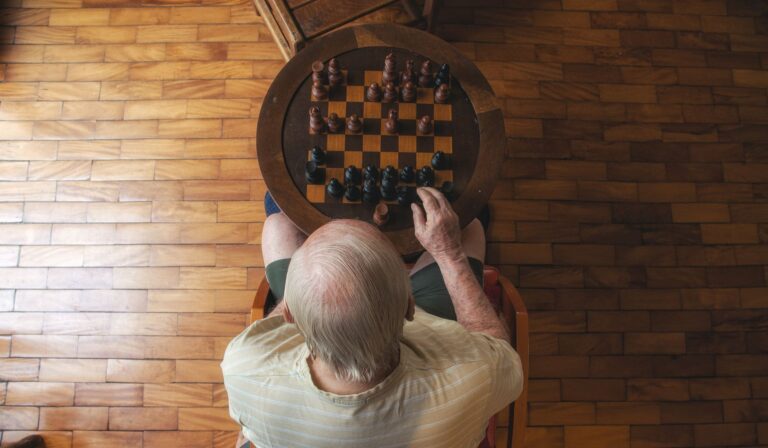
The 2026 WHO Dementia Guideline treats staying socially connected as a legitimate, evidence-backed step for protecting brain health in midlife — not just a quality-of-life nicety. For the first time, the World Health Organization has issued a formal recommendation in favor of social activity as a way to reduce cognitive decline and dementia risk. That recommendation arrived in WHO's second edition of its dementia risk-reduction guidelines, released 15 July 2026 — the first update since 2019. It sits inside a broader finding: up to 45% of dementia risk comes from modifiable factors, including social isolation, tobacco use, alcohol use, physical inactivity, air pollution, and conditions like hypertension and diabetes, according to the same WHO guidance.
Medical information disclaimer: This article is for general educational purposes only and does not provide medical advice, diagnosis, or treatment. Always consult a physician or other qualified health professional about symptoms, medications, tests, or treatment decisions.
Official resources:
- Read the WHO guideline on risk reduction of cognitive decline and dementia — Readers can review WHO's full second-edition guidance, including the exact wording and evidence grading behind the social-activity recommendation.
- Explore WHO's Commission on Social Connection resources — Readers can find WHO's broader report and practical strategies for building social connection and reducing loneliness.
Table of Contents
- What the guideline actually recommends
- How much difference does social connection actually make?
- Why is the evidence for social connection weaker than for other risk factors?
- What this means for adults in midlife
- Frequently Asked Questions
What the guideline actually recommends
WHO's 2026 update issues a conditional recommendation in favor of social activity interventions for adults with normal cognition or mild cognitive impairment (MCI), a stage where memory or thinking problems are noticeable but don't yet interfere with daily independence. The goal is reducing the odds of progressing to cognitive decline or dementia, according to the guideline's entry in the BIGG-REC/Epistemonikos recommendation registry. This is new. The 2019 edition had no recommendation on social activity at all — WHO judged the evidence too thin at the time to say anything official.
The 2026 edition changes that, but only partially: the recommendation is labeled "conditional" with "very low" certainty of evidence, the weakest grade WHO assigns, per the same registry entry. In practical terms, that means it's a suggestion worth following, not a directive with the weight of, say, blood pressure control. Social activity doesn't stand alone in the guideline. WHO pairs it with a parallel recommendation for cognitive training and stimulation — structured activities that exercise memory, reasoning, or problem-solving — for the same population of adults with normal cognition or MCI, according to WHO's guideline summary.
How much difference does social connection actually make?
Isolation and dementia risk are linked, but the size of that link is modest compared to other factors on WHO's list. Reporting on the guideline cites a WHO estimate that eliminating loneliness could prevent roughly 5% of dementia cases, and that about one in four older adults currently feels socially isolated, according to coverage summarizing the WHO findings. That 5% figure isn't an outlier.
The 2024 Lancet Commission on dementia prevention — the body of research WHO draws on for its modifiable-risk-factor framing — independently attributed about 5% of dementia cases to social isolation in later life, arriving at nearly the same number through separate analysis. Two independent efforts landing on the same figure gives it more weight than either would carry alone. Put in context, social isolation sits well below the biggest single contributors to dementia risk, but it's not negligible either. A 5% population-level reduction, if achieved broadly, would translate into a meaningful number of delayed or avoided cases, even though no individual can know in advance whether staying connected will change their own outcome.
Why is the evidence for social connection weaker than for other risk factors?
The "very low certainty" grade isn't a dismissal — it reflects specific, well-understood problems with the underlying research. Prof. Kaarin Anstey, commenting on the guideline, noted that studies on social activity use inconsistent outcome measures, making it hard to compare results across trials, according to her commentary published by HealthEd. A bigger issue is reverse causation: the same commentary points out that researchers can't rule out that people in the early, undiagnosed stages of cognitive decline withdraw socially first, rather than isolation causing the decline.
That would make isolation look like a cause when it's actually an early symptom — a distinction that's extremely hard to untangle in observational studies that simply track who stays connected and who doesn't over time. This doesn't mean the recommendation is wrong. It means the evidence can't yet prove that boosting social activity, on its own, prevents dementia the way controlling blood pressure demonstrably does. WHO's "conditional" grading is the guideline doing exactly what it should: following the evidence it has without overstating it.
What this means for adults in midlife
For readers in their 40s, 50s, or early 60s, the practical takeaway is straightforward: maintaining active social ties and participating in group or social activities now is a low-risk step that carries WHO's endorsement, even if the supporting evidence is still thin. WHO's broader framework treats midlife as the window where modifiable risk factors carry the most weight, since this is when cardiometabolic and lifestyle patterns are still being set, according to the WHO guideline. The key is treating social connection as an addition, not a substitute.
The same WHO guidance lists companion measures with stronger evidence behind them: regular physical activity, not smoking, reduced alcohol intake, a healthy diet, hearing aid use when hearing loss is present, lower air pollution exposure, and management of cardiometabolic conditions like high blood pressure and diabetes. A few ways to build social activity into midlife without overhauling daily life: Because the social-activity recommendation rests on weaker evidence, it's reasonable to pursue it as one part of a broader pattern rather than the centerpiece of a prevention plan. The companion measures WHO lists alongside it remain the better-documented places to put the most effort.
- Join a recurring group activity — a class, club, faith community, or volunteer shift — rather than relying on occasional one-off gatherings.
- Treat hearing loss early; untreated hearing loss is one of the most common reasons people quietly withdraw from conversation and group settings.
- Pair social activity with cognitive stimulation where possible — a discussion group, a card game, a class that requires active thinking — since WHO recommends both for the same population.
- Don't let social activity replace the measures with stronger evidence: blood pressure checks, diabetes management, exercise, and not smoking still carry more proven weight individually.
Frequently Asked Questions
Does the WHO guideline say loneliness causes dementia?
No. It identifies social isolation as one of several factors associated with higher dementia risk, but the evidence behind the social activity recommendation is graded "very low certainty," meaning researchers can't fully rule out that early cognitive decline causes withdrawal rather than the reverse.
Is the social activity recommendation as strong as advice to quit smoking or control blood pressure?
No. WHO labels it "conditional" with "very low" certainty, its weakest evidence tier, while measures like smoking cessation and cardiometabolic disease management rest on stronger evidence within the same guideline.
What percentage of dementia cases could social connection prevent?
WHO-linked reporting estimates that eliminating loneliness could prevent roughly 5% of dementia cases, a figure that matches an independent 2024 Lancet Commission estimate for social isolation in later life.
You Might Also Like
- High Cholesterol in the 2026 WHO Dementia Guideline: Practical Evidence-Based Steps for Adults in Midlife
- Hearing Aids in the 2026 WHO Dementia Guideline: Practical Evidence-Based Steps for Adults in Midlife
- Diabetes in the 2026 WHO Dementia Guideline: Practical Evidence-Based Steps for Adults in Midlife