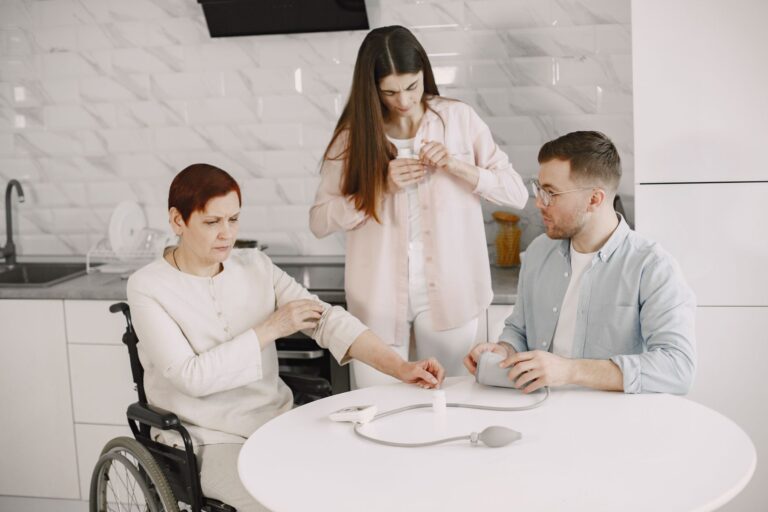
Long-distance dementia caregiving demands a practical tech setup that bridges the gap between independence and safety—but the right tools aren’t complicated or expensive. The essential core is simpler than most people think: a smartphone for you, video calling on their device, basic medication reminders, and ideally one motion sensor that alerts you to falls or extended inactivity. You don’t need a full smart home; you need visibility into the daily patterns that matter and a quick way to check in. A 72-year-old woman in Sacramento with mild cognitive decline lives alone three hours away from her daughter. Before any tech setup, the daughter drove down twice weekly to check medications and meals.
After adding a $15-a-month video doorbell, twice-daily text reminders via Google Calendar, and a motion sensor in the hallway, the visits dropped to once weekly—not because the tech replaced caregiving, but because it created reliable touchpoints between visits. The fear of “too much monitoring” or “she won’t use it” stops many adult children from starting. The real barrier is rarely rejection—it’s picking tools that fit the person’s actual cognitive and technical abilities, not an ideal version of them. A caregiver trying to implement a system designed for a 60-year-old with intact memory will fail if the person has moderate memory loss. The tech setup for long-distance dementia care succeeds only when it reduces friction for both of you: simple enough for your aging parent to use without daily frustration, reliable enough that you trust what you see, and specific enough to catch real problems before they become emergencies.
Table of Contents
- What devices and apps should long-distance dementia caregivers prioritize first?
- Setting up medication reminders that actually work without creating alert fatigue
- Video calling and fall detection for safety monitoring between visits
- Commercial monitoring packages versus DIY tech systems—which trade-off fits your situation?
- Common mistakes when implementing dementia-friendly tech for the first time
- Internet reliability and backup communication for care homes and rural areas
- Creating a sustainable maintenance routine so the tech actually keeps working
What devices and apps should long-distance dementia caregivers prioritize first?
Start with the device they already have or will actually use daily. A smartphone is ideal because it’s always near them, but a tablet is fine if that’s more natural. If they have neither and resist change, a basic Echo Show or Fire HD—a single device that does video calling, reminders, and music—eliminates the “which device do I use?” confusion. Don’t buy them three gadgets hoping one sticks. The primary device should have one job: make it trivially easy for them to stay connected to you and trivially easy for you to send reminders. A 79-year-old man with early Alzheimer’s refused his daughter’s tech suggestions for months until she gave him a used iPad with only three apps installed: Photos (preloaded with family pictures), FaceTime, and a large red button that calls his daughter.
Within a week, he used FaceTime daily and stopped asking repeatedly where his son was—the photos gave him anchoring points. The operating system matters less than pre-configuration. If they already use an iPhone, add them to your Apple ecosystem so shared calendars and reminders work seamlessly. If they prefer Android, Google Family Link and Google Calendar do the same job without extra steps. The single biggest mistake is downloading nine apps and telling them to “just pick one.” Instead, choose two communication tools maximum—one for video (FaceTime or WhatsApp), one for messaging—and test both with them before committing. Many older adults with early dementia use technology fine if they don’t have to choose between options or remember which button leads where. Pre-load their home screen with only what matters: a phone app, messaging, your photos, and a clock.
Setting up medication reminders that actually work without creating alert fatigue
Medication non-adherence is one of the most common crises in long-distance caregiving, and it’s where tech fails most often. Reminder apps send notifications that go unnoticed or ignored, while smart pill dispensers that cost $300 only work if the person remembers to look at them. The most reliable approach is redundancy: the reminder should come in the morning via text from you, at noon via their phone’s built-in calendar alarm, and ideally via a simple written checklist they check off by hand. This sounds low-tech, but a printed daily checklist on the kitchen counter works better for moderate dementia than any app because it stays in the same place and doesn’t require remembering which device has which alert. Google Calendar is underrated here. You create a repeating event “Take AM meds” at 8:00 AM daily on their calendar, and it pings them.
You get a notification ten minutes before so you can call and verify they’re taking them. For people who lose track of whether they already took something (“Did I take my blood pressure pill or is that tomorrow?”), ask their doctor for a weekly pill organizer—not a smart one, just the standard Sunday-through-Saturday box. A physical organizer plus a calendar reminder is less elegant than a $400 smart dispenser, but it works reliably for someone with memory loss. If they do use a smart dispenser, test it first with an over-the-counter vitamin, not their actual medication, to make sure they’ll actually retrieve and use it correctly. A warning: some people with dementia experience “reminder fatigue” and start ignoring all alerts after two weeks. If you notice the texts or calendar pings are being missed or deleted, stop using the app reminder and shift to a phone call at the same time daily instead. The human interaction of a 60-second “Hi Mom, time to take your morning pills” call is more reliable than a notification for most people with cognitive decline.
Video calling and fall detection for safety monitoring between visits
video calling lets you see your parent’s environment quickly—whether they’re in a safe place, whether the house temperature is reasonable, whether they’re dressed and mobile. It’s not creepy surveillance if you’re using it for legitimate safety checks; it’s a normal part of long-distance caregiving. Set up a scheduled time each morning and evening for a quick video call—not intrusive monitoring, just “hi, how are you feeling today, let me see the kitchen.” A 10-minute video call every morning catches a UTI-induced confusion, a fall-related bruise, or a medical appointment they forgot about far faster than a phone-only check-in. Fall detection is the second-most practical safety tool after video check-ins. A standard motion sensor placed in a bedroom hallway or bathroom costs $15–40, syncs to your phone via WiFi, and alerts you if there’s been no motion for 30 minutes (adjustable).
This isn’t perfect—it won’t catch a fall in real time—but it flags the pattern “my parent hasn’t moved in two hours at 3 AM” which suggests a fall, syncope, or medical event. A caregiver son in Portland installed a motion sensor in his 82-year-old mother’s hallway after she fell and lay for 12 hours before the neighbors found her. Six months later, the sensor alerted him at 2:30 AM that there’d been no motion since midnight. He called, got no answer, called police for a welfare check, and the officers found her on the bathroom floor from syncope—still conscious, but she’d already been down for 90 minutes. The sensor alone didn’t prevent the fall, but it compressed the discovery window from 12 hours to 90 minutes, which changed the medical outcome.
Commercial monitoring packages versus DIY tech systems—which trade-off fits your situation?
A commercial medical alert service (Life Alert, Philips Lifeline, etc.) costs $25–60 per month and includes a wearable button plus 24/7 monitoring center response. Someone presses the button, dispatchers talk to them, and if they don’t respond or need help, emergency responders are sent. The advantage is simplicity and professional verification; the downside is your parent has to remember to wear the device and press the button if they fall, which people with moderate dementia often can’t do in the moment. Also, the button alerts a commercial center, not you first—you’re the second notification, not the primary responder. A DIY system—motion sensor plus a door sensor plus your phone—costs $100–200 upfront and $5–15 monthly for WiFi, but requires you to be the primary response layer. You get an alert, you call to check, you decide if 911 is needed. This works well if you’re available during the day and your parent’s primary risks are falls or getting lost (detected by door opening), not acute medical events.
A hybrid approach is common: use a DIY motion sensor for overnight falls and daily pattern checking, add a Bluetooth-enabled medication tracker for pills, and keep your parent’s phone on you (not them) so you can call or use Find My Phone if they wander out of the house. This costs under $200 initially and $10–15 monthly, versus $50+ monthly for a commercial service they might not use correctly. The real limitation is that no system catches every scenario. A motion sensor doesn’t alert you to confusion, sundowning, or a stroke happening on the couch. A medical alert button won’t help if your parent is unconscious. Choose the setup that catches your parent’s most likely risks: if they live alone, falls and inactivity detection matter most. If they live with a spouse or in assisted living, medication timing and appointment reminders might matter more.
Common mistakes when implementing dementia-friendly tech for the first time
The most common failure is expecting your parent to set up the tech themselves or to learn it independently. A 76-year-old with early dementia is not refusing your FaceTime suggestion out of stubbornness—she’s probably overwhelmed by the concept of “downloading an app.” Instead, you set up the device completely: pre-install apps, save your contacts, test everything with them watching but with you doing the clicks. On the first video call, you initiate it from your phone while you’re in the room with her, so she sees her own face and yours appear. Then, next call, you initiate from her device while she holds it, and you stay on long enough for her to orient. After three calls, she might initiate herself. Skipping this setup step and sending her a device with “just click FaceTime” is a recipe for it sitting unused. A second mistake is choosing too many monitoring inputs.
You buy a motion sensor, a door sensor, a water leak detector, a temperature sensor, and a medication dispenser, thinking more data is better. Instead, you create alert fatigue for yourself: your phone buzzes ten times a day, you stop trusting the alerts, and you miss the real problems. Start with one monitoring element—video check-ins plus a motion sensor—and add complexity only if that fails. A third mistake is not informing your parent’s doctor or healthcare providers about the monitoring setup. If you’re seeing patterns (e.g., your parent is confused between 2–4 PM daily), tell their neurologist. If the motion sensor repeatedly alerts you to long periods of inactivity, that’s worth a medical conversation—it might indicate depression, medication side effects, or a UTI-related pattern. The tech is only useful if it feeds information back into actual medical care.
Internet reliability and backup communication for care homes and rural areas
Tech setups assume reliable WiFi, which is a major flaw in rural areas. If your parent’s internet drops regularly—or if they live in a facility with weak WiFi—build in a backup. A cellular-enabled motion sensor or a basic flip phone for text messaging acts as a secondary channel. If video calling is your primary safety tool and the WiFi goes down during a critical moment, you lose visibility.
A simple solution: if they live in an area with spotty internet, don’t rely on WiFi-dependent devices as your primary alert system. Instead, use cellular-based options: a cell phone with a large-text interface and programmed speed-dial buttons, a cellular-enabled medical alert button, or a door sensor that sends alerts via 4G. For facilities like assisted living or memory care, ask whether they have a WiFi guest network and whether visiting device signals are strong in the resident’s room. Some facilities have terrible WiFi coverage despite having WiFi, which is an infrastructure problem they should fix—but until they do, video check-ins might fail regularly. Test it before moving your parent in.
Creating a sustainable maintenance routine so the tech actually keeps working
A tech system only works if it stays charged, stays configured, and stays relevant to your parent’s current cognitive level. Set a calendar reminder on your phone for the first of each month: “Test Mom’s device and recharge all sensors.” Each time, you call or visit and confirm that their phone is at 100% charge, the app still has your location access permission (many people accidentally disable permissions), and their contact list still has your number at the top. This 5-minute monthly check prevents the scenario where their device dies for a week and you don’t notice because you assumed the system was working. As your parent’s dementia progresses, revisit the tech setup.
A tool that worked for mild cognitive impairment might be too complicated for moderate or advanced stages, requiring simplification. A son in Portland set up a sophisticated smart home for his mother with a smartphone app, voice commands, and multiple sensors. Six months later, his mother could no longer operate the smartphone app (too many steps to remember), and he had to downgrade to a single motion sensor and return to daily phone calls and twice-weekly visits. The tech didn’t fail; his parent’s abilities changed, which is predictable in dementia progression and should trigger a redesign, not a decision to abandon monitoring entirely.