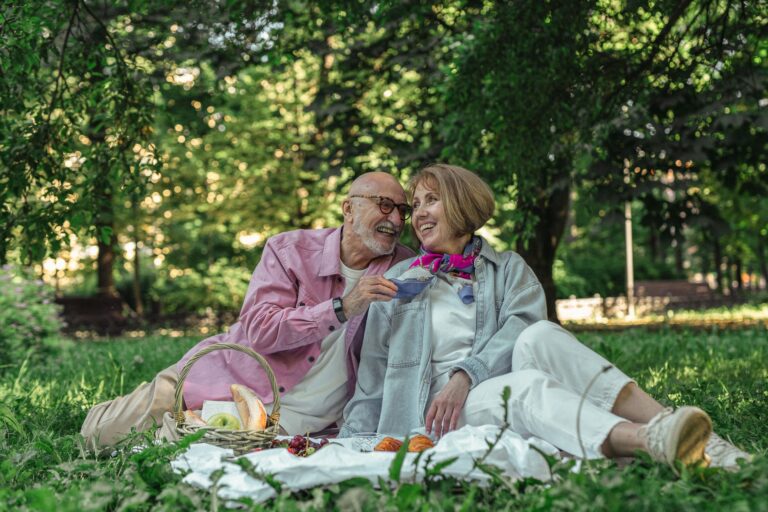
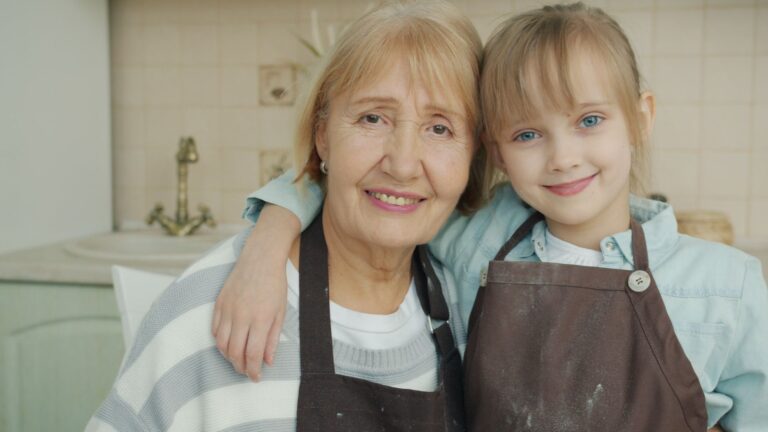
A person with dementia enjoying no-cook food preparation usually shows it on their face and in their hands: smiling, sustained eye contact, and reaching in to help rather than sitting back and watching. Caregivers who know what to look for can tell real engagement from polite tolerance within a few minutes of starting a task. These signals come from how dementia research measures enjoyment in general, applied to the specific activity of simple food tasks like washing produce, mixing, or assembling a sandwich. The signs are consistent enough to use as a quick check during or after any no-cook kitchen activity.
Medical information disclaimer: This article is for general educational purposes only and does not provide medical advice, diagnosis, or treatment. Always consult a physician or other qualified health professional about symptoms, medications, tests, or treatment decisions.
Table of Contents
- What enjoyment actually looks like
- Why hands-on tasks work better than watching
- How to set up a task so enjoyment is more likely
- Keeping no-cook tasks safe
- When enjoyment is hard to read
- Frequently Asked Questions
What enjoyment actually looks like
The clearest sign is a person wanting to do the task rather than just watch it happen. Ruth Drew, an activity specialist at the Alzheimer's Association, says people with Alzheimer's disease often show they're enjoying a food activity by wanting to be "part of the action" — washing produce, mixing batter, or peeling vegetables — instead of staying on the sidelines while someone else does it, according to the Caregiver Action Network. That shift from spectator to participant is often the first thing a caregiver notices. Facial and vocal cues back this up.
A nonverbal-behavior research table on dementia care lists facial expression and sustained eye contact as caregiver-recognized signs of positive engagement during an activity, and some people will spontaneously sing along or even dance while a task is underway, according to a peer-reviewed research table. None of these require the person to say anything — they show up in posture and expression before they show up in words. A validated dementia quality-of-life measure, the ADRQL scale, lists the same basic cluster as evidence an activity is landing well: smiling around others, showing delight, and generally appearing cheerful, according to a peer-reviewed research table. Any one of these on its own is a mild signal; two or three together during a food task are a reliable one.
Why hands-on tasks work better than watching
The preference for doing over watching isn't just about keeping someone busy — it reflects something about where enjoyment comes from. A project affiliated with the University of Southern Denmark found that involving people with dementia in preparing their own meals, rather than only eating food made for them, supports a felt sense of contentment and meaning in daily life, and the project built a practical guide for adapting tasks and utensils to make that participation possible, according to UCViden. There's a cognitive angle too.
A six-year study of 10,978 older adults in Japan, led by Yukako Tani's team at the Institute of Science Tokyo and published in the Journal of Epidemiology & Community Health, found that cooking at least weekly was linked to lower dementia incidence, with adjusted hazard ratios of 0.77 for men and 0.73 for women, according to the study. The benefit was strongest among people who rated their own cooking skill as poor, where weekly cooking corresponded to roughly a two-thirds relative reduction in risk — a pattern that points to the hands-on challenge of the task mattering more than skill at it, according to HealthDay's coverage. That doesn't mean no-cook prep alone lowers dementia risk, but it helps explain why active participation tends to produce more visible enjoyment than passive observation.
How to set up a task so enjoyment is more likely
Enjoyment is easier to spot when the task itself is set up well. A dementia-care food-preparation handout recommends introducing no-cook tasks one step at a time, with a caregiver modeling the task first and eating alongside the person, because the sight and smell of food can trigger memories tied to cooking and encourage the person to engage and eat, according to a CEN4ARD activity handout. A few practical starting points: These steps matter because keeping the task simple is also what keeps it safe, which is covered next.
- Offer one step at a time — washing fruit, tearing lettuce, spreading spread on bread — rather than a full recipe.
- Do the first round yourself, slowly, so the person sees the motion before trying it.
- Sit and eat part of what's made together, since the shared meal is often what sustains interest.
- Watch for the person reaching for the next piece or ingredient without being asked — that's a stronger sign than verbal enthusiasm.
Keeping no-cook tasks safe
No-cook tasks exist largely because stovetop and knife use become unsafe as dementia progresses. Caregiver safety guidance recommends removing knives from counters and drawers and planning meals that need minimal preparation, since people with dementia can forget how to use a knife safely, and later-stage dementia makes stovetop or oven use unsafe altogether, according to the Caregiver Action Network.
Pre-cut ingredients and tasks like mixing, spreading, or assembling keep the hands-on element without the risk. Safety and enjoyment aren't competing goals here — a task scaled down to what's safe is often also the task someone can actually succeed at, and success is part of what produces the smiling and eye contact described above.
When enjoyment is hard to read
Not every quiet reaction means disinterest. Dementia frequently impairs sense of smell before memory symptoms become obvious, and because smell and taste are linked, that loss can reduce appetite and dampen apparent interest in food activities even when the person isn't distressed, according to research published in the Journal of Nutrition, Health & Aging. A muted response may reflect sensory decline rather than a lack of enjoyment.
Reading engagement also gets harder as dementia advances. A Japanese occupational-therapy study of care-home residents found that smiles and laughter during activities came mostly from interaction with a staff member rather than between residents themselves, and noted that more severe dementia makes a person's engagement harder for an outside observer to judge, according to the study abstract. Staying in the task alongside the person — not just supervising from across the counter — often brings out the responses that are easiest to see.
Frequently Asked Questions
Does it matter if the person doesn't talk during the activity?
No — facial expression and sustained eye contact are counted as positive engagement signs on their own, according to a peer-reviewed research table, and verbal response isn't required to read enjoyment.
Is wanting to help more telling than smiling?
Both matter, but wanting to be "part of the action" — washing, mixing, or peeling rather than watching — is the sign activity specialists point to first, according to the Caregiver Action Network.