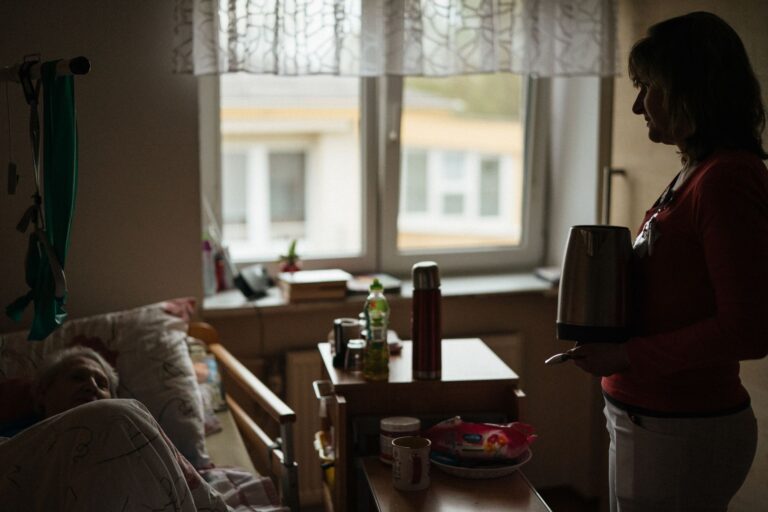
In 2026, dementia researchers are prioritizing a specific gap: whether people with dementia actually experience the end-of-life care they and their families say they want. The push spans new federal funding, a UK patient-priority ranking, and practical tools aimed at helping families and care staff plan earlier and more accurately. For family caregivers, this matters because advance care planning for dementia is harder than for most other illnesses — the person affected often can't confirm their own wishes by the time decisions are urgent. The research underway in 2026 is designed to close that gap, and several of its tools and findings are already reaching nursing homes and primary care clinics.
Medical information disclaimer: This article is for general educational purposes only and does not provide medical advice, diagnosis, or treatment. Always consult a physician or other qualified health professional about symptoms, medications, tests, or treatment decisions.
Table of Contents
- What research priorities were set in 2026?
- Why advance care planning for dementia needs its own research
- What new tools are being developed for families and care staff?
- How is funding shaping what gets studied?
- What family caregivers can do now
What research priorities were set in 2026?
The National Institute on Aging (NIA) convened a virtual "2026 Dementia Care and Caregiving Research Summit" March 17–19, bringing together five working sessions on the economic impact of caregiving, community-based care, rigorous intervention development, data infrastructure for Alzheimer's and related dementias, and coordination across care systems, according to the NIA/University of Michigan CAPRA event listing. The goal was to review what has been learned so far and identify where dementia caregiving research still falls short.
Separately, a refreshed UK priority-setting exercise conducted with the James Lind Alliance and published by Marie Curie in October 2025 ranked a single question above all others in palliative and end-of-life care: how people with dementia experience the end of life, and how palliative and end-of-life care can better serve patients, carers, and families, according to Marie Curie's priority-setting report. That ranking signals where clinical researchers and funders are expected to concentrate attention over the next several years. Together, these efforts point to the same underlying problem: dementia changes how end-of-life wishes are formed, communicated, and honored, and the systems meant to support that process haven't caught up.
Why advance care planning for dementia needs its own research
Advance care planning means documenting a person's wishes for future medical treatment before they lose the capacity to decide for themselves. For dementia specifically, that window can close gradually and unpredictably, which is why several 2026 studies focus on improving how and when those conversations happen. A study published online March 26, 2026 in the Journal of the American Medical Directors Association drew on the APPROACHES embedded pragmatic trial to interview family caregivers about advance care planning conversations for nursing home residents with dementia, where staff had been trained through a structured "ACP Specialist Program," according to the JAMDA study.
The approach puts trained staff, rather than outside consultants, at the center of these conversations inside the facility where residents already live. A separate NIA-funded project at the University of Oklahoma, grant 1RF1AG089510-01, is examining whether the end-of-life care outpatients with dementia actually receive matches what they or their surrogates previously said they wanted, according to the University of Oklahoma news release. That mismatch — documented preferences versus delivered care — is the gap much of this research field is now organized around closing.
What new tools are being developed for families and care staff?
Two funded projects aim to give families and care home staff better instruments for these conversations, rather than relying on informal judgment. Alzheimer's Society and Marie Curie jointly funded about £1 million across five dementia end-of-life care studies in their Call 13 grant round, with applicants notified in March 2025, according to the Alzheimer's Society/Marie Curie grants program. One of those studies, led by Dr. Lesley Williamson at King's College London with £203,314 in funding, is piloting the IPOS-Dem tool, which lets care home staff systematically assess symptoms in residents with dementia who may struggle to report pain or distress themselves.
A second project in the same funding round, led by Dr. Nicola White at University College London with £177,191, is adapting the Death Literacy Index — a measure of how comfortable and knowledgeable people feel discussing death and dying — specifically to gauge and build dementia caregivers' confidence around end-of-life decisions, according to the Marie Curie Research Grants Scheme. For a caregiver, a higher score on that kind of measure corresponds to feeling more prepared to ask questions, raise concerns, and make decisions when a clinical crisis arrives. These tools matter for care-planning because they replace guesswork with structured, repeatable assessments. A caregiver whose relative is in a facility piloting IPOS-Dem, for instance, can expect staff to document symptoms in a way that follows the resident across shifts and care transitions, rather than depending on which staff member happens to be on duty.
How is funding shaping what gets studied?
Dementia-specific end-of-life research increasingly sits inside broader serious-illness and palliative care funding, which affects what gets studied and how quickly. Congress established a multi-disease "Consortium for Palliative Care Research Across the Lifespan" at NIA beginning with the Further Consolidated Appropriations Act, 2024, and the American Academy of Hospice and Palliative Medicine's testimony to the House on April 16, 2026 confirmed continued funding through the Consolidated Appropriations Act, 2026, while requesting an additional $12.5 million for fiscal year 2027, according to AAHPM's House Appropriations testimony.
Advocacy groups have specifically named dementia as a reason this funding needs to grow. AAHPM and the National Coalition for Hospice and Palliative Care told Senate and House appropriators in 2025 and 2026 that dementia is a leading driver of the need for expanded palliative care research, because infrastructure for serious-illness and end-of-life studies remains fragmented across separate NIH institutes, according to AAHPM's Senate testimony. For families, that fragmentation has a practical consequence: a caregiver dealing with both dementia and, say, heart failure or cancer in the same relative may find that research-backed guidance for one condition hasn't yet been coordinated with the other.
What family caregivers can do now
None of this research changes what a family can start doing today, but it clarifies where the gaps are and what questions are worth raising with a care team.
- Ask whether a nursing home or memory care facility has staff trained in structured advance care planning conversations, similar to the ACP Specialist Program model studied in the APPROACHES trial.
- Document specific wishes in writing while the person with dementia can still participate, rather than relying on informal conversations recalled later.
- Ask a facility whether it uses a formal symptom-assessment tool, such as IPOS-Dem, for residents who have difficulty communicating pain or distress.
- Revisit documented wishes periodically, since the research gap identified at the University of Oklahoma is specifically about preferences drifting out of sync with care delivered over time.
- Expect conversations about death and dying to feel uncomfortable at first; tools like the adapted Death Literacy Index exist because confidence in these conversations is something that can be built, not a fixed trait.
You Might Also Like
- UAS-CLEAR Dementia Care Research Data Priorities in 2026: Research Participation Questions for Family Caregivers
- NHATS and NSOC Dementia Care Data Priorities in 2026: Research Participation Questions for Family Caregivers
- Privacy and Data Access Gaps in 2026 Dementia Research: Questions Family Caregivers Can Ask About the Research