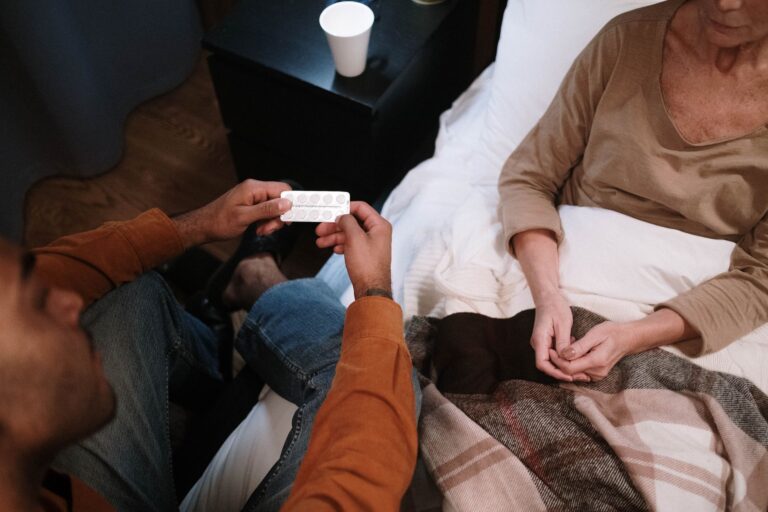
Family caregivers researching dementia care face a research system where genetic and health data can legally reach insurers, data brokers, and thousands of outside scientists with limited visibility for the people who provided it. Three distinct gaps exist in 2026: commercial resale of dementia-linked data outside any study, insurance underwriting uses that federal genetic-privacy law does not cover, and consent language that lets de-identified research data travel well beyond the original study team. None of these gaps mean a caregiver should avoid research participation. They mean specific questions are worth asking before a loved one enrolls in a trial, submits a DNA sample, or takes a genetic test connected to Alzheimer's risk.
Medical information disclaimer: This article is for general educational purposes only and does not provide medical advice, diagnosis, or treatment. Always consult a physician or other qualified health professional about symptoms, medications, tests, or treatment decisions.
Table of Contents
- Has dementia-linked data already been sold outside any research study?
- How is dementia genetic data controlled once it enters a research repository?
- Can a genetic test for Alzheimer's risk affect a family's long-term-care insurance?
- What do dementia trial consent forms actually promise about data sharing?
- What should a caregiver ask before enrolling a loved one in dementia research?
- Frequently Asked Questions
Has dementia-linked data already been sold outside any research study?
Yes. The California Privacy Protection Agency fined Texas-based data broker Rickenbacher Data LLC, operating as "Datamasters," $45,000 on January 8, 2026, after the CPPA's enforcement announcement found the company had sold lists of 435,245 postal addresses tied to Alzheimer's patients without registering as a data broker. The same lists covered people with blindness or visual impairment and people in addiction recovery.
The case shows dementia-linked information moving through a resale market that has nothing to do with research consent or clinical oversight — someone compiled a mailing list identifying Alzheimer's households and sold access to it commercially. The signed CPPA order now bars Datamasters from selling Californians' personal information and requires it to delete the data it already collected, under case number ENF25-172-D-DA. This case involved postal addresses, not genetic or medical records from a study. But it establishes that a dementia diagnosis in a household is a data point that has already been packaged and sold, separate from anything a family agreed to when enrolling in research.
How is dementia genetic data controlled once it enters a research repository?
NIAGADS, the National Institute on Aging's designated repository for Alzheimer's and related-dementia genetics, holds genomic data from roughly 209,000 samples, according to a NIAGADS/NCBI summary. Access splits into two tiers: an open-access tier available without review, and a controlled-access tier that requires a formal Data Access Request. That controlled tier operates under the NIH Genomic Data Sharing Policy, in effect for extramural and intramural research since January 25, 2015.
A March 2026 NIH Intramural Research Program document describes how the policy still governs internal requests for sensitive data such as whole-genome sequences from dementia research participants. In practice, this means a family's genetic contribution to dementia research does not stay with the lab that collected it. It becomes part of a repository that outside, vetted researchers can request access to under a data-use agreement — a legitimate and common research-sharing model, but one the original participant or their caregiver does not control after the request is approved.
Can a genetic test for Alzheimer's risk affect a family's long-term-care insurance?
Yes, and this is the clearest coverage gap in the research pipeline. The federal Genetic Information Nondiscrimination Act, known as GINA, blocks genetic discrimination in employment and health insurance, but it explicitly does not extend to life, disability, or long-term-care insurance. A long-term-care insurer can legally require or factor in a genetic test result — including APOE4 status, a gene variant linked to higher Alzheimer's risk — when deciding whether to offer a policy or what to charge.
A Harvard-led study found that people who learn they carry the APOE4 variant are about five times more likely than average to buy long-term-care insurance afterward. That pattern itself can become a signal to insurers in a product category GINA does not restrict: simply seeking coverage after genetic testing can raise questions in an industry allowed to ask about it. This gap matters most for families considering predictive genetic testing before or during a dementia study. A test result that has no bearing on a participant's health coverage can still affect a family's ability to buy or afford long-term-care insurance later.
What do dementia trial consent forms actually promise about data sharing?
Consent forms for dementia clinical trials commonly commit to sharing only de-identified data — information with direct identifiers removed — with other vetted researchers under formal data-use agreements, not with participants or their families. Consent documents filed with ClinicalTrials.gov, including those for trials NCT02483520 and NCT04944420, state plainly that once data leave the originating institution, federal privacy protections may no longer apply. That sharing happens at scale.
The Alzheimer's Disease Data Initiative's AD Workbench platform reported roughly 6,178 registered researcher-users from 115 countries as of April 2025, including 886 users from 60 low- and middle-income countries, according to a peer-reviewed description of the platform. Pooled dementia data from a single family's participation can end up supporting analyses by researchers around the world, none of whom report back to the household that contributed it. Neither practice is improper research conduct — broad, de-identified data sharing is how large dementia datasets produce findings no single study could reach alone. But it means a caregiver signing a consent form is agreeing to a data-sharing scope that extends well past the research site where enrollment happens, and typically ends the family's ability to track where the data goes next.
What should a caregiver ask before enrolling a loved one in dementia research?
A 2026 review of dementia studies on ClinicalTrials.gov found that fewer than half of trial listings disclosed caregiver responsibilities in the study information given before enrollment, according to reporting on the review. That gap in disclosure is a reason to ask directly, rather than assume the listing covers it.
Questions worth raising with a study coordinator before signing consent: Asking these questions does not require a legal or medical background. The answers determine how far a family's information travels, and who can act on it later.
- Will any genetic or biomarker data be shared with repositories like NIAGADS, and if so, under what access tier?
- Does the consent form specify whether de-identified data can be shared with other institutions, and does it say protections end once data leave the original site?
- If a genetic test is part of the study, could the result affect eligibility for long-term-care insurance down the line?
- What is expected of the caregiver during the study — visit frequency, driving, monitoring — and is that written in the materials provided before enrollment?
- Is there a way to withdraw data already shared with outside researchers, or does withdrawal only stop future collection?
Frequently Asked Questions
Does GINA protect a dementia patient's genetic data from all insurance discrimination?
No. GINA covers employment and health insurance only. Life, disability, and long-term-care insurers can legally use genetic test results, including APOE4 status, when underwriting policies.
Is data broker resale of Alzheimer's-linked information connected to research consent?
No. The Datamasters case involved postal address lists sold commercially, unconnected to any research study, clinical trial, or participant consent process.
Can a caregiver see who accesses a relative's data after it's shared with a repository like NIAGADS?
The research packet does not document a mechanism for caregivers to track individual access; controlled-tier data requests go through NIH's Data Access Request process between the repository and approved researchers.
You Might Also Like
- UAS-CLEAR Dementia Care Research Data Priorities in 2026: Research Participation Questions for Family Caregivers
- NHATS and NSOC Dementia Care Data Priorities in 2026: Research Participation Questions for Family Caregivers
- Insurance Fragmentation and Dementia Costs in the 2026 NIA Report: Cost and Access Questions for Long-Distance Caregivers