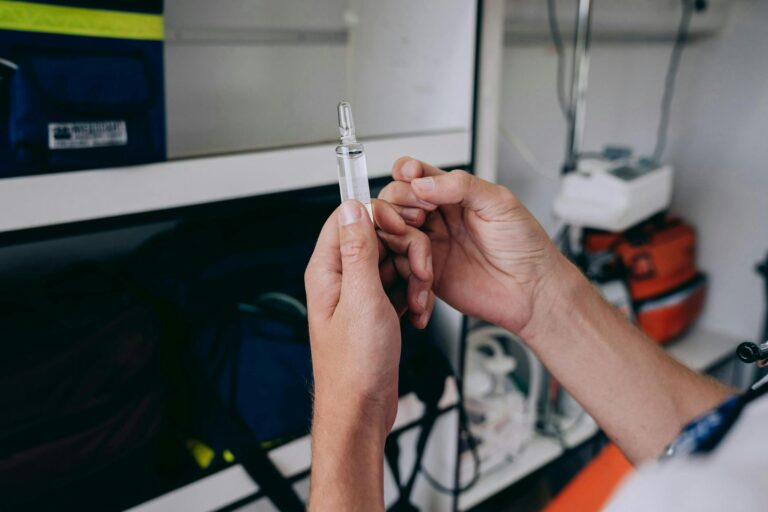
RSV, or respiratory syncytial virus, now has real preventive options for infants — and for the 2025–2026 season, parents have more choices than ever before. Two long-acting monoclonal antibodies, nirsevimab (Beyfortus) and the newly approved clesrovimab (Enflonsia), can each be given as a single shot to protect babies through their most vulnerable months. A maternal vaccine, Abrysvo, offers another route by passing protective antibodies from mother to child before birth.
For families navigating the fog of new parenthood — or those simultaneously managing caregiving responsibilities for aging relatives — understanding these options matters more than you might expect. RSV remains the leading cause of infant hospitalization in the United States, with hospitalization rates among babies under 12 months reaching 1,116.7 per 100,000 during the July 2024 to June 2025 surveillance period. The 2025–2026 season began earlier than usual, with detections and hospitalizations surging in late summer 2025 and tracking above historical averages for infants under six months. This article walks through each protection option in detail, compares their effectiveness, addresses timing and cost, and flags the practical questions parents and caregivers are actually asking their pediatricians.
Table of Contents
- What Are the New RSV Protection Options for Infants, and How Do They Work?
- Nirsevimab vs. Clesrovimab — How Do the Two Infant Antibodies Compare?
- What Happened to Synagis, and Why Is It Going Away?
- Timing the RSV Shot — When Should Your Baby Get Protected?
- Cost, Insurance, and Access — Will Families Actually Be Able to Get This?
- RSV Protection in the Context of Multigenerational Households
- What Comes Next for Infant RSV Prevention
- Conclusion
- Frequently Asked Questions
What Are the New RSV Protection Options for Infants, and How Do They Work?
There are now two distinct pathways to protect a baby from severe RSV illness, and they work through different biological mechanisms. The first — and the one the CDC positions as the primary recommendation — involves giving the infant a monoclonal antibody injection directly. Nirsevimab (Beyfortus), made by Sanofi and AstraZeneca, has been available for a couple of seasons. It is a long-acting antibody delivered as a single dose, available in 50 mg and 100 mg strengths, and recommended for healthy infants younger than eight months at the time of administration. In CDC-led real-world studies, nirsevimab demonstrated 81% effectiveness against RSV-associated hospitalization, and it held up well over time — still showing 77% effectiveness at 130 to 210 days after the dose. Clinical trials had put the figure even higher, at roughly 90% against hospitalization. The second monoclonal antibody option is newer. Clesrovimab (Enflonsia), developed by Merck, received FDA approval on June 9, 2025, and was recommended by the Advisory Committee on Immunization Practices (ACIP) on June 26, 2025, as an alternative to nirsevimab.
Unlike nirsevimab, clesrovimab is given as a single fixed 105 mg dose regardless of the infant’s weight, which simplifies dosing. In clinical trials, it reduced RSV-associated medically attended lower respiratory infections by 60.5% and hospitalizations by 84.3% through five months compared to placebo. Shipments began ahead of the current season. The second pathway is maternal vaccination. Abrysvo, made by Pfizer, is given to pregnant women between 32 and 36 weeks of gestation. The vaccine prompts the mother’s immune system to produce antibodies that cross the placenta and protect the newborn for approximately six months after birth. In Phase 3 trials, Abrysvo reduced infant RSV hospitalization by 68% within three months and 57% within six months of birth. The CDC notes that most infants do not need both maternal vaccination and an infant RSV antibody — one or the other generally provides sufficient protection.

Nirsevimab vs. Clesrovimab — How Do the Two Infant Antibodies Compare?
Parents hearing about two antibody options will naturally want to know which one is better. The honest answer is that both are effective, but the data profiles differ in ways worth understanding. Nirsevimab has a longer track record and stronger real-world effectiveness numbers — 81% against hospitalization in CDC-led observational studies, with durability confirmed past four months. Clesrovimab’s 84.3% reduction in hospitalizations comes from clinical trial data against placebo, which is a different measurement context than real-world effectiveness studies. Direct head-to-head trials comparing the two have not been published, so claiming one is definitively superior to the other would be premature.
However, there are practical differences. Clesrovimab’s fixed 105 mg dose regardless of infant weight is a logistical advantage in clinic settings — there is no need to weigh the baby and select between two dose sizes. For families in areas where one product may be more readily available than the other, the existence of a second option also reduces the risk of the supply shortages that plagued the nirsevimab rollout in earlier seasons. If your pediatrician’s office stocks one but not the other, either is a reasonable choice based on current evidence. One important caveat: if your infant has specific medical conditions — congenital heart disease, chronic lung disease of prematurity, or severe immunodeficiency — the conversation with your pediatrician may be more nuanced. The general recommendations apply to healthy infants under eight months, and children with higher-risk profiles may have additional considerations that go beyond choosing between two products.
What Happened to Synagis, and Why Is It Going Away?
For years, palivizumab (Synagis) was the only RSV preventive available, but it came with significant drawbacks. It required monthly injections throughout the RSV season — typically five doses — and was restricted to high-risk infants such as those born very prematurely or with certain heart and lung conditions. Most healthy babies were never eligible. The burden on families was considerable: monthly clinic visits during cold and flu season with a vulnerable infant, each visit carrying its own exposure risks.
Palivizumab will no longer be available after December 31, 2025. Nirsevimab and clesrovimab replace it as single-dose alternatives that offer broader eligibility and comparable or superior protection with far less hassle. For the small number of families whose premature infants received Synagis in past winters, this transition means one shot instead of five — a meaningful reduction in clinic visits during the months when respiratory viruses circulate most aggressively. Pediatricians who previously had to navigate complex prior authorization processes for monthly Synagis doses are also finding the single-dose model simpler to implement.

Timing the RSV Shot — When Should Your Baby Get Protected?
Timing matters more than many parents realize. The CDC recommends administering the monoclonal antibody shortly before RSV season begins, which typically means October or November. For babies born during RSV season — October through March — the ideal window is within the first week of life, and many hospitals now offer the injection during the birth hospitalization itself. A baby born in January who does not receive the antibody before discharge may face a gap in protection during peak circulation months. For the maternal vaccine route, the calculus is different. Because Abrysvo is given at 32 to 36 weeks of pregnancy, the timing depends on when the baby is expected to arrive relative to RSV season.
A woman reaching 34 weeks in September, with a due date in November, is well positioned — her baby would be born with maternal antibodies right as the season intensifies. But a woman delivering in June might find that maternal antibodies wane before the following winter’s surge, making an infant antibody dose the more practical choice for her child. The tradeoff between maternal vaccination and infant antibodies is not just about efficacy numbers. Some mothers may prefer vaccination during pregnancy to avoid a postnatal injection for their newborn. Others may have medical reasons to defer vaccination during pregnancy and opt for the infant dose instead. The CDC’s guidance that most infants do not need both gives families flexibility without doubling up on interventions.
Cost, Insurance, and Access — Will Families Actually Be Able to Get This?
Availability and cost have been real barriers in past RSV seasons, and it is worth being direct about what families can expect. Under the Affordable Care Act, insurance plans are required to cover ACIP-recommended preventive immunizations, which means most families should be able to obtain Beyfortus or Enflonsia for little to no out-of-pocket cost. For uninsured children, the federal Vaccines for Children (VFC) program provides coverage at no cost through participating providers. However, “should” and “will” are different words in American healthcare.
Some insurance plans require prior authorization before covering the antibody, which can introduce delays. In the 2023–2024 season, supply shortages of nirsevimab left some families unable to access the product at all, regardless of insurance status. The addition of clesrovimab as a second option for the 2025–2026 season is partly a response to those supply concerns, but families should still confirm availability with their pediatrician’s office well before the season begins rather than assuming it will be in stock on demand. Parents managing complex household situations — perhaps caring for an aging parent with dementia while also navigating a new baby’s medical needs — should be especially proactive about scheduling. RSV prevention is one of those tasks that rewards advance planning rather than last-minute action, and a quick call to the pediatrician’s office in late summer can save significant stress when the season arrives.

RSV Protection in the Context of Multigenerational Households
RSV is not exclusively a pediatric concern. Older adults, particularly those over 60 and those with chronic conditions including neurological disorders, are also vulnerable to severe RSV illness.
In multigenerational households where a newborn and a grandparent with cognitive decline share living space, the virus can move in both directions. Protecting the infant with a monoclonal antibody does not create a barrier around the household — it protects that one child from severe disease if exposed. Families in these settings should discuss adult RSV vaccination with the older adult’s physician as a complementary measure, recognizing that infection control in a shared home requires thinking about every vulnerable person under the roof.
What Comes Next for Infant RSV Prevention
The RSV prevention landscape has changed more in the past three years than in the preceding three decades. The phase-out of monthly palivizumab injections, the arrival of two competing single-dose monoclonal antibodies, and the availability of a maternal vaccine represent a genuine shift in how pediatric medicine approaches this virus.
With RSV associated with 190,000 to 350,000 hospitalizations and 10,000 to 23,000 deaths during the October 2024 to July 2025 period alone, the public health stakes are substantial. Looking ahead, ongoing surveillance will clarify how real-world effectiveness of clesrovimab compares to nirsevimab over multiple seasons, and whether the early-season surges seen in 2025–2026 become a recurring pattern that demands adjusted timing recommendations. For now, the message to parents is straightforward: effective single-dose protection exists, it is accessible for most families, and the conversation with your pediatrician should happen before the season starts — not after your baby’s first cough.
Conclusion
RSV prevention for infants has entered a new chapter. Parents now have two monoclonal antibody options — nirsevimab and clesrovimab — each requiring just one injection to provide months of protection against a virus that remains the leading cause of infant hospitalization in the United States. A maternal vaccine offers a third pathway for families who prefer prenatal protection.
The phase-out of monthly palivizumab injections by the end of 2025 marks the close of an era that demanded far more of families for comparable benefit. The practical steps are clear: talk to your pediatrician before RSV season begins, confirm product availability, understand your insurance coverage, and choose the option that fits your family’s circumstances. For households juggling infant care alongside elder caregiving, remember that RSV threatens both ends of the age spectrum, and protection strategies should account for everyone in the home. Prevention is simpler and more accessible than it has ever been — the key is acting on it early enough to matter.
Frequently Asked Questions
Does my baby need both the maternal RSV vaccine and an infant monoclonal antibody?
In most cases, no. The CDC states that most infants do not need both maternal vaccination and infant RSV antibodies. One or the other generally provides sufficient protection. Discuss your specific situation with your pediatrician, particularly if timing or medical factors complicate the decision.
What is the difference between nirsevimab (Beyfortus) and clesrovimab (Enflonsia)?
Both are single-dose long-acting monoclonal antibodies recommended for healthy infants under eight months. Nirsevimab has a longer track record with 81% real-world effectiveness against RSV hospitalization. Clesrovimab, approved in June 2025, showed 84.3% reduction in hospitalizations in clinical trials and uses a fixed dose regardless of infant weight. Both are considered appropriate options.
Will insurance cover the RSV antibody for my baby?
Under the Affordable Care Act, insurance plans are required to cover ACIP-recommended preventive immunizations, so most families should pay little to nothing out of pocket. Some plans may require prior authorization. Uninsured children can receive the antibody at no cost through the federal Vaccines for Children (VFC) program.
When should my baby get the RSV antibody?
The optimal timing is shortly before RSV season begins, typically in October or November. Babies born during RSV season (October through March) should ideally receive the injection within their first week of life, often during the birth hospitalization. Eligibility extends to healthy infants younger than eight months at the time of administration.
Is Synagis (palivizumab) still available?
Palivizumab will no longer be available after December 31, 2025. It has been replaced by nirsevimab and clesrovimab, which offer single-dose protection rather than requiring monthly injections throughout the season.
Can RSV affect older adults in the same household as my baby?
Yes. RSV causes significant illness in older adults, particularly those over 60 and those with chronic health conditions. In multigenerational households, protecting the infant does not eliminate household transmission risk. Adult RSV vaccination should be discussed separately with the older family member’s physician.