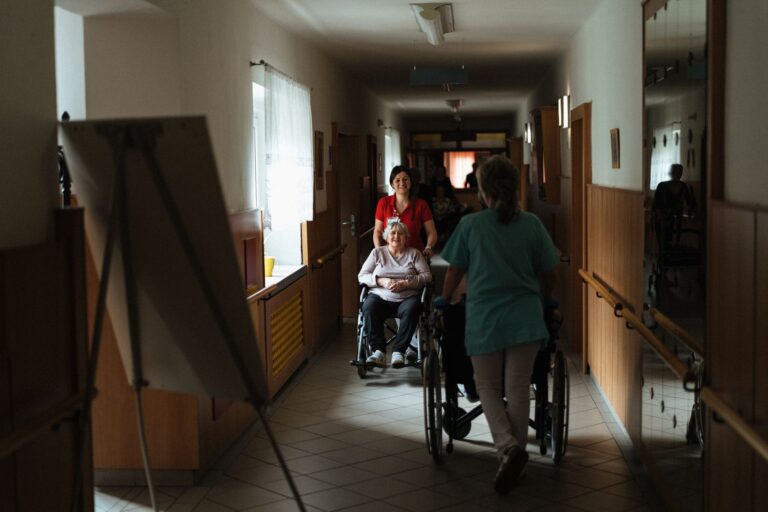
Repeated questions in dementia do not, by themselves, predict a specific safety incident. They can, however, signal memory failure or distress that warrants checking medicines, wandering, driving, household hazards, and finances. "Repeated questions" means asking the same thing after receiving an answer, often because the earlier exchange was not retained. The Alzheimer's Association notes that repetition may also express anxiety, insecurity, concern, or a need for help.
Medical information disclaimer: This article is for general educational purposes only and does not provide medical advice, diagnosis, or treatment. Always consult a physician or other qualified health professional about symptoms, medications, tests, or treatment decisions.
Table of Contents
- When does a change need medical attention?
- Check medicines and household hazards
- Look beyond the question for wandering or driving risk
- Review financial activity, even if simple bills seem manageable
- Turn the repeated question into a focused safety check
When does a change need medical attention?
Consider whether the repetition is longstanding or part of a new or worsening change in confusion or behavior. Do not assume dementia explains every change. People with Alzheimer's may develop illnesses that affect behavior but be unable to describe what is wrong.
The National Institute on Aging advises caregivers to report observed changes and signs to a clinician. Note what changed, when it began, and what else you observed. This record gives the health-care team more useful information than a general report that the person "seems worse.".
Check medicines and household hazards
A question such as "Did I take my pills?" does not establish whether a dose was taken. Verify the medication plan or record before giving another dose. The Alzheimer's Association recommends help with medicines even during early Alzheimer's when needed.
Safeguards include a current medication list, a plan that prevents missed or duplicate doses, and locked storage when necessary. Memory problems can also leave an oven or faucet running or prevent someone from calling for help. The National Institute on Aging recommends practical protections such as:.
- Stove shutoff devices
- Working smoke and gas detectors
- Water heaters set to 120°F
- Locked access to medicines, chemicals, weapons, and tools
Look beyond the question for wandering or driving risk
Repetitive speech alone does not prove that someone will wander. Still, wandering deserves separate attention: the Alzheimer's Association says six in 10 people with dementia will wander at least once, and some do so repeatedly. Watch for a history of wandering, restlessness, or repetitive movements.
The National Institute on Aging says a person with Alzheimer's who has wandered before should not be left unattended. Suggested safeguards include identification, location tracking, door alarms or locks, a recent photo, and notifying neighbors or police. Driving requires its own assessment. As memory and decision-making worsen, families should watch for forgotten routes to familiar places or difficulty finding home and involve the health-care team when concerns arise.
Review financial activity, even if simple bills seem manageable
Financial trouble can appear while a person can still handle familiar, simple payments. Complex banking may become difficult earlier, creating openings for unpaid bills, mistakes, fraud, or abuse. The National Institute on Aging recommends that family members or legal representatives review financial records monthly.
Look for unpaid bills, unusual purchases, or missing money. Repeated questions about a payment do not prove that money was lost or stolen. Check statements and receipts rather than relying on either the person's memory or reassurance from someone else.
Turn the repeated question into a focused safety check
First, answer calmly and consider the possible concern beneath the words. Then verify any safety-sensitive issue with objective information rather than asking the person to remember again.
Use the subject of the question to guide the check: Treat the question as a prompt to verify, not as proof of danger. If the question is "Did I take my medicine?", check the dose record before anyone gives another pill.
- Medicine: Review the dose record before giving anything.
- Home: Inspect the appliance, faucet, alarm, or locked storage.
- Leaving: Check supervision, identification, tracking, and door safeguards.
- Driving: Review recent route-finding problems and involve the health-care team.
- Money: Examine bills, statements, purchases, and missing funds.