A grandparent's recipe card—handwritten, worn, stained with decades of use—can reconnect a person with Alzheimer's to cherished memories when ordinary conversation fails. The card works not because it restores lost memories, but because visual and tactile cues activate emotional and sensory pathways that bypass the retrieval problems Alzheimer's causes, creating moments of clarity and connection that matter. This is not magical thinking.
Neuroscience shows that Alzheimer's disrupts how the brain retrieves stored memories, even when those memories remain intact. Familiar objects—especially ones tied to food, family routines, and sensory experience—offer external cues that help bypass damaged memory pathways. Holding a recipe card, reading a parent's handwriting, smelling ingredients, or preparing a dish together becomes a structured way to access preserved memories and improve mood, engagement, and quality of life across disease progression.
Medical information disclaimer: This article is for general educational purposes only and does not provide medical advice, diagnosis, or treatment. Always consult a physician or other qualified health professional about symptoms, medications, tests, or treatment decisions.
Table of Contents
- Why Recipe Cards Work Better Than Conversation Alone
- The Memory Types That Survive Longer
- How to Use a Recipe Card as a Memory Bridge
- What Changes at Different Disease Stages
- What to Do If Memories Don't Return
- Frequently Asked Questions
Why Recipe Cards Work Better Than Conversation Alone
When someone has Alzheimer's, they struggle to retrieve memories on demand through verbal recall—not because the memories are erased, but because the neural networks that retrieve them are damaged. Asking "Do you remember making this dish?" often draws a blank. Handing them the actual recipe card changes the equation.
Research on reminiscence therapy—interventions using familiar objects and concrete items—shows measurable improvements in cognition, mood, and reduced depression and behavioral symptoms across 29 randomized trials involving over 3,000 dementia patients. The card itself becomes a cue that bypasses failed verbal retrieval. Object handling during reminiscence therapy restores access to life histories and creates spaces where people with dementia engage meaningfully, even when language is difficult.
The Memory Types That Survive Longer
Not all memory fails at the same rate in Alzheimer's disease. Emotional and procedural memories—the feelings and skills associated with activities—remain relatively preserved in mild-to-moderate stages, while declarative memory (facts and recent events) degrades first. This is why a person may not recall *when* they learned to make bread, but their hands may remember how to knead dough. They may not name a dish, but seeing it and smelling it can restore the emotional weight it carried.
Food and cooking activate these preserved pathways. Cooking and food-related activities trigger memory recall and stimulate appetite in Alzheimer's patients; food scents activate olfactory-limbic pathways linked to autobiographical family memories. A recipe card that looks familiar, feels real in the hand, and promises to produce a remembered smell creates multiple retrieval channels at once. Multisensory stimulation combining smell, taste, and touch reduces agitation and anxiety while improving cognition and mood by activating the emotional and sensory brain systems that remain more resilient than factual memory networks.
How to Use a Recipe Card as a Memory Bridge
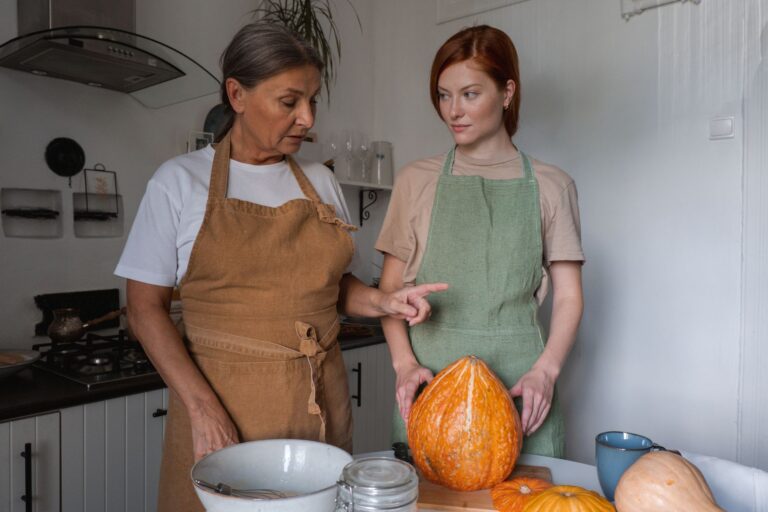
Using a recipe card is not about perfect execution or teaching cooking. It is about creating a structured, multisensory activity that invites engagement. Here are concrete steps:.
- **Start with a card your loved one actually used.** Handwriting, stains, and notes are retrieval cues themselves. If the original is fragile, make a copy or simply handle it together.
- **Gather ingredients before you begin.** Let them see, touch, and smell what is familiar. Arrange items on the table so the sensory environment is rich.
- **Read the card aloud, slowly.** Pause to ask open-ended questions: "What do you remember about this?" "Did you make this often?" Listen for any memory fragment—a name, a person, an emotion.
- **Involve them in preparation,** even if only holding a spoon, stirring, or smelling the pan. The procedural memory of movement matters as much as the final dish.
- **Don't correct or push.** If they confuse details or recall something that didn't actually happen, let it rest. The goal is engagement and mood, not historical accuracy.
What Changes at Different Disease Stages
Early-stage Alzheimer's: A person may struggle to recall the recipe unprompted but recognize it immediately and engage deeply with preparation. They may contribute detailed memories and feel pleasure in the competence they retain. Middle-stage Alzheimer's: Verbal recall is minimal.
The recipe card works best as a purely sensory trigger—familiar objects, the smell of cooking, and guided physical involvement become primary. Frustration may arise if complex steps are expected; simpler activities (stirring, tasting, holding) are most effective. Late-stage Alzheimer's: Even if language is nearly gone, multisensory cues including taste, smell, and tactile contact can improve mood and reduce agitation. A person may not recall the dish or the recipe, but holding a card with their parent's handwriting or tasting a familiar flavor can produce moments of calm or comfort.
What to Do If Memories Don't Return
It is natural to hope that a recipe card will unlock a flood of memories. Often it will not—at least not in words. The absence of verbal memory does not mean the activity failed.
The real outcome is behavioral and emotional: reduced agitation, improved focus during the activity, a moment of connection shared with someone present, or a small smile at a familiar scent. Research shows that memory retrieval can be externally cued even when spontaneous recall fails completely—familiar objects restore access to preserved memories that remain neurologically intact but functionally inaccessible. If no memory emerges, the multisensory experience itself—cooking, tasting, being together around something meaningful—is still therapeutic. The goal is presence and engagement, not recovery.
Frequently Asked Questions
Can a recipe card cause frustration if my grandparent can't remember?
Yes. If they become upset or agitated, stop and try again later with a simpler activity—just handling the card or smelling ingredients, without the expectation of recall. Keep the focus on comfort, not performance.
What if I don't have the original recipe card?
A handwritten recipe on any card, a printed copy of a family recipe, or even a photograph of the dish can work. The physical object and the association matter more than the specific original card.
Is it okay to cook a simplified version of the recipe?
Yes. Adjust for safety and ability. A shorter recipe with fewer steps, pre-measured ingredients, or help from you keeps the activity focused on engagement rather than frustration.
How often should we do this activity?
Once or twice weekly often works well. Avoid repetition that becomes rote or boring, but consistency helps your loved one anticipate the activity and build comfort around it.