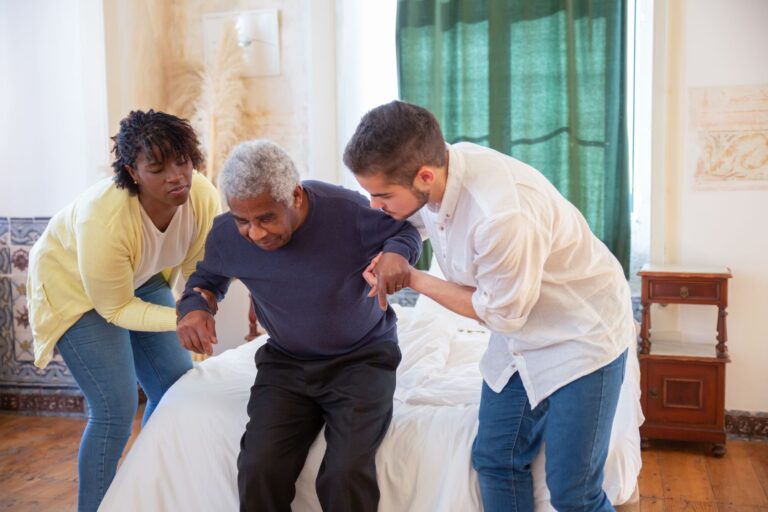
Privacy and data access gaps in 2026 dementia research center on family caregivers being hard to identify and properly authorize in health systems. Researchers still need to learn how to give caregivers legitimate access while protecting patient privacy and consent. A family caregiver is a relative or friend who provides unpaid help with daily care, medical tasks, and decisions. When records and portals do not name that person clearly, families face delays and researchers miss key care data.
Medical information disclaimer: This article is for general educational purposes only and does not provide medical advice, diagnosis, or treatment. Always consult a physician or other qualified health professional about symptoms, medications, tests, or treatment decisions.
Table of Contents
- Why are caregivers missing from health records?
- Why do shared logins create privacy risks?
- Which families face the largest access gaps?
- What should researchers change next?
Why are caregivers missing from health records?
In one study, researchers found caregivers were identified inconsistently in electronic health records. According to the National Library of Medicine/PMC, 91% were listed only in contact tabs and only 1 of 22 had formal proxy portal access in the JMIR Aging study.
A contact tab is useful for phone calls but does not grant permission to view results or send messages. Without an extractable caregiver field or formal proxy account, clinics cannot reliably count caregivers or include them in research.
Why do shared logins create privacy risks?
Care partners wrote most portal messages for patients with diagnosed dementia, yet they usually signed in as the patient. According to the National Library of Medicine/PMC, overwhelming use of patient logins rather than shared-access credentials created consent and audit-trail risks in the Alzheimer's and Dementia study.
Shared logins hide who actually wrote the message. That makes it hard to confirm permission, track decisions, or protect sensitive patient and caregiver details.
Which families face the largest access gaps?
Portal gaps fall hardest on high-need households. Older adults whose portals were used solely by caregivers were disproportionately Medicaid-enrolled, homebound, and living with dementia, at 43% versus 5%, according to Johns Hopkins HBHI in its 2022 portal-use analysis.
Access also differs by education and ethnicity. Among dementia family caregivers, lower education predicted lower portal use, while Hispanic ethnicity predicted higher use, according to the National Library of Medicine/PMC in a 2024 JMIR Aging analysis. Researchers need to adjust recruitment and caregiver-reported data collection for those differences.
What should researchers change next?
Researchers should use formal proxy or shared-access workflows instead of informal password sharing. They should also create extractable caregiver fields and offer plain-language privacy choices for families. New rules may reshape data reuse.
NIH proposed a Controlled-Access Data Policy plus Genomic Data Sharing revisions in December 2025, while neuroscientists warned that routing more data through controlled access could slow open secondary research. In interviews with 16 Alzheimer's caregivers, participants wanted personalized AI support but feared sharing sensitive details. Key record and interview findings still rest on small exploratory samples, so they guide design but do not describe all caregivers.
- Ask each patient who helps with care and record that person in a structured field
- Offer proxy portal enrollment during visits, discharge, and dementia diagnosis
- Explain what a proxy can see, send, and share in short, clear language
- Review audit trails so caregiver messages are labeled as caregiver messages
You Might Also Like
- NHATS and NSOC Dementia Care Data Priorities in 2026: What Researchers Still Need to Learn for Adults With Memory Concerns
- Unpaid Dementia Care Costs in the 2026 NIA Summit Report: Cost and Access Questions for Long-Distance Caregivers
- Unpaid Dementia Care Costs in the 2026 NIA Summit Report: What the Report Establishes and Leaves Unanswered for Long-Distance Caregivers